
Ottawa Along With Halifax and More in Supercharging Canada Domestic Tourism With Record Travel Demand in 2026
Ottawa Along With Halifax and More in Supercharging Canada Domestic Tourism With Record Travel Demand in 2026

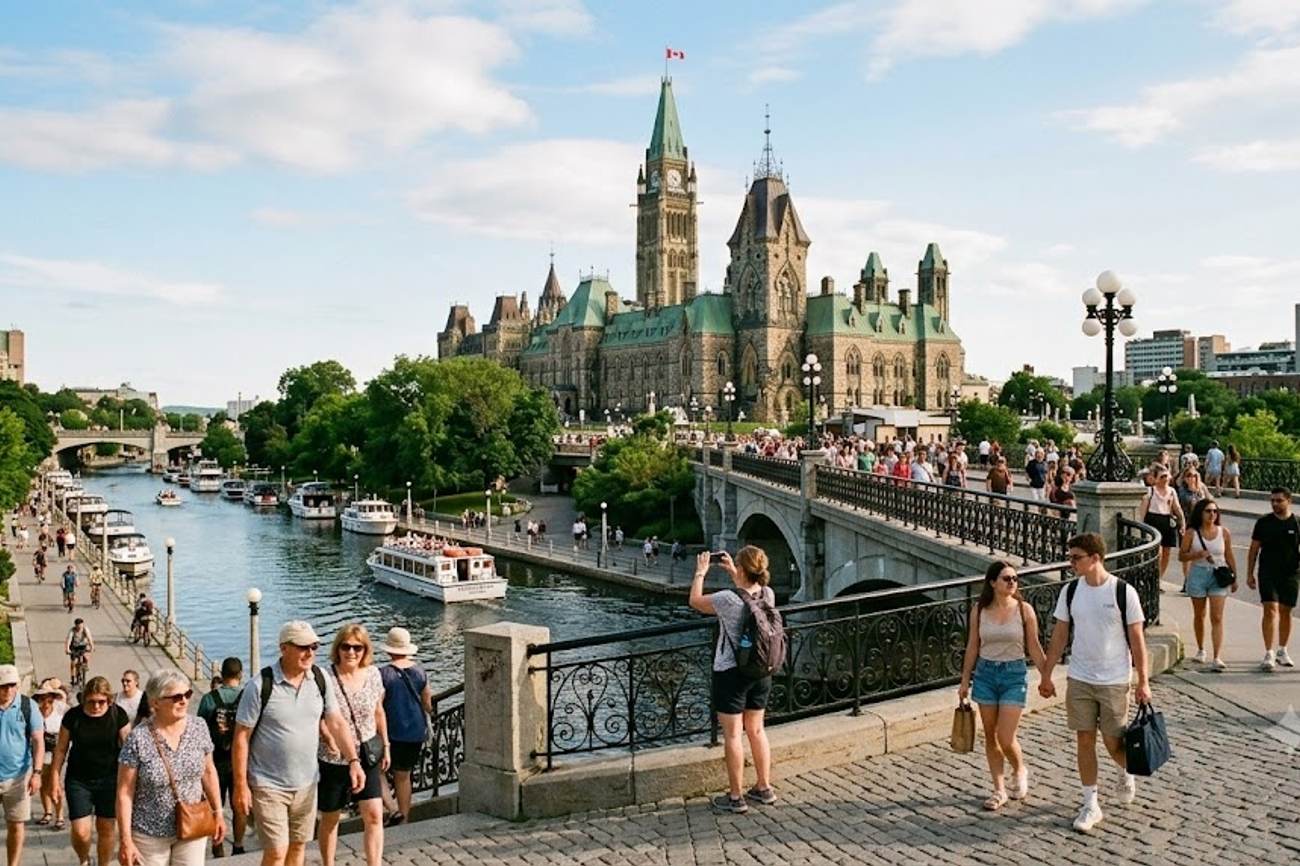
Image generated by AI
More than 60% of all Airbnb trips in Canada are now domestic, with 2025 recording a platform-high 9.5 million guest arrivals. This shift proves that Canadians are no longer just traveling locally as a temporary reaction to global disruptions, but have fundamentally restructured how they explore their own backyard.
The Great Domestic Pivot of 2026
The Canadian travel map is being redrawn. While the traditional magnets of Toronto and Vancouver still hold sway, the real momentum in 2026 is shifting toward regional hubs and smaller communities. We are seeing a structural change where provincial pride and a hunger for authentic, regional experiences are driving record-breaking demand. This isn't just about short weekend getaways; it is a comprehensive movement toward "slow travel" within national borders.
In Ontario, this trend is particularly pronounced. Data indicates that roughly 70% of trips taken by Ontario residents stay within the provincial borders. This creates a powerful internal economy where cottage country, nature retreats, and city breaks in the capital are sustaining local businesses. Ottawa, for instance, saw hotel room demand climb 3% between June and August 2026. The city leveraged its bicentennial celebrations alongside high-energy events like the RBC Bluesfest and IRONMAN Canada-Ottawa to turn the capital into a primary summer destination rather than just a political stopover.
The ripple effect is visible across provincial lines. The Outaouais region of Quebec, situated just across the river from Ottawa, saw overnight stays in registered accommodations surge by 9.1% from May to July 2026. The sentiment among local operators is overwhelmingly positive, with 87% describing their summer season as either good or exceptional. This cross-border synergy between the Ottawa-Gatineau region proves that when a metropolitan hub thrives, the surrounding rural and suburban areas reap the rewards.
What Makes the Atlantic and Quebec Regions Different
If Ontario is the engine of domestic stability, Quebec and the Atlantic provinces are the engines of growth. Quebec has mastered the art of "event-led tourism," where massive cultural festivals translate directly into hotel revenue. In July 2026, Quebec's hotel occupancy rose 7.8% to 81.7%, with revenue per available room (RevPAR) jumping 17.1% to CAD213.11. Montreal was an even larger standout, seeing occupancy hit 84.5% and an average daily rate (ADR) of CAD268.71.
What is truly fascinating about Quebec is its internal loyalty; 62% of travel by Quebec residents remains within the province. This ensures that rural nature destinations and winter resorts aren't solely dependent on the whims of international flight schedules.
Further east, Nova Scotia and Newfoundland and Labrador are redefining the "edge of the world" experience. Nova Scotia saw a dramatic 15.7% increase in ADR in June 2026, reaching CAD270.46, bolstered by the Canada Sail Grand Prix in Halifax. By July, the ADR remained high at CAD272.46.
Meanwhile, Newfoundland and Labrador is capitalizing on the "unreplicable." In June 2026, hotel occupancy rose 4.6% to 86.4%, while RevPAR surged 19.0% to CAD203.61. The catalyst here is often nature-centric, such as the Iceberg Festival, which draws visitors who are less interested in luxury shopping and more interested in the raw, coastal landscapes and wildlife of the Atlantic. New Brunswick has followed suit, recording an 11.2% increase in average daily hotel rates in July 2026, reaching CAD200.55.
Visitor Insider Tips
To navigate Canada like a local during this domestic boom, you have to time your visits to avoid the "event peaks" unless you are specifically attending a festival.
Timing the Atlantic Coast: If you are heading to Nova Scotia or Newfoundland, avoid the peak June/July window if you want lower rates. However, if you do visit in June, base yourself in Halifax but take day trips to the coast to avoid the city center congestion during the Sail Grand Prix. For Newfoundland, the Iceberg Festival is a must, but book your accommodations at least four months in advance, as occupancy frequently hits the 86% mark.
Navigating the Ottawa-Gatineau Corridor: Don't limit yourself to the Ontario side. Use the bridges to cross into the Outaouais region of Quebec. The dining scene in Gatineau often feels more authentic and less "tourist-centric" than the downtown Ottawa core. Use the local transit systems to move between the two provinces to avoid the heavy summer traffic associated with the bicentennial events.
Quebec’s Regional Secret: While Montreal is the heartbeat of the province, the 62% internal travel rate suggests that the real magic is in the rural outskirts. Rent a car and head toward the Charlevoix region or the Gaspé Peninsula. When visiting Montreal during July, stay in neighborhoods like Le Plateau or Mile End rather than the downtown core to experience the city's actual rhythm.
Transport Hacks: For those traversing the Atlantic provinces, the "Cabot Trail" in Nova Scotia is legendary, but for a truly local experience, explore the smaller coastal roads of New Brunswick. Use official resources like Destination Canada or Tourism Quebec to find regional festivals that aren't on the main international radar.
Cultural and Environmental Context
The surge in domestic tourism is a double-edged sword for Canada's smaller communities. On one hand, the circulation of wealth within provincial economies—specifically in the Atlantic provinces—is providing a lifeline to rural towns that previously relied on seasonal fishing or logging. When a Canadian from Ontario spends money in a New Brunswick café or a Newfoundland guesthouse, that capital stays within the community.
However, the increase in "nature-led" tourism, particularly around the Iceberg Festival and coastal hiking trails, puts pressure on fragile ecosystems. The shift toward Airbnb—with 9.5 million domestic arrivals in 2025—has also sparked conversations in cities like Montreal and Halifax regarding housing affordability for locals. As more residential properties convert to short-term rentals to capture the domestic boom, the tension between tourism growth and local livability increases.
Preservation is now the priority. Many regions are moving toward a model of "high-value, low-impact" tourism. This is why you see a push toward sporting events (like IRONMAN) and cultural festivals (like the Bicentennial), which concentrate visitors in specific hubs and timeframes, rather than a constant, unstructured flow of traffic through protected wilderness areas. For those visiting UNESCO World Heritage sites in Canada, such as Old Quebec, respecting the local pace and following "Leave No Trace" principles is no longer optional—it is a requirement for the survival of these sites.
FAQ: Visiting Canada 2026
What is the best time to visit the Atlantic provinces? June is ideal for the Iceberg Festival in Newfoundland, but July offers the most stable weather for Nova Scotia's coast. For lower prices and fewer crowds, aim for the "shoulder season" in September.
How do I get between Ottawa and Gatineau? The two cities are separated only by the Ottawa River. You can easily cross via several bridges by car, bus, or even walking/cycling in certain areas, making it simple to experience both Ontario and Quebec.
Is it safe for solo travelers in regional Canada? Yes, Canada is exceptionally safe for solo travelers. Smaller communities in New Brunswick and Newfoundland are known for being particularly welcoming to strangers, though basic transport (car rentals) is essential for rural exploration.
Do I need a visa for domestic travel? If you are a Canadian citizen or permanent resident, no. International visitors should check the Official Government of Canada website for current eTA or visa requirements before arrival.
Stop following the crowds to the coast; the real Canada is found in the provincial borders where the locals still outnumber the suitcases.
Related Travel Guides
- UK Tourist Tax Threat as East Anglian Tourism Overnight Levy Sparks Fears Across Norfolk and Suffolk
- New Mexico Outpaces Nevada, Kentucky and More US States In Gray Divorce As Older Population Reshapes Travel And Lifestyle Trends
- Canada Joins US and More in Skyrocketing Bahamas Tourism Through a Surge in Tourism for Eight Straight Months in 2026
Disclaimer
This article is for informational and educational purposes only. It does not constitute legal, financial, or professional advice. While we strive to provide accurate and up-to-date information, travel policies, regulations, and conditions change rapidly. Always verify information with official sources before making travel decisions. Nomad Lawyer makes no representations about the accuracy, reliability, completeness, or suitability of the information provided. Readers should consult qualified professionals for advice specific to their circumstances. The views expressed in this article are those of the author and do not necessarily reflect the views of Nomad Lawyer.
Kunal K Choudhary
Co-Founder & Contributor
A passionate traveller and tech enthusiast. Kunal contributes to the vision and growth of Nomad Lawyer, bringing fresh perspectives and driving the community forward.
Learn more about our team →