
UK Tourist Tax Threat as East Anglian Tourism Overnight Levy Sparks Fears Across Norfolk and Suffolk
UK Tourist Tax Threat as East Anglian Tourism Overnight Levy Sparks Fears Across Norfolk and Suffolk

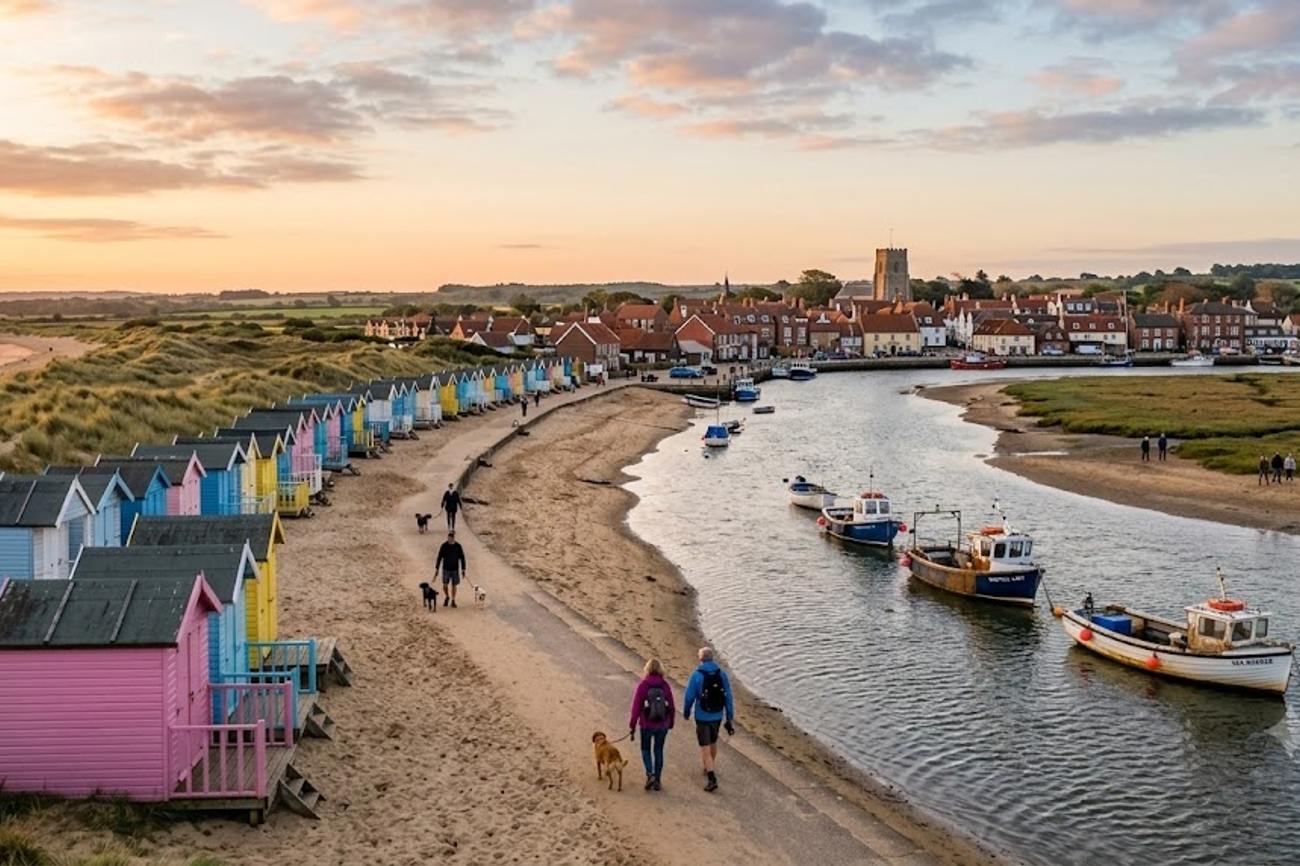
Image generated by AI
The visitor economy in Norfolk and Suffolk generates £5.9 billion annually and sustains 120,000 jobs, yet this massive economic engine now faces a structural shift as the UK moves toward localized taxation. While the East of England has historically relied on central government grants and council tax, the legislative pivot finalized in September 2026 introduces a discretionary overnight tourism levy, mirroring a fiscal model already standard across the European Union and North America.
The East Anglian Levy in Numbers
The introduction of the Overnight Visitor Levy Bill, formally integrated into the King’s Speech on 13th May 2026, signals a departure from traditional UK public finance. This is not a mandatory national tax but a permissive power granted to Mayoral Strategic Authorities and Foundation Strategic Authorities. The scale of the industry at risk is significant; the £5.9 billion generated by the visitor economy in Norfolk and Suffolk represents a critical lifeline for rural and coastal zones that lack the diversified industrial bases of metropolitan hubs.
According to the statutory architecture defined by the Ministry of Housing, Communities and Local Government (MHCLG), the levy can be implemented in two distinct formats: a fixed flat fee per room per night or a percentage-based charge relative to the total cost of the stay. This flexibility allows local authorities to calibrate the tax based on the luxury tier of the accommodation or the volume of the stay. To prevent market distortion, the framework covers 11 commercial accommodation categories, ensuring that traditional hotels and B&Bs are not undercut by short-term digital rentals.
Comparative Fiscal Context: Regional and Global Benchmarks
The shift toward "fiscal devolution" in England is a lagging indicator of a global trend. For decades, the World Tourism Organization (UNWTO) has tracked the rise of transient occupancy taxes (TOT) as a means to mitigate "overtourism" and fund urban infrastructure. While East Anglia is now entering this phase, other UK nations have already established the precedent. Scotland led the legislative movement, followed by Wales, creating a UK-wide trajectory toward localized tourism funding.
The primary tension lies in the difference between "brand-pull" metropolitan areas and "domestic-reliant" rural regions. Cities like Greater Manchester or the Liverpool City Region possess a high concentration of inbound corporate and international leisure travelers who are generally less price-sensitive to small surcharges. In contrast, the East of England relies heavily on the domestic "staycation" market. Data suggests that domestic travelers are significantly more sensitive to incremental cost increases, particularly during volatile trading periods in coastal towns.
| Metric/Feature | Metropolitan Hubs (e.g., London/Manchester) | Rural/Coastal Regions (e.g., East Anglia) | Global Benchmark (Paris/Amsterdam) |
|---|---|---|---|
| Primary Visitor Base | International & Corporate | Domestic & Seasonal | High-Volume International |
| Price Sensitivity | Low to Moderate | High | Moderate |
| Levy Objective | Infrastructure & Sanitation | Public Realm Maintenance | Overtourism Mitigation |
| Economic Driver | Diversified Service Economy | Visitor Economy (£5.9B in Norfolk/Suffolk) | Global Tourism Hubs |
| Tax Structure | Likely Percentage-based | Likely Flat-rate (to protect B&Bs) | Mixed Flat/Percentage |
Practical Traveler Advisory and Strategic Insights
For the individual traveler, the transition to a discretionary levy system means that the "sticker price" of a hotel or rental in East Anglia may no longer be the final price. Because the levy is discretionary and subject to local public consultation, costs will vary significantly from one municipality to another.
If you are planning a trip to Norfolk or Suffolk in late 2026 or 2027, you should account for an additional per-night surcharge. To navigate this, travelers should:
- Scrutinize Booking Totals: Check if the "Tourist Tax" or "Visitor Levy" is included in the initial quote or added at checkout. Digital platforms may integrate this differently than direct hotel bookings.
- Diversify Accommodation Types: Since the levy covers 11 categories—including boutique inns, B&Bs, and guesthouses—switching from a hotel to a B&B may not bypass the tax, as the legislation is designed for competitive parity.
- Monitor Local Council Announcements: Because the levy is discretionary, some districts may opt out to remain competitive. Tracking IATA reports on regional travel trends or local government notices will reveal which specific zones have activated the charge.
Projections for the UK Visitor Economy
The trajectory suggests that the "permissive" nature of the levy will eventually lead to widespread adoption. As local authorities face sustained financial pressures and a decline in central government grants, the temptation to tap into the £5.9 billion regional tourism stream will be high.
Local authorities in East Anglia are exploring the implementation of a visitor levy to fund infrastructure and environmental conservation. This move follows broader discussions within the UK Government regarding the legality and framework of tourist taxes to alleviate the financial burden on local taxpayers.
We can expect a "clustering effect" where neighboring authorities implement similar rates to avoid diverting tourists to a cheaper adjacent town. However, the risk remains that a poorly calibrated levy could trigger a decline in overnight stay durations. If a flat fee is perceived as too high for a budget B&B but negligible for a luxury resort, the lower-end hospitality sector—which supports a vast portion of the 120,000 local jobs—could see a contraction in occupancy rates.
The long-term success of this policy will depend on "transparency of spend." Travelers are generally more accepting of levies when the funds are visibly reinvested into the destination—such as improved beach maintenance, better public transport, or preserved heritage sites. Without a clear link between the tax and a tangible improvement in the visitor experience, the East of England may see a shift in domestic preference toward regions that have not yet implemented the charge.
FAQ: East Anglian Visitor Levy 2026
Will my hotel room prices increase immediately? Not necessarily. The levy is discretionary. Only if your specific local authority chooses to activate the power granted by the May 2026 King's Speech will you see a charge. Check with your provider for local implementation dates.
Does this tax apply to all types of accommodation? Yes. The statutory framework covers 11 categories, including hotels, B&Bs, guesthouses, and digital platform rentals, to ensure that all commercial overnight stays are treated equally.
Is this a national tax or a local one? It is a local, discretionary levy. While the legislation (Overnight Visitor Levy Bill) is national, the decision to implement it, and the specific rate charged, rests with Mayoral and Foundation Strategic Authorities.
Why is this being introduced now? Local authorities are facing increased financial pressure. By shifting to a model used in cities like Paris and Rome, they aim to fund public infrastructure using the revenue generated by the visitors who use those services.
The shift from central grants to visitor-funded infrastructure marks the end of the "free-ride" era for regional tourism management.
Related Travel Guides
- New Mexico Outpaces Nevada, Kentucky and More US States In Gray Divorce As Older Population Reshapes Travel And Lifestyle Trends
- Canada Joins US and More in Skyrocketing Bahamas Tourism Through a Surge in Tourism for Eight Straight Months in 2026
- American Airlines Cohorts With United as Fuel Crisis Forces Major US Airlines Into a New Era of Flight Planning
Disclaimer
This article is for informational and educational purposes only. It does not constitute legal, financial, or professional advice. While we strive to provide accurate and up-to-date information, travel policies, regulations, and conditions change rapidly. Always verify information with official sources before making travel decisions. Nomad Lawyer makes no representations about the accuracy, reliability, completeness, or suitability of the information provided. Readers should consult qualified professionals for advice specific to their circumstances. The views expressed in this article are those of the author and do not necessarily reflect the views of Nomad Lawyer.
Preeti Gunjan
Contributor & Community Manager
A passionate traveller and community builder. Preeti helps grow the Nomad Lawyer community, fostering engagement and bringing the reader experience to life.
Learn more about our team →