Canada Joins US and More in Skyrocketing Bahamas Tourism Through a Surge in Tourism for Eight Straight Months in 2026

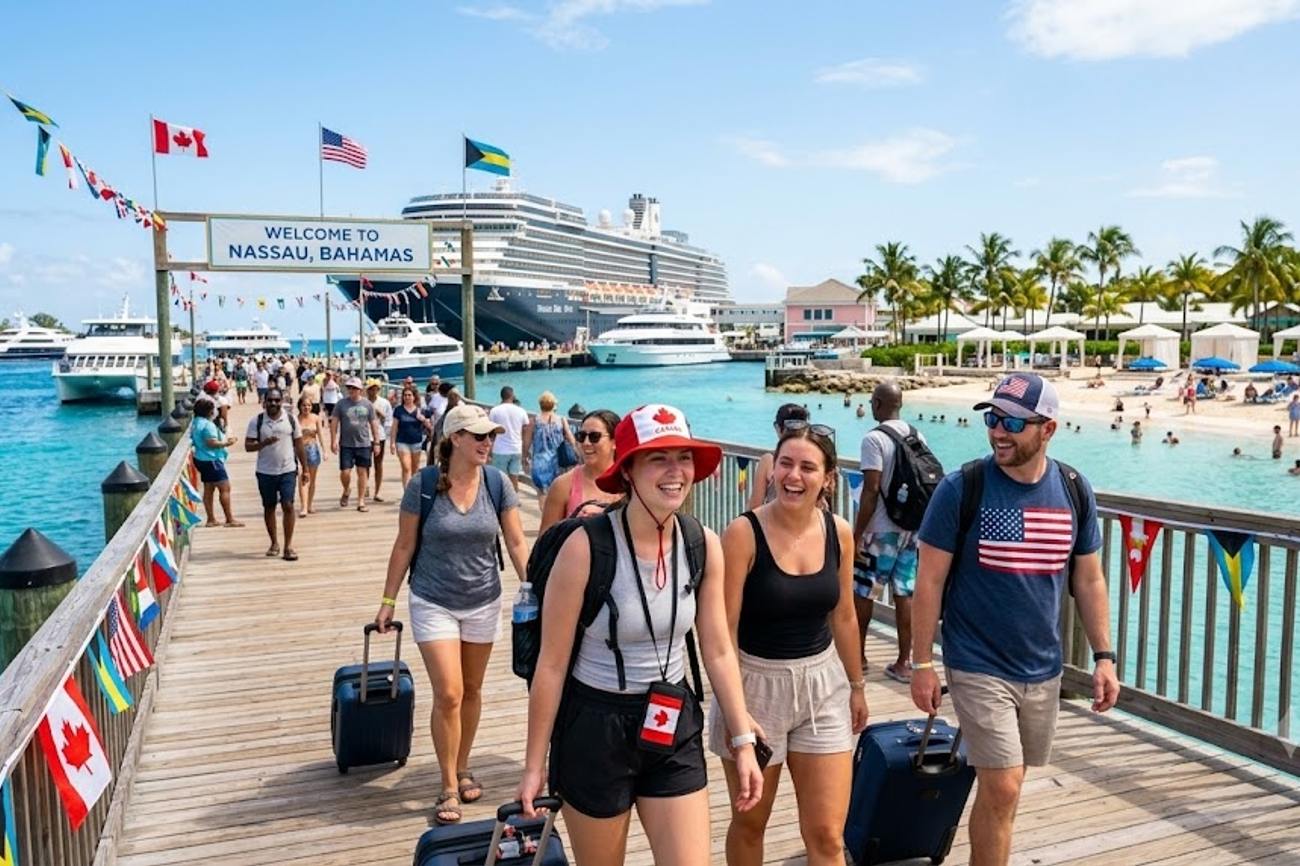
Image generated by AI
[Nassau, August 2026] — The Bahamas is on track to surpass 1.5 million stopover visitors by the end of August 2026, driven by a relentless eight-month surge in international arrivals. Current data reveals a significant expansion in visitor volume, with Canada emerging as a high-growth powerhouse alongside the dominant United States market.
The Bahamas Ministry of Tourism reports that between January and July 2026, the archipelago welcomed 1,314,639 stopover visitors, marking a 4.3% increase over the 1,260,436 arrivals recorded during the same period in 2025. If the current monthly average holds, total arrivals for the first eight months of the year will hit approximately 1,502,445. This growth is attributed to a combination of expanded air connectivity, heightened demand for Caribbean luxury experiences, and a strategic diversification of source markets.
The Catalyst for Growth
The current spike in tourism is not the result of a single factor but a convergence of systemic travel trends. Primary drivers include a surge in warm-weather demand from North American markets and an aggressive expansion of international flight paths connecting the islands to global hubs.
The data indicates a shift in visitor demographics. While the United States remains the primary engine of volume, the Bahamas is successfully penetrating non-traditional markets. The "Rest of the World" category has seen a staggering 118.2% increase, suggesting that the destination's global brand appeal is expanding far beyond its traditional geographic strongholds. This diversification reduces the country's reliance on any single economy and strengthens the resilience of the local hospitality sector.
Market Breakdown and Impacted Regions
The tourism boom is distributed unevenly across global markets, with some regions showing explosive growth while others maintain steady, high-volume flows.
| Source Market | Jan–Jul 2026 Actual | Jan–Jul 2025 Actual | YoY Growth | 2026 Market Share | Projected Jan–Aug 2026 |
|---|---|---|---|---|---|
| United States | 1,084,570 | 1,071,007 | +1.3% | 82.5% | ~1,239,509 |
| Canada | 96,401 | 83,510 | +15.4% | 7.3% | ~110,173 |
| Europe | 61,805 | 59,437 | +4.0% | 4.7% | ~70,634 |
| Caribbean | 18,242 | 12,632 | +44.4% | 1.4% | ~20,848 |
| Latin America | 23,160 | 19,889 | +16.4% | 1.8% | ~26,469 |
| Rest of World | 30,461 | 13,961 | +118.2% | 2.3% | ~34,813 |
| Total | 1,314,639 | 1,260,436 | +4.3% | 100% | ~1,502,445 |
The United States continues to provide the foundational volume, with projections suggesting arrivals will exceed 1.23 million by the end of August. However, Canada is now a critical growth lever, with a 15.4% increase in visitors and a rising market share of 7.3%.
Regional travel within the Caribbean has also accelerated sharply, posting a 44.4% growth rate. This indicates a rise in short-haul leisure and business travel between island nations. Meanwhile, Latin American arrivals have climbed 16.4%, providing a necessary hedge against North American market volatility.
Practical Traveler Advisory and Strategic Insights
For the average traveler, this surge in arrivals translates to several immediate practical implications:
1. Increased Flight Availability and Competition The "stronger air connectivity" cited in tourism data means more carriers are fighting for market share. Travelers from Canada and the US can expect more frequent flight options and potentially more competitive pricing as airlines increase capacity to meet the rising demand.
2. Higher Occupancy and Pricing Pressure With projections pushing toward 1.5 million visitors in just eight months, premium resorts and boutique hotels are seeing higher occupancy rates. Travelers booking last-minute trips to the Bahamas may encounter limited availability or "peak season" pricing even outside traditional holiday windows.
The Bahamas has experienced an unprecedented growth phase, with Canadian arrivals contributing significantly to a record-breaking eight-month surge in 2026. Travelers can find comprehensive entry requirements and updated travel advisories through the Official Bahamas Ministry of Tourism to ensure a seamless visit.
3. Heightened Airport Congestion The Lynden Pindling International Airport (NAS) is the primary gateway for these stopover visitors. A 4.3% overall increase in volume—and triple-digit growth from some international markets—means longer queues at customs and immigration. Travelers should allow extra time for arrivals and departures.
4. Diversified Tourist Experiences The influx of European and Latin American visitors is encouraging local operators to diversify their offerings. This likely means a broader range of multilingual services and a shift toward more "premium" and "diversified" Caribbean experiences to cater to long-haul international tastes.
Future Projections and Volatility
The projection of 1.5 million visitors by August is a "straight-line" estimate based on the average pace of the first seven months of 2026. It is not an official final tally. Aviation analysts warn that these figures remain subject to several volatile variables.
Weather remains the most significant risk. The Caribbean hurricane season can cause sudden drops in arrivals and widespread flight cancellations. Additionally, airline capacity is not static; any reduction in seats from major carriers could immediately blunt the growth trajectory of the Canadian or European markets.
Looking ahead, the Bahamas is positioning itself to move beyond its image as a US-centric destination. By aggressively pursuing the "Rest of the World" market—which has already seen a 118.2% jump—the government is attempting to create a year-round tourism cycle that is less dependent on the winter escape patterns of North Americans.
FAQ: Bahamas Travel 2026
Is it more expensive to visit the Bahamas in 2026? With record-breaking visitor numbers and a 4.3% increase in arrivals, demand is high. This often leads to higher hotel rates and limited availability at top-tier resorts. Booking several months in advance is recommended to avoid price spikes.
Are there more flights available from Canada? Yes. Canada has seen a 15.4% surge in arrivals, supported by improved air connectivity. Travelers will find more route options and frequent schedules compared to previous years.
Should I expect crowds at the airports? Yes. With stopover visitors projected to hit 1.5 million by August, major hubs like Lynden Pindling International Airport are experiencing higher volumes. Plan for longer processing times at immigration and security.
Which markets are growing the fastest? While the US provides the most visitors, the "Rest of the World" category is growing fastest at 118.2%, followed by the Caribbean at 44.4% and Latin America at 16.4%.
The Caribbean is no longer just a backyard for North America; it is becoming a global hub.
Related Travel Guides
- American Airlines Cohorts With United as Fuel Crisis Forces Major US Airlines Into a New Era of Flight Planning
- Dover Adapts As Biometric Border Checks Expand
- Texas Teams Up With California and More in Skyrocketing US Tourism as Leading Source of Mexican Tourist Arrivals for Eight Straight Months in 2026
This article is for informational purposes. Flight routes, passenger regulations, visa rules, and transit advisories are subject to change by airlines and aviation authorities. Readers are advised to verify schedules and travel documentation with relevant carriers and border agencies before departure.
Related Stories

Canada Inbound Travel from India Falls 7.8% in 2026: Gateway Analysis for Toronto, Vancouver, and Montréal

Thailand Tourism Slowdown Tests Small Businesses as Kingdom Pivots to High-Yield Travel and Secondary Provinces