
Orlando International Airport Records Massive Passenger Surge During Labor Day Weekend
Orlando International Airport handled over 841,000 passengers during the 2026 Labor Day window, peaking on Sept 7 with 155,776 travelers.

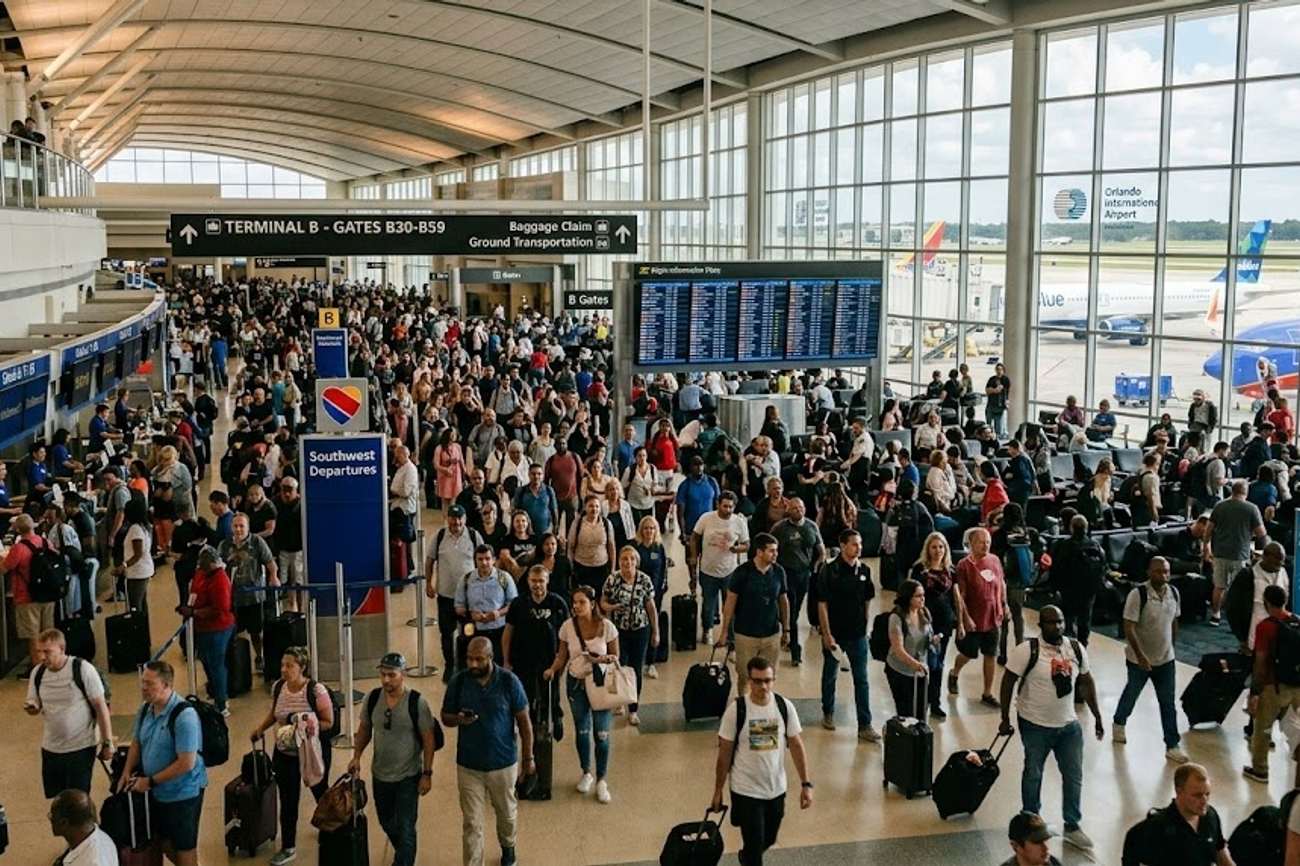
Image generated by AI
Orlando Logistics Handle Massive Holiday Influx
[Orlando, September 8, 2026] — Central Florida's aviation infrastructure faced a rigorous test as thousands of vacationers descended upon Orlando for the final major holiday break of the summer. Data indicates a powerful demand for leisure travel, with passengers flooding into the region for a combination of theme park visits, family reunions, and warm-weather escapes.
Orlando International Airport (MCO) reported a projected total of 841,577 passengers arriving and departing between September 3 and September 8, 2026. The operational peak occurred on Monday, September 7, when flight tracking and airport data showed approximately 155,776 passengers moving through the terminals. This volume underscores the city's enduring magnetism as a global hub for hospitality and entertainment.
Strategic Drivers of Central Florida Tourism
The consistent draw of Orlando during the Labor Day period is rooted in its diversified tourism ecosystem. While the city is globally recognized as the theme park capital, its appeal spans multiple demographic segments, including international tourists, convention attendees, and domestic families.
The primary engines of this demand are the Walt Disney World Resort and Universal Orlando Resort. These entities drive massive visitor numbers through immersive storytelling, seasonal events, and high-capacity attractions. However, the region's growth is no longer solely dependent on these giants.
Industry data shows a rising trend in "diversified leisure," where visitors integrate theme park stays with visits to professional sports venues, luxury golf resorts, and high-end outlet shopping districts. For many U.S. households, this specific window represents the final opportunity for a large-scale family excursion before the autumn academic calendar takes effect.
Operational Pressure at Orlando International Airport
The sheer volume of 841,577 passenger movements placed significant stress on MCO’s ground operations, including parking facilities, security checkpoints, and baggage handling systems. To mitigate potential bottlenecks, airport officials implemented aggressive passenger management strategies.
To maintain flow, the airport urged travelers to utilize digital tools for real-time flight updates and encouraged early arrivals to account for the concentrated demand at security screenings. The surge highlighted the necessity of the airport's ongoing infrastructure investments.
A key component of this capacity increase is the newer Terminal C development. This expansion has significantly boosted the airport's ability to process both domestic and international arrivals, ensuring that the facility can scale alongside the city's growing tourism footprint.
Essential Navigation Tips for MCO Travelers
Managing the experience at a high-volume gateway like MCO requires proactive planning. During peak holiday windows, standard arrival times are often insufficient to clear security and reach boarding gates comfortably.
Travelers are advised to prioritize the following logistics:
- Digital Integration: Use airline apps for check-in and baggage tracking to bypass manual queues.
- TSA Compliance: Strict adherence to liquid restrictions and prohibited item lists is necessary to prevent secondary screenings that delay thousands of other passengers.
- Communication: Monitoring airline notifications is vital, as late-summer weather patterns in Florida frequently cause aircraft delays or schedule shifts.
- Ground Coordination: To prevent terminal road congestion, those picking up arriving passengers are directed to use designated waiting zones rather than idling in active traffic lanes.
Regional Traffic Impacts Across Central Florida
The ripple effects of the Labor Day surge extended far beyond the airport terminals, impacting the broader transportation network of Central Florida. Major tourism corridors, particularly those surrounding International Drive and the routes leading to Walt Disney World, experienced heavy congestion.
The increased reliance on rental cars, ride-sharing services, and taxis created a high-demand environment for ground transportation. For visitors, this meant that transit times between hotels and attractions were significantly extended. Experts suggest that as Orlando’s tourism ecosystem expands, integrated transportation planning—including the use of resort shuttles and off-peak travel—becomes a necessity rather than a luxury to avoid missing dining or attraction reservations.
The Economic Engine of Experience-Based Travel
The continued dominance of theme parks in the regional economy is a testament to the shift toward "experience-based travel." Rather than traditional sightseeing, modern tourists prioritize immersive environments and memorable family milestones.
The theme park sector does more than fill hotels; it supports a massive secondary economy of thousands of jobs in the food service, transportation, and retail sectors across Central Florida. For international visitors, Orlando serves as a primary entry point into American pop culture and entertainment.
Beyond the gates of the major resorts, the region is promoting its natural assets. The warm Florida climate supports a year-round industry of hiking, water recreation, and nature exploration, providing a counterbalance to the high-stimulation environment of the theme parks.
Why This Matters: The Traveler's Perspective
For the average traveler, these statistics translate into a tangible change in the vacation experience. When nearly 850,000 people move through a single airport in six days, the "friction" of travel increases. This means longer lines, higher ride-share surge pricing, and the need for meticulous scheduling.
From a logistical standpoint, the reliance on Terminal C shows that Orlando is preparing for a future of "mega-tourism." For the visitor, this means that while the airport is becoming more efficient, the sheer volume of people will continue to make "winging it" a risky strategy. The trend is clear: the successful Orlando vacation now requires the same level of planning as the trip itself.
Related Travel Guides
Disclaimer
This article is for informational and educational purposes only. It does not constitute legal, financial, or professional advice. While we strive to provide accurate and up-to-date information, travel policies, regulations, and conditions change rapidly. Always verify information with official sources before making travel decisions. Nomad Lawyer makes no representations about the accuracy, reliability, completeness, or suitability of the information provided. Readers should consult qualified professionals for advice specific to their circumstances. The views expressed in this article are those of the author and do not necessarily reflect the views of Nomad Lawyer.
Kunal K Choudhary
Co-Founder & Contributor
A passionate traveller and tech enthusiast. Kunal contributes to the vision and growth of Nomad Lawyer, bringing fresh perspectives and driving the community forward.
Learn more about our team →