
One Street Holidays: Top 5 US Urban Corridors Redefining City Breaks in 2026
From Austin's South Congress to NYC's Fifth Avenue, the 'One Street Holiday' trend allows travelers to experience full city breaks within a single walkable corridor.

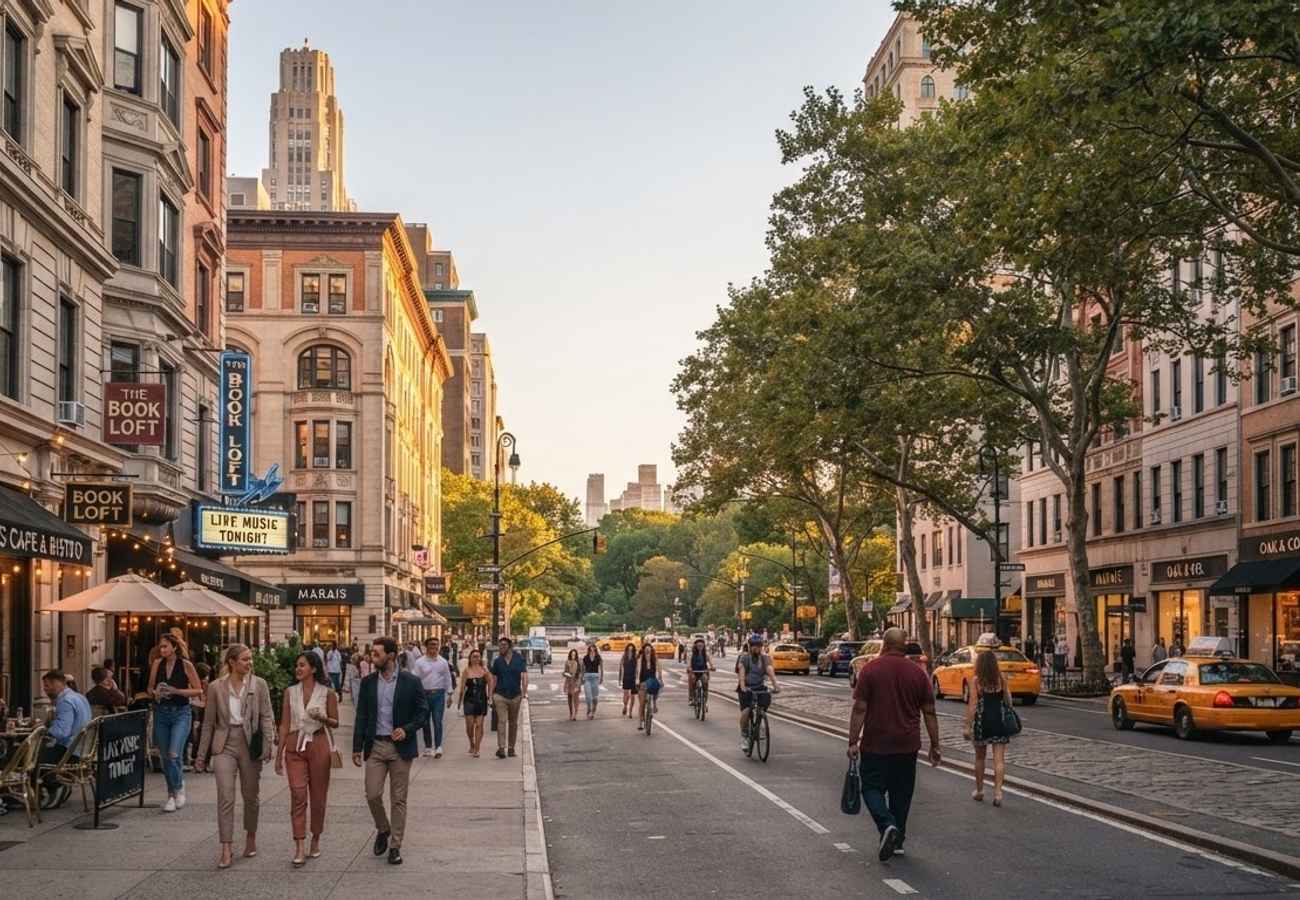
Image generated by AI
The "One Street Holiday" is replacing traditional multi-stop city itineraries, allowing travelers to maximize their experience by focusing on a single, high-density cultural corridor.
The Rise of the Single-Corridor Destination
Modern urban travel is shifting away from fragmented sightseeing. Instead of navigating complex transit systems to hit ten different landmarks, a growing number of travelers are adopting the "One Street Holiday." This approach treats a specific avenue or boulevard as the destination itself, integrating dining, shopping, art, and entertainment into a single walkable experience.
Our analysis indicates that this trend is driven by a desire for "slow travel" and a reduction in transport-related stress. By remaining on one street, visitors can observe the organic transformation of a neighborhood from morning to night.
Top 5 US Corridors for One Street Holidays
The following locations have successfully integrated diverse attractions into a compact geographic area, making them ideal for single-day immersive visits.
South Congress Avenue, Austin
Known for its strong Texas identity, this district functions as a condensed version of Austin's eclectic culture.
- Primary Draws: Independent boutiques, cowboy boot stores, and vibrant street murals.
- Experience Cycle: Morning coffee and retail exploration transition into evening live music sessions.
Magazine Street, New Orleans
Spanning approximately six miles parallel to the Mississippi River, this route offers a deep dive into local commerce.
- Primary Draws: Victorian row houses, historic mansions, vintage stores, and local bakeries.
- Experience Cycle: A slow-paced journey through galleries and antique shops ending in local bars.
Ocean Drive, Miami Beach
This corridor is defined by its dramatic shift in atmosphere based on the time of day.
- Primary Draws: Ten walkable blocks of Art Deco architecture and direct Atlantic Ocean access.
- Experience Cycle: Morning beach walks and architectural tours evolve into a high-energy nightlife scene with cocktails and dancing.
Broadway, Nashville
In Nashville, the street serves as a sonic experience where the audio environment is the main attraction.
- Primary Draws: Honky-tonks, rooftop venues, and continuous live musical performances.
- Experience Cycle: Daytime shopping and dining lead into a dense evening of live music across multiple venues.
Fifth Avenue, New York City
Unlike the nightlife-centric corridors, Fifth Avenue provides a cultural and high-fashion marathon.
- Primary Draws: Museum Mile, luxury retail, and immediate access to Central Park.
- Experience Cycle: A progression from Manhattan’s commercial hubs to world-class art institutions.
Passenger Rights & Urban Transit Advisory
For the traveler adopting the One Street Holiday model, the focus shifts from long-haul transit to "last-mile" logistics. Our analysis of urban travel policies suggests the following practical considerations:
Ride-Share and Drop-off Logistics Many of these corridors (particularly Ocean Drive and Broadway) have strict ride-share zones. To avoid fines or delays, passengers should identify designated "Passenger Loading Zones" via apps like Uber or Lyft before arrival.
Pedestrian Safety and Accessibility For those with mobility issues, we recommend verifying the ADA (Americans with Disabilities Act) compliance of the specific corridor. For example, while Fifth Avenue is highly accessible, some older sections of Magazine Street may have uneven sidewalks that impact wheelchair access.
Local Transit Alternatives If the "One Street" is long (e.g., the six miles of Magazine Street), travelers should utilize local shuttle services or bike-share programs to avoid exhaustion. In New Orleans and Austin, these alternatives are often more efficient than attempting to navigate the entire length on foot.
Industry Analyst View
The success of these corridors suggests that "continuity" is the most valuable asset in urban tourism. A street that offers a reason to stop every few hundred feet—whether it is a mural, a boutique, or a live musician—creates a higher "stickiness" factor than a collection of isolated monuments.
From a development perspective, this trend encourages cities to invest in pedestrian-first infrastructure. When a street becomes the destination, the economic benefit is distributed across dozens of small, locally-owned businesses rather than a few large-scale tourist attractions.
The future of the American city break is not about how much you can see, but how deeply you can experience one place.
Related Travel Guides
Disclaimer
This article is for informational and educational purposes only. It does not constitute legal, financial, or professional advice. While we strive to provide accurate and up-to-date information, travel policies, regulations, and conditions change rapidly. Always verify information with official sources before making travel decisions. Nomad Lawyer makes no representations about the accuracy, reliability, completeness, or suitability of the information provided. Readers should consult qualified professionals for advice specific to their circumstances. The views expressed in this article are those of the author and do not necessarily reflect the views of Nomad Lawyer.
Raushan Kumar
Founder & Lead Developer
Full-stack developer with 11+ years of experience and a passionate traveller. Raushan built Nomad Lawyer from the ground up with a vision to create the best travel and law experience on the web.
Learn more about our team →