
Oman Goes Hand In Hand With More Middle East Countries To Redefine Tourism Through Culture, Sustainable Growth And Regional Unity
Oman Goes Hand In Hand With More Middle East Countries To Redefine Tourism Through Culture, Sustainable Growth And Regional Unity

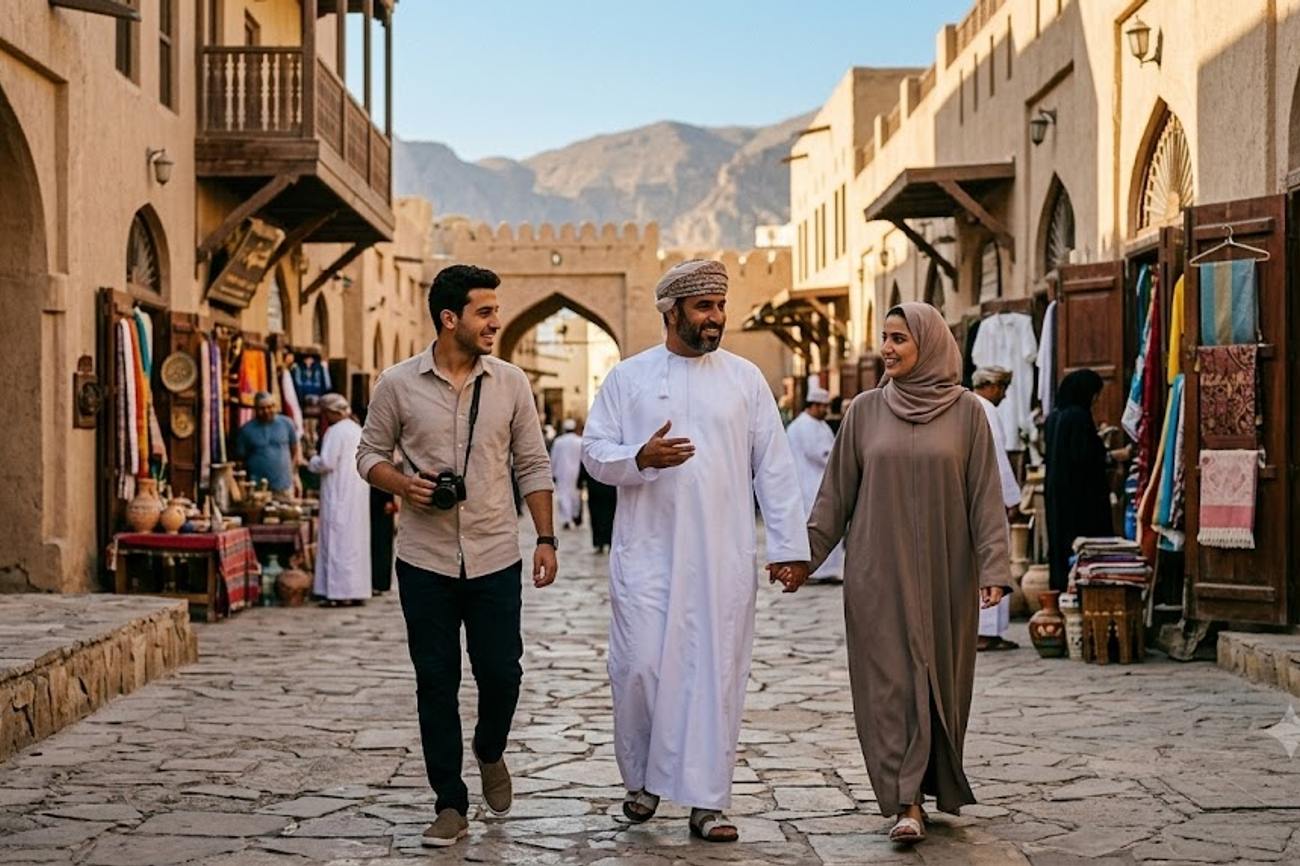
Image generated by AI
[Manama, September 12, 2026] — Oman is leading a strategic push to unify the tourism sectors of the Gulf Cooperation Council (GCC) countries, advocating for a shared regional identity based on sustainability, cultural heritage, and integrated marketing. During the 10th Meeting of GCC Ministers Responsible For Tourism held in Bahrain, Omani officials urged member states to move beyond basic coordination and implement concrete, joint programs that allow international travelers to visit multiple Gulf nations through a single, seamless itinerary.
The initiative seeks to transform the Middle East into a cohesive global destination, leveraging the collective strengths of Oman, Saudi Arabia, the United Arab Emirates, Qatar, Bahrain, and Kuwait. By synchronizing digital services and promotional strategies, the GCC aims to compete directly with established global tourism hubs. Oman's proposal emphasizes that the region's diverse assets—ranging from ancient heritage sites and rugged natural landscapes to ultra-luxury hospitality and modern infrastructure—are more effective when marketed as a unified experience rather than as isolated national products.
The Catalyst for Regional Integration
The primary driver behind this movement is the recognition that fragmented tourism strategies limit the region's ability to attract long-stay international visitors. Oman is championing a shift toward "practical projects," meaning the creation of multi-country travel packages and shared digital visitor platforms. The goal is to eliminate the friction currently associated with crossing borders and planning multi-destination trips within the Gulf.
Oman has presented a specific framework for this cooperation, focusing on six key pillars:
- Cultural Connectivity: Linking historic sites and local traditions across borders.
- Environmental Stewardship: Expanding tourism while strictly protecting natural ecosystems.
- Strategic Cooperation: Establishing shared governance for regional tourism programs.
- Digital Innovation: Modernizing visitor experiences through unified tech services.
- Enhanced Connectivity: Streamlining the logistics of multi-country journeys.
- Unified Promotion: Branding the Gulf as one singular, diverse global destination.
Regional Stakeholders and Market Contributions
The success of this integrated vision depends on the specific strengths each member state brings to the network. While Oman provides the model for sustainable, nature-based travel, other nations are scaling their offerings to complement this ecosystem.
| Country | Primary Tourism Drivers (2026) | Strategic Focus |
|---|---|---|
| Saudi Arabia | Heritage, Religious, Luxury, Adventure | Rapid expansion of entertainment and pilgrimage sites |
| UAE | Luxury Hotels, Global Events, Business | High-capacity connectivity via Dubai Airports |
| Qatar | Sports, Culture, Premium Hospitality | Leveraging international events and Qatar Tourism |
| Bahrain | Island Experiences, Traditional Culture | Heritage-led growth and regional diplomacy |
| Kuwait | Family Tourism, Shopping, Leisure | Developing modern visitor facilities and cultural hubs |
| Oman | Mountain, Nature, Sustainable Travel | Low-impact, high-value heritage journeys |
What This Means for Travelers
For the average traveler, this shift represents a transition from "single-city" trips to "regional circuits." Instead of choosing between a luxury stay in Dubai or a nature retreat in Oman, the GCC is building the infrastructure to make a combined trip the standard.
Passenger and Visitor Impact:
- Easier Itineraries: Travelers can expect more "Gulf-wide" tour packages that bundle flights, hotels, and visas across multiple GCC countries.
- Simplified Logistics: The push for "innovation" and "connectivity" suggests a move toward unified digital visas or streamlined entry requirements for tourists visiting more than one member state.
- Diverse Experiences: Visitors can now combine the high-energy urbanism of the UAE and Qatar with the quiet, sustainable mountain tourism of Oman’s Al Jabal Al Akhdar.
- Coordinated Pricing: Joint marketing efforts may lead to more competitive regional flight bundles and hotel deals for those booking multi-country stays.
The Sustainable Model: Al Jabal Al Akhdar
Oman is utilizing its own internal successes to prove the viability of this regional model. The government highlighted Al Jabal Al Akhdar as a benchmark for how nature-based tourism can scale without compromising the environment. This specific region has become a cornerstone of Oman's sustainable strategy, demonstrating a balance between luxury infrastructure and ecological preservation.
Current data for the Al Jabal Al Akhdar development includes:
- Hotel Establishments: 95 active properties.
- Total Room Inventory: Exceeding 1,060 rooms.
By presenting these figures to the Gulf Cooperation Council, Oman is arguing that high-value, low-impact tourism is the most sustainable path forward for the entire Middle East, providing a blueprint that Saudi Arabia and Kuwait can adapt for their own natural landscapes.
The Roadmap for 2026 and Beyond
The GCC is no longer satisfied with vague agreements. Oman has specifically demanded the creation of clear implementation plans with fixed timelines and measurable KPIs (Key Performance Indicators). The immediate next steps involve the coordination of marketing agencies across the six nations to create a shared global brand identity.
Saudi Arabia's aggressive growth in luxury and adventure tourism is expected to act as a primary engine for this network, drawing in massive volumes of global travelers who can then be diverted into the sustainable circuits of Oman or the cultural hubs of Bahrain and Qatar. The UAE will likely remain the primary gateway, using its world-leading aviation hubs to distribute passengers across the rest of the region.
FAQ: GCC Regional Tourism 2026
Can I visit multiple Gulf countries on one visa? While the GCC is working toward deeper integration, travelers should currently check the specific e-visa requirements for each nation. The new regional strategy aims to simplify this process, but official unified visa implementation timelines are still pending.
What is the best way to experience "sustainable tourism" in the region? Oman's Al Jabal Al Akhdar is currently the gold standard for sustainable travel in the Gulf, offering nature-focused experiences and mountain tourism that prioritize environmental protection over mass-market expansion.
How does this affect flight bookings within the Middle East? Expect an increase in multi-city flight options and regional passes. As airlines and governments coordinate, booking a "circuit" (e.g., Muscat to Doha to Dubai) should become more cost-effective than booking separate one-way tickets.
Is the Gulf becoming a budget-friendly destination? The focus remains heavily on "luxury," "premium," and "high-value" tourism. However, the diversification into adventure and nature tourism in Oman and Saudi Arabia is creating a wider range of price points for different types of travelers.
The Gulf is pivoting from a collection of competing hubs to a unified tourism superpower.
#OmanTourism2026 #GCCIntegration #AlJabalAlAkhdar #SaudiTourismGrowth #GulfTravelNetwork #SustainableTourismMiddleEast
Related Travel Guides
- UAE and Saudi Arabia Turbocharges with New Robotic and AI Integration to Boom Travel Technology to These Surprising Levels
- Canada’s Vancouver International Airport Revolutionises Passenger Travel With Powerful Digital Map Technology For Faster And Stress-Free Journeys
- Cyprus Travel Secrets Revealed As Larnaca And Paphos Airports Unlock Smarter Savings And Stress Free European Journeys
Disclaimer
This article is for informational and educational purposes only. It does not constitute legal, financial, or professional advice. While we strive to provide accurate and up-to-date information, travel policies, regulations, and conditions change rapidly. Always verify information with official sources before making travel decisions. Nomad Lawyer makes no representations about the accuracy, reliability, completeness, or suitability of the information provided. Readers should consult qualified professionals for advice specific to their circumstances. The views expressed in this article are those of the author and do not necessarily reflect the views of Nomad Lawyer.
Kunal K Choudhary
Co-Founder & Contributor
A passionate traveller and tech enthusiast. Kunal contributes to the vision and growth of Nomad Lawyer, bringing fresh perspectives and driving the community forward.
Learn more about our team →