
Oceania Cruises' Slow Travel Push: Oceania Vista 2026 World Cruise Covers 43 Countries, 101 Ports, and 81 UNESCO Sites
Oceania Cruises is expanding its longer voyage programme as its 2026 world cruise aboard Oceania Vista covers six continents, 43 countries, 101 ports, and 81 UNESCO World Heritage sites — positioning slow travel as the defining premium cruise trend of the decade.

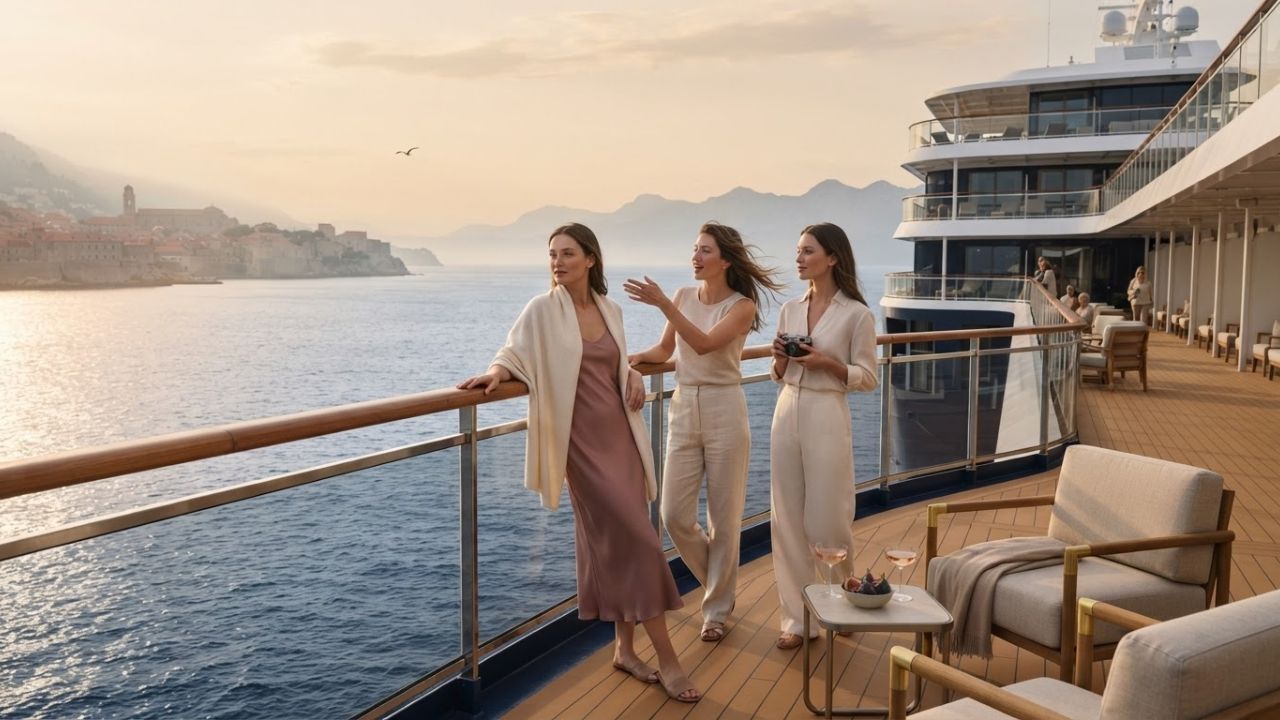
Image generated by AI
The 2026 world cruise aboard Oceania Cruises' ship Oceania Vista spans six continents, 43 countries, 101 ports of call, and 81 UNESCO World Heritage sites — a scale of global itinerary that makes it one of the most ambitious slow travel programmes available in luxury cruising today. As the industry shifts away from destination-counting toward depth of experience, Oceania Cruises is building extended voyages — including journeys lasting up to 180 days — that treat the ship as a home base rather than a vehicle for rapid transfers between airports.
Why Luxury Travellers Are Abandoning Short Itineraries for Longer Ocean Voyages
The structural shift underway in premium cruise demand is not a niche preference. Industry observers tracking luxury travel behaviour report that a growing segment of high-net-worth travellers is actively rejecting itineraries built around maximum ports in minimum time. What is replacing it is a demand for extended voyages where the quality of the shore experience — time spent in local communities, engagement with regional food traditions, access to heritage sites — outweighs the volume of destinations ticked off.
Longer cruises address this directly. When a vessel spends an overnight in port rather than departing by mid-afternoon, passengers gain access to evening cultural performances, local dining, and neighbourhood exploration that daytime-only stops fundamentally cannot deliver. For destinations like Kyoto, Istanbul, or Lisbon — cities whose character reveals itself after sunset — overnight stays are not a luxury add-on. They are the difference between a tourist transit and a genuine encounter.
| Slow Travel Feature | Traveller Benefit |
|---|---|
| Longer voyage duration | More time to explore destinations |
| Overnight port stays | Opportunity for evening cultural experiences |
| Smaller luxury ships | Access to unique and less-frequented ports |
| Regional exploration | Deeper understanding of local traditions |
| Multi-country routes | Seamless global journeys without airport transfers |
Oceania Vista's 2026 World Cruise: Six Continents, 43 Countries, 101 Ports, 81 UNESCO Sites
The Oceania Vista world cruise programme for 2026 represents the clearest illustration of how far extended luxury cruising has evolved. Six continents. 43 countries. 101 ports. 81 UNESCO World Heritage sites. These are not marketing abstractions — they define the literal geographic and cultural scope of a single continuous voyage.
The 81 UNESCO World Heritage site access points are particularly significant for culturally motivated travellers. UNESCO listings — spanning ancient cities, natural landscapes, and living heritage traditions — serve as the international benchmark for places of outstanding universal value. A cruise itinerary that incorporates 81 of them within a single voyage gives passengers a structured path through the world's most significant heritage locations without the logistical complexity of independently booking flights, accommodation, and ground transfers across dozens of countries.
The 101-port count also reflects a deliberate deployment strategy. Oceania's smaller luxury vessels can access harbours and anchorages that larger mass-market ships cannot reach — Adriatic fishing villages, Pacific island communities, Indian Ocean outposts — expanding the geographic reach of the itinerary well beyond the standard cruise circuit.
Asia's Rise as the Most Sought-After Region for Immersive Extended Cruises
Of all the regions featured in Oceania's extended voyage portfolio, Asia is generating the strongest growth in passenger interest from travellers seeking depth over speed. The range of cultural contexts available within a single Asian itinerary — Japan's historic temple cities alongside its hyper-modern urban centres, India's heritage landmarks from Mumbai to coastal Kerala, Indonesia's volcanic islands and ancient Balinese traditions, and Southeast Asia's markets, wats, and river systems — presents a combinatorial richness that short visits cannot begin to process.
Japan, in particular, benefits disproportionately from longer port stays. A morning call at Nagasaki or Beppu followed by an afternoon departure leaves passengers with a single district and a handful of photographs. An overnight stop opens access to evening festivals, ryokan dining, and the quieter experience of a Japanese city after its tourism circuits wind down.
Oceania's Asia itineraries incorporate this logic directly, pairing UNESCO-listed sites with local culinary traditions and allowing passengers extended time in communities rather than landmark queues.
Australia, New Zealand, and the South Pacific: Nature and Indigenous Culture Drive Slow Travel Demand
The South Pacific — spanning Australia's coastal regions, New Zealand's fjords, lakes, and Māori cultural sites, and the island communities of French Polynesia and surrounding Pacific nations — is the region where slow travel's logic is most self-evident. Many of these destinations are simply not accessible to speed. Fiordland's sounds require time to absorb. Remote Pacific atolls have no airport infrastructure. Indigenous cultural encounters depend on extended, respectful presence rather than an hour-long shore excursion.
Extended cruise itineraries serve this region better than any other mode of travel. A sailing between Sydney, Hobart, Milford Sound, the Bay of Islands, and Bora Bora connects Australia, New Zealand, and the South Pacific in a journey that would require multiple long-haul flights, multiple currency changes, and extensive ground logistics if attempted independently. On a longer voyage, the ship handles transit while the passenger experiences arrival.
Oceania Cruises includes Australia, New Zealand, and South Pacific destinations across its global itinerary portfolio, with growing demand reported among travellers in their late 50s and 60s who have the time, financial capacity, and cultural curiosity to make extended Pacific voyages viable.
Europe and the Mediterranean: Why Slower Pacing Unlocks the Continent's Depth
Europe remains the highest-volume region for luxury cruising, and for good reason. The density of historic cities, cultural institutions, coastal landscapes, and culinary traditions across the Mediterranean, Northern Europe, and the British Isles gives longer itineraries almost unlimited depth of programming.
Destinations across Greece, Italy, Spain, Scandinavia, and the British Isles each carry distinct seasonal rhythms. A vessel spending multiple days in Greek waters can visit Athens and Santorini, but also the quieter Cycladic islands of Folegandros or Ikaria — places that reward the traveller who arrives by small ship rather than budget airline. Similarly, Northern European itineraries that include Norwegian fjords, Estonian medieval towns, and Scottish sea lochs deliver an experience of the continent that the conventional city-break circuit entirely misses.
| Region | Key Destinations | Travel Experience |
|---|---|---|
| Asia | Japan, India, Southeast Asia | Heritage, cuisine, ancient traditions |
| Australia and New Zealand | Sydney, coastal regions, Pacific islands | Nature, indigenous culture, adventure |
| Europe | Mediterranean, Northern Europe | History, architecture and art |
| Middle East | Arabian Peninsula | Modern cities and ancient heritage |
| South Pacific | French Polynesia and island nations | Remote landscapes and island culture |
| Americas | Caribbean, South America, North America | Coastal cities and natural wonders |
What Is Driving the Shift: Remote Work, Ageing Travellers, and Wellness Priorities
The commercial logic behind longer voyage growth is supported by identifiable demographic and behavioural trends that are reshaping who books extended cruises and why.
| Travel Trend | Impact on Cruise Demand |
|---|---|
| Search for authentic experiences | More interest in local culture over sightseeing |
| Ageing luxury traveller market | Greater demand for longer, more comfortable holidays |
| Remote work flexibility | More people able to travel for extended periods |
| Wellness and relaxation focus | Preference for slower, less pressured itineraries |
| Experience-based tourism | Higher demand for meaningful, memorable journeys |
The remote work dimension is particularly new. A meaningful segment of Oceania's passenger base under 60 now travels with the ability to work aboard ship during sea days, transforming what was once an exclusively retirement-market product into something accessible to professionals in their 40s and 50s. This expands the viable audience for world cruise programmes significantly.
Why This Matters for Travellers Planning International Holidays in 2026
For the traveller currently weighing international holiday options, Oceania's extended voyage model raises a direct question: how much of your annual travel budget produces genuinely lasting experience versus logistical fatigue?
A 14-day fly-stay-fly holiday to Southeast Asia involves two long-haul flights, multiple hotel check-ins, and constant itinerary management. An extended cruise through the same region eliminates airport transfers, accommodation logistics, and transport booking entirely — replacing them with a single embarkation and a consistent onboard home base while the itinerary unfolds.
The 180-day world cruise format takes this further still. For travellers with the flexibility to take extended leave — or who have retired — a six-month voyage covering six continents and 43 countries delivers a scope of experience that no independently arranged trip could replicate within a comparable timeframe and logistical effort.
From a planning standpoint, the overnight port stay model also provides a meaningful advantage. For any destination where the cultural highlight happens after dark — Havana's live music, Tokyo's night markets, Dubrovnik's illuminated old city — an overnight call is not a scheduling option. It is a prerequisite for genuinely experiencing the place.
FAQ: Oceania Cruises Slow Travel and World Cruise Programmes 2026
What does the 2026 Oceania Vista world cruise include? The 2026 world cruise aboard Oceania Vista covers six continents, 43 countries, 101 ports of call, and 81 UNESCO World Heritage sites in a single continuous voyage.
How long can an Oceania world cruise last? Oceania Cruises offers extended world cruise experiences with some itineraries reaching 180-day global journeys covering multiple continents and dozens of countries.
Why are overnight port stays important on longer cruises? Overnight stays allow passengers to experience destinations beyond daytime sightseeing, including evening dining, cultural performances, local nightlife, and neighbourhood exploration — experiences that afternoon departures cannot provide.
Which regions does Oceania Cruises serve on its extended voyages? Oceania Cruises' longer itineraries cover Asia (including Japan, India, Indonesia, and Southeast Asia), Europe, Australia, New Zealand, the South Pacific, the Middle East, Africa, and the Americas.
Are longer cruises suitable for first-time cruise travellers? Yes. Longer cruises consolidate accommodation, inter-destination transport, and curated activities into a single booking — reducing the planning complexity that independent long-distance travel requires and making them accessible to first-time cruise passengers.
Related Travel Guides
Disclaimer
This article is for informational and educational purposes only. It does not constitute legal, financial, or professional advice. While we strive to provide accurate and up-to-date information, travel policies, regulations, and conditions change rapidly. Always verify information with official sources before making travel decisions. Nomad Lawyer makes no representations about the accuracy, reliability, completeness, or suitability of the information provided. Readers should consult qualified professionals for advice specific to their circumstances. The views expressed in this article are those of the author and do not necessarily reflect the views of Nomad Lawyer.
Raushan Kumar
Founder & Lead Developer
Full-stack developer with 11+ years of experience and a passionate traveller. Raushan built Nomad Lawyer from the ground up with a vision to create the best travel and law experience on the web.
Learn more about our team →