
Oakland Airport Sees Southwest Airlines Flight Cuts After City Drops Long-Running Labor Lawsuit in 2026
Despite Oakland dismissing a yearslong lawsuit against Southwest Airlines over paid sick leave, flight schedules show a continued reduction in service and rising fares for passengers.

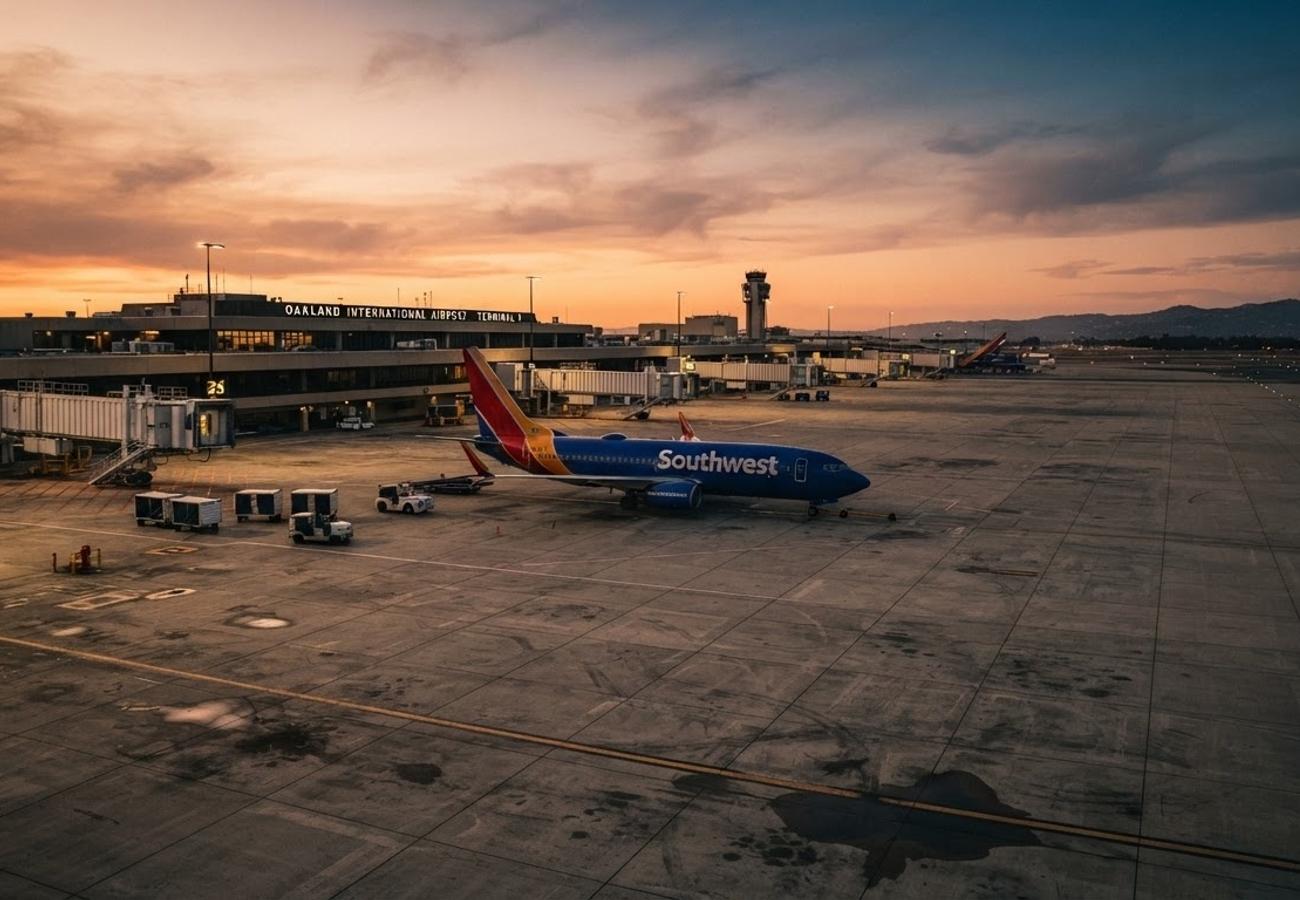
Image generated by AI
Oakland’s strategic decision to dismiss a protracted legal battle with Southwest Airlines has failed to yield increased air service. Instead, flight tracking data and updated schedules reveal a steady contraction of capacity at the airport.
The Legal Settlement and Service Decline
The City of Oakland recently dismissed a lawsuit against Southwest Airlines that had spanned approximately eight years. The litigation centered on allegations that the carrier failed to comply with local paid sick leave mandates for ground personnel stationed at the airport.
While city officials framed the dismissal as a move to stabilize relations with its most critical tenant, there has been no public record of new investments or service commitments from the airline. Our analysis of recent schedules indicates that Southwest, which dominates Oakland’s domestic traffic, is continuing to trim its presence.
Flight and Airport Impact Breakdown
The reduction in service is most evident in frequency and availability across core West Coast routes.
- Route Frequency: Nonstop flights that previously operated multiple times daily have been reduced to "thinner" offerings with significant gaps between departures.
- Peak Time Disruptions: Travelers report a scarcity of late-evening and weekend flights, particularly on Saturdays and off-peak days.
- Regional Shifts: A notable decline in overall passenger volumes at Oakland is evident when compared to historical data.
- Network Reallocation: Flight tracking systems suggest Southwest is reallocating aircraft to other markets to manage aircraft delivery delays and defend competitive positions elsewhere.
Passenger Rights and Advisory
For the affected passenger, the shrinking schedule at Oakland International (OAK) creates a "capacity trap" where limited competition leads to higher fares. Our analysis of current Bay Area trends suggests the following actions for travelers:
1. Compare Tri-Airport Pricing Because Southwest has reduced its frequency, last-minute fares from OAK are now frequently higher than similar routes from San Francisco International (SFO) or San Jose (SJC). We advise passengers to check all three hubs before booking.
2. Rebooking and Delay Rights If a flight is canceled due to these ongoing network "trimmings," passengers are entitled to:
- Rebooking: Immediate placement on the next available flight to the destination at no extra cost.
- Refunds: Under US DOT guidelines, if a passenger chooses not to travel due to a significant schedule change or cancellation, they are entitled to a full refund to the original form of payment, regardless of the ticket type.
3. Managing Ground Logistics As OAK service thins, passengers are increasingly absorbing the cost of tolls and parking at SFO or SJC. For those opting for these alternatives, we suggest calculating the "total trip cost" (ticket + transit + parking) to determine if the OAK premium is still justifiable.
Industry Analyst View
Oakland’s dependence on a single dominant carrier has left the airport uniquely exposed. When a carrier like Southwest reduces capacity in a market where it holds a near-monopoly, the ripple effect extends beyond the terminal.
The economic impact includes reduced hours for ground handlers, maintenance providers, and airport concessionaires. Furthermore, the lack of an influx of other low-cost carriers (LCCs) suggests that the "stable regulatory climate" the city hoped to achieve by dropping the lawsuit has not yet attracted new competitors.
While terminal renovations continue, the fundamental challenge remains: aircraft are being moved to hubs with higher yield potential or less political volatility.
The Bay Area aviation map is shifting, leaving Oakland passengers to choose between convenience and cost.
Related Travel Guides
Disclaimer
This article is for informational and educational purposes only. It does not constitute legal, financial, or professional advice. While we strive to provide accurate and up-to-date information, travel policies, regulations, and conditions change rapidly. Always verify information with official sources before making travel decisions. Nomad Lawyer makes no representations about the accuracy, reliability, completeness, or suitability of the information provided. Readers should consult qualified professionals for advice specific to their circumstances. The views expressed in this article are those of the author and do not necessarily reflect the views of Nomad Lawyer.
Preeti Gunjan
Contributor & Community Manager
A passionate traveller and community builder. Preeti helps grow the Nomad Lawyer community, fostering engagement and bringing the reader experience to life.
Learn more about our team →