
Norway Reveals a Powerful New Way to Explore Europe by Scenic Train
Norway Reveals a Powerful New Way to Explore Europe by Scenic Train

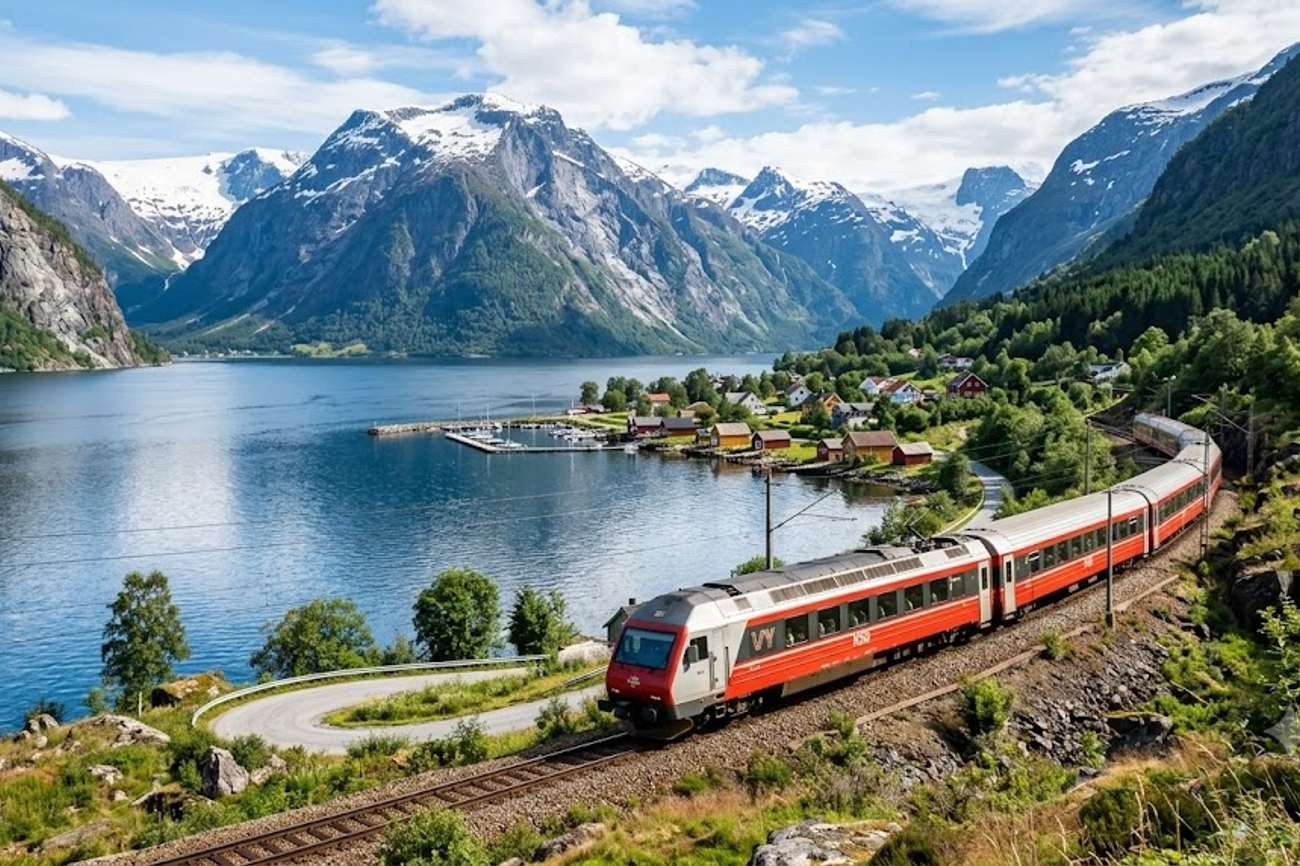
Image generated by AI
[Zurich, October 2025] — European rail operators are expanding high-scenery corridors across Norway, Switzerland, Austria, Scotland, and Portugal, transforming traditional transit routes into primary tourism destinations. These networks are increasingly marketed as "holiday hubs" rather than simple transport links, integrating UNESCO World Heritage sites and extreme geographical landmarks into scheduled passenger itineraries.
The shift toward rail-centric tourism is led by major national carriers and regional bodies, including Switzerland Tourism and Visit Portugal, who are now bundling multi-leg journeys to reduce reliance on short-haul flights. This strategic pivot focuses on "slow travel" infrastructure, where the journey—characterized by high-altitude plateaus, glacial passes, and river valleys—serves as the central attraction of the itinerary.
The Engineering of Scenic Transit
The current surge in rail tourism is triggered by a global shift toward sustainable travel and a renewed interest in "landmark engineering." In Austria, the Semmering Railway serves as a primary example, where the infrastructure itself is the draw. Built between 1848 and 1854, this 41-kilometer stretch between Gloggnitz and Mürzzuschlag utilizes 14 tunnels, 16 viaducts, 118 stone bridges, and 11 iron bridges to reach a peak elevation of 895 meters. Its designation as a UNESCO World Heritage site underscores a trend where the technical difficulty of the route's construction adds value to the passenger experience.
Similarly, Norway has optimized its network to provide "screen-like" views of the fjords. The Bergen Railway traverses the Hardangervidda, Europe's highest mountain plateau, creating a high-altitude corridor between Oslo and Bergen. This serves as a feeder for the Flåm Railway, a 20-kilometer branch that descends 867 meters from Myrdal to the Aurlandsfjord. The Flåm route is noted for its 20 tunnels, one-third of which were excavated by hand, emphasizing the raw, industrial effort required to penetrate the Norwegian coastline.
Regional Impact and Route Specifics
The transition to rail-led vacations is affecting specific markets and passenger flows across five key European regions:
| Region | Primary Route | Key Geographic/Technical Feature | Distance/Metric |
|---|---|---|---|
| Switzerland | Grand Train Tour | 11 lakes; 5 UNESCO World Heritage Sites | 1,280 km total |
| Switzerland | Bernina Express | 196 bridges; 55 tunnels; Bernina Pass | Chur/St Moritz to Tirano |
| Norway | Flåm Railway | 20 tunnels; 867m descent to Aurlandsfjord | 20 km |
| Norway | Rauma Railway | Kylling Bridge; Trollveggen rock face | 1h 40m (Dombås to Åndalsnes) |
| Scotland | West Highland Line | Rannoch Moor; Glenfinnan Viaduct (21 arches) | 164 miles (Glasgow to Mallaig) |
| Portugal | Douro Line | Terraced vineyards; 26 tunnels; 30 bridges | Porto to Barca d’Alva |
| Austria | Semmering Railway | 118 stone bridges; 11 iron bridges | 41 km |
In the United Kingdom, the West Highland Line is redefining access to the remote Highlands. The route reaches Corrour station at 1,340 feet—a location with no public road access—making the railway the sole viable entry point for hikers and nature tourists. This creates a monopoly on access that elevates the rail line from a convenience to a necessity for regional exploration.
What This Means for Travelers
For passengers booking travel in 2025 and 2026, these developments mean that the "train" is no longer a means to get to a city, but the destination itself. This requires a fundamental change in how itineraries are planned.
1. Shift in Booking Logic: Travelers should now book "linked journeys" rather than point-to-point tickets. For example, the Swiss Grand Train Tour allows passengers to build a full holiday around eight different sections, removing the need for hotel-hopping in a single city.
2. Integration of "Last-Mile" Tourism: Many of these lines are now designed to integrate with other modes of transport. The Douro line in Portugal and the Flåm Railway in Norway are specifically timed to connect with river boats and fjord cruises, meaning passengers must coordinate rail arrivals with maritime departures.
3. Sensitivity to Maintenance Windows: Because these routes rely on extreme engineering (tunnels and viaducts), maintenance can significantly alter the experience. Travelers must check specific train numbers rather than just route names. A critical example is the Bernina Express: trains 951 and 952 are scheduled to divert through the Vereina Tunnel from October 29 to November 13, 2026, which will bypass a significant portion of the northern scenic views.
Infrastructure Outlook and 2026 Timelines
The trend toward "experience-based" rail is expected to accelerate through 2026. Operators are focusing on the "intermodal" experience—linking rail to walking trails and water transport. In Scotland, the emphasis is on daylight travel to maximize the visibility of Rannoch Moor and the Glenfinnan Viaduct, while in Portugal, the focus is on the cultural intersection of the railway and the wine industry in Pinhão.
The upcoming 2026 maintenance cycles in Switzerland suggest a period of infrastructure hardening to ensure these high-traffic scenic routes can handle increased passenger loads. The use of the Vereina Tunnel as a bypass for the Bernina Express indicates a strategy of maintaining service continuity even during heavy engineering works, ensuring that the "holiday on wheels" model remains uninterrupted.
FAQ: European Scenic Rail 2026
Which Swiss train route is best for alpine views? The Bernina Express is the premier choice, crossing 196 bridges and 55 tunnels from Chur or St Moritz to Tirano, Italy. It is specifically noted for the transition from glaciers to Italian landscapes.
How do I reach the most remote parts of the Scottish Highlands? The West Highland Line is the primary artery. It provides the only access to Corrour station (1,340 feet), as there are no public roads leading to this location.
Is the Flåm Railway in Norway a long journey? No. It is a short, 20-kilometer branch line, but it is highly intense, descending 867 meters through 20 tunnels to reach the Aurlandsfjord.
What should I check before booking the Bernina Express in late 2026? Verify your train number. Trains 951 and 952 will use the Vereina Tunnel between October 29 and November 13, 2026, which changes the available scenery in the northern section.
The era of the transit-only ticket is ending; the journey is now the destination.
#BerninaExpress2026 #WestHighlandLine #FlåmRailway #SemmeringRailway #DouroValleyRail #EuropeanRailTourism
Related Travel Guides
- Chile Moves Beyond Fiestas Patrias As Travel Pressure Resets Around Santiago And Viña del Mar
- Cardiff to Bridgend Railway Line Closure Announced as Network Rail Begins Major Improvements
- UAE Fujairah Abu Dhabi Rail Cargo Corridor Creates New Trade Route Connecting Maritime Gateway With Industrial Heartland
Disclaimer
This article is for informational and educational purposes only. It does not constitute legal, financial, or professional advice. While we strive to provide accurate and up-to-date information, travel policies, regulations, and conditions change rapidly. Always verify information with official sources before making travel decisions. Nomad Lawyer makes no representations about the accuracy, reliability, completeness, or suitability of the information provided. Readers should consult qualified professionals for advice specific to their circumstances. The views expressed in this article are those of the author and do not necessarily reflect the views of Nomad Lawyer.
Preeti Gunjan
Contributor & Community Manager
A passionate traveller and community builder. Preeti helps grow the Nomad Lawyer community, fostering engagement and bringing the reader experience to life.
Learn more about our team →