
Noida International Airport Expands Cargo Capacity with AISATS Freighter Partnerships in 2026
Noida International Airport is transforming North India's logistics landscape as Air India SATS secures major freighter agreements with SpiceXpress and Totsol Aviation to boost air freight.

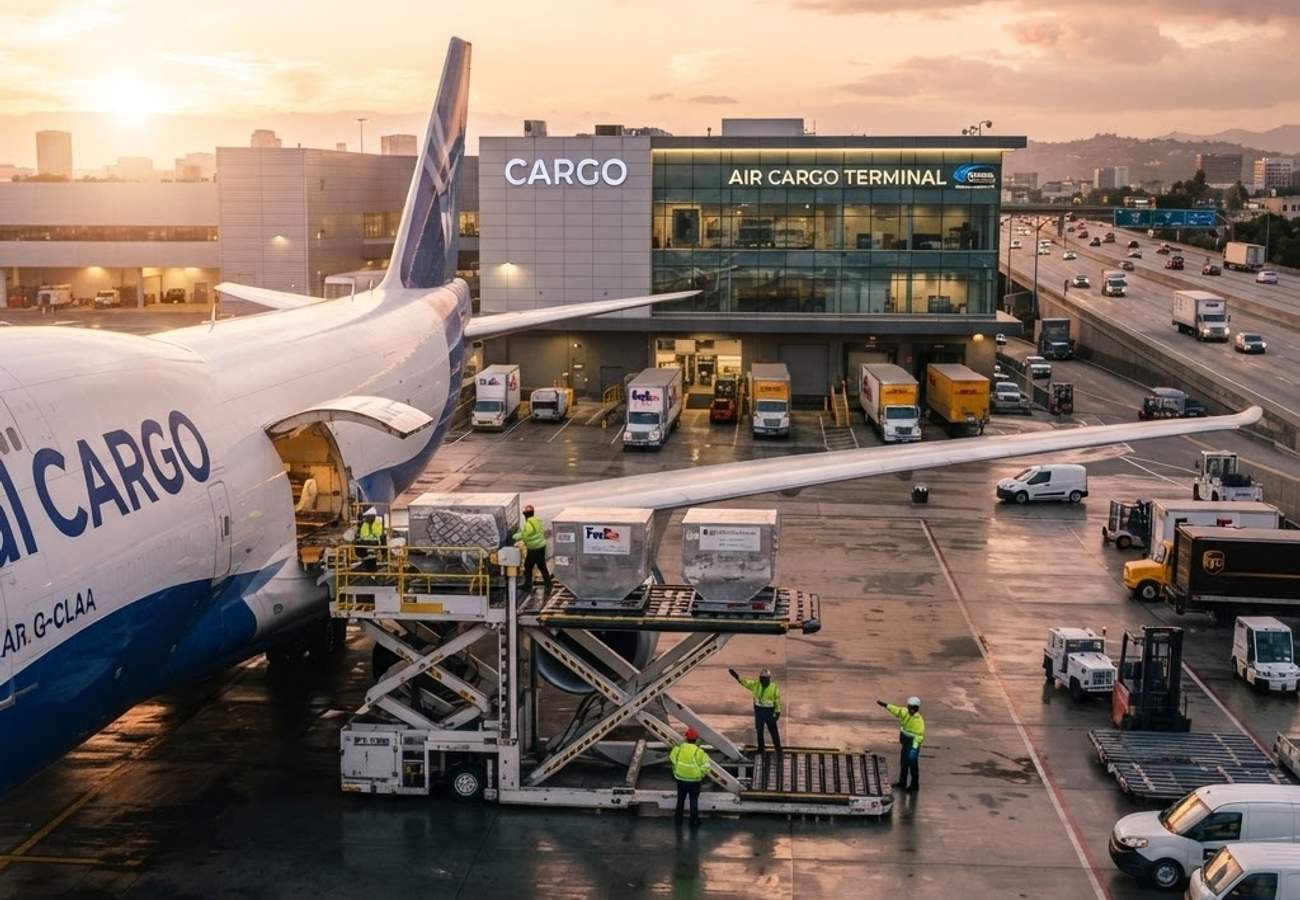
Image generated by AI
[Jewar, August 24, 2026] — Noida International Airport is rapidly positioning itself as a dominant force in India’s air freight sector as Air India SATS (AISATS) aggressively expands its cargo operations through strategic freighter partnerships and massive multimodal infrastructure investments. This shift marks a pivot toward dedicated cargo aircraft to ensure North India has a high-capacity alternative to existing aviation hubs.
The development is centered on the Jewar greenfield project, where AISATS is implementing a business model that prioritizes specialized freighter traffic over the traditional reliance on passenger aircraft bellyhold capacity. By securing dedicated cargo agreements, the airport is preparing to handle high-volume, time-sensitive shipments for the National Capital Region (NCR).
AISATS Secures Major Freighter Agreements with SpiceXpress and Totsol Aviation
Recent industry data reveals that Air India SATS Airport Services Private Limited has finalized separate operational agreements with Totsol Aviation and SpiceXpress Logistics. These partnerships are designed to launch dedicated freighter services operating out of the Multi Modal Cargo Hub at Noida International Airport.
The collaboration with SpiceXpress is particularly significant, focusing on the specialized transport of livestock. According to operational projections, the carrier intends to execute approximately 200 freighter flights during its first full year of service, spanning from September 2026 to August 2027.
These operations will be headquartered at the AISATS-managed cargo terminal. This strategy follows a previous agreement with Afcom Holdings, which is aimed at channeling international all-cargo flights through the Jewar facility. By diversifying its partner base, AISATS is ensuring that the airport becomes a primary anchor for freighter traffic in the region.
Technical Specifications of the Integrated Cargo Terminal
The logistics infrastructure at Jewar is not a standard airport warehouse but a comprehensive Multi Modal Cargo Hub. This ecosystem integrates an Integrated Cargo Terminal with a sprawling Integrated Warehousing and Logistics Zone to minimize the time goods spend on the ground.
The facility is equipped with several high-efficiency features:
- Warehouse Capacity: Approximately 22,000 square meters of dedicated storage space.
- Airside Infrastructure: Two dedicated parking bays specifically for freighter aircraft.
- Handling Technology: Roller-deck positions and the COSYS+ digital system for real-time shipment tracking.
- Logistics Access: Multiple truck docks with direct landside connectivity via the Yamuna Expressway.
This layout allows the airport to handle a diverse range of commodities, including express parcels, temperature-controlled pharmaceuticals, and specialized livestock shipments, all operating on a 24/7 basis. By clustering warehousing and airside handling in one location, the hub effectively eliminates the need for long-distance trucking to off-site warehouses, thereby reducing overall dwell times.
Multimodal Connectivity via CONCOR Air and Rail Links
To expand its reach beyond the immediate airport perimeter, AISATS has entered into a Memorandum of Understanding (MoU) with CONCOR Air Limited, a subsidiary of the Container Corporation of India. This agreement establishes a streamlined corridor for customs-cleared transshipment cargo moving from the Inland Container Depot (ICD) at Dadri directly to the Noida International Airport terminal.
This rail-linked integration allows the airport to tap into the industrial heartlands of Haryana and Uttar Pradesh. When combined with the direct access provided by the Yamuna Expressway, the airport creates a seamless transition between rail, road, and air.
This multimodal approach is critical for the movement of high-volume goods, including:
- Automotive components and textiles.
- E-commerce shipments and express logistics.
- Pharmaceutical products requiring cold-chain integrity.
- Large-scale livestock exports and imports.
Operational Milestones Ahead of Commercial Passenger Launch
While the general public expects the airport to open for commercial passenger flights in mid-2026, the cargo division has already entered the operational phase. Industry reports confirm that AISATS successfully processed the first domestic freighter operation at the Multi Modal Cargo Hub earlier this year.
This inaugural flight served as a critical stress test for the facility's digital systems, airside handling protocols, and truck flow management. By validating these processes before the passenger terminal opens, the airport ensures that its cargo operations are fully mature upon the launch of scheduled passenger services.
Once passenger flights commence in mid-2026, the airport will benefit from a hybrid capacity model. Shippers will be able to utilize both dedicated freighter aircraft and the bellyhold capacity of widebody passenger jets, providing greater frequency and flexibility on international routes.
Strategic Positioning as North India’s Secondary Cargo Gateway
The overarching goal for Noida International Airport is to serve as a complementary gateway to Delhi’s established aviation hubs. Rather than competing directly for all traffic, the Jewar facility is positioning itself to specialize in niche, high-value cargo segments.
AISATS is leveraging its extensive experience in ground handling across other Indian airports to optimize this new hub. The proximity to major manufacturing clusters in North India, combined with facilities specifically designed for livestock and temperature-sensitive goods, gives Noida a competitive edge.
As more agreements with logistics firms and inland container operators are finalized, the airport is expected to capture a significant portion of the region's freight flow. The success of this venture will depend on the speed at which scheduled freighter networks expand and the efficiency of the rail-to-air corridors feeding the hub.
The evolution of Jewar into a logistics powerhouse signals a new era for Indian trade, shifting the center of gravity for air freight in the National Capital Region.
Related Travel Guides
Disclaimer
This article is for informational and educational purposes only. It does not constitute legal, financial, or professional advice. While we strive to provide accurate and up-to-date information, travel policies, regulations, and conditions change rapidly. Always verify information with official sources before making travel decisions. Nomad Lawyer makes no representations about the accuracy, reliability, completeness, or suitability of the information provided. Readers should consult qualified professionals for advice specific to their circumstances. The views expressed in this article are those of the author and do not necessarily reflect the views of Nomad Lawyer.
Preeti Gunjan
Contributor & Community Manager
A passionate traveller and community builder. Preeti helps grow the Nomad Lawyer community, fostering engagement and bringing the reader experience to life.
Learn more about our team →