
South Korea Casino Regulation Changes Threaten Tourism Investment Amid Competition from Japan and Singapore 2026
New proposed amendments to South Korea's Tourism Promotion Act regarding foreigner-only casinos risk deterring international investment as Japan, Singapore, and the Philippines expand their integrated resort capacities.

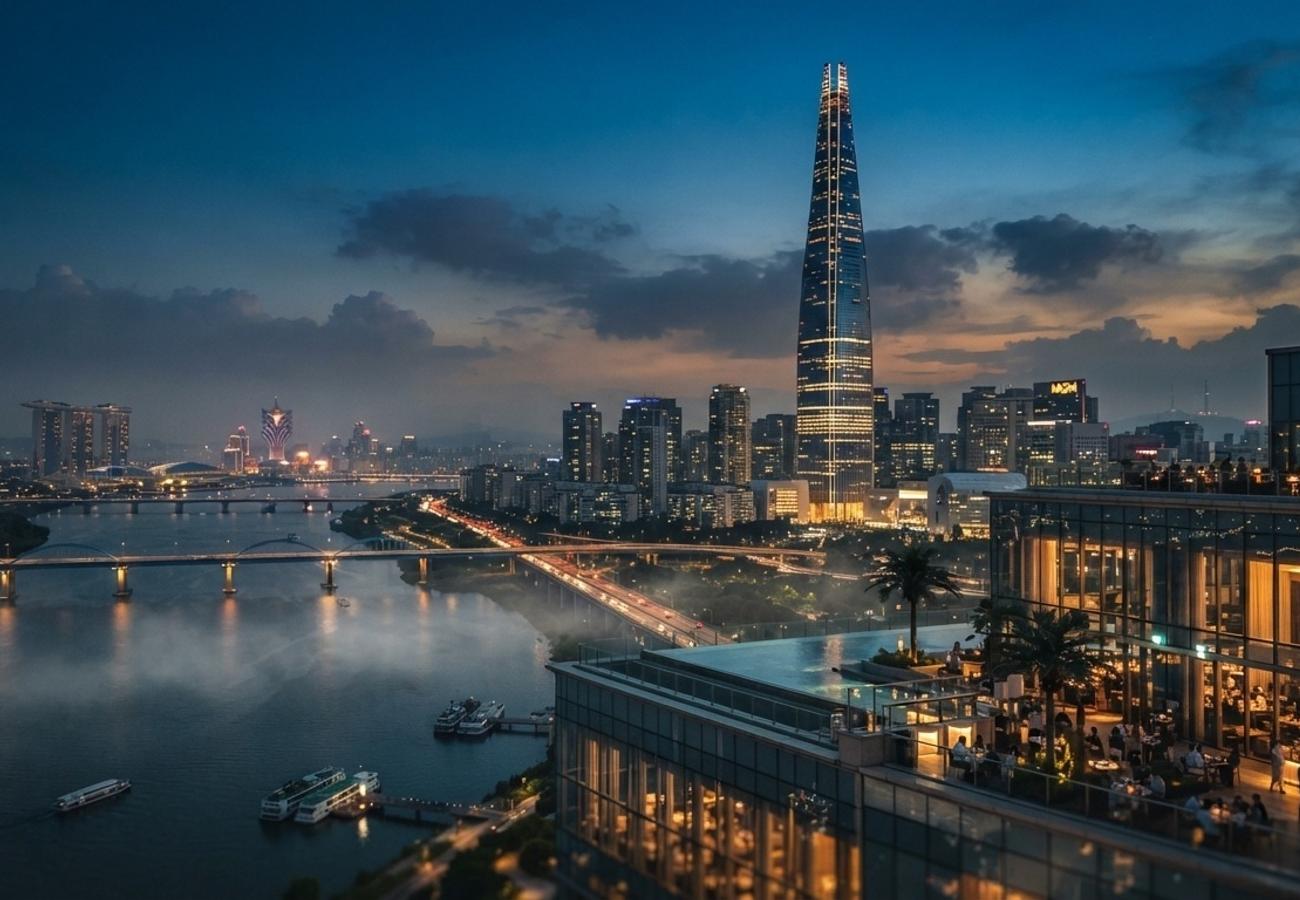
Image generated by AI
A coalition of 12 major tourism organizations warns that proposed amendments to South Korea's foreigner-only casino regulations could trigger a flight of international capital toward competing Asian hubs.
The dispute centers on planned changes to the Tourism Promotion Act, which industry leaders argue will undermine the financial viability of integrated resorts and weaken South Korea's position against regional rivals.
Regulatory Shift and Industry Pushback
The South Korean government is seeking to modernize its regulatory framework for foreigner-only casinos. However, the industry argues that the proposed measures ignore the high capital requirements of integrated resorts, which often necessitate investments reaching hundreds of billions or trillions of Korean won.
A coalition representing casinos, hotels, and travel agencies has urged a reconsideration of these rules, citing a potential decline in the country's ability to attract high-spending international visitors.
Breakdown of Proposed Changes and Industry Risks
| Issue Area | Proposed Government Change | Industry Concern | Tourism Impact |
|---|---|---|---|
| Tourism Fund Levy | Increase max contribution from 10% to 15% of gross gaming revenue (GGR) | Levy is based on revenue, not profit; payments rise even during financial downturns | Reduced funds for resort upgrades and marketing |
| Licensing Cycle | Replace long-term approvals with mandatory reviews every 5 years | Short cycles create instability for long-term infrastructure projects | Reduced attractiveness compared to Singapore and Japan |
| Ownership Control | Government approval required for major shareholder changes | Additional bureaucracy slows corporate restructuring and investment | Hinders international partnerships and expansion |
| Oversight Powers | Stronger government review of all casino operations | Predictability is lost for international investors | Potential stall in integrated resort development |
Regional Competitive Analysis
Our analysis indicates that South Korea is uniquely vulnerable due to its "foreigner-only" model. Unlike markets with domestic gaming, South Korean operators rely entirely on international arrivals, making them hypersensitive to regulatory instability and regional shifts.
The Asian Integrated Resort Landscape
- Singapore: The Marina Bay Sands and Resorts World Sentosa models have set the global standard for combining luxury hospitality, business tourism, and gaming.
- Philippines: The expansion of Entertainment City in Manila offers a flexible investment environment that attracts aggressive international gaming capital.
- Japan: The anticipated opening of MGM Osaka around 2030 is expected to divert significant Japanese traveler traffic away from South Korean destinations.
- Macau: Remains the global benchmark for gaming infrastructure and international visitor appeal.
Geographic Impact Assessment
The potential chilling effect on investment is expected to manifest across four primary hubs:
- Seoul: Risk to urban entertainment competitiveness and luxury hospitality investments.
- Incheon: Direct impact on the expansion of the Paradise City integrated resort and airport-linked tourism.
- Busan: Increased competition for international convention and entertainment visitors.
- Jeju Island: High exposure due to a heavy reliance on regional travel patterns and multiple foreigner-only casinos.
Passenger Rights & Advisory
For the international traveler and investor, these regulatory shifts may result in a visible decline in service quality or a slowdown in the development of new luxury amenities.
For the affected traveler, this means:
- Service Disruptions: If operators face profitability pressure from the 15% GGR levy, maintenance and luxury upgrades at major resorts may be deferred.
- Investment Volatility: For those holding interests in South Korean hospitality, the shift to a five-year license renewal system introduces a new layer of sovereign risk.
- Alternative Destinations: Our analysis suggests that luxury travelers may increasingly pivot toward the Philippines or Singapore if South Korean integrated resorts fail to modernize their offerings due to capital constraints.
Industry Analyst View
The South Korean government is attempting to balance transparency and funding with market competitiveness. However, implementing a revenue-based levy (GGR) rather than a profit-based one is a regressive move that ignores the operational realities of the post-pandemic recovery.
By tightening ownership approvals and shortening license windows, Seoul is inadvertently signaling a less predictable business environment. In the high-stakes world of integrated resorts, predictability is the primary currency. If the government does not calibrate these rules, the "flight to quality" will likely lead investors toward the more stable frameworks found in Singapore or the emerging market in Japan.
The balance between regulatory oversight and economic competitiveness will determine if South Korea remains a top-tier Asian destination or becomes a secondary market.
Related Travel Guides
Disclaimer
This article is for informational and educational purposes only. It does not constitute legal, financial, or professional advice. While we strive to provide accurate and up-to-date information, travel policies, regulations, and conditions change rapidly. Always verify information with official sources before making travel decisions. Nomad Lawyer makes no representations about the accuracy, reliability, completeness, or suitability of the information provided. Readers should consult qualified professionals for advice specific to their circumstances. The views expressed in this article are those of the author and do not necessarily reflect the views of Nomad Lawyer.
Preeti Gunjan
Contributor & Community Manager
A passionate traveller and community builder. Preeti helps grow the Nomad Lawyer community, fostering engagement and bringing the reader experience to life.
Learn more about our team →