
Niagara Travel Surges as Ball’s Falls Reawakening Blends Culture, Nature and Heritage
Niagara Travel Surges as Ball’s Falls Reawakening Blends Culture, Nature and Heritage

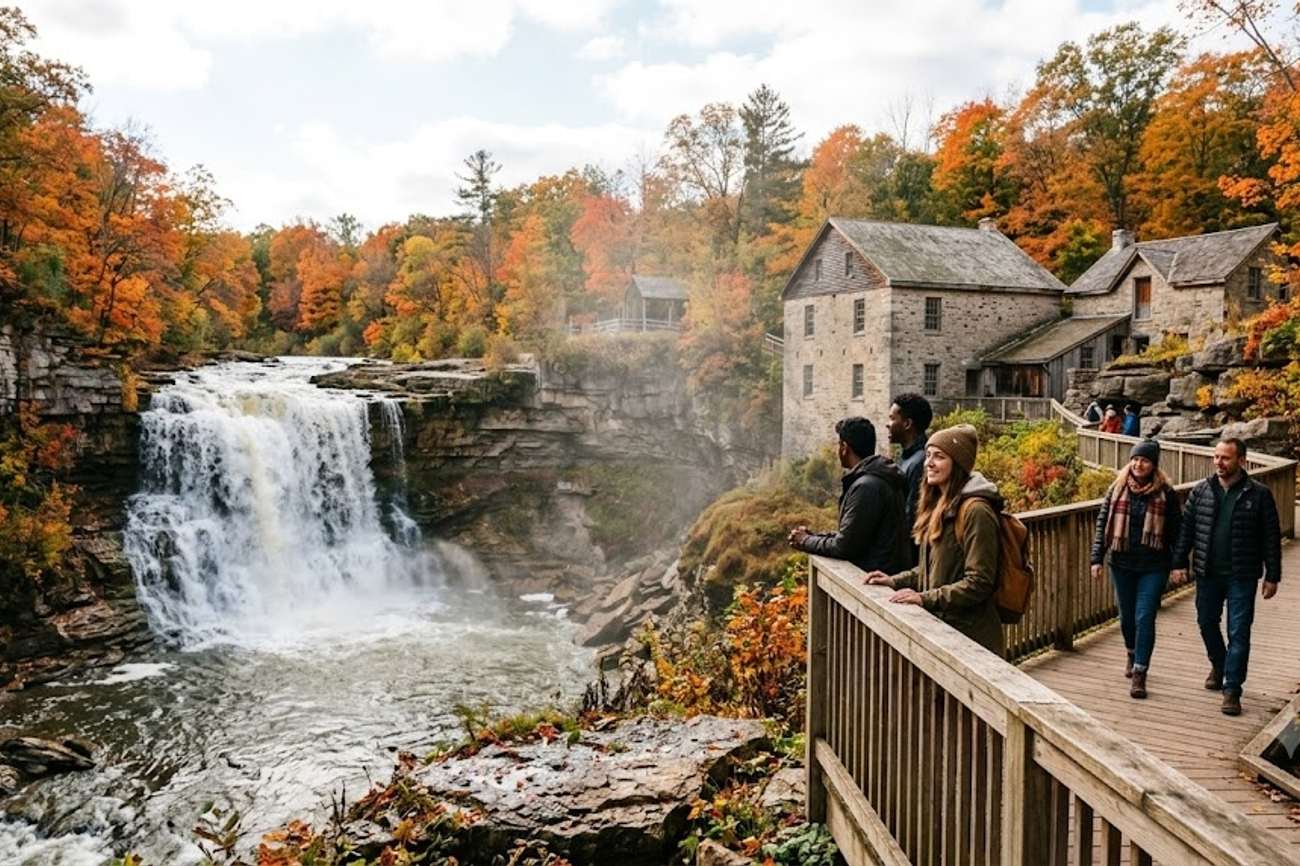
Image generated by AI
Niagara region visitation patterns have shifted from a heavy reliance on high-density attraction hubs toward decentralized, heritage-based excursions, with the Niagara Escarpment seeing a marked increase in "slow travel" engagement. This pivot is exemplified by the emergence of immersive cultural programming at the Ball’s Falls Conservation Area, specifically the "Reawakening: Stories by the Fire" event scheduled for September 26, 2026. While traditional tourism in the region historically peaked around the physical spectacle of the falls and the commercial output of wine country, current data suggests a migration toward "meaningful journeys" that prioritize Indigenous knowledge and environmental stewardship over passive sightseeing.
The Cultural Pivot in Numbers: Ball's Falls 2026
The operational shift at Ball’s Falls, managed by the Niagara Peninsula Conservation Authority (NPCA), represents a strategic move to monetize and preserve cultural heritage through experiential tourism. The "Reawakening: Stories by the Fire" event, taking place from 5:30 p.m. to 8 p.m. on September 26, 2026, is not a standalone attraction but a data point in a larger trend of "Sonic Tourism" and Indigenous-led storytelling.
The event utilizes the Carolinian Forest and Twenty Mile Creek as a living classroom. By integrating the "Sonic Trail" experience—which blends forest sounds with Indigenous voices—the NPCA is targeting a demographic of travelers who value auditory and emotional engagement. The 2026 roster of cultural contributors includes Elder Dave Labbé, Anishinaabee singer and dancer Joe Shawana, Tuscarora singer Quinna Hamby, Grandmother Jackie Labonte, vocalist Nicole Joy-Fraser, and Huron-Wendat composer and violinist Geneviève Gros-Louis. This concentration of high-level Indigenous knowledge keepers indicates a shift toward authentic, non-commercialized cultural exchange, moving away from the "performance-based" tourism seen in previous decades.
Comparative Context: Heritage vs. Mass Tourism
Historically, the Niagara tourism economy was a duopoly of Niagara Falls (spectacle) and Niagara Wine Country (luxury/culinary). However, according to data trends tracked by the World Tourism Organization (UNWTO), there is a global surge in Indigenous tourism as travelers seek authentic connections to ancestral lands. Ball's Falls is positioning itself as the regional leader in this niche by leveraging its status within the Niagara Escarpment, a UNESCO World Biosphere Reserve.
The following table compares the traditional Niagara tourism model against the emerging experiential model represented by the Ball's Falls reawakening.
| Metric | Traditional Niagara Model | Experiential Heritage Model (Ball's Falls) |
|---|---|---|
| Primary Driver | Visual Spectacle / Consumption | Cultural Education / Reflection |
| Visitor Pace | High-velocity (multiple sites/day) | Slow-travel (single-site immersion) |
| Key Assets | Commercial Infrastructure / Vineyards | Carolinian Forest / Indigenous Knowledge |
| Engagement Type | Passive Observation | Active Participation (Community Circles) |
| Environmental Focus | Managed Landscapes | Biosphere Conservation (UNESCO) |
| Timing Peak | Summer Solstice / High Season | Seasonal/Event-driven (e.g., Sept 26) |
This transition is mirrored in broader North American patterns. As reported by Statista, the demand for sustainable and community-based tourism has outpaced traditional luxury travel growth in several Canadian provinces. The shift from "sightseeing" to "storytelling" allows destinations like Lincoln, Ontario, to capture a higher-value traveler—one who stays longer and spends more on local, authentic experiences than the average day-tripper visiting the falls.
What This Means for Travelers
For the modern nomad or the legal professional seeking a retreat, the data suggests that the "center of gravity" in Niagara is shifting. If you are planning a visit to Ontario in Q3 or Q4, the following actionable strategies are recommended:
- Shift Your Booking Window: Traditional Niagara attractions are crowded year-round, but heritage events like "Reawakening" are time-specific (September 26, 2026). To secure access to these limited-capacity immersive experiences, booking 8-12 weeks in advance is now a requirement rather than a suggestion.
- Diversify Your Itinerary: Instead of clustering your stay in the Niagara Falls city center, pivot toward the Twenty Valley and the Niagara Escarpment. The data shows that the "Sonic Trail" and forest-based experiences provide a higher ROI in terms of mental wellness and cultural enrichment compared to the high-stimulus environment of the main falls.
- Align with the Biosphere Calendar: Because Ball's Falls is part of a UNESCO World Biosphere Reserve, the value of the visit is tied to the season. Autumn is the peak period for photographers and nature-based travelers due to the Carolinian Forest's color transformation. Plan your visit for late September to synchronize with both the cultural events and the peak biological display.
Forward Projection: The Rise of the "Knowledge Economy" in Travel
The trajectory of Niagara tourism suggests that by 2030, "Knowledge-Based Tourism" will account for a significantly larger share of the regional GDP. The integration of Indigenous Elders and Knowledge Keepers into the official tourism product at Ball's Falls is a precursor to a wider regional strategy. We can expect to see a proliferation of "Sonic Trails" and "Community Circles" across the Niagara Peninsula as the NPCA and other bodies realize that authenticity is a more sustainable commodity than novelty.
Furthermore, the collaboration between various Indigenous nations—including the Anishinaabee, Tuscarora, and Huron-Wendat—indicates a move toward inter-tribal cultural showcases. This will likely lead to the development of "Cultural Circuits" where travelers can move between different Indigenous-led sites across Ontario, mirroring the "Wine Trails" that currently dominate the region. As the World Travel & Tourism Council (WTTC) continues to emphasize the economic impact of sustainable tourism, the Ball's Falls model will likely be exported to other UNESCO sites across Canada.
FAQ: Niagara Experiential Tourism 2026
Will prices for Niagara travel increase due to these cultural events? While base hotel rates remain tied to seasonal demand, "experiential" tickets for events like Reawakening often carry a premium due to limited capacity. Expect higher costs for curated, small-group cultural experiences compared to general admission at major falls attractions.
Is this a good time to book a trip to the Niagara Escarpment? Yes. The shift toward decentralized tourism means that the Escarpment is currently offering a more authentic, less crowded experience than the city center. Booking for the September 2026 window is advised to align with the Reawakening event.
Which operators are expanding into Indigenous-led tourism in Ontario? The Niagara Peninsula Conservation Authority (NPCA) is leading the charge at Ball's Falls. Other regional operators in the Twenty Valley are beginning to integrate local heritage and Indigenous storytelling into their nature-based offerings to compete with mass-market attractions.
How does the "Sonic Trail" differ from a standard hiking trail? Unlike standard trails focused on physical exercise or scenery, the Sonic Trail integrates auditory storytelling, forest sounds, and Indigenous teachings. It transforms a physical walk into a narrative experience, prioritizing listening and reflection over mere transit.
The era of the passive tourist is ending; the era of the active participant has arrived in Niagara.
Tags: Niagara-Escarpment-Growth-2026, Indigenous-Tourism-Ontario, NPCA-Cultural-Data, Experiential-Travel-Metrics, UNESCO-Biosphere-Tourism
Related Travel Guides
- Los Angeles Earthquake Cluster Rattles California With More Than 60 Tremors, Raising Travel Safety Concerns
- Europe’s Golden Visa Boom Transforms Tourism As Travellers Seek Residency, Investment And Longer Stays
- Spain Emerges Alongside Many European Markets as Mallorca and Menorca Highlight Europe’s Second-Destination Shift
Disclaimer
This article is for informational and educational purposes only. It does not constitute legal, financial, or professional advice. While we strive to provide accurate and up-to-date information, travel policies, regulations, and conditions change rapidly. Always verify information with official sources before making travel decisions. Nomad Lawyer makes no representations about the accuracy, reliability, completeness, or suitability of the information provided. Readers should consult qualified professionals for advice specific to their circumstances. The views expressed in this article are those of the author and do not necessarily reflect the views of Nomad Lawyer.
Naina Thakur
Contributor & Travel Specialist
Travel enthusiast and legal writer covering visa regulations, responsible tourism, and cultural journeys across global destinations.
Learn more about our team →