
New York City Launches Subway Heat Recovery Pilot to Power Midtown Manhattan Buildings in 2026
New York City is piloting a thermal energy network that captures excess heat from subway tunnels to provide winter heating for Midtown Manhattan buildings.

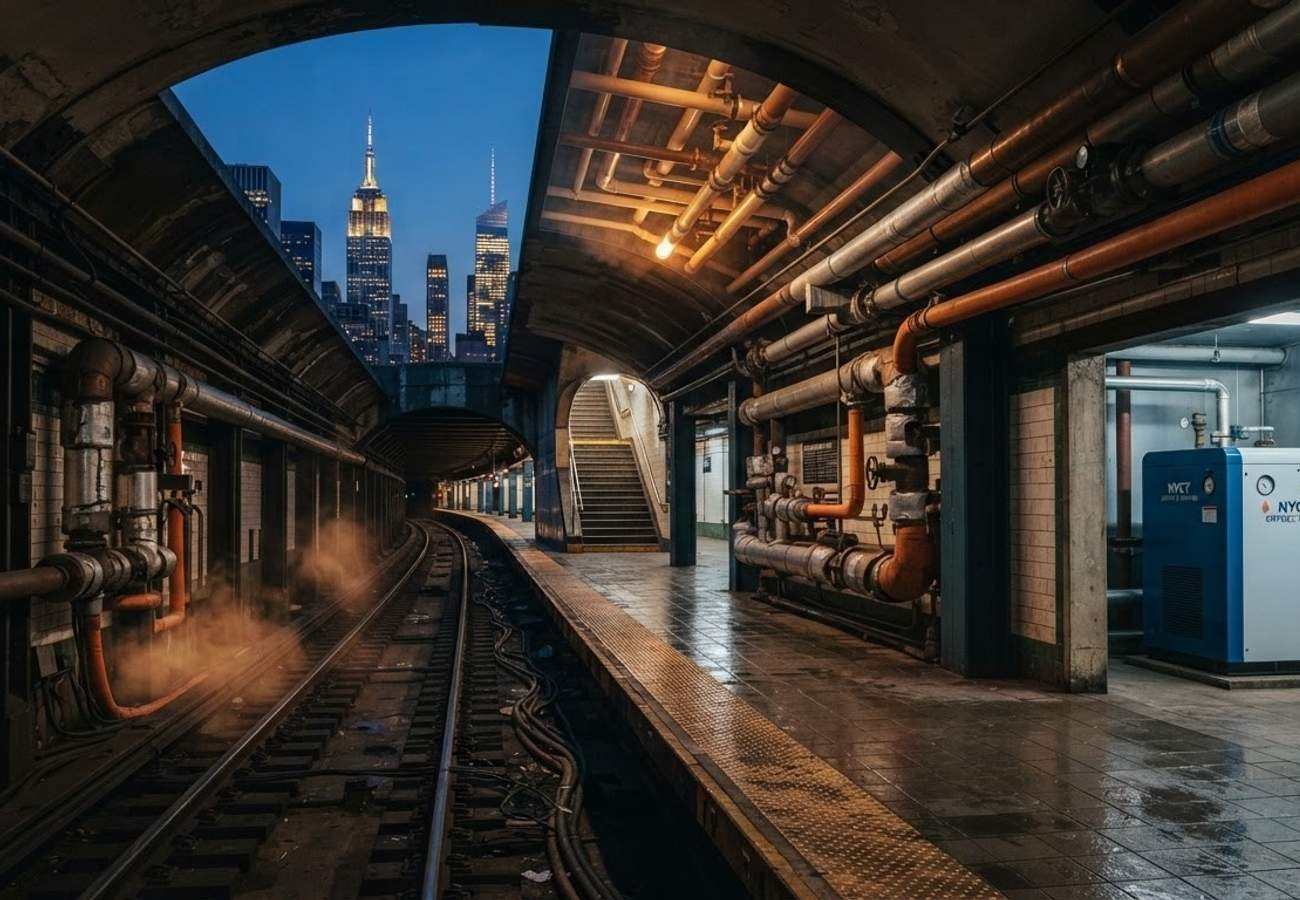
Image generated by AI
New York City is initiating a pilot project to harvest ambient heat from Midtown Manhattan subway stations, converting waste energy from braking trains and electrical systems into winter heating for nearby commercial buildings.
Urban Thermal Energy Recovery System
New York City is transforming its underground transit infrastructure into a functional energy asset. A new pilot project is deploying a closed-loop thermal energy network designed to capture the significant heat accumulation found in subway tunnels and platforms. This heat, generated by braking trains, electrical equipment, and air conditioning exhaust, is typically vented as waste; the new system instead redirects it into a usable energy stream.
The project utilizes a network of water-filled pipes that circulate near subway stations. During the summer months, the loop absorbs excess heat from the transit environment and surrounding infrastructure. In winter, electrically powered heat pumps extract this stored warmth and upgrade it to temperatures suitable for space heating and hot water for connected buildings.
This shift aligns with New York State’s electrification mandates, moving away from combustion-based boilers toward low-carbon heat pumps. By treating the subway system as a long-term thermal reservoir, the city aims to reduce the reliance on fossil fuels during peak winter demand.
System Specifications and Operational Flow
The following table outlines the technical parameters and seasonal functionality of the thermal energy pilot.
| Parameter | Summer Operation | Winter Operation |
|---|---|---|
| Primary Goal | Heat Absorption & Platform Cooling | Heat Extraction & Building Warmth |
| Mechanism | Closed-loop water circulation | Electrically powered heat pumps |
| Heat Source | Braking trains, AC vents, electrical gear | Stored thermal energy in the loop |
| End Use | Thermal reservoir storage | Space heating & hot water |
| Environmental Impact | Lower ambient platform temperatures | Reduced building GHG emissions |
| Infrastructure | Underground utility corridors | District-scale thermal network |
Traveler Logistics Guide: Navigating NYC Transit During Infrastructure Upgrades
From a ground-level perspective, the implementation of thermal networks often coincides with broader station modernization. While this specific pilot is largely invisible to the commuter, navigating the NYC subway during these transition periods requires specific strategies.
Managing Station Heat and Crowds Until these systems are scaled, summer platform temperatures in Midtown can exceed street-level heat significantly. Travelers should prioritize stations with updated ventilation or utilize the "Wayfinding" digital signage to avoid congested, non-ventilated transfer tunnels.
Digital Transit Integration To minimize time spent on sweltering platforms, riders should leverage real-time tracking via the MTA app or OMNY payment systems to time their arrival precisely with train departures. For international visitors, ensuring a contactless payment method is configured before entering the station prevents unnecessary delays at turnstiles.
Connection Planning When navigating Midtown hubs, allow an additional 10-15 minutes for transfers. Infrastructure pilots often result in temporary corridor diversions. Always check the MTA's official service alerts for "Planned Work" notifications that may affect specific entrances or exits near the thermal loop installation sites.
Infrastructure Impact Assessment
This pilot represents a fundamental shift in how dense urban environments manage energy. By intersecting transportation and utility planning, New York is creating a blueprint for "circular" urban energy. The primary impact is twofold:
- Rider Experience: While not a full-scale air conditioning solution, the redirection of waste heat is expected to modestly lower ambient temperatures on platforms, mitigating the effects of urban heat islands during summer waves.
- Decarbonization: By connecting large commercial buildings to a shared thermal loop, the city reduces the need for individual gas-fired boilers, directly lowering the carbon footprint of the Midtown skyline.
The success of this Midtown test case will likely dictate the expansion of similar networks to other high-traffic hubs. Global transit centers in London, Paris, and Tokyo are currently monitoring these results to determine the viability of subway-linked energy recovery in their own decarbonization strategies.
Urban mobility is evolving from a simple transit service into a distributed power plant for the cities it serves.
Related Travel Guides
Disclaimer
This article is for informational and educational purposes only. It does not constitute legal, financial, or professional advice. While we strive to provide accurate and up-to-date information, travel policies, regulations, and conditions change rapidly. Always verify information with official sources before making travel decisions. Nomad Lawyer makes no representations about the accuracy, reliability, completeness, or suitability of the information provided. Readers should consult qualified professionals for advice specific to their circumstances. The views expressed in this article are those of the author and do not necessarily reflect the views of Nomad Lawyer.
Kunal K Choudhary
Co-Founder & Contributor
A passionate traveller and tech enthusiast. Kunal contributes to the vision and growth of Nomad Lawyer, bringing fresh perspectives and driving the community forward.
Learn more about our team →