
Japan Tourism Boom 2026: Tokyo, Kyoto Reshapes Regional Travel
Japan's tourism boom in 2026 reshapes travel patterns across Tokyo, Kyoto, and beyond as record 40+ million visitors arrive. A weak yen and new regional initiatives drive unprecedented demand.

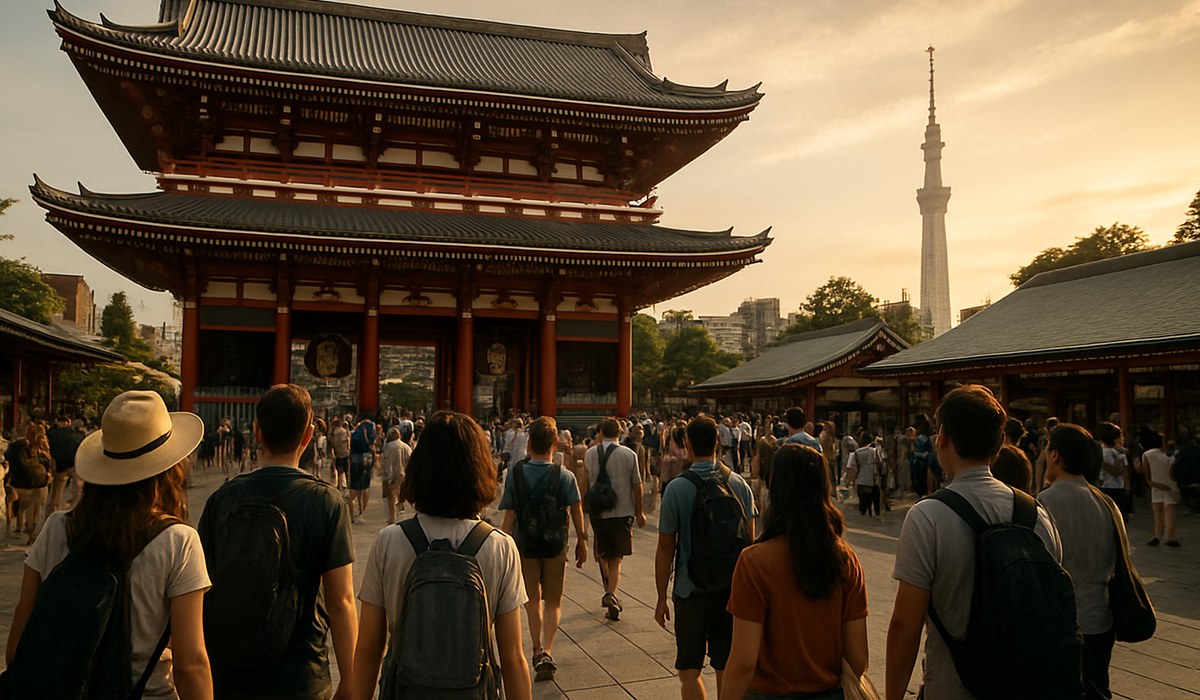
Image generated by AI
Japan is experiencing its strongest inbound tourism surge on record, with visitor numbers surpassing 40 million annually and fundamentally reshaping travel patterns across major destinations and rural regions alike. The convergence of a weak yen, expanded airline routes, and strategic regional marketing initiatives is driving the japan tourism boom that extends far beyond traditional gateways like Tokyo and Kyoto.
Record-Breaking Visitor Numbers Signal 2026 Peak
Inbound arrivals to Japan have shattered pre-pandemic records throughout 2025 and into early 2026, with February 2026 alone welcoming 3.4 million international visitors—the highest single month ever recorded. Monthly visitor counts now regularly exceed 3 million even during traditionally slower winter seasons, reflecting structural shifts in global travel preferences and currency advantages that make Japan exceptionally competitive compared to other major Asian destinations.
The momentum driving this japan tourism boom stems from three interconnected factors. First, the Japanese yen has remained historically weak against major currencies, making accommodation, dining, and shopping substantially more affordable for international travelers. Second, Japanese tourism authorities and regional development boards have aggressively marketed underutilized destinations outside the crowded Golden Route corridor. Third, international airlines have dramatically increased capacity to Japanese airports, with carriers like All Nippon Airways (ANA) and Japan Airlines (JAL) expanding routes from regional hubs worldwide. Economic analysts attribute roughly 2-3% of Japan's recent GDP growth to tourism spending, cementing its strategic importance to the national economy.
Forecasts for 2026 project a baseline volume remaining at or near record levels despite slight moderation in growth rates. Currency fluctuations and geopolitical tensions may constrain explosive year-over-year increases, yet the underlying demand infrastructure suggests sustained high volumes throughout the year.
Tokyo Adapts Strategy to Manage Unprecedented Demand
Tokyo continues attracting the largest share of inbound visitors, though the capital's tourism strategy has fundamentally shifted from maximizing arrivals to distributing them strategically across neighborhoods and time periods. Immersive art installations, pop culture museums, and large-scale digital experiences in districts like Shibuya and Shinjuku consistently rank among Asia's most-visited attractions, drawing millions annually and driving the broader japan tourism boom across the metropolitan area.
Data from early 2026 reveals a subtle but significant trend: Tokyo's year-on-year growth has moderated from double-digit percentage increases to single-digit rates, indicating market saturation in core tourist zones. Rather than signaling declining interest, this pattern reflects deliberate visitor redistribution toward emerging neighborhoods and waterfront redevelopment zones. Campaign messaging now emphasizes districts like Toyosu, Odaiba, and emerging areas along the Tamagawa Canal, positioning these zones as alternatives to exhausted temple circuits and shopping streets.
Accommodation data supports this shift. While overall occupancy rates remain exceptionally high across the city, booking patterns show travelers increasingly selecting hotels in peripheral neighborhoods and shorter stays in the central core. Room rates in less-trafficked areas have risen sharply, indicating successful dispersal of demand. Tourism operators report that multi-night experiences combining short Tokyo stays with extended regional excursions are now the dominant booking pattern, fundamentally restructuring how visitors experience the capital.
Kyoto Implements Tourism Management Framework
Kyoto's famous temples and traditional districts face unprecedented pressure from the japan tourism boom, with streets in neighborhoods like Higashiyama and Arashiyama frequently exceeding safe pedestrian capacity during peak hours. The city has responded with an innovative framework designed to preserve cultural integrity while accommodating record visitor numbers through managed growth strategies.
Since January 2025, Kyoto has expanded its lodging tax structure and implemented pilot programs restricting access to heritage areas during specific hours. New digital signage directs visitors toward lesser-known temples, seasonal gardens, and northern district attractions that possess comparable cultural value but significantly lower visitor concentrations. Tourism messaging explicitly encourages multi-day stays in satellite towns like Uji and Arashiyama's rural periphery, where visitors can explore authentic rural culture and agricultural landscapes untouched by mass tourism.
The first measurable success appeared in early 2026 data showing slight year-on-year declines in central district foot traffic—not because demand fell, but because visitors now distribute across wider geographic areas and longer time horizons. A single traveler might spend 2-3 days dispersed across 4-5 neighborhoods rather than concentrating visits in 2-3 hyper-popular zones. This distribution strategy protects Kyoto's fragile historic sites while maintaining record-high tourism revenue. Learn more about Kyoto's sustainable tourism initiatives through Lonely Planet's Kyoto guide.
Hokkaido Emerges as Year-Round International Destination
Hokkaido has transformed from a destination defined by winter skiing into a genuine four-season competitor attracting 10+ million annual visitors across all seasons. Australian and Southeast Asian traveler arrivals alone exceeded one million during 2025, with this demographic now comprising 30-40% of Hokkaido's total inbound visitors, fundamentally reshaping the island's infrastructure and promotional focus.
International carriers have expanded service to New Chitose Airport (CTS) near Sapporo and regional airports in Asahikawa and Hakodate, creating direct connections with Tokyo, Osaka, and major overseas hubs that didn't exist three years ago. This expanded connectivity enables travelers to treat Hokkaido as a primary destination rather than a secondary add-on to Golden Route circuits.
Seasonal diversification now drives sustainable growth across the tourism calendar. Spring attracts travelers to cherry blossom festivals and rural agricultural experiences; summer brings hikers to national parks in the Daisetsu range; autumn showcases Mount Fuji views and foliage photography; winter remains skiing's primary season. Travel specialists report that multi-week itineraries combining 3-4 days in Tokyo or Kyoto with 8-10 days exploring Sapporo, Niseko, and coastal communities have become the dominant booking pattern, representing a fundamental restructuring of how international visitors experience Japan.
However, this rapid expansion raises sustainability concerns. Local governments across Hokkaido increasingly debate optimal capacity levels for ski resorts, onsen towns, and national parks. Housing shortages for seasonal workers and environmental impact assessments now feature prominently in regional policy discussions as authorities attempt to preserve Hokkaido's competitive advantages while avoiding over-saturation.
Regional Destinations Beyond Major Cities Attract Experimental Travelers
The japan tourism boom has created unprecedented interest in lesser-known destinations that regional tourism boards are actively promoting through national marketing initiatives. Cities like Takayama in the Japanese Alps, coastal Naoshima, and rural Kanazawa are now experiencing 40-60% annual visitor growth as travelers seek authentic experiences beyond standardized tour itineraries.
Regional airports and rail operators report booking surges for routes connecting Tokyo to peripheral destinations. The JR Pass, traditionally marketed primarily to foreign backpackers, now attracts affluent travelers seeking multi-week explorations of rural Japan. Luxury train services like the Seven Stars Kyushu have extended routes and increased capacity to accommodate demand, with bookings now extending 12+ months in advance.
Accommodation providers in secondary cities report exceptional occupancy rates and rising nightly rates, indicating strong demand and pricing power. Ryokan properties, farm stays, and rural guesthouses have multiplied across regions like Nagano, Shimane, and Okinawa. This geographic expansion of tourism has distributed economic benefits beyond traditional gateways, creating employment and infrastructure investment in communities that received minimal international visitor attention five years ago.
National tourism messaging emphasizes "beyond the Golden Route" narratives that position regional exploration as authentic and culturally enriching compared to standardized central-city tourism. This strategic framing has successfully repositioned secondary destinations from consolation alternatives into primary travel objectives, reshaping how travelers construct Japan itineraries.
Tourism Infrastructure and Capacity Constraints Emerge
The rapid acceleration
Disclaimer
This article is for informational and educational purposes only. It does not constitute legal, financial, or professional advice. While we strive to provide accurate and up-to-date information, travel policies, regulations, and conditions change rapidly. Always verify information with official sources before making travel decisions. Nomad Lawyer makes no representations about the accuracy, reliability, completeness, or suitability of the information provided. Readers should consult qualified professionals for advice specific to their circumstances. The views expressed in this article are those of the author and do not necessarily reflect the views of Nomad Lawyer.
Preeti Gunjan
Contributor & Community Manager
A passionate traveller and community builder. Preeti helps grow the Nomad Lawyer community, fostering engagement and bringing the reader experience to life.
Learn more about our team →