
Castle of Good Hope 2026 Heritage Month: How AI and Digital Tours Are Transforming South Africa’s Oldest Fort
Castle of Good Hope 2026 Heritage Month: How AI and Digital Tours Are Transforming South Africa’s Oldest Fort

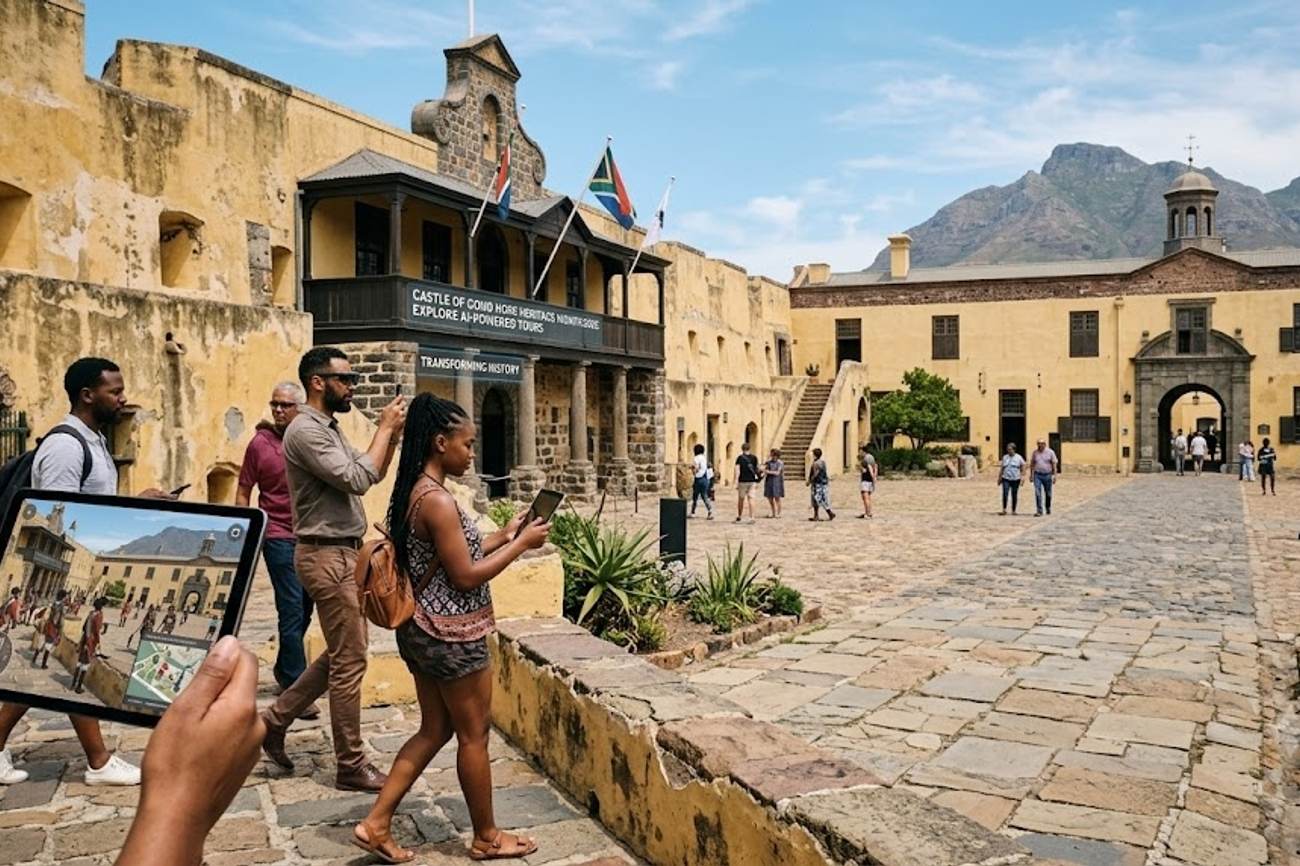
Image generated by AI
The oldest colonial building in South Africa is no longer just a relic of the Dutch East India Company; it is becoming a living laboratory for artificial intelligence. While most visitors see the Castle of Good Hope as a 17th-century military bastion, the 2026 Heritage Month programme is transforming these stone walls into a digital hub where AI-driven archives and augmented reality bridge the gap between colonial trauma and modern reconciliation.
The Digital Evolution of Cape Town’s Oldest Bastion
The Castle of Good Hope is undergoing a fundamental shift in how it presents history to the world. For years, the site functioned primarily as a military museum, but the 2026 initiative marks a pivot toward "smart tourism." The Castle Control Board is moving away from static displays, instead implementing a strategy that treats the fortress as a space for active public dialogue.
The 2026 programme is built upon two specific pillars: "Reimagine Our Heritage Institutions for a New Era" and "Digital Agenda and Artificial Intelligence to Redesign Tourism." This isn't just about adding a few screens to a gallery; it is a systemic overhaul. The Department of Sport, Arts and Culture has noted that integrating digital tools into heritage sites leads to significantly higher engagement from international visitors. By blending 17th-century architecture with 21st-century tech, the site aims to make the heavy history of the Cape more accessible and provocative for a younger, tech-savvy generation.
Visitors in 2026 will encounter augmented reality (AR) stations positioned throughout the inner courtyards. As you walk the ramparts, these tools provide digital reconstructions of life in the 1600s, overlaying the current view with the ghosts of the past. Perhaps more impressive is the integration of AI-assisted archival research tools. Instead of browsing through dusty ledgers, visitors can now query digitized records of both colonial and indigenous populations in real time, uncovering specific narratives that were previously buried in bureaucracy.
What Makes the Castle of Good Hope Different
To understand the Castle, you have to understand its geometry. Built between 1666 and 1679, it replaced an earlier structure of clay and timber. It was designed by the VOC (Dutch East India Company) as a maritime replenishment station and a military nerve center. Its star-shaped layout was meant for defense, but today, that same architecture serves as a metaphor for the layered, often conflicting, histories of South Africa.
What separates this site from other colonial forts is its commitment to "reconciliation tourism." The 2026 festival doesn't shy away from the darkness of the site. The tour circuits specifically include the dungeons and torture chambers, but they now pair these visits with multidisciplinary art installations. Contemporary African artists have been commissioned to create works that specifically critique and reframe the colonial architecture of the bastions.
The site also hosts the Iziko William Fehr Collection, adding a layer of fine art to the military history. By hosting interactive reconciliation symposia on the historic Kat Balcony, the Castle is transforming from a place of command and control into a forum for historians, digital innovators, and cultural practitioners to debate the nation's trajectory.
Visitor Insider Tips
If you are planning to visit during the 2026 Heritage Month, timing and location are everything. The Castle is located in the central business district of Cape Town, making it highly accessible, but the experience varies wildly depending on when you enter the gates.
Timing the Visit: While events span the entire month of September, the absolute peak is Heritage Week in mid-September. This is when you will find the evening illuminations of the bastions and live cultural performances. To avoid the heaviest crowds, aim for the early morning slots or mid-week visits. Because of the new AI-driven predictive crowd-management systems, you can often get a sense of flow, but advance booking via South African Tourism or official channels is non-negotiable during Heritage Week.
Navigating the Site: Do not rely solely on the digital guides. While the AI-driven multilingual audio guides are excellent for facts, the accredited heritage specialists who lead the daily tours provide the emotional nuance and storytelling that AI cannot replicate. Specifically, ask for tours that focus on the indigenous narratives and the stories of enslaved individuals, as these are the core of the 2026 reimagining.
Local Etiquette and Logistics: The Castle is a place of reflection. When visiting the dungeons or the reconciliation symposia, keep your volume low. The transition from the noisy CBD of Cape Town to the quiet of the inner courtyards is jarring; embrace the silence. For transport, while the site is central, using a ride-share app is generally more efficient than navigating public buses if you are staying in the Waterfront or Gardens areas.
Cultural and Environmental Context
The transformation of the Castle of Good Hope is a microcosm of South Africa's broader struggle with its colonial legacy. For decades, heritage sites in the region focused on the "victor's narrative"—the architectural achievements of the Dutch and British. The 2026 programme represents a shift toward an inclusive history, where the voices of the marginalized are given equal spatial weight to the colonial administrators.
This shift is not without tension. The use of AI and AR in a space once used for incarceration and torture is a bold choice. Some argue that technology can sanitize history, while the Castle Control Board believes it can democratize it. By allowing visitors to query indigenous records in real time, the site is effectively handing the keys of history back to the people.
From an environmental perspective, the site is a rare green lung in the middle of the urban concrete of the CBD. The preservation of the ramparts and courtyards requires a delicate balance between maintaining 300-year-old masonry and installing modern digital infrastructure. The goal is to ensure that the "smart" upgrades do not compromise the physical integrity of the UNESCO-recognized heritage standards that govern such historic structures.
FAQ: Visiting the Castle of Good Hope 2026
What is the best time to visit? The peak experience is during Heritage Week in mid-September. For a quieter visit, go in early September or late October. Always book in advance for the special 2026 festival events.
How do I get there from Cape Town city center? The Castle is located in the central business district. It is easily reachable via a short Uber or Bolt ride from most major hotels, or a 15-minute walk from the city's main transport hubs.
Is the site accessible for solo travelers? Yes, it is very safe for solo travelers. The use of AI-driven audio guides makes it easy to explore at your own pace, and the guided group tours provide a great way to meet other history enthusiasts.
Do I need a visa to visit South Africa? Visa requirements vary by nationality. Check the official South African Government website or your local embassy to see if you are eligible for a visa-on-arrival or if you need to apply in advance.
Step through the digital portals of the past to understand the blueprint of South Africa's future.
#CapeTownTourism2026 #CastleOfGoodHope #SouthAfricaHeritageMonth #DigitalTourismAfrica #CapeTownHistory
Related Travel Guides
Disclaimer
This article is for informational and educational purposes only. It does not constitute legal, financial, or professional advice. While we strive to provide accurate and up-to-date information, travel policies, regulations, and conditions change rapidly. Always verify information with official sources before making travel decisions. Nomad Lawyer makes no representations about the accuracy, reliability, completeness, or suitability of the information provided. Readers should consult qualified professionals for advice specific to their circumstances. The views expressed in this article are those of the author and do not necessarily reflect the views of Nomad Lawyer.
Preeti Gunjan
Contributor & Community Manager
A passionate traveller and community builder. Preeti helps grow the Nomad Lawyer community, fostering engagement and bringing the reader experience to life.
Learn more about our team →