Netherlands and European Nations Shift Tourism from Volume to Value: Landmark JRC Economic Data Drives Sustainable Reforms Across Amsterdam, Barcelona, and Rome

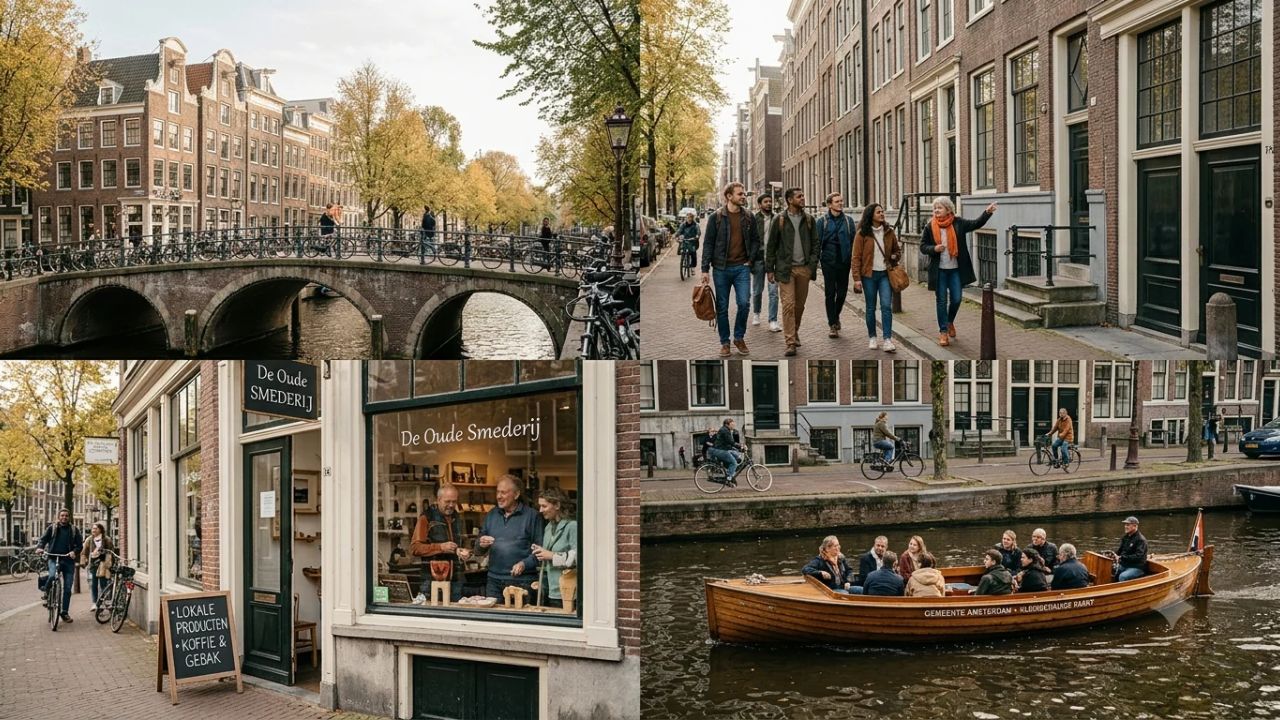
THE HAGUE — The Netherlands, alongside a united coalition of leading European Union economies, is executing a historic paradigm shift across its international visitor economy, fundamentally dismantling legacy mass-tourism models to transition from sheer visitor volume to high-yield sustainable economic value.
Announced in conjunction with landmark analytical findings published by the European Commission’s Joint Research Centre (JRC) in November 2026, the continent-wide pivot represents a calculated structural evolution rather than a retreat from international travel.
Recognizing that unconstrained masses of transient visitors degrade residential livability, exhaust municipal water and waste infrastructure, and displace local housing markets, European policymakers are systematically rewriting the rules of hospitality engagement.
The economic imperative driving this transformation centers on the profound ripple effect of tourism across the European Union.
According to the November 2026 JRC macroeconomic estimates, tourism generates more than one out of every ten euros of total value added across the EU financial ecosystem.
While the direct contribution of tourism to the EU’s Gross Value Added (GVA) sits at 4.1 percent, its comprehensive economic footprint—encompassing secondary supply chains, agriculture, construction, logistics, and local professional services—reaches an astounding 10.1 percent.
Sustaining over twenty million jobs and five million commercial enterprises, ninety-nine percent of which are small and medium-sized enterprises (SMEs), the sector serves as Europe's primary grassroots economic engine.
By curbing low-spending, high-impact day trips and prioritizing extended, culturally engaged stays, nations including the Netherlands, Spain, Italy, Greece, and France are proving that hosting fewer visitors can generate greater net wealth, protect delicate cultural heritage, and secure long-term civic prosperity.
EUROPEAN TOURISM VALUE TRANSFORMATION: MACRO DATA SUMMARY
| Entity / Route | Metrics | Operational Status |
|---|---|---|
| Economic & Policy Dimension | JRC 2026 Benchmark | Strategic Policy Implication |
| Total Economic Footprint | 10.1% of Total EU GVA | Captures broad supply-chain |
| (Direct + Indirect Impact) | (>1 in every 10 euros added) | multiplier beyond hotel rooms |
| Direct GVA Contribution | 4.1% of Total EU GVA | Base hospitality and transit |
| Workforce & SME Footprint | 20+ Million European Jobs; | 99% of businesses are local |
| 5 Million Active Enterprises | small & midsize enterprises | |
| Core Policy Document | EU Strategy for Sustainable | Formally adopted by European |
| Tourism (November 4, 2026) | Commission in Brussels | |
| Primary Operational Goal | "Volume to Value" Transition | Maximize local revenue retention |
| across all 27 Member States | while capping civic strain |
The End of Mass Volume: Why Europe is Rewriting the Tourism Social Contract
For over half a century, the European travel industry operated under a singular, unquestioned metric of commercial success: infinite quantitative expansion.
National tourism boards celebrated annual record arrivals, budget airlines added hundreds of point-to-point routes, and maritime ports expanded berths to accommodate colossal cruise vessels carrying thousands of passengers into fragile historical centers.
The implicit assumption was that more visitors inevitably produced more economic prosperity.
By 2026, however, that unbridled growth formula generated acute municipal friction.
In world-renowned destinations such as Amsterdam, Barcelona, Venice, Dubrovnik, and Florence, hyper-tourism overwhelmed historic cobblestone quarters, drove local residents out of rental housing through unregulated short-term apartment conversions, and crowded out neighborhood retail in favor of homogenous souvenir outlets.
Municipal governments found themselves spending millions of euros in public tax revenues to manage overflowing refuse, provide emergency medical staffing, and repair historic monuments, while the bulk of tourist spending was captured by multinational cruise corporations, offshore booking platforms, and foreign-owned budget airlines.
                   THE STRUCTURAL PARADOX OF EXTRACTIVE MASS TOURISM

   [ High-Volume / Low-Value Tourism Model ]
         * Massive influx of transient day-trippers & budget cruise passengers
         * Heavy municipal infrastructure wear: sanitation, policing, transit crowding
         * Residential displacement: Long-term apartments converted to tourist rentals
         * Economic Leakage: Corporate profits siphon out of local communities

   [ High-Value / Sustainable Tourism Model (2026–2027) ]
         * Longer average lengths of stay; multi-night hotel & boutique lodging
         * Deep local spending: Artisanal dining, regional rail, cultural institutions
         * Strict carrying-capacity limits and targeted tourism taxes fund local green assets
         * High Economic Multiplier: Wealth circulates directly among neighborhood SMEs
The European Commission and member state governments recognized that this extractive model was commercially self-defeating.
Overcrowding degrades the very ambiance and historical authenticity that attracts travelers in the first place, deterring discerning, high-spending international visitors who refuse to navigate chaotic, overcrowded streets.
The transition to the "Volume to Value" framework represents a deliberate effort to restore balance: curating a visitor demographic that stays longer, respects local community life, travels outside peak summer months, and spends money directly with locally owned businesses.
The Economic Anatomy of EU Tourism: 10.1% GVA and the SME Supply Chain
The urgency behind the European Commission’s policy shift is rooted in the analytical findings produced by the Joint Research Centre (JRC).
The November 2026 JRC study represents the most comprehensive empirical assessment of tourism economics ever undertaken by the European Union, utilizing multi-regional input-output modeling to map the true economic footprint of travel.
The research highlights the vast divergence between direct hospitality transactions and the broader "ripple effect" across the European economy.
While direct tourism activities account for 4.1 percent of EU Gross Value Added, the total economic footprint expands to 10.1 percent when indirect and induced supply-chain interactions are included.
When a traveler orders fresh seafood at a coastal taverna in Greece or a seaside restaurant in Zeeland, that transaction ripples outward: it supports local commercial fishermen, wholesale refrigeration technicians, logistics drivers, agricultural olive oil producers, and neighborhood linen cleaning services.
EUROPEAN ECONOMIC RELIANCE ON TOURISM (TOTAL GVA FOOTPRINT)
| Entity / Route | Metrics | Operational Status |
|---|---|---|
| Reliance Category | Representative Member States | Economic Impact (% of GVA) |
| Highest Dependency Tier | Croatia, Portugal, Greece, Cyprus | Surpasses 20.0% of National GVA |
| (Deep Vulnerability) | Highly reliant on foreign arrivals; | Economic stability demands urgent |
| high seasonal summer employment peaks | diversification into year-round | |
| High Dependency Tier | Spain, Italy, Austria, Malta | Approximately 14.0% of GVA |
| (Structural Pillar) | Major global heritage superpowers; | Acute infrastructure bottlenecks |
| strong domestic & international spend | requiring regulatory caps on beds | |
| Moderate Dependency | France, Germany, Netherlands | Between 7.0% and 9.5% of GVA |
| (Balanced Economies) | Broad, diversified industrial bases; | High absolute revenues; focused on |
| extensive corporate business travel | regional balance & carrying limits | |
| Lowest Dependency Tier | Denmark, Belgium, Sweden, Poland | Below 5.0% of National GVA |
| (Supplementary Sector) | Highly industrialized or service hubs | Tourism functions as supplementary |
| with localized regional leisure hubs | rather than foundational revenue |
Importantly, the JRC data underscores that tourism is fundamentally a grassroots economic engine.
Out of the five million enterprises operating within the European tourism ecosystem, ninety-nine percent are classified as small and medium-sized enterprises (SMEs), employing fewer than 250 individuals.
Unlike capital-intensive heavy industries dominated by multinational conglomerates, tourism distributes wealth directly to family-owned guesthouses, neighborhood bakeries, licensed mountain guides, and regional transport cooperatives.
Protecting this economic foundation requires shielding these vulnerable local operators from corporate short-term rental platforms and monopolistic booking intermediaries that extract disproportionate commissions while contributing minimal local tax revenue.
The European Union Strategy for Sustainable Tourism: The Continental Blueprint
To operationalize the transition from volume to value across all twenty-seven member states, the European Commission officially adopted the EU Strategy for Sustainable Tourism on November 4, 2026.
The strategy establishes a unified policy framework, deploying financial incentives, regulatory standards, and digital technologies to harmonize national tourism governance.
                   EU STRATEGY FOR SUSTAINABLE TOURISM ARCHITECTURE

   [ European Commission Strategic Framework (Adopted 4 Nov 2026) ]
                                |
       +------------------------+------------------------+
       |                                                 |
       v                                                 v
   [ The "Toolbox for Balanced Tourism" ]    [ Sustainable Connectivity Infrastructure ]
   * Crowd-monitoring toolkits for cities    * High-speed cross-border rail expansion
   * Marketing subsidies for rural hamlets   * Unified multimodal ticketing platforms
   * Carrying-capacity measurement models    * Replacing short-haul domestic flights
       |                                                 |
       +------------------------+------------------------+
                                |
                                v
   [ Advanced Data Intelligence & Crisis Coordination ]
   * "Common European Tourism Data Space" powered by predictive AI
   * "EU Tourism Observatory" real-time visitor flow monitoring
   * "EU Tourism Crisis Coordination Network" for climate & geopolitical shocks
The strategy introduces several continent-wide policy mechanisms designed to transform destination management.
First, the "Toolbox for Balanced Tourism" provides a standardized policy framework enabling municipal and regional authorities to monitor pedestrian density, alleviate seasonal bottlenecks, and redirect public promotional funding toward lesser-known rural destinations and natural parks.
Second, sustainable connectivity infrastructure initiatives deploy major capital commitments to support cross-border high-speed rail corridors, night trains, and integrated multimodal ticketing platforms designed to replace short-haul domestic flights. The initiative also funds electric vehicle charging networks and micro-mobility hubs in remote island and alpine regions.
Third, data intelligence and artificial intelligence deployments anchor the newly established EU Tourism Observatory and the Common European Tourism Data Space. Utilizing machine-learning algorithms, municipal planners can forecast crowd surges days in advance, dynamically adjust public transit schedules, and provide real-time occupancy data to local small enterprises through open application interfaces.
Finally, global brand alignment reinforces the "Destination Europe" identity through direct diplomatic dialogues with high-yield source markets—including India, Japan, and the Gulf Cooperation Council nations—to attract travelers seeking immersive cultural, wellness, and gastronomic experiences.
The Netherlands: Scientific Carrying Capacity and Urban De-Densification
The Netherlands has emerged as Europe’s foremost pioneer in scientifically measuring and managing visitor carrying capacities.
Operating through the Centre of Expertise Leisure, Tourism & Hospitality (CELTH) and its innovative Gastvrije Transities (Hospitable Transitions) national initiative, Dutch authorities have abandoned quantitative arrival targets in favor of strict empirical boundary modeling.
                    NETHERLANDS CARRYING CAPACITY FRAMEWORK

   [ CELTH Scientific Measurement Model ]
                 |
                 +---> Ecological Carrying Capacity: Water, air, and soil thresholds
                 +---> Spatial Carrying Capacity: Pedestrian & bicycle flow limits
                 +---> Social Carrying Capacity: Local resident well-being & livability
                 |
                 v
   [ Amsterdam Municipal Policy Enforcement (2026) ]
         * Short-term holiday rentals slashed from 30 days to 15 days per year
         * Absolute ban on new hotel development across municipal boundaries
         * Ocean cruise terminal relocation away from central city waterfront
         * Heavy tour coaches banned from historic urban canal zones
1. Slashing Short-Term Rentals in Amsterdam
In Amsterdam, this data-driven methodology prompted radical municipal intervention.
To curb hyper-transient visitor congestion and reclaim the residential housing stock for local citizens, the Amsterdam City Council enacted a landmark regulation in April 2026: the legal limit for renting private homes as short-term holiday accommodations was slashed from thirty days down to a strict fifteen days per calendar year.
Properties operating beyond this threshold face automated deregistration, digital platform de-listing, and substantial municipal fines.
By curbing speculative short-term rental acquisitions, the city has successfully redirected accommodation demand back to regulated, tax-paying boutique hotels while returning thousands of apartments to long-term residential leasing.
2. Comprehensive Urban De-Densification
Alongside rental restrictions, Amsterdam has enacted a comprehensive suite of de-densification policies designed to reclaim public space.
Under the city's hotel construction moratorium, municipal authorities have implemented a permanent freeze prohibiting the construction of new hotels within city limits unless an existing hotel closes and the replacement property demonstrates superior ecological sustainability.
Simultaneously, the municipal council has advanced plans to relocate the central ocean cruise passenger terminal away from the historic IJ waterfront, ending the spectacle of 5,000-passenger mega-ships disembarking directly into the city center.
In addition, heavy tourist buses exceeding 7.5 tons are barred from entering the historic canal ring, requiring tour groups to transfer to electric municipal trams or walk from perimeter transit hubs, drastically reducing diesel emissions and vibrations that threaten fragile wooden canal foundations.
Spain: Aggressive Municipal Bans and Sovereign Cruise Moratoriums
Spain carries a massive 14.0 percent GVA reliance on travel and tourism, generating billions in foreign exchange.
However, intense overcrowding across Barcelona, the Balearic Islands, and the Canary Islands triggered widespread civic protests, prompting Spanish authorities to enact some of the boldest regulatory interventions on the continent.
SPAIN HIGH-YIELD TOURISM INTERVENTIONS
| Entity / Route | Metrics | Operational Status |
|---|---|---|
| Destination / Region | Regulatory Intervention | Long-Term Strategic Objective |
| Barcelona Metropolitan | Complete phase-out of all 10,000 | Eliminates residential rental |
| Authority | licensed tourist flats by 2028 | displacement; curbs nuisance noise |
| Balearic Islands | Capping cruise ship arrivals to a | Prevents port town gridlock; |
| (Palma de Mallorca) | maximum of 3 vessels per day | protects sensitive marine ecology |
| Catalonia Municipalities | Doubling of regional tourist tax | Generates direct funding for local |
| (Hotel Tiering) | to €10.00–€15.00 per night | water and green urban assets |
| Canary Islands | Strict environmental carrying caps | Halts unchecked land consumption; |
| (Tenerife & Lanzarote) | on protected volcanic parklands | mandates sustainable wage scales |
Barcelona has established itself as the global vanguard of urban tourism reform.
Mayor Jaume Collboni established an uncompromising deadline: by November 2028, the city will revoke all 10,000 active tourist apartment licenses, effectively banning short-term holiday rentals in residential buildings entirely.
To complement this measure, the city doubled its municipal tourist surcharge in April 2026, pushing total nightly hotel taxes to between €10 and €15 per person per night for five-star properties.
Simultaneously, the Spanish government has begun curbing the maritime cruise industry.
Major ports including Barcelona, Palma de Mallorca, and Valencia have instituted strict daily limits on cruise dockings, capping arrivals at three vessels per day and excluding ships exceeding 5,000-passenger capacities.
National maritime authorities have published a strategic roadmap aimed at prohibiting extreme-capacity mega-liners entirely by 2035, opening port facilities exclusively for smaller, premium luxury cruise ships whose passengers spend significantly more in local museums, galleries, and restaurants.
Italy: The "Luminous Destinations" Strategy and Heritage Protection Fees
Italy’s tourism economy generates approximately 14.0 percent of national Gross Value Added, but its historic cities have long suffered under the weight of excessive visitor density.
In response, the Italian Ministry of Tourism launched the "Luminous Destinations 2026" initiative, designed to redirect traveler attention away from the saturated "Golden Triangle" of Rome, Florence, and Venice toward culturally rich, under-visited rural towns and historic villages (borghi).
                    ITALY DUAL-PRONGED TOURISM ARCHITECTURE

   [ Monetizing & Regulating Saturated Metropolitan Cores ]
         * Rome: €2.00 entry fee implemented at Trevi Fountain to manage crowds
         * Florence: Total ban on exterior self-check-in lockboxes in UNESCO center
         * Venice: Expansion of the €5.00 day-tripper access fee during peak weekends

   [ Subsidizing & Marketing "Luminous Destinations" ]
         * National tax credits for boutique hotels restoring rural historic borghi
         * Extensive high-speed rail connections to secondary cultural capitals
         * Marketing campaigns highlighting Umbria, Abruzzo, Basilicata, and Piedmont
While marketing capital is channeled toward rural regions, Italy is actively regulating its historic metropolitan centers through targeted civic interventions.
In Rome, the municipal administration implemented a reservation-based two-euro entry fee in February 2026 for non-residents visiting the pedestrian basin directly surrounding the iconic Trevi Fountain. This modest tariff controls crowd density, eliminates pickpocketing choke points, and generates direct municipal funding for monument restoration.
To the north, Florence enacted a total ban on exterior keyboxes used for automated self-check-in across its UNESCO-listed Renaissance core. By requiring property owners to conduct in-person key handovers and verify guest identities, the city protects neighborhood architectural aesthetics and restores personal accountability to residential lodging.
Simultaneously, Venice expanded its five-euro day-tripper entry fee across high-demand summer weekends. Utilizing automated pedestrian turnstiles at the Santa Lucia railway station, the lagoon city discourages transient excursionists who contribute little to the municipal economy while generating substantial waste and crowd congestion.
Greece and France: Climate Adaptation Fees, Rental Moratoriums, and Dual Cultural Pricing
In Greece and France, the shift toward sustainable value is deeply intertwined with climate resilience and cultural sovereignty.
GREECE AND FRANCE REGULATORY INNOVATIONS
| Entity / Route | Metrics | Operational Status |
|---|---|---|
| Country & Region | Policy Mechanism | Functional Objective |
| Athens Central Districts | 1-Year moratorium on issuing new | Halts residential gentrification; |
| (Koukaki, Plaka, Psyrri) | short-term rental licenses in 2026 | preserves traditional urban life |
| Greece Nationwide | Scaled Climate Resilience Fee up to | Funds emergency disaster relief, |
| (Peak Season Apr–Oct) | €8.00 per room night in hotels | water desalination, & wildland ops |
| Southern France | Seasonal marketing pivot to autumn | Combats extreme summer wildfires; |
| (Hérault & Var) | and winter cultural wine tourism | stabilizes year-round SME revenue |
| Paris Cultural Sites | Tiered dual pricing at major museums | Non-EU visitors pay higher rates |
| (The Louvre Museum) | preserving low fees for EU citizens | to cross-subsidize heritage upkeep |
1. Greece: Short-Term Rental Freeze and Climate Resilience Fees
Greece’s tourism sector represents over twenty percent of national GVA, making policy adjustments exceptionally sensitive.
To prevent housing shortages in the capital, the Greek government implemented a one-year moratorium in 2026 prohibiting the issuance of any new short-term rental licenses across three central Athens districts: Koukaki, Plaka, and Psyrri.
Nationally, Greece scaled up its statutory Climate Resilience Fee.
During peak travel months from April through October, hotel guests pay an additional €8 per night for standard four-star accommodations, and up to €15 per night for luxury suites and independent villas.
The collected revenues are ring-fenced within a dedicated national emergency fund, directly financing catastrophic wildfire response, coastal flood defenses, and public water desalination plants across arid Aegean islands.
2. France: Seasonal Redistribution and Dual Cultural Pricing
France has adopted structural pricing and seasonal rebalancing to safeguard its travel sector against extreme climate volatility.
Following severe summer heatwaves and wildfires in Mediterranean departments like Var and Hérault, regional tourism boards have shifted promotional budgets away from peak July and August windows.
Instead, marketing campaigns highlight autumn wine harvests, winter culinary festivals, and spring cycling routes, providing year-round income stability for local hospitality SMEs.
Simultaneously, leading French cultural institutions have embraced dual pricing architectures.
The Louvre Museum introduced a tiered admission structure where non-European Union visitors pay a premium admission fee, while European Union residents continue to enjoy standard discounted rates.
This model ensures that domestic taxpayers retain affordable access to their national patrimony while extracting maximum economic value from affluent international travelers.
Legal Frameworks, Data Compliance, and European Passenger Rights
International travelers navigating Europe’s evolving tourism landscape operate within a highly regulated legal and consumer protection environment.
                     EUROPEAN TRAVEL CONSUMER & DATA RIGHTS

   [ EU Short-Term Rental Regulation (Regulation 2024/1028) ]
         * Mandatory digital registration numbers for all rental properties
         * Online platforms (Airbnb, Booking.com) legally forced to share booking data
         * Automated removal of uncertified, illegal holiday apartment listings

   [ EU Package Travel Directive (Directive 2015/2302) ]
         * 100% financial insolvency protection for bundled holiday bookings
         * Statutory right to free cancellation if unavoidable natural events occur

   [ European Rail Passenger Rights (Regulation 2021/782) ]
         * Guaranteed cash compensation for cross-border train delays (25% to 50%)
         * Mandatory rerouting on alternative rail operators without added fees
1. Short-Term Rental Data Transparency (EU Regulation 2024/1028)
The enforcement of short-term rental limits in Amsterdam, Barcelona, and Athens is anchored by the EU Short-Term Rental Regulation.
Under this landmark statute, all property hosts must obtain a unique digital registration number from municipal authorities.
Major online travel platforms—including Airbnb, Booking.com, and Expedia—are legally mandated to verify these registration numbers and automatically transmit monthly transaction and guest-night data directly to national tax authorities.
Platforms that display uncertified listings face severe financial penalties under the Digital Services Act (DSA), eliminating the underground market in illegal vacation rentals.
2. Package Travel Directive Protections (Directive 2015/2302)
Travelers booking packaged holidays or linked travel arrangements in Europe are protected under the EU Package Travel Directive:
- If severe climate disruptions (such as extreme wildfires or catastrophic flooding) significantly impact a travel destination, consumers have the statutory right to cancel their package holiday without penalty and receive a full cash refund within fourteen days.
- Tour operators are legally required to maintain insolvency insurance, guaranteeing that traveler funds are protected and emergency repatriation is fully funded if a travel agency or operator enters bankruptcy.
3. Cross-Border Rail Passenger Rights (Regulation 2021/782)
As Europe redirects travelers from short-haul flights to regional rail, travelers benefit from updated Rail Passenger Rights:
- Delays of sixty to one hundred and nineteen minutes entitle passengers to a twenty-five percent statutory fare refund.
- Delays exceeding one hundred and twenty minutes entitle passengers to a fifty percent cash refund.
- If a cross-border train connection is missed due to a prior delay, the operating railway must provide complimentary re-routing on the next available service, along with meals and hotel accommodation if an unscheduled overnight stay is required.
The Modern Traveler's Playbook: Navigating Value-Driven Europe
For international holidaymakers, corporate executives, and independent explorers planning European itineraries, adapting to the "Volume to Value" framework unlocks a far superior travel experience.
VALUE-DRIVEN EUROPE TRAVEL ACTION PLAYBOOK
| Entity / Route | Metrics | Operational Status |
|---|---|---|
| Planning Step | Recommended Action | Direct Traveler Advantage |
| 1. Seasonal Timing | Target shoulder months: April–May | Lower lodging rates, pleasant |
| or September–October | weather, and manageable crowds | |
| 2. Transit Strategy | Book cross-border high-speed rail | City-center to city-center speed; |
| (Eurostar, TGV, Frecciarossa, ICE) | zero airport baggage hassles | |
| 3. Lodging Selection | Choose certified boutique hotels or | Exempt from 15-day rental caps; |
| agriturismi over private apartments | supports authentic local jobs | |
| 4. Advance Ticketing | Reserve monument slots (Trevi, | Guarantees entrance and avoids |
| Louvre, Park Güell) 30 days out | secondary black-market markups |
Step 1: Embrace the Shoulder Season
Avoid traveling to Mediterranean capitals during July and August, when temperatures routinely exceed 40°C (104°F) and crowd congestion peaks.
Traveling during the shoulder seasons—specifically April through May, or late September through early November—delivers pleasant weather, shorter museum queues, and significantly lower airfare and accommodation pricing.
Step 2: Utilize Europe’s High-Speed Rail Network
Rather than enduring crowded airport security lines and paying ancillary baggage fees on budget airlines, explore Europe via high-speed and sleeper rail.
Services such as the Frecciarossa in Italy, the TGV INOUI in France, Eurostar between London, Paris, and Amsterdam, and Nightjet sleeper trains across Central Europe connect city centers directly.
Rail journeys provide generous luggage allowances, complimentary Wi-Fi, and reduce individual carbon footprints by over eighty percent compared to equivalent commercial flights.
Step 3: Prioritize Locally Owned Boutique Accommodations
With major cities aggressively penalizing short-term vacation apartments, booking certified independent boutique hotels, historic inns, or rural farmstays (agriturismi) provides greater reliability and comfort.
These properties operate under full legal compliance, feature on-site staff for local recommendations, and guarantee that lodging revenues circulate directly into the local host community.
Strategic Horizons: The Next Era of Regenerative European Tourism
The transition from volume to value sweeping across the Netherlands, Spain, Italy, Greece, and France represents far more than a temporary policy adjustment; it is a permanent redefinition of European travel.
The era of cheap, unchecked mass tourism that treated ancient cities as disposable amusement parks is drawing to a close.
In its place, European nations are establishing a mature, data-driven, and culturally respectful tourism model that balances commercial vitality with environmental carrying capacities.
By leveraging advanced artificial intelligence to manage visitor flows, eliminating predatory short-term rental speculation, mandating fair climate adaptation fees, and directing promotional capital toward overlooked rural hamlets, Europe is ensuring that its incomparable architectural, natural, and culinary treasures remain preserved.
For the international traveler, this transformation is an invitation to engage more deeply, travel more slowly, and experience a continent whose cultural authenticity is safeguarded for generations to come.
Related Travel Guides
- Busan Triggers Historic One Trillion Won Tourism Boom Bypassing Seoul: Direct International Flights, Maritime Cruises, and Global Visitor Surge
- Princess Cruises Launches Blue Friday 2026 Campaign with 50% Fare Cuts, US$400 Instant Savings, and Complimentary Guests
- UAE and Global Destinations Face Compounding Travel Strain as International Visitor Arrivals Decelerate
- Hyatt Relaunches Hyatt Leverage with Spotnana: Cloud-Native SME Corporate Travel Platform Unifies Booking and Spend
- New Zealand Reopens Wairere Falls Track After 16-Month Safety Overhaul: Complete Waikato Hiking and Summer Trail Guide
This article is for informational purposes. Flight routes, passenger regulations, visa rules, and transit advisories are subject to change by airlines and aviation authorities. Readers are advised to verify schedules and travel documentation with relevant carriers and border agencies before departure.
Related Stories


Thailand Cultural Tourism Boom Accelerates as Grab Unveils TASTE Digital Framework and 15 Billion Baht Economic Impact