
Nepal Travel Alert: Himalayan Flood Raises Tourism Safety Concerns
A catastrophic glacier flood in Nepal's Rasuwa district disrupts Mount Kailash pilgrimage routes, raising fresh safety concerns. Read the travel alert.

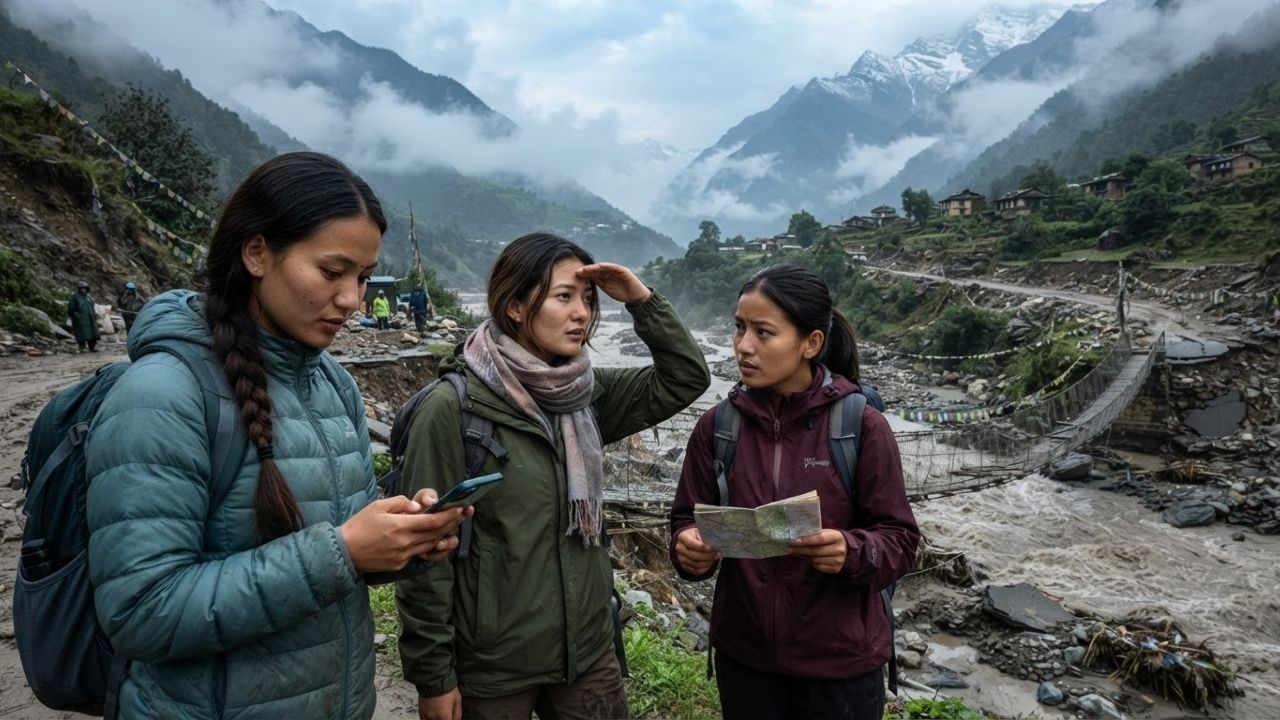
Image generated by AI
A catastrophic Himalayan flash flood triggered by a glacier collapse has devastated border regions between Nepal and Tibet, impacting pilgrims, adventure tourists, and local communities. The disaster in Nepal's Rasuwa district has blocked key transport corridors, raising fresh safety concerns for high-altitude tourism routes.
Glacial Instability Triggers Border Devastation
A sudden glacier collapse in the high-altitude frontier released a massive volume of water, ice, and rock debris into the mountain valleys near the Nepal-China border. The resulting flash flood swept through communities in Nepal’s Rasuwa district and affected sectors connected to Tibet’s Gyirong border region, including the border crossing town of Timure village and Gyirong Port.
According to reports monitored by the International Centre for Integrated Mountain Development (ICIMOD), early assessments indicate that hundreds of people were killed and thousands are believed missing as rescue teams search remote communities. The debris flow destroyed roads, bridges, and regional communications infrastructure, making ground rescue operations difficult and necessitating the use of helicopters for evacuations and supply drops.
Pilgrims and Trekking Routes Facing Disruption
The timing of the flood coincided with the peak season for the Mount Kailash pilgrimage, one of Asia's most significant spiritual journeys. Many international travelers—including a couple from the San Francisco Bay Area who described escaping their vehicle to reach high-ground safety—were moving through the Rasuwa corridor when the disaster struck.
The Gyirong border crossing serves as the primary gateway for pilgrims entering Tibet from Nepal. With the road networks severely damaged and the border facilities at Gyirong Port temporarily impacted, tour operators have suspended itineraries along this route. The Department of Tourism of Nepal has advised adventure travelers and religious tour operators to exercise extreme caution and halt trekking in the immediate border valleys.
| Region / District | Current Operational Status | Primary Travel Activities Impacted | Emergency Rescue Infrastructure |
|---|---|---|---|
| Rasuwa District (Border) | Severely Damaged / Suspended | Mount Kailash Pilgrimage, border crossing, and Langtang trekking | Helicopter access only; road links cut |
| Gyirong Port (Tibet Border) | Closed / Affected by wider disruption | Cross-border trade and pilgrimage transits | Subject to road reconstruction |
| Timure Village | Heavily Damaged | Border transit services and local accommodations | Local emergency shelters active |
| Kathmandu & Pokhara | Fully Operational | Urban cultural tourism and regional flights | Normal operations; hubs for rescue logistics |
While the border districts remain under emergency status, major tourism hubs in central Nepal, including Kathmandu and Pokhara, continue to operate normally.
Climate Resilience in Himalayan Tourism
This disaster has renewed discussions about the impact of climate change on high-altitude travel. The Himalayas are experiencing rising geological and meteorological risks, including glacial lake outburst floods (GLOFs) and debris flows.
The Nepal Tourism Board (NTB) emphasizes that long-term adventure tourism depends on strengthening early warning networks, building resilient infrastructure, and improving communications in remote valleys.
For the traveler, this event highlights the vital importance of safety planning. High-altitude environments can experience rapid weather changes, making proper equipment, flexible travel plans, and experienced local guidance essential.
Sustainable Tourism and Supporting Mountain Communities
While safety remains the immediate priority, the long-term recovery of these regions relies on the return of responsible tourism. Remote mountain communities depend heavily on income from local guides, porter services, teahouse accommodations, and regional transport.
Travelers can support sustainable recovery by:
- Booking via Local Agencies: Ensure your tour operator employs registered local guides and pays fair wages to mountain porters.
- Minimizing Plastic Waste: Avoid using single-use plastic water bottles, which litter fragile mountain trails. Use reusable bottles with purification tablets instead.
- Choosing Eco-Certified Lodges: Stay in teahouses that practice energy conservation and waste reduction.
- Respecting Conservation Zones: Stay on designated trails to prevent soil erosion in landslide-prone valleys.
Local Insider Secrets for Savvy Holiday Travelers
To navigate Himalayan travel safely and responsibly, follow these tips:
- Verify Emergency Evacuation Insurance: Choose a travel insurance policy that explicitly covers search and rescue (SAR) and high-altitude helicopter evacuation up to 6,000 meters. Standard policies often cap coverage at 3,000 meters.
- Check Border Documentation Hours: When traveling through Gyirong Port, confirm that your Chinese Tibet Travel Permit and Nepalese multiple-entry visas are printed. Border offices have strict daytime processing hours.
- Walk Clockwise at Sacred Sites: When visiting temples or shrines along the Mount Kailash route, always walk in a clockwise direction (kora) to respect Buddhist, Hindu, and Jain traditions.
- Hire Registered Guides: Verify that your guide is registered with the Trekking Agencies' Association of Nepal (TAAN) and carries active satellite communication equipment.
- Sample Regional Specialties: When staying in teahouses, eat the traditional Dal Bhat (lentil soup and rice) or sample local Yak cheese produced in high-altitude pastures.
Related Travel Guides
UK Foreign Office Issues Strict 'Do Not Travel' Warnings for 36 Global Destinations in 2026
Vietnam Caving: Son Doong and the Deep-Earth Tourism Boom
The Mount Kailash Pilgrimage Guide: Routes & Tips, According to Reddit
Disclaimer
This article is for informational and educational purposes only. It does not constitute legal, financial, or professional advice. While we strive to provide accurate and up-to-date information, travel policies, regulations, and conditions change rapidly. Always verify information with official sources before making travel decisions. Nomad Lawyer makes no representations about the accuracy, reliability, completeness, or suitability of the information provided. Readers should consult qualified professionals for advice specific to their circumstances. The views expressed in this article are those of the author and do not necessarily reflect the views of Nomad Lawyer.
Raushan Kumar
Founder & Lead Developer
Full-stack developer with 11+ years of experience and a passionate traveller. Raushan built Nomad Lawyer from the ground up with a vision to create the best travel and law experience on the web.
Learn more about our team →