
Nepal Creates A New Cultural Tourism Attraction As Bhaktapur’s Sa Paru Festival Draws Curious Travellers
Nepal Creates A New Cultural Tourism Attraction As Bhaktapur’s Sa Paru Festival Draws Curious Travellers

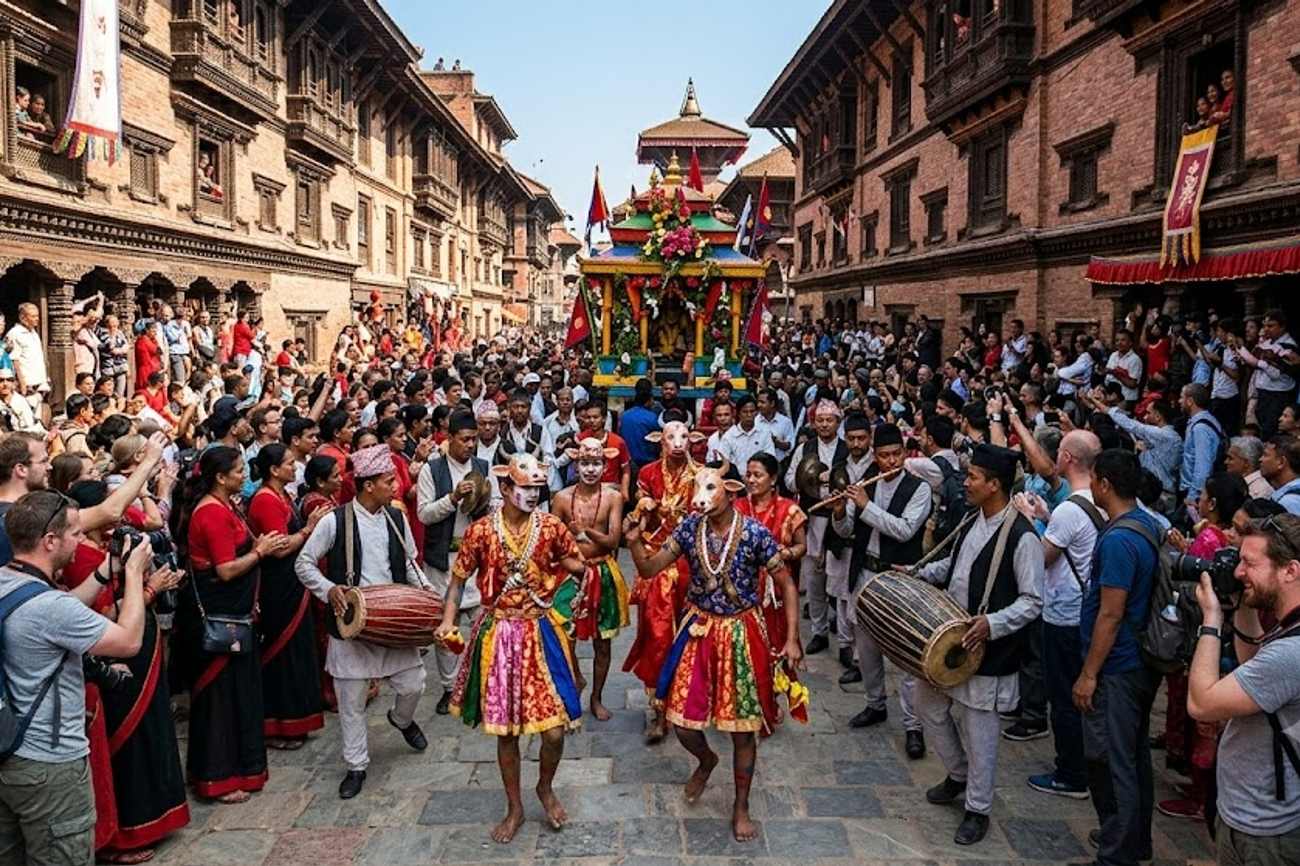
Image generated by AI
[Bhaktapur, September 2024] — The historic city of Bhaktapur is currently hosting the Sa: Paru festival, a massive public celebration that transforms traditional mourning into a vibrant display of music, dance, and communal art.
The event, also widely known as Gai Jatra, serves as a spiritual rite of passage for the Newar community of the Kathmandu Valley. Families who lost loved ones during the previous year gather to commemorate the deceased, utilizing public processions to facilitate the soul's journey toward salvation. Unlike the quiet disposition typical of grief in many global cultures, Sa: Paru utilizes theatrical performances and rhythmic parades to celebrate the natural cycle of life and death.
The Ritual of the Taha Sa
The immediate catalyst for the city's transformation is the construction and procession of "taha: sa," intricate bamboo structures that serve as symbolic proxies for the departed. These installations replace the traditional use of cows in the procession and are the result of intense community collaboration.
Neighbors and extended family members work together to engineer these bamboo frames, decorating them with:
- High-resolution portraits of the deceased
- Vibrant, colorful fabrics
- Protective ceremonial umbrellas
- Specific religious iconography
This collective craftsmanship is designed to signal that the burden of loss is shared by the entire community rather than borne by a single family in isolation.
Regional Impact and Cultural Reach
While Sa: Paru is observed across the broader Kathmandu Valley, Bhaktapur has established itself as the primary hub for the most elaborate versions of the tradition. The city's infrastructure—characterized by narrow medieval streets and ancient courtyards—acts as a natural amphitheater for the festivities.
The following elements define the current impact on the city:
| Element | Description | Impact on City Flow |
|---|---|---|
| Ghintang Ghisi Dance | Rhythmic performance using wooden sticks | High congestion in historic squares |
| Taha Sa Processions | Bamboo structures moving through streets | Temporary closure of narrow alleys |
| Newar Attire | Traditional dress worn by participants | High visual density of cultural heritage |
| Satirical Theatre | Masked performances and social commentary | Gathering of large crowds in public plazas |
The Nepal Tourism Board continues to promote these living museums as a primary draw for international visitors seeking authentic cultural immersion beyond standard monument sightseeing.
Practical Traveler Advisory and Strategic Insights
For those currently booking travel to the Kathmandu Valley or visiting Bhaktapur, the Sa: Paru festival shifts the visitor experience from passive observation to active immersion.
Logistical Constraints: Travelers should expect significant pedestrian congestion within the city center. The narrow streets of Bhaktapur are not designed for high-volume vehicle traffic, and during Sa: Paru, they are almost entirely reclaimed by parades. Movement between the Bhaktapur Durbar Square and outlying pottery workshops will be slower than usual.
Cultural Etiquette: Visitors are welcome and encouraged to join the atmosphere. However, it is vital to remember that while the festival is celebratory, it is rooted in death and remembrance. Respectful observation of the taha: sa structures is mandatory.
Accommodation and Dining: There is an increased demand for boutique heritage stays. Travelers are encouraged to utilize local Newar eateries to experience the authentic cuisine associated with the festival period.
Navigating Nepal's Current Travel Climate
The celebration of Sa: Paru comes at a time when Nepal is balancing cultural promotion with environmental recovery. The Department of Tourism Nepal has noted that while the Kathmandu Valley and Bhaktapur remain fully operational and safe for visitors, other regions of the country have faced significant disruptions.
Recent devastating floods and landslides in various districts have created localized travel concerns. However, the government emphasizes that the primary tourist circuit—including the Kathmandu Valley and major trekking hubs—remains open. The continued influx of tourists during festivals like Sa: Paru provides essential financial support to local artisans, hotel operators, and hospitality workers who are the backbone of the regional economy.
The Sa Paru festival in Bhaktapur highlights the region's unique Newari heritage, attracting international visitors seeking authentic cultural immersion. Travelers can find comprehensive guides on visiting the Kathmandu Valley and managing entry requirements through the Nepal Tourism Board.
The Living Museum Experience
Beyond the festival, Bhaktapur functions as a permanent cultural repository. Travelers are encouraged to extend their stays to explore the city's enduring industries:
- Pottery Square: A center where traditional clay shaping is performed by hand under open skies.
- Paper Making: Ancient techniques for producing handmade Nepalese paper are still practiced in local workshops.
- Architectural Preservation: The city continues to maintain its medieval layout, offering a glimpse into Newar urban planning.
By shifting from a "short stop" itinerary to a multi-day residency, visitors contribute to the sustainable preservation of these customs. Responsible tourism in this region focuses on supporting the local community's ability to maintain these traditions against the pressures of modernization.
FAQ: Sa: Paru Bhaktapur 2024
Is it respectful for tourists to attend a festival about death? Yes. Sa: Paru is designed as a public celebration of life and spiritual transition. The Newar community welcomes visitors to witness their unique way of processing grief through art and music.
How should I dress when visiting Bhaktapur during the festival? Modest dress is recommended. While modern clothing is common, covering shoulders and knees is respectful when entering temples or interacting with traditional community members during the processions.
Are there any travel warnings for the Kathmandu Valley? Currently, the Kathmandu Valley and Bhaktapur are safe and open. While floods have impacted other remote regions of Nepal, they have not disrupted the primary cultural sites of the capital region.
What is the best way to get around Bhaktapur during Sa: Paru? Walking is the only viable option. The city's historic core is largely pedestrian, and festival parades make vehicle movement nearly impossible in the center.
A city where grief is played on a drum and sorrow is dressed in color.
Related Travel Guides
Disclaimer
This article is for informational and educational purposes only. It does not constitute legal, financial, or professional advice. While we strive to provide accurate and up-to-date information, travel policies, regulations, and conditions change rapidly. Always verify information with official sources before making travel decisions. Nomad Lawyer makes no representations about the accuracy, reliability, completeness, or suitability of the information provided. Readers should consult qualified professionals for advice specific to their circumstances. The views expressed in this article are those of the author and do not necessarily reflect the views of Nomad Lawyer.
Naina Thakur
Contributor & Travel Specialist
Travel enthusiast and legal writer covering visa regulations, responsible tourism, and cultural journeys across global destinations.
Learn more about our team →