
Nebraska City Brings Apple Magic to Life With Its Grand AppleJack Festival This September
Nebraska City Brings Apple Magic to Life With Its Grand AppleJack Festival This September

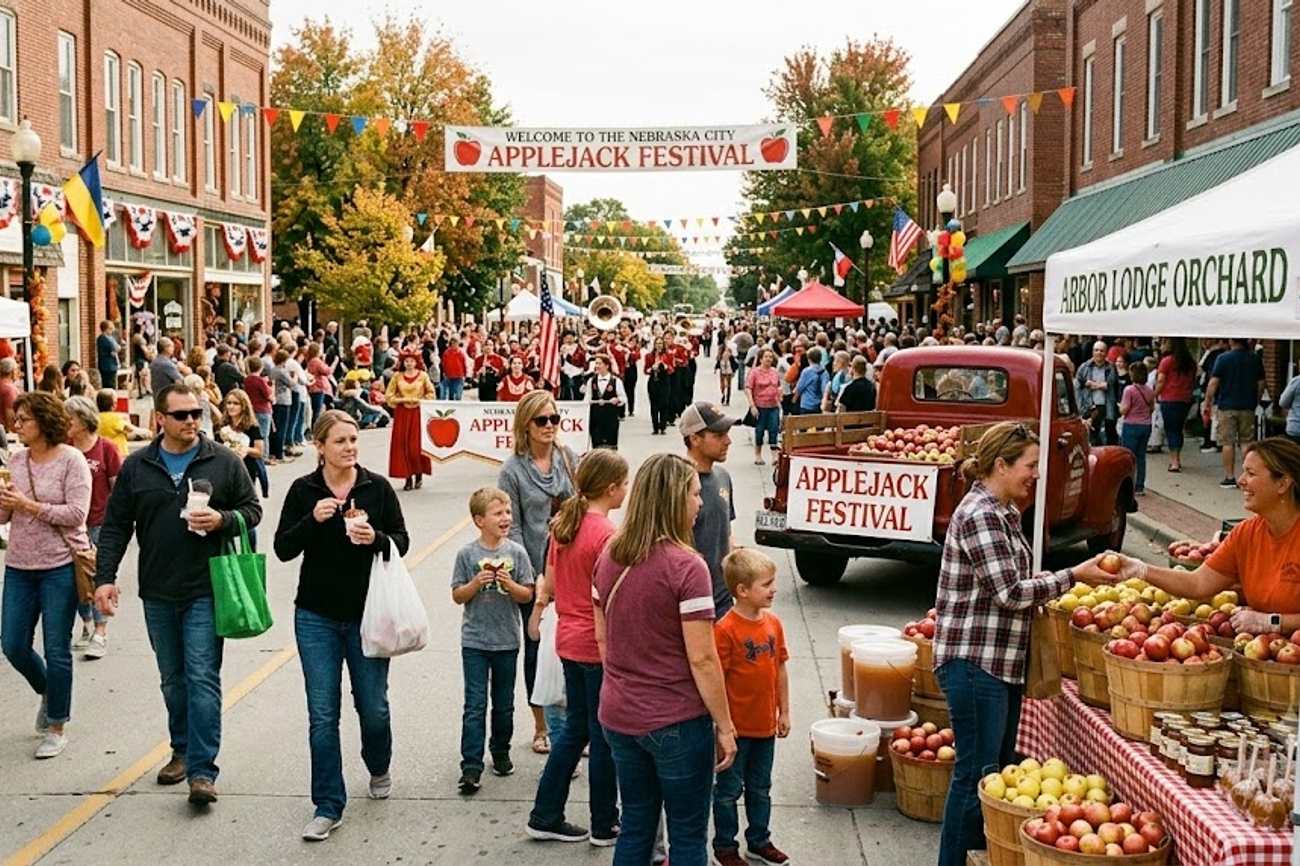
Image generated by AI
Agritourism participation in the United States has seen a steady climb, with the sector now contributing billions to the national GDP, yet localized harvest events like the AppleJack Festival demonstrate a shift toward "split-peak" scheduling to manage capacity. While traditional festivals historically condensed their impact into a single 72-hour window, Nebraska City’s 2026 strategy utilizes two distinct weekends—September 18-20 and September 26-27—to distribute visitor flow and maximize the economic yield of the autumn harvest.
The Agritourism Yield in Numbers: Nebraska City 2026
The 2026 AppleJack Festival serves as a primary case study in regional tourism distribution. By splitting the event across two weekends, the city is attempting to mitigate the "bottleneck effect" common in high-density harvest events. The first window (September 18-20) is engineered for maximum volume, integrating high-traffic assets including a carnival, a classic car show, and a city-wide parade. The second window (September 26-27) pivots toward a lower-density, high-engagement model focused on orchard activities and harvest experiences.
Data from the event's anchor participants reveals a commitment to longevity and educational integration. Kimmel Orchard and Vineyard is entering its 58th annual iteration of the festival on September 19 and 20. This longevity suggests a stable, multi-generational visitor base, which is a key metric for sustainable regional tourism. Furthermore, the integration of the University of Nebraska–Lincoln via the Education Jamboree—featuring live bees and robotics—indicates a shift from passive consumption (buying apples) to active educational tourism.
According to data tracked by the World Travel & Tourism Council (WTTC), the integration of educational components into leisure travel increases the average length of stay for family demographics. In Nebraska City, this is evidenced by the synergy between the urban center, Kimmel Orchard, and Arbor Day Farm, which encourages visitors to transition from day-trippers to overnight guests.
Comparative Context: Regional Harvest Models
When comparing the AppleJack Festival to other Midwestern harvest events, the "dual-weekend" structure is a strategic outlier. Most regional festivals operate on a single-weekend surge model, which often leads to infrastructure strain and diminished visitor satisfaction due to overcrowding. By extending the operational window, Nebraska City effectively doubles the opportunity for local hotels and restaurants to capture revenue.
The following table compares the two 2026 festival windows to highlight the shift in visitor intent and activity density:
| Metric | Weekend 1 (Sept 18-20) | Weekend 2 (Sept 26-27) | Shift Analysis |
|---|---|---|---|
| Primary Driver | Event-Based (Parade/Carnival) | Experience-Based (Harvest/Orchards) | High-Energy $\rightarrow$ Low-Energy |
| Crowd Density | Peak / Maximum | Moderate / Controlled | Volume $\rightarrow$ Value |
| Core Activities | Classic Cars, Vendor Shows, Rides | U-Pick Apples, Cider Tasting | Urban $\rightarrow$ Rural |
| Target Demographic | General Public / Large Groups | Families / Nature Seekers | Mass Market $\rightarrow$ Niche |
| Key Venues | Downtown + Orchards | Orchards + Arbor Day Farm | Centralized $\rightarrow$ Decentralized |
This distribution model aligns with broader trends seen in STR’s hospitality data, where regional destinations are increasingly seeking to "flatten the curve" of peak demand to improve RevPAR (Revenue Per Available Room) across a wider date range rather than relying on a single, volatile spike.
What This Means for Travelers
For the individual traveler, the data suggests that the "best" time to visit is entirely dependent on your tolerance for crowd density and your specific travel goals.
If your objective is the full cultural spectacle—including the parade and the carnival—the window of September 18-20 is non-negotiable. However, because this is the highest-density period, booking accommodation at Lied Lodge or within the city center should be completed 3-4 months in advance to avoid the inevitable sell-outs associated with peak harvest weekends.
Conversely, for those seeking a "slow travel" experience, the second weekend (September 26-27) offers a superior value proposition. With the removal of the high-traffic carnival and parade, the focus shifts to the agricultural experience. This period is ideal for those prioritizing the U-pick activities at Kimmel Orchard or the Tree Adventure at Arbor Day Farm.
Travelers should also account for the geographical spread of the festival. Because the activities are decentralized across downtown, Kimmel Orchard, and Arbor Day Farm, a single-day trip is inefficient. The data supports a minimum 48-hour stay to fully engage with the three primary hubs without excessive transit time.
Forward Projection: The Evolution of the Harvest Economy
Based on the current trajectory of the AppleJack Festival, we can project a further move toward "Edutainment." The partnership with the University of Nebraska–Lincoln is not an isolated event but a signal of where agritourism is heading. As indicated by UNWTO reports, there is a growing global demand for "transformative travel" where tourists leave with a new skill or piece of knowledge.
We expect Nebraska City to further integrate STEM (Science, Technology, Engineering, and Mathematics) into its harvest celebrations. The presence of robotics and pollinator studies in an orchard setting suggests that future iterations may include augmented reality (AR) orchard tours or deeper agricultural certifications for visitors.
Economically, the two-weekend model is likely to be adopted by other mid-sized Midwestern towns. By decoupling the "spectacle" (parades/carnivals) from the "experience" (picking/tasting), destinations can cater to two entirely different psychological profiles of travelers—the thrill-seeker and the escapist—within the same month.
FAQ: AppleJack Festival 2026
Will prices increase during the first weekend? While admission to public city events is typically free, expect higher premiums for local lodging and dining during September 18-20 due to peak demand. Booking early is the only way to hedge against these seasonal price spikes.
Is it better to visit Kimmel Orchard or Arbor Day Farm? This depends on your goal. Kimmel Orchard is the choice for traditional harvest activities and educational exhibits (robots/bees). Arbor Day Farm is better for those seeking a resort-style experience with lodge accommodations and nature trails.
Which weekend is best for children? Both offer value, but the first weekend (Sept 18-20) is superior for children who enjoy carnivals and parades. The second weekend is better for children interested in nature, apple picking, and a calmer environment.
Are the festivals accessible for those without a car? The festival is decentralized. While downtown is walkable, reaching Kimmel Orchard and Arbor Day Farm requires a vehicle. We recommend renting a car or arranging a shuttle if you are staying in Omaha or Lincoln.
The shift from a single-event spike to a distributed-experience model marks the professionalization of regional agritourism, turning a local harvest into a strategic economic engine.
#NebraskaCityTourism2026 #AgritourismGrowthMetrics #MidwestHarvestEconomics #KimmelOrchardData #ArborDayFarmCapacity #OtoeCountyVisitorTrends
Related Travel Guides
Disclaimer
This article is for informational and educational purposes only. It does not constitute legal, financial, or professional advice. While we strive to provide accurate and up-to-date information, travel policies, regulations, and conditions change rapidly. Always verify information with official sources before making travel decisions. Nomad Lawyer makes no representations about the accuracy, reliability, completeness, or suitability of the information provided. Readers should consult qualified professionals for advice specific to their circumstances. The views expressed in this article are those of the author and do not necessarily reflect the views of Nomad Lawyer.
Kunal K Choudhary
Co-Founder & Contributor
A passionate traveller and tech enthusiast. Kunal contributes to the vision and growth of Nomad Lawyer, bringing fresh perspectives and driving the community forward.
Learn more about our team →