
Mumbai Airport to Bandra Transit Guide 2026: Best Routes for BKC Business and Hotels
Navigate the 7-10km transit from Chhatrapati Shivaji Maharaj International Airport (CSMIA) to Bandra and BKC using optimized routes, current 2026 fare benchmarks, and monsoon-ready logistics.
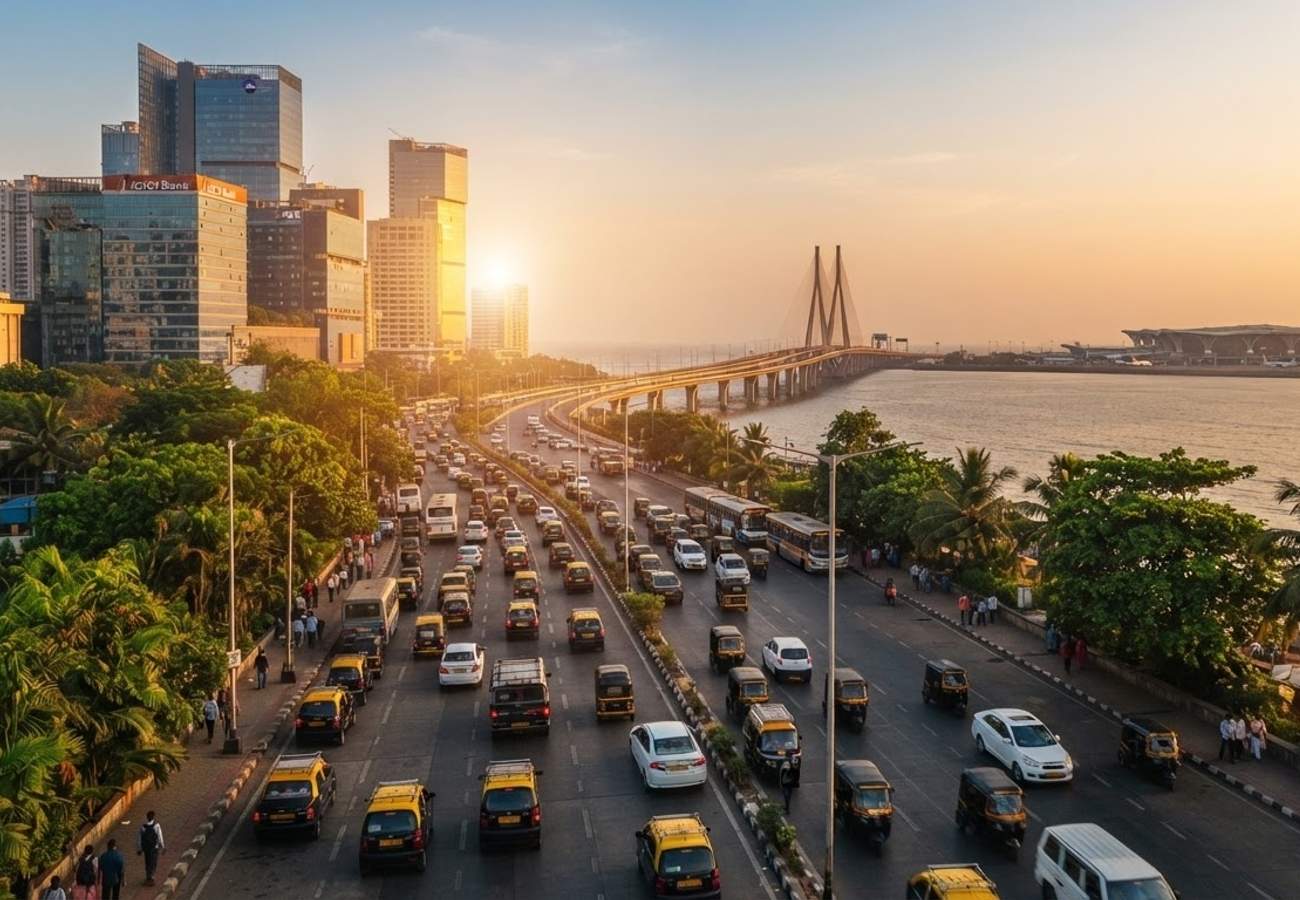
Image generated by AI
Transit from Chhatrapati Shivaji Maharaj International Airport (CSMIA) to Bandra involves navigating a short 7-10km distance that can fluctuate from a 20-minute sprint to a 60-minute crawl depending on peak-hour congestion and monsoon weather.
Navigating the CSMIA to Bandra Corridor
The transit link between Mumbai’s primary aviation hub and the Bandra district is a critical artery for corporate travelers heading to the Bandra Kurla Complex (BKC) and leisure visitors targeting Bandra West. The journey originates from either Terminal 2 (T2)—handling most international and select domestic flights—or Terminal 1 (T1), which serves low-cost domestic carriers.
While the physical distance is modest, the "traffic reality" of Mumbai dictates the actual travel time. A late-night transit from T2 to Hill Road in Bandra West typically clocks in at 20 to 25 minutes. However, weekday evening peaks often extend this to 45 minutes or more, primarily due to bottlenecks at the Kalanagar and BKC junctions.
For those targeting corporate hubs like One BKC or the Jio World Convention Centre, the distance is shorter (6 to 8 kilometers), but internal BKC signal-heavy loops typically add 10 to 15 minutes to the total trip.
Seasonal Impact: The Monsoon Factor
From June to September, heavy rainfall significantly alters logistics. Localized waterlogging near the Vakola flyover and Kalanagar can paralyze movement. During peak monsoon periods, travelers should budget up to 60 minutes for the transfer, regardless of the time of day.
Transit Options and Fare Benchmarks
Depending on luggage volume and familiarity with the city, travelers can choose between prepaid services, app-based aggregators, or traditional metered transport.
Transport Specifications & Estimated Costs
| Transport Mode | Estimated Fare (INR) | Est. Travel Time (Off-Peak) | Est. Travel Time (Peak) | Best For |
|---|---|---|---|---|
| Prepaid Taxi | ₹350 – ₹500 | 20–30 Mins | 45–60 Mins | First-time visitors, no local SIM |
| UberGo / Ola Mini | ₹250 – ₹400 | 20–30 Mins | 45–60 Mins | Budget-conscious, app users |
| Uber Premier / Ola Prime | ₹450 – ₹700 | 20–30 Mins | 45–60 Mins | Business travelers, extra comfort |
| Hotel Private Car | Premium Rates | 20–30 Mins | 45–60 Mins | VIPs, seamless luggage handling |
| Auto Rickshaw | Metered (Low) | 25–35 Mins | 50–70 Mins | Short hops, light luggage |
Traveler Logistics Guide: Ground-Level Execution
From a ground-level perspective, the most common friction points occur at the pickup zones and during the "last mile" of the journey.
Managing App-Based Pickups (Uber/Ola): At T2, ride-hailing services operate from designated zones in the multi-level parking structure (often around level P4). To avoid driver cancellations or waiting fees, do not request your vehicle immediately upon clearing customs. T2 is expansive; the walk to the app cab bay can take 10 to 15 minutes. Request the ride only once you are physically at the pickup level. Use the app's messaging feature to provide your exact pillar number (e.g., "Standing near P4, Zone C") to streamline the meeting process.
Utilizing Prepaid Taxis: For those without an active Indian SIM or data plan, the official prepaid counters inside T1 and T2 are the most reliable option. These counters provide a printed slip with a fixed fare, eliminating the need for price negotiation.
The Auto Rickshaw Limitation: Auto rickshaws are permitted in the suburbs (Bandra and northwards) but are strictly prohibited in South Mumbai. At CSMIA, autos do not have access to the elevated terminal curbs. Travelers must follow signage to the lower-level auto stands or the city bus area. These are best utilized for short distances within Bandra once you have checked into your hotel.
Hotel Transfers: For high-end properties such as the Trident BKC, Sofitel BKC, or Taj Lands End, hotel-arranged cars are recommended for those on tight schedules. These services provide meet-and-greet assistance, which is invaluable when navigating the crowded arrivals hall.
Infrastructure Impact Assessment
The connectivity between CSMIA and Bandra remains a focal point of Mumbai's urban planning. The concentration of corporate offices in BKC has turned this short stretch into one of the most high-pressure transit corridors in the city. While the distance is short, the reliance on a few key flyovers (Vakola and Kalanagar) creates a single point of failure during accidents or heavy rain.
The integration of app-based cabs has standardized pricing, but the physical layout of the airport terminals still creates a gap between the passenger and the vehicle, necessitating a disciplined approach to booking timing.
Navigate the chaos with a plan, and always account for the 'Mumbai Minute' when scheduling BKC meetings.
Related Travel Guides
Disclaimer
This article is for informational and educational purposes only. It does not constitute legal, financial, or professional advice. While we strive to provide accurate and up-to-date information, travel policies, regulations, and conditions change rapidly. Always verify information with official sources before making travel decisions. Nomad Lawyer makes no representations about the accuracy, reliability, completeness, or suitability of the information provided. Readers should consult qualified professionals for advice specific to their circumstances. The views expressed in this article are those of the author and do not necessarily reflect the views of Nomad Lawyer.