
Mumbai Airport Curtails 265 Weekly International Flights: Terminal 1 Closure, Airline Cuts, and Navi Mumbai Alternatives
CSMIA reduces 265 weekly international flights from 25 October 2026 as Terminal 1 closes for complete reconstruction through 2030, shifting domestic capacity to Terminal 2.

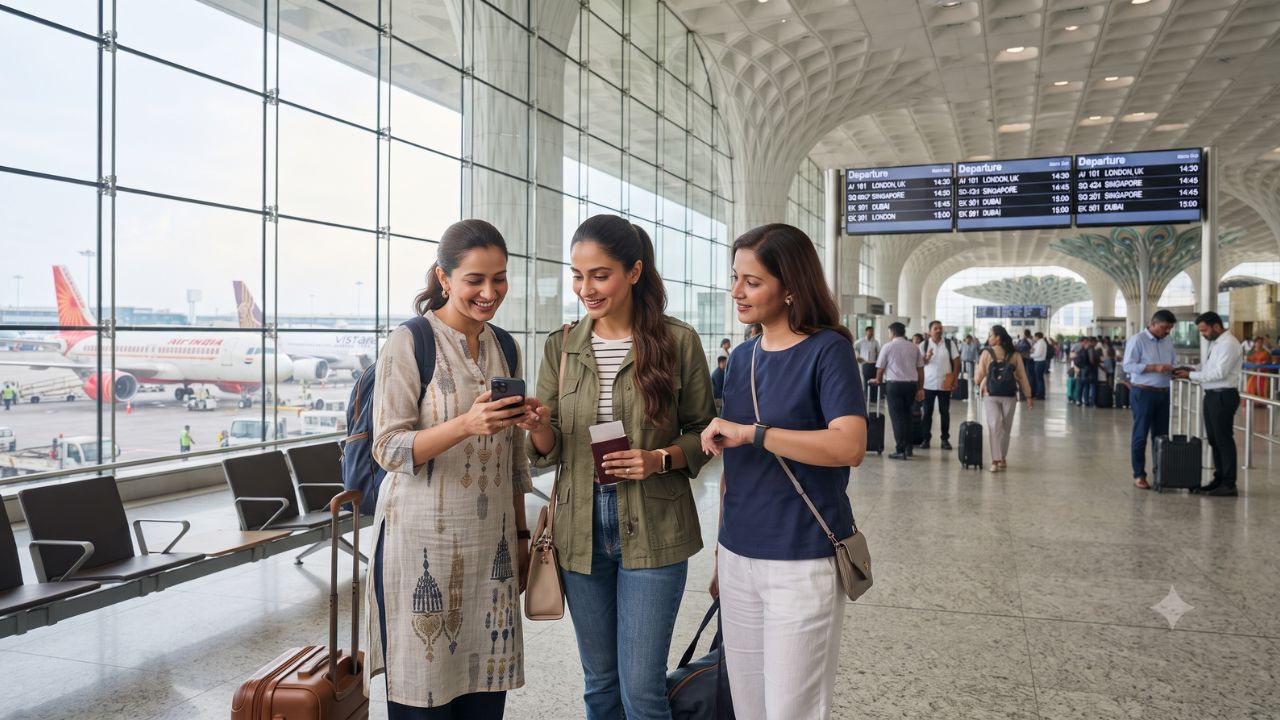
At 11:59 PM on 25 October 2026, Mumbai's Chhatrapati Shivaji Maharaj International Airport will eliminate 265 weekly international flights—a massive 33 percent reduction in overseas departure slots—to make room at Terminal 2 for domestic airlines displaced by the total demolition and rebuilding of Terminal 1. Occurring at the exact start of Maharashtra's winter tourist season, the four-year reconstruction project extends through 2029–2030, impacting 46 Indian and international carriers.
According to official statistics from the Ministry of Tourism, Mumbai welcomed 1.652 million foreign tourist arrivals in 2025, accounting for 18.06 percent of India's total international visitor entries. With major carriers like IndiGo losing 74 weekly international services, Air India shedding 33, and Gulf giants Emirates and Etihad trimming 10 weekly departures each, travelers heading to India's financial capital face tightened seat availability and shifting airline schedules.
Managed by Adani Airport Holdings, Chhatrapati Shivaji Maharaj International Airport CSMIA (BOM) is undertaking the reconstruction to increase Terminal 1's handling capacity by 42 percent to 20 million annual passengers by 2030. In the interim, navigating Mumbai's skies requires careful attention to airport codes, connecting buffers, and emerging alternatives at Navi Mumbai.
The Operational Squeeze: Why Terminal 1 Demolition Impacts Overseas Slots
Historically, Mumbai airport operated with a divided layout: Terminal 1 (Santacruz) handled low-cost domestic departures, while Terminal 2 (Sahar) processed full-service domestic routes alongside all international flights. When Terminal 1 closes in late October 2026 ahead of physical construction in January 2027, hundreds of daily domestic flights must be absorbed into Terminal 2.
MUMBAI CSMIA INTERNATIONAL FLIGHT REDUCTION AUDIT
| Impact Metric | Official 2026 Data | Core Operational Reason |
|---|---|---|
| Total Flights Cut | 265 Weekly Overseas | 33% reduction in international |
| & Effective Date | Services; 25 Oct 2026 | departure slots at 11:59 PM |
| Impacted Carriers | 46 Indian & Foreign | Domestic flights relocated |
| & Airlines Covered | Airlines Total | from T1 into Terminal 2 (T2) |
| Terminal 1 Target | Rebuilt by 2029–2030; | +42% capacity expansion to |
| & Construction | Heavy work starts Jan | 20 million passengers/year |
| Navi Mumbai (NMI) | 20M Passenger Cap; | Alternative gateway via Atal |
| Phase 1 Alternative | First flight July 2026 | Setu Trans Harbour Link bridge |
Because Terminal 2 has a finite number of contact gates, baggage carousels, and security check-in islands, airport authorities mandated a 33 percent cut in international departure slots. While this does not mean 265 distinct foreign destinations will vanish, airlines are consolidating frequencies, reducing multi-daily flights to single daily departures, or deploying larger widebody aircraft to preserve passenger capacity.
Carrier-by-Carrier Breakdown: Who Loses the Most Slots
The slot reductions fall heavily on major domestic carriers operating regional overseas flights to the Gulf, Southeast Asia, and Central Asia:
| Airline Operator | Curtailed Weekly Flights | Primary Affected Regional Corridors | Strategic Adjustment Planned |
|---|---|---|---|
| IndiGo | 74 Weekly Services | Dubai, Doha, Singapore, Bangkok, Muscat | Upgrading narrowbody A320s to A321neos |
| Air India | 33 Weekly Services | London Heathrow, Dubai, Newark, Frankfurt | Consolidating twin-aisle Boeing 777/787s |
| Akasa Air | 11 Weekly Services | Riyadh, Jeddah, Kuwait, Abu Dhabi | Re-routing frequencies via regional hubs |
| Emirates & Etihad | 10 Slots Each (20 Total) | Dubai (DXB) & Abu Dhabi (AUH) | Upgrading select frequencies to Airbus A380 |
| Air India Express | 7 Weekly Services | Gulf budget routes & direct worker feeds | Shifting services to Navi Mumbai (NMI) |
| SpiceJet | 5 Weekly Services | Middle East regional city hops | Frequency adjustments on key trunk routes |
Navi Mumbai International Airport (NMI): The Regional Pressure Valve
Travelers booking flights to the Mumbai Metropolitan Region must now pay close attention to three-letter airport codes. While Chhatrapati Shivaji Maharaj International Airport retains code BOM, the newly inaugurated Navi Mumbai International Airport operates under code NMI.
Navi Mumbai's Phase 1 terminal boasts a capacity of 20 million passengers annually. Following Air India Express launching its first scheduled international route to Abu Dhabi on 15 July 2026, several regional international services are expected to migrate to NMI. Connecting between BOM in Santacruz and NMI in Ulwe requires crossing the Mumbai Trans Harbour Link (Atal Setu), taking approximately 60 to 90 minutes by road depending on traffic.
What Makes Mumbai's Winter Travel Season Different
The timing of the flight reductions coincides with the peak travel season across Maharashtra. Between October and February, pleasant coastal weather, lower humidity, and major festivals attract hundreds of thousands of international cultural visitors, promoted through the Maharashtra Tourism Official Portal.
Mumbai is celebrated for its rich historical architecture, featuring the Victorian Gothic and Art Deco Ensembles of Mumbai and the majestic Chhatrapati Shivaji Maharaj Terminus, both inscribed on the UNESCO World Heritage Centre register. Travelers explore the colonial heritage of Fort and Colaba, take ferries to the ancient 5th-century rock-cut Elephanta Caves, and walk the iconic Marine Drive promenade.
Visitor Insider Tips
Navigating Mumbai's skies during the Terminal 1 reconstruction requires proactive travel strategies:
- Double-Check Airport Codes (BOM vs. NMI): When reserving domestic or international flights, verify whether your ticket departs from Mumbai CSMIA (BOM) or Navi Mumbai (NMI). Ensure you do not arrive at the wrong terminal across the bay.
- Book Peak Winter Flights Well in Advance: With 265 weekly international flights eliminated, economy and business class airfares to Dubai, London, and Singapore will experience heavy demand. Secure tickets three to four months prior to your intended travel date.
- Allow at Least Four Hours for International-to-Domestic Transfers: Because all domestic flights from Terminal 1 are consolidating inside Terminal 2, check-in halls and baggage claim areas will experience heavy passenger volume. Allow ample connection time between international arrivals and domestic connections.
- Use the Western Express Highway Metro Line 3: Avoid notorious road bottlenecks along the Western Express Highway. Utilize Mumbai Metro Line 3 (Aqua Line), which links Terminal 2 directly with Bandra-Kurla Complex (BKC) and South Mumbai via underground electrified rail.
- Explore Cultural Quarters in South Mumbai: Base yourself in Colaba, Kala Ghoda, or Marine Lines. You can walk between art galleries, historic Irani cafes like Britannia & Co., and waterfront promenades without navigating north Mumbai highway traffic.
Cultural and Environmental Context
The redevelopment of Terminal 1 represents a necessary modernization of India's oldest commercial aviation hub. Built in the mid-20th century, the existing domestic terminal lacked energy-efficient cooling and multi-modal transit connectivity.
The new terminal master plan integrates solar rooftop generation, rainwater harvesting, automated baggage handling, and direct underground metro links. By shifting regional point-to-point flights to Navi Mumbai and electrifying ground transport, the state aims to cut urban aviation congestion while protecting Mumbai's coastal environment.
FAQ: Navigating Mumbai Airport Flight Cuts 2026
When do the 265 weekly flight cuts take effect at Mumbai Airport?
The slot reductions take effect at 11:59 PM on 25 October 2026, coinciding with the start of the winter airline schedule.
Why is Terminal 1 closing at CSMIA?
Terminal 1 is closing for complete demolition and reconstruction through 2029–2030, increasing its capacity by 42 percent to handle 20 million annual passengers.
What is the difference between BOM and NMI airport codes?
BOM is the primary Chhatrapati Shivaji Maharaj International Airport in Mumbai city, while NMI is the new Navi Mumbai International Airport across the harbour in Ulwe.
Which airlines are facing the largest flight reductions?
IndiGo faces the largest cut with 74 weekly international services, followed by Air India with 33, Akasa Air with 11, and Emirates and Etihad with 10 slots each.
By checking airport codes early, booking flights in advance, and taking advantage of direct metro lines, travelers can navigate Mumbai's dynamic aviation landscape with ease.
Related Travel Guides
Disclaimer
This article is for informational and educational purposes only. It does not constitute legal, financial, or professional advice. While we strive to provide accurate and up-to-date information, travel policies, regulations, and conditions change rapidly. Always verify information with official sources before making travel decisions. Nomad Lawyer makes no representations about the accuracy, reliability, completeness, or suitability of the information provided. Readers should consult qualified professionals for advice specific to their circumstances. The views expressed in this article are those of the author and do not necessarily reflect the views of Nomad Lawyer.
Raushan Kumar
Founder & Lead Developer
Full-stack developer with 11+ years of experience and a passionate traveller. Raushan built Nomad Lawyer from the ground up with a vision to create the best travel and law experience on the web.
Learn more about our team →