
Mountain Wave Turbulence Over the Rocky Mountains Rattles Southwest, United, Delta, American, and Alaska Flights as Denver, Bozeman, and Albuquerque Top US Turbulence Rankings
A new report ranks Denver, Bozeman, and Albuquerque among America's most turbulent airports as mountain wave effects over the Rockies intensify disruptions for Southwest, United, Delta, American, and Alaska Airlines.

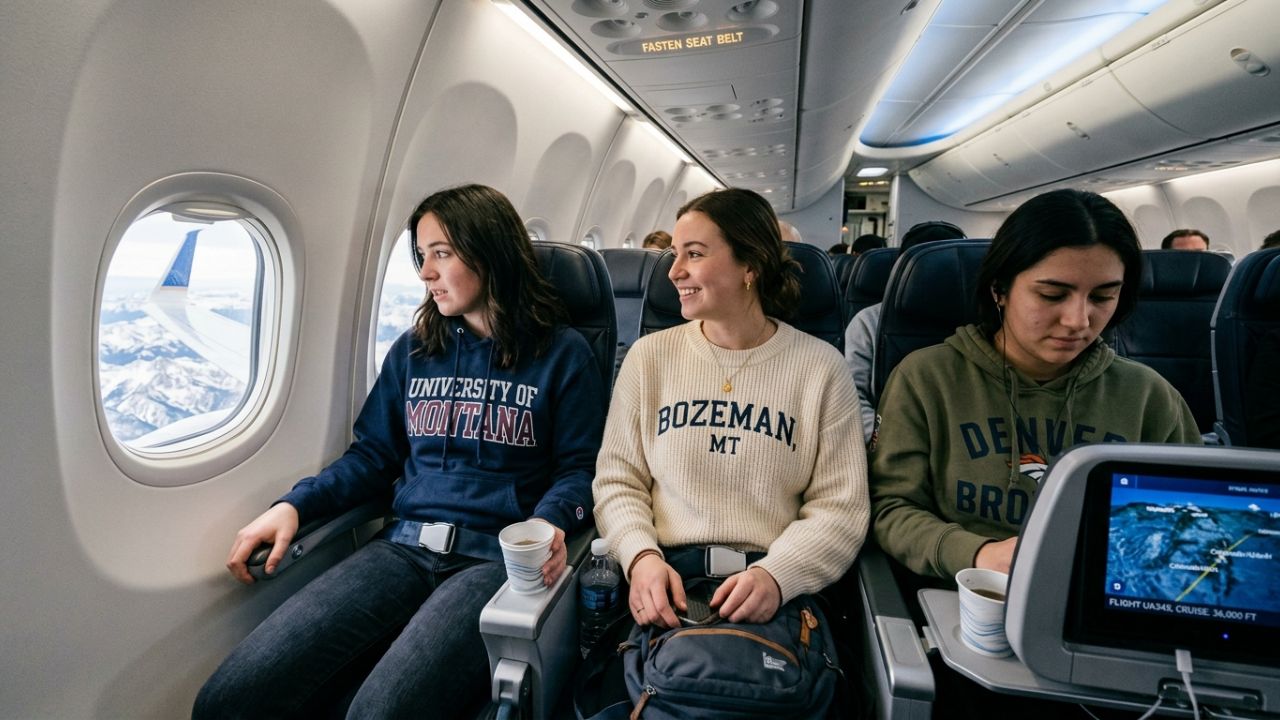
Image generated by AI
Mountain Wave Turbulence Over the Rocky Mountains Rattles Southwest, United, Delta, American, and Alaska Flights as Denver, Bozeman, and Albuquerque Top US Turbulence Rankings for 2026
Published on May 13, 2026
The Rocky Mountains are magnificent, awe-inspiring, and — according to a significant new aviation report — genuinely challenging for commercial aviation. A new analysis has ranked airports across America's Mountain West region among the most turbulence-intensive in the entire United States, with Denver International Airport, Bozeman Yellowstone International, and Albuquerque International Sunport emerging as the country's turbulence frontrunners for 2026. The culprit is a powerful and persistent atmospheric phenomenon known as mountain wave turbulence — a condition created when powerful wind currents flow over the Rockies, Sierra Nevada, and surrounding ranges, generating wave-like disturbances that extend thousands of feet into the atmosphere and remain active long after aircraft have left the mountain zone. Southwest Airlines, United Airlines, Delta Air Lines, American Airlines, and Alaska Airlines are the carriers absorbing the most significant disruption from this natural aviation challenge. And for the millions of international visitors from Mexico, Canada, the UK, Japan, Germany, and South Korea who route through Mountain West hubs each year, this is the atmospheric reality that demands a clear-eyed traveler response.
Quick Summary:
- Denver International Airport, Bozeman Yellowstone International, and Albuquerque International Sunport have been ranked among America's most turbulent airports in 2026, driven by mountain wave effects over the Rocky Mountains.
- Airlines most affected: Southwest Airlines, United Airlines, Delta Air Lines, American Airlines, and Alaska Airlines — all operating high-frequency services into Mountain West hubs.
- Root cause: Mountain wave turbulence — atmospheric waves generated when wind flows over major mountain ranges including the Rockies and Sierra Nevada — creates unstable air conditions particularly acute during approach and departure phases at Mountain West airports.
- Other high-turbulence airports identified: Salt Lake City International, Jackson Hole Airport (Wyoming), and other Mountain West regional hubs.
- International travelers from Mexico, Canada, UK, Japan, Germany, and South Korea particularly urged to prepare — these nations represent the largest inbound international traveler groups through Mountain West airport gateways.
- No direct safety crisis — modern commercial aircraft are certified to withstand turbulence well beyond operational norms, and airlines have significantly enhanced real-time turbulence forecasting capabilities.
- Travelers advised to keep seatbelts fastened throughout flights, stow carry-on bags securely, and remain flexible with itineraries through turbulence-affected Mountain West routes.
What Is Mountain Wave Turbulence — and Why Is It So Intense Over the Rockies?
To understand why Denver, Bozeman, and Albuquerque are at the top of America's turbulence rankings, it is essential to understand the specific atmospheric mechanics that make the Mountain West's geography so uniquely challenging for commercial aviation.
Mountain wave turbulence is generated when strong horizontal winds — typically flowing from the west across the prevailing pattern of the Rocky Mountains — encounter the dramatic vertical topography of the range. As air is forced upward over peaks like Longs Peak in Colorado, Granite Peak in Montana, and Wheeler Peak in New Mexico, it creates wave-like oscillations in the atmosphere that extend both upward and downward from the mountain crests.
These atmospheric waves — invisible to the naked eye but measurable with modern meteorological equipment — can reach altitudes of 30,000 to 45,000 feet, directly within the cruising altitude of commercial jet aircraft. Unlike convective turbulence (generated by thunderstorm activity and typically predictable and localized), mountain wave turbulence can extend hundreds of miles downwind of the mountain crest — meaning that aircraft well beyond visual range of the Rockies can still experience significant wave effects.
At Denver International Airport — which sits at 5,431 feet elevation on Colorado's High Plains, directly downwind of the Front Range — arriving and departing aircraft routinely pass through the mountain wave zone during approach and departure, making it structurally one of the most turbulence-exposed major airports in the United States.
Denver International: America's High-Plains Aviation Hub at the Turbulence Epicenter
Denver International Airport (DEN) — the fifth-busiest airport in the United States and the primary hub serving the broader Mountain West region — sits at the intersection of extraordinary aviation demand and exceptional atmospheric challenge.
Denver serves as a critical connecting hub for United Airlines, with Southwest Airlines operating one of its highest-frequency domestic networks from DEN. Delta, American, and Alaska Airlines all maintain significant Denver operations, connecting the city to both coasts, international destinations, and the broader Mountain West ski resort, national park, and outdoor adventure travel network.
The extraordinary destinations accessible from Denver — the ski slopes of Aspen, Vail, Steamboat Springs, and Breckenridge; the extraordinary wilderness of Rocky Mountain National Park; the red rock landscapes of Mesa Verde and Arches; and the world-class cultural scene of Denver itself — make it one of America's most aspirationally desirable aviation destinations.
But Denver's location directly downwind of the Front Range makes mountain wave turbulence a near-constant feature of the DEN approach and departure corridor, particularly during the high-wind periods of winter and spring when the strongest jet stream conditions interact with the Rockies' topography.
For travelers flying through DEN — whether for a Colorado ski adventure, a national park road trip, or a United hub connection onward to Europe or Asia — understanding the turbulence context is part of intelligent travel planning.
Bozeman: Gateway to Yellowstone and America's Most Beautiful Turbulence Zone
Bozeman Yellowstone International Airport (BZN) has emerged as one of the most significant growth airports in the United States over the past decade, driven by the explosive expansion of Bozeman as a destination city and the gateway role it plays for visitors heading to Yellowstone National Park and the extraordinary Big Sky and Bridger Bowl ski areas.
Bozeman's location in Montana's Gallatin Valley — surrounded by the Bridger Range to the northeast, the Gallatin Range to the south, and the Madison Range to the west — creates a geographic bowl effect that makes mountain wave turbulence particularly pronounced during approach and departure.
For travelers making the journey to Bozeman for the extraordinary wildlife experience of Yellowstone's geysers and bison herds, the luxury resort skiing of Big Sky, or the dramatic scenery of the Beartooth Highway, the turbulence profile of BZN is a genuine feature of the travel experience — one worth understanding and preparing for rather than being surprised by.
Delta, United, and Alaska Airlines all serve Bozeman from major hubs, making it accessible from most major US cities. The turbulence on approach is frequently described by travelers as significant — particularly during winter and spring when mountain wave conditions are most active — but the extraordinary destination that waits beyond the approach corridor makes every bumpy landing entirely worthwhile.
Albuquerque and the Desert Mountain Effect: The Southwest Turbulence Story
Albuquerque International Sunport (ABQ) rounds out the top three most turbulent US airports in the 2026 rankings — a designation that reflects the unique confluence of high-altitude geography and the dramatic mountain wall presented by the Sandia Mountains directly to the east of the city.
Albuquerque sits at 5,352 feet elevation in the Rio Grande valley, with the Sandia Mountains rising to 10,679 feet directly behind the airport's eastern approach corridor. Wind-driven mountain wave effects from the Sandias create turbulence that is frequently described as sharp and unexpected — the desert landscape providing none of the visual cues that passengers associate with mountain turbulence in ski resort destinations.
Southwest Airlines operates its most significant Albuquerque presence of any major carrier, connecting ABQ to its network across Texas, California, and the broader Southwest. United, American, and Delta also serve Albuquerque with hub connections that route passengers through Denver, Dallas/Fort Worth, Los Angeles, and Phoenix.
For travelers flying to Albuquerque to experience Balloon Fiesta — the world's largest hot air balloon event, held each October and drawing hundreds of thousands of visitors — or to explore the Turquoise Trail, Old Town Albuquerque, and the extraordinary cultural landscape of New Mexico, the Sunport's turbulence reputation is part of a dramatic and rewarding destination story.
The International Dimension: What Mexico, Canada, UK, Japan, Germany, and South Korean Travelers Need to Know
The Mountain West's turbulence challenge extends beyond the domestic traveler experience. International visitors from the countries that generate the largest inbound travel volumes to US Mountain West airports face the same atmospheric conditions — often without the contextual understanding that domestic frequent flyers have developed over years of Rocky Mountain routing.
Mexican travelers — representing one of the largest international visitor groups to Mountain West ski and outdoor destinations — typically route through Denver or Phoenix and onward to mountain resort airports, where the terrain-driven turbulence can be particularly pronounced on final approach to smaller airports like Aspen (ASE), Steamboat Springs (HDN), and Telluride (TEX).
Canadian travelers — particularly from Vancouver, Calgary, and Toronto — arrive in significant numbers at both Denver and Bozeman for ski tourism, with Canadian visitors to Yellowstone and Grand Teton representing a major component of those national parks' international visitation.
UK, Japanese, German, and South Korean travelers — all significant contributors to US mountain tourism through the ski, national park, and adventure travel segments — typically experience their first introduction to mountain wave turbulence on long-haul connecting flights through Denver, where the final approach over the Front Range can be a notably physical experience.
Airlines Adapting: How Southwest, United, Delta, American, and Alaska Are Responding
The major airlines serving Mountain West routes have been progressively enhancing their turbulence management capabilities in direct response to the intensity of Rocky Mountain atmospheric conditions.
Advanced turbulence forecasting — using a combination of PIREPs (Pilot Reports), automated weather observation systems, and increasingly AI-driven atmospheric modeling — allows dispatchers and flight crew to identify and partially route around the most intense mountain wave regions. While complete avoidance is impossible given the geographic extent of mountain wave effects, strategic altitude adjustments and minor route deviations can meaningfully reduce passenger exposure to the sharpest turbulence zones.
Pilot training specific to mountain operations remains a priority for all major carriers serving Denver, Bozeman, Salt Lake City, Jackson Hole, and Albuquerque. The approach procedures at many Mountain West airports require specialized training that goes beyond standard commercial instrument approach qualifications, reflecting the unique demands of high-altitude, terrain-influenced operations.
Structural aircraft certification — all commercial aircraft operated by Southwest, United, Delta, American, and Alaska in Mountain West service are certified to withstand turbulence forces far exceeding normal operational exposures — provides the fundamental safety baseline that makes routine mountain wave turbulence a passenger comfort challenge rather than a safety threat for properly fastened passengers.
Guide for Travelers:
- Always keep your seatbelt fastened throughout Mountain West flights — including when the seatbelt sign is off. Mountain wave turbulence can be sudden and intense, and fastened seatbelts are the single most effective passenger safety measure available.
- Stow carry-on bags completely in overhead bins or under the seat in front of you. Unsecured items can become dangerous projectiles during sharp turbulence — this is not a formality at Mountain West airports.
- Choose window seats for situational awareness — while window seats don't reduce turbulence, many travelers find that being able to see the horizon and terrain provides reassurance during turbulent approaches.
- Check real-time turbulence maps before your flight via Turbli.com, Windy.com, or the Turbulence Forecast feature within Flightradar24. These tools provide a visual turbulence prediction that helps contextualize what your flight crew will encounter.
- Consider travel insurance with trip interruption coverage for Mountain West itineraries — particularly for ski resort and national park trips where turbulence-related delays can compress carefully planned itineraries.
- Book direct flights where possible — reducing the number of Mountain West approaches minimizes cumulative turbulence exposure during multi-leg mountain itineraries.
- For nervous flyers: The SOAR turbulence-focused flying anxiety program and the "Am I Going Down?" app (based on real flight safety statistics) both provide evidence-based reassurance for turbulence anxiety. Consulting your airline crew about your anxiety before departure is always welcomed.
- Best times to fly through Denver with lower turbulence probability: Early morning departures and arrivals (before 8 AM local time) typically experience less intense mountain wave activity than afternoon and evening windows, when daytime heating amplifies convective effects on top of mountain wave patterns.
- Jackson Hole Airport (JAC) tip: Jackson Hole has one of the most dramatically beautiful and operationally challenging approach corridors in the US — a runway at 6,451 feet elevation surrounded by the Teton Range. Budget extra time and flexibility in your Jackson Hole itinerary to account for weather holds and turbulence-related delays.
Related Travel Guides
- US Flight Chaos: United, Delta, Southwest, and Alaska Cancel 44 Flights and Delay 1,400 More Across America
- Southwest, Delta, and Hawaiian Airlines Hit Las Vegas with 55 Delays at Harry Reid International
- Europe's Jet Fuel Crisis Threatens Summer Travel as EU Issues Emergency Aviation Guidance
The Rocky Mountains, the Sierra Nevada, the Tetons, and the Sangre de Cristo ranges are among the most magnificently beautiful landscapes on Earth — and they are also among the most aerodynamically challenging geographic features that commercial aviation has to navigate every single day. Mountain wave turbulence is not a new problem or an escalating crisis — it is a permanent feature of flying through one of the world's most dramatic landscapes, managed with extraordinary skill by the pilots of Southwest, United, Delta, American, and Alaska Airlines on thousands of Mountain West flights every day. Denver, Bozeman, and Albuquerque remain world-class aviation gateways to some of the most extraordinary outdoor, cultural, and adventure experiences that the United States has to offer. The turbulence is real. The destinations are extraordinary. And the mountains — magnificent and immovable — will always be worth the bumpy approach that brings you to them.
Disclaimer
This article is for informational and educational purposes only. It does not constitute legal, financial, or professional advice. While we strive to provide accurate and up-to-date information, travel policies, regulations, and conditions change rapidly. Always verify information with official sources before making travel decisions. Nomad Lawyer makes no representations about the accuracy, reliability, completeness, or suitability of the information provided. Readers should consult qualified professionals for advice specific to their circumstances. The views expressed in this article are those of the author and do not necessarily reflect the views of Nomad Lawyer.
Kunal K Choudhary
Co-Founder & Contributor
A passionate traveller and tech enthusiast. Kunal contributes to the vision and growth of Nomad Lawyer, bringing fresh perspectives and driving the community forward.
Learn more about our team →