
Tokyo Mount Takao Bear Sighting Triggers High-Alert Safety Protocols for Silver Week Hikers
Asiatic black bear camera sighting on Mount Takao Trail No. 1 prompts safety advisories across Tokyo ahead of Silver Week.

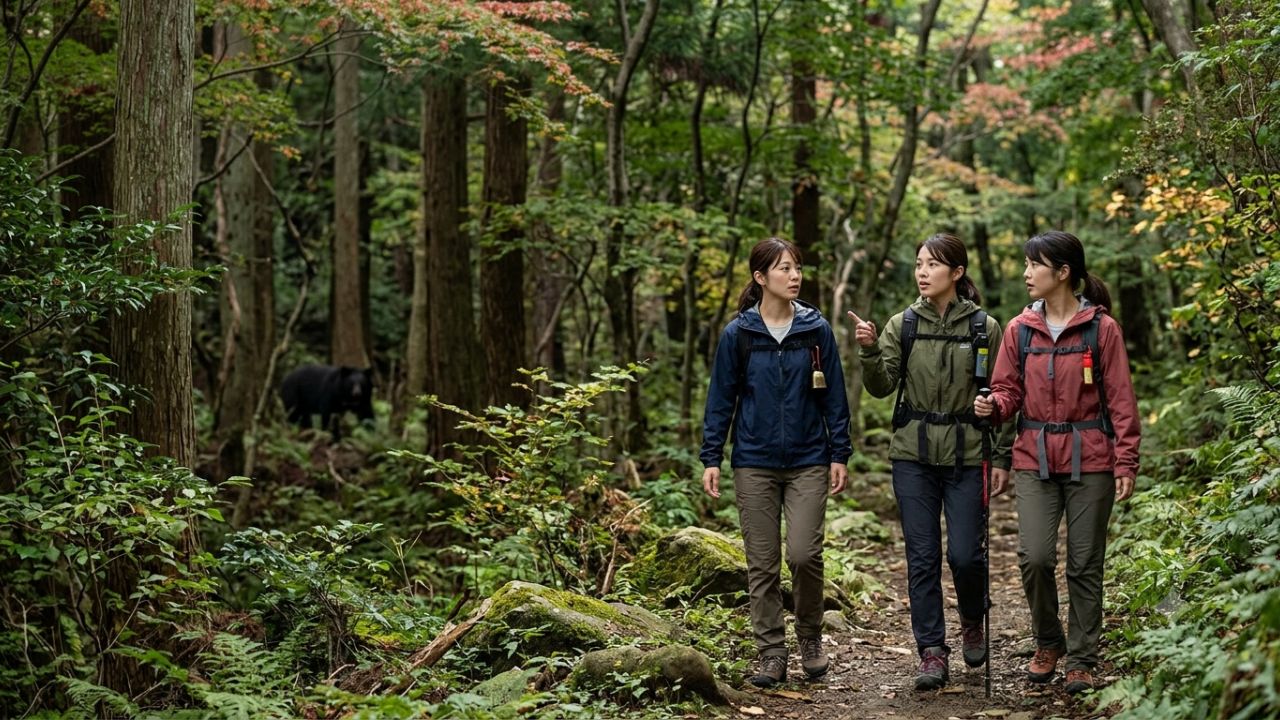
Image generated by AI
A confirmed Asiatic black bear sighting along Trail No. 1 on Mount Takao in western Tokyo has prompted municipal authorities to issue urgent safety warnings for hikers ahead of the Silver Week holiday. Verified by Hachioji City officials and the Tokyo Metropolitan Government, trail cameras captured the bear just 70 meters north of the Shiromidai viewing point, signaling rising wildlife activity across the capital's Tama region.
The sighting occurred at approximately 11 p.m. on August 20, 2026, along a heavily paved section of Trail No. 1 surrounded by dense forest canopy. Because Mount Takao serves as one of Tokyo's primary outdoor destinations—accessible via Takaosanguchi Station—the proximity of the animal to established walking paths has prompted immediate safety advisories for incoming holiday crowds.
Mount Takao Incident Details and Tama Wildlife Population Dynamics
Environmental data from a Tokyo Metropolitan Government survey conducted in fiscal 2025 estimated the bear population in the forests of western Tokyo's Tama region to be between 120 and 378 animals, with indicators pointing toward a growing population. Metropolitan authorities maintain an online bear tracking portal mapping confirmed sightings, camera footage, and footprint evidence across the capital's western perimeter.
Tokyo Metropolitan Area Wildlife Indicators (2026)
├── Location of Sighting  : Mount Takao Trail No. 1 (70m North of Shiromidai)
├── Camera Log Timestamp  : 11:00 PM, August 20, 2026
├── Tama Region Bear Count: 120 to 378 Asiatic Black Bears (FY2025 Survey)
├── Primary Danger Window : Dawn, Dusk, and Nighttime Low-Visibility Hours
└── Key Safety Protocols  : Bear Bells, Group Travel & Tree Canopy Inspection
Widespread bear encounters have also been recorded nationwide during September. On September 3, a bear was filmed carrying a harvested pear in an orchard in Miyoshi, Hiroshima Prefecture, causing crop damage. On the same day, police in Maizuru, Kyoto Prefecture, dispatched emergency armed units after two bears appeared near a residential home. Additionally, a bear sighting in a suburban neighborhood in Tendo, Yamagata Prefecture, on September 7 led to localized road closures.
To protect attendees at the annual Imoni Festival scheduled for September 20 in Yamagata City, event organizers deployed pyrotechnics and firecrackers in surrounding mountains between September 16 and September 19. Furthermore, organizers relocated an automated "Monster Wolf" acoustic deterrent—a sensor-equipped system projecting over 50 distinct protective sounds—closer to the festival perimeter on September 18.
Ecological Analysis and Hospitality Sector Adaptation
Explaining the seasonal surge in wildlife encounters, Takayoshi Yamauchi, an associate professor specializing in bear ecology in the Faculty of Agriculture at Iwate University, noted that natural food sources for bears become scarce during August, driving animals toward peripheral low-elevation zones. As wild fruits and nuts ripen in September, bears remain stationary in feeding zones, overlapping directly with autumn hikers and mushroom collectors.
Seasonal Bear Behavior & Travel Friction (Iwate University Assessment)
├── Late Summer (August)  : Food Scarcity Forces Bears into Peripheral Urban Zones
├── Early Autumn (Sept)   : Ripening Crops Keep Bears Stationary in Feeding Areas
└── Travel Overlap Risk   : Heightened Friction During Peak Silver Week & Foliage Season
Commercial operators near Mount Takao are adjusting daily operations to manage wildlife risks. Daichi Usui, deputy manager of the Takao Coffee main store, emphasized that local businesses have instituted strict outdoor waste containment protocols to eliminate food scents that could attract animals to commercial trailheads.
Japan Wildlife Encounters and Municipal Safety Responses (2026)
The table below summarizes recent Asiatic black bear encounters, locations, and municipal safety responses across Japan.
| Incident Location | Date / Timestamp | Wildlife Activity & Details | Municipal & Operational Response |
|---|---|---|---|
| Mount Takao, Tokyo (Trail No. 1) | 20 August 2026 (11:00 PM) | Asiatic black bear logged 70m north of Shiromidai | Night hiking ban advisory & digital map tracking |
| Miyoshi, Hiroshima Prefecture | 3 September 2026 | Bear observed foraging pears in commercial orchard | Agricultural damage assessment & orchard patrols |
| Maizuru, Kyoto Prefecture | 3 September 2026 | Two bears reported adjacent to residential homes | Emergency police firearms dispatch & warning alerts |
| Tendo, Yamagata Prefecture | 7 September 2026 | Bear entry into suburban residential district | Localized road closures & school safety escorts |
| Yamagata City (Imoni Festival) | 16–19 September 2026 | Preemptive deterrents prior to 20 Sept event | Firecracker deployment & Monster Wolf relocation |
Why This Matters (Information Gain & Experience)
For international travelers and local residents visiting Mount Takao during Silver Week, the bear sighting requires shifting from routine walking to active wildlife awareness. Because Trail No. 1 is paved and widely considered an easy urban walk, many visitors arrive unprepared for mountain wildlife encounters.
From a practical perspective, hikers must carry active acoustic deterrents—such as traditional metal bear bells or handheld noise devices—to continuously signal human presence along forest corridors. Additionally, because bears frequently climb trees to feed on acorns and wild fruit, hikers should routinely inspect the upper tree canopy rather than looking strictly at the footpath ahead.
Local authorities have implemented heightened safety protocols and increased patrols on Mount Takao to protect hikers during the busy Silver Week period. Visitors are urged to follow official safety guidelines and check current trail alerts via the Tokyo Metropolitan Government website before departing.
Traveler Logistics Guide: Navigating Mount Takao Safely
Hikers visiting Mount Takao and the Tama region can protect their outdoor itineraries by following established municipal safety guidelines.
1. Night and Low-Visibility Hiking Restrictions
- Avoid Night Hikes: Hachioji City authorities strongly advise hikers to avoid entering Mount Takao during low-visibility hours, specifically between sunset and sunrise, when Asiatic black bears are most active.
- Plan Day Returns: Ensure your return journey via the Takao Tozan Railway cable car or Trail No. 1 footpaths is completed well before dusk.
2. Mandatory Acoustic & Visual Safety Gear
- Carry Bear Bells: Attach a clear-sounding bear bell to your daypack to signal human presence continuously along forested trail sections.
- Inspect Tree Canopies: Asiatic black bears frequently feed in tall trees along Trail No. 1 and Trail No. 6. Maintain visual awareness of both the ground trail and upper branches.
3. Scent Management and Fragrance Rules
- Eliminate Strongly Scented Products: Avoid wearing heavy perfumes, scented body sprays, or carrying open food containers that may attract animal attention.
- Pack Out Food Waste: Store all food wrappers and trash inside sealed, airtight bags and dispose of waste off the mountain.
4. Real-Time Tracking & Emergency Protocols
- Check Tokyo Bear Maps: Consult the Tokyo Metropolitan Government's online bear sighting map before embarking on outdoor excursions in the Tama region.
- Group Travel: Hike in small groups rather than alone, especially along secondary unpaved routes like the Inariyama Trail or Trail No. 6.
Infrastructure Impact Assessment and Wildlife Coexistence
The response to the Mount Takao bear sighting highlights a shift toward proactive wildlife tracking in Japanese tourism management. Rather than issuing reactive advisories after an incident occurs, metropolitan authorities deploy digital tracking maps, automated acoustic systems like the Monster Wolf, and strict commercial waste management.
By integrating real-time wildlife monitoring with clear hiker safety protocols, municipal authorities ensure that major natural attractions like Mount Takao remain accessible while safeguarding both visitors and native animal populations during peak holiday windows.
Frequently Asked Questions: Mount Takao Bear Safety 2026
Where was the bear sighted on Mount Takao?
The Asiatic black bear was captured on camera at 11 p.m. on August 20, 2026, approximately 70 meters north of Shiromidai on Trail No. 1 on Mount Takao in Hachioji City, Tokyo.
Is it safe to hike Mount Takao during Silver Week?
Yes, provided hikers take precautions. Municipal authorities recommend hiking during daylight hours, traveling in groups, carrying bear bells, and avoiding night or early morning hikes.
How many bears live in the Tokyo Tama region?
A FY2025 Tokyo Metropolitan Government survey estimated the Asiatic black bear population in the western Tama region of Tokyo to be between 120 and 378 animals.
What should hikers do if they encounter a bear on Mount Takao?
Hikers should avoid running or making sudden movements. Back away slowly while keeping your eyes on the animal, avoid direct aggressive eye contact, and move to a safe, enclosed shelter or crowded area.
Related Travel Guides
Heavy Rain Triggers Widespread Travel Disruptions Across Eastern Japan Ahead of Silver Week Holiday
Disclaimer
This article is for informational and educational purposes only. It does not constitute legal, financial, or professional advice. While we strive to provide accurate and up-to-date information, travel policies, regulations, and conditions change rapidly. Always verify information with official sources before making travel decisions. Nomad Lawyer makes no representations about the accuracy, reliability, completeness, or suitability of the information provided. Readers should consult qualified professionals for advice specific to their circumstances. The views expressed in this article are those of the author and do not necessarily reflect the views of Nomad Lawyer.
Kunal K Choudhary
Co-Founder & Contributor
A passionate traveller and tech enthusiast. Kunal contributes to the vision and growth of Nomad Lawyer, bringing fresh perspectives and driving the community forward.
Learn more about our team →