
Mount Manaslu Autumn Season Kicks Off With Record 466 Climbers and Historic Permit Revenue in Nepal
Mount Manaslu Autumn Season Kicks Off With Record 466 Climbers and Historic Permit Revenue in Nepal

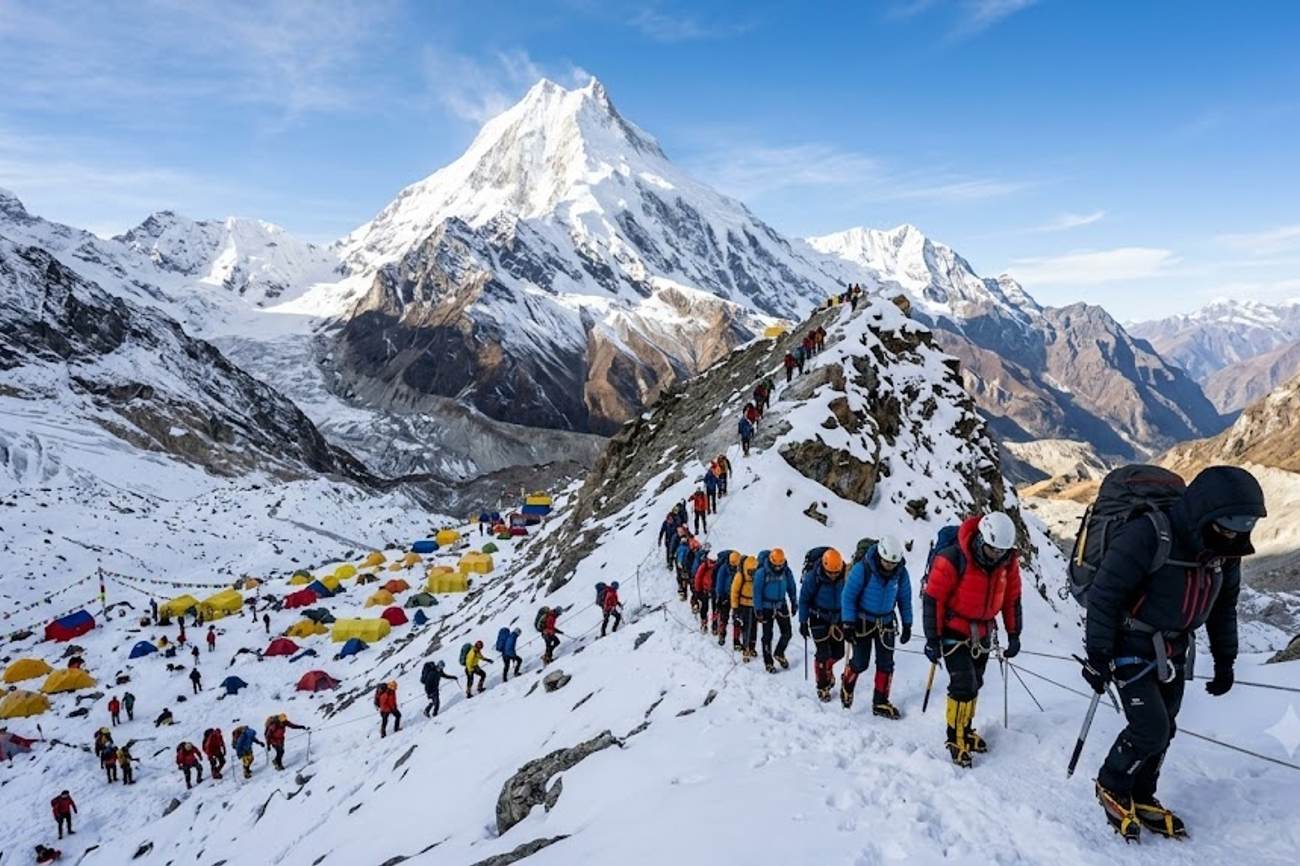
Image generated by AI
Are you planning a high-altitude expedition to the world's eighth-highest peak this autumn? Navigating the logistics of Mount Manaslu requires more than just physical endurance; it demands a precise understanding of permit protocols and regional transit.
The Manaslu Autumn Ascent Surge
The current climbing season for Mount Manaslu has officially begun, marking a historic peak in participation. According to the Department of Tourism, 466 climbers have secured official permits to attempt the 8,163-metre summit. This is the highest number of registered climbers in the mountain's history since it first opened for mountaineering on May 9, 1956.
The logistical scale of this season is unprecedented. The 466 participants are divided into 39 distinct expedition groups, comprising 342 men and 124 women. These teams are currently operating out of the base camp located in Samagaun, within the Chumanubri Rural Municipality-1 of Gorkha. Based on current meteorological data and pacing, the primary ascent window is expected to close within the next two to three weeks.
From a financial logistics perspective, the surge in interest has resulted in a record-breaking revenue collection of Rs 212.44 million from permit fees alone. This influx of capital reflects a significant post-pandemic recovery in high-altitude adventure tourism and a shift in preference toward Manaslu as a primary objective for international mountaineers.
Route and Schedule Details
The transit to the summit is a phased operation. While the final push takes a few weeks, the overall journey from Kathmandu to the summit involves several stages of acclimatization and transport.
| Route Segment | Frequency | Primary Mode | Duration | Status |
|---|---|---|---|---|
| Kathmandu to Gorkha | Daily | Private Jeep/Bus | 5-7 Hours | Operational |
| Gorkha to Samagaun | Seasonal | Trekking/Porter | 7-10 Days | Active |
| Samagaun to Base Camp | Seasonal | Trekking/Porter | 2-3 Days | Active |
| Base Camp to Summit | Once per Season | Technical Climb | 2-3 Weeks | In Progress |
Traveler Logistics Guide
Scaling a peak of 8,163 metres requires a rigid logistical framework. If you are coordinating transport for a team or joining an established expedition, follow these step-by-step requirements.
1. Permit Acquisition and Documentation You cannot enter the Manaslu region without official clearance. All documentation must be processed through the Department of Tourism (DoT) in Kathmandu. Ensure your permits are secured well before the autumn window opens, as the record-breaking volume of 466 climbers this year has put additional pressure on administrative processing.
2. Ground Transport to Gorkha The first leg of the journey involves transit from the capital to the Gorkha district. I recommend hiring private 4WD vehicles rather than public buses to ensure your gear—which is substantial for an 8,000-metre peak—is transported securely. Be prepared for rugged road conditions that can fluctuate based on seasonal rainfall.
3. The Samagaun Transit Hub Samagaun serves as the primary logistical node for the Chumanubri Rural Municipality. This is where teams establish their final staging areas. Upon arrival, it is standard practice to observe local cultural protocols. This includes the traditional prayer ceremony led by a Lama, which is a mandatory spiritual and social integration step for most expeditions.
4. Porter and Support Crew Management With 39 groups currently on the mountain, the demand for porters and support staff is at an all-time high. If you are organizing your own support, contract your crews early. Ensure that all support staff have the necessary insurance and high-altitude gear, as the economic surge in the region has led to increased competition for experienced high-altitude personnel.
5. Health and Evacuation Logistics At 8,163 metres, medical emergencies are a high probability. Your logistics plan must include a verified medical evacuation protocol. This includes having a satellite communication device and a pre-arranged agreement with helicopter rescue services operating out of Kathmandu. Do not rely on local ground transport for emergencies; aerial evacuation is the only viable option from the Samagaun area.
Nepal's tourism sector has seen a significant surge in high-altitude mountaineering, with Mount Manaslu attracting a record 466 climbers this autumn. This influx has generated historic permit revenue for the government, as detailed by the Nepal Tourism Board, highlighting the growing global appeal of the region's eighth-highest peak.
6. Weather Monitoring The window for the final ascent is narrow—currently estimated at two to three weeks. You must monitor real-time weather updates via professional meteorological services. Rapid shifts in Himalayan weather can close the summit window instantly, requiring an immediate descent strategy for all 466 climbers to avoid being trapped in high camps.
Regional Connectivity Impact
The record-breaking turnout of climbers has fundamentally altered the economic and logistical landscape of the Gorkha region. The injection of Rs 212.44 million into the permit system is only the beginning; the actual spend on ground logistics, food, and lodging in Samagaun is significantly higher.
This surge has created a temporary but intense economic boom for the Chumanubri Rural Municipality. Local lodges and tea houses are operating at maximum capacity, which means that independent travelers or smaller trekking groups may find it difficult to secure accommodation without prior bookings.
Furthermore, the increased volume of people has forced local authorities to implement stricter crowd management strategies. The transition from a niche climbing destination to a high-traffic hub means that waste management and environmental preservation are now critical logistical hurdles. Travelers should expect more stringent checks on "carry-in, carry-out" policies to protect the rugged terrain of the Himalayas.
For those navigating the region, I suggest utilizing the Nepal Tourism Board for updated regional alerts and connectivity maps. The increased traffic has made certain trekking paths more defined, but it has also increased the risk of bottlenecks at narrow passes.
FAQ: Mount Manaslu Logistics 2024
Do I need a special permit for Manaslu? Yes. You must obtain a climbing permit from the Department of Tourism in Kathmandu. Given this season's record 466 climbers, apply early to avoid administrative delays.
How long is the final ascent window? Based on current pacing and weather, climbers are expected to complete their summit attempts within the next two to three weeks.
Where is the main logistical hub for the climb? The primary gathering point and base for acclimatization is Samagaun, located within the Chumanubri Rural Municipality-1 of Gorkha.
What is the total cost of the permit for this season? The government collected a total of Rs 212.44 million from all permits issued for the current climbing season.
Precision in planning is the only way to survive the 8,000-metre zone.
Related Travel Guides
- Saudi Arabia Joins Oman, Jordan and Other Nations in Latest US Department of State Travel Advisory Because of Conflict, Health and Crime: New Alert
- The Ultimate Guide to Extreme Tourism: 6 Thrilling Destinations for Fearless Travellers
- Galicia Strategically Leverages Xacobeo 2027 to Elevate Business Tourism and MICE Sector
Disclaimer
This article is for informational and educational purposes only. It does not constitute legal, financial, or professional advice. While we strive to provide accurate and up-to-date information, travel policies, regulations, and conditions change rapidly. Always verify information with official sources before making travel decisions. Nomad Lawyer makes no representations about the accuracy, reliability, completeness, or suitability of the information provided. Readers should consult qualified professionals for advice specific to their circumstances. The views expressed in this article are those of the author and do not necessarily reflect the views of Nomad Lawyer.
Preeti Gunjan
Contributor & Community Manager
A passionate traveller and community builder. Preeti helps grow the Nomad Lawyer community, fostering engagement and bringing the reader experience to life.
Learn more about our team →