
Galicia Strategically Leverages Xacobeo 2027 to Elevate Business Tourism and MICE Sector
Galicia Strategically Leverages Xacobeo 2027 to Elevate Business Tourism and MICE Sector

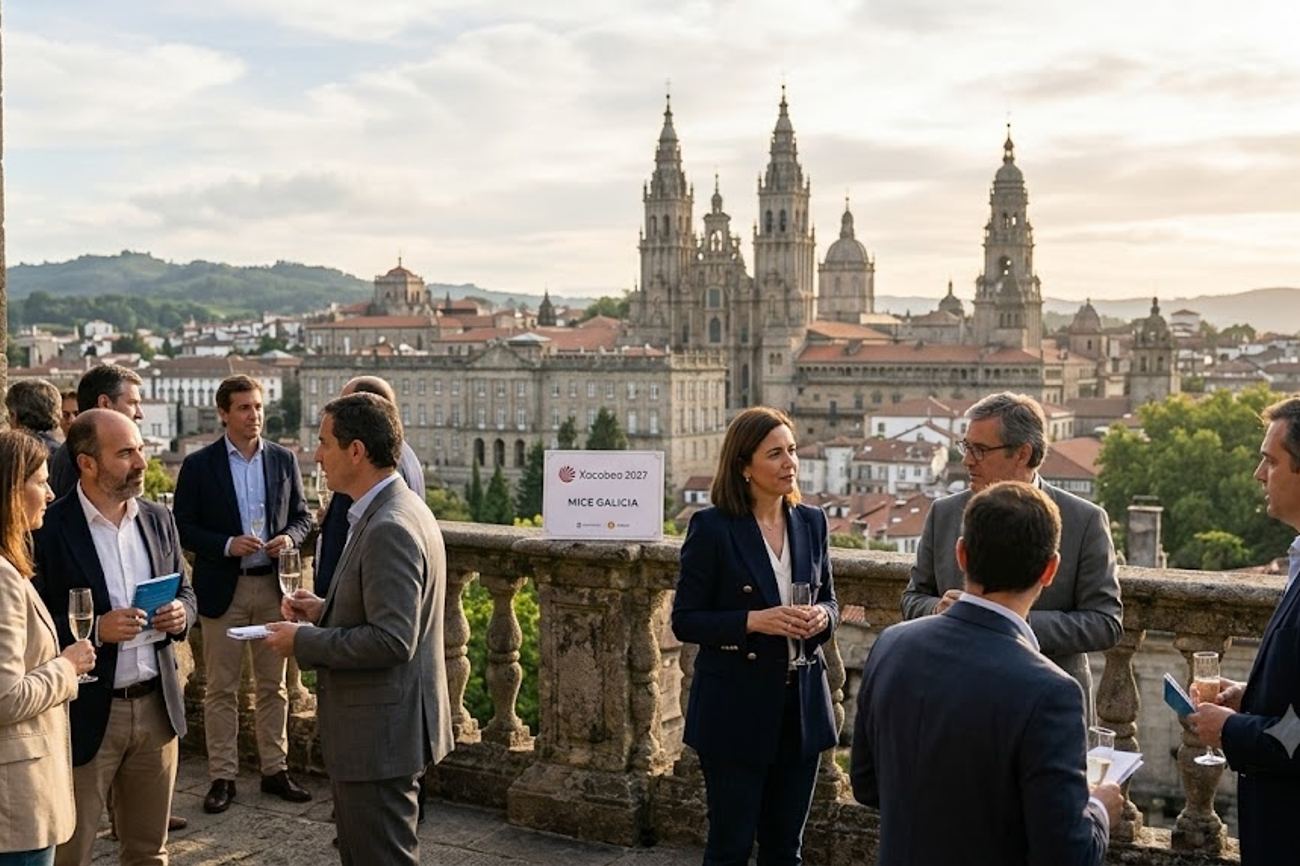
Image generated by AI
Historically, the Holy Year cycles in Galicia have functioned as peaks for religious leisure travel, but the strategy for Xacobeo 2027 marks a departure from this cyclicality by targeting the high-yield MICE (Meetings, Incentives, Conferences, and Exhibitions) sector. While previous jubilees focused on managing mass pilgrim volumes, the current trajectory shifts the metric of success from total visitor headcount to average revenue per visitor (ARPV), signaling a move toward a premium, corporate-centric economic model.
The Xacobeo 2027 MICE Pivot in Numbers
The strategic realignment of Galicia for Xacobeo 2027 is not merely a marketing shift but a structural overhaul of the regional tourism value chain. By integrating professional business infrastructure with the global visibility of the Camino de Santiago, the region is attempting to solve the perennial problem of seasonality. According to data trends monitored by the World Travel & Tourism Council (WTTC), destinations that diversify into MICE typically see a significant increase in off-peak occupancy rates, as corporate travel is less dependent on weather or religious calendars than leisure tourism.
The regional authorities are prioritizing high-spending visitors over mass-market tourists. This is evidenced by the coordinated updates to conference facilities and the introduction of curated premium experiences. The goal is to transform the "pilgrim" identity into a "professional" identity, where the cultural heritage of the northwestern Iberian Peninsula serves as a backdrop for international conventions and networking summits. This shift is supported by targeted investments in digital transformation and venue modernization, ensuring that the local infrastructure meets the rigorous standards of global enterprises.
Comparative Context: From Mass Pilgrimage to Corporate Resilience
To understand the scale of this shift, one must compare the current framework with the policies implemented during previous Holy Years. Historically, the regional approach was reactive, focusing on basic infrastructure upkeep and the logistical management of large crowds. The Xacobeo 2027 model is proactive, treating the jubilee as a catalyst for permanent economic diversification.
The following table illustrates the transition in strategic priorities between previous Holy Year cycles and the upcoming 2027 framework:
| Metric/Focus Area | Previous Holy Year Models | Xacobeo 2027 Strategic Model |
|---|---|---|
| Primary Visitor Profile | Religious Pilgrims / Leisure Tourists | High-Spending Corporate Delegates / MICE |
| Revenue Driver | Volume-based (Mass Tourism) | Value-based (Premium Services) |
| Operational Cycle | Highly Seasonal (Peak Summer/Jubilee) | Year-Round Professional Utility |
| Infrastructure Goal | Basic Capacity & Crowd Control | State-of-the-art Conference Facilities |
| Economic Objective | Short-term Tourism Spike | Long-term Structural Diversification |
| Sustainability Approach | Waste & Crowd Management | Integrated Eco-friendly Corporate Mobility |
This evolution mirrors a broader trend across Southern Europe, where regions are moving away from "sun and sand" or "faith-based" tourism toward knowledge-based travel. By leveraging the existing global brand of the Camino de Santiago, Galicia is attempting to capture a larger share of the European MICE market, which is increasingly seeking destinations that offer "authentic" cultural experiences alongside professional amenities. Data from Statista indicates that the global MICE market is recovering with a preference for "bleisure" (business + leisure) travel, a trend Galicia is perfectly positioned to exploit.
Practical Traveler Advisory and Strategic Insights
For the individual corporate traveler or event planner, the data suggests a significant upgrade in the regional offering. The shift toward a modernized ecosystem means that the friction typically associated with visiting secondary regional hubs—such as limited high-end hotel inventory or outdated meeting spaces—is being systematically removed.
If you are planning a corporate retreat or an international convention in Galicia for 2027, the following data-driven advice applies:
- Booking Windows: Because Xacobeo 2027 will draw simultaneous crowds of religious pilgrims and corporate delegates, the traditional booking window is no longer sufficient. Event planners should secure venues 12-18 months in advance to avoid the price surges associated with the jubilee peak.
- Infrastructure Expectations: Travelers can expect a higher density of "smart" venues. The investment in digital transformation means that high-speed connectivity and hybrid-event capabilities will be standard in updated facilities.
- Logistical Planning: The emphasis on sustainable corporate mobility suggests that the most efficient way to move between venues will be through integrated, eco-friendly transport networks rather than traditional private car rentals.
- Experience Integration: For those organizing incentive trips, there is now a formal bridge between professional engagements and regional heritage. Curated premium experiences are being designed specifically to merge corporate networking with the cultural milestones of the region.
Forward Projection: The Post-2027 Trajectory
Based on the current trajectory, Galicia is not merely preparing for a single year of growth but is building a foundation for a permanent shift in its economic identity. The integration of MICE infrastructure during a high-visibility event like Xacobeo 2027 creates a "legacy effect." Once the state-of-the-art conference centers are built and the digital infrastructure is laid, the region becomes a viable competitor for mid-sized international summits long after the jubilee ends.
We can project that by 2028, Galicia will see a stabilized increase in its baseline hotel occupancy rates during the shoulder seasons (October through March). The shift from a cyclical holiday spot to a resilient, multi-faceted destination will likely lead to an increase in foreign direct investment in the hospitality sector, particularly in the luxury and boutique segments. Furthermore, as IATA continues to track the recovery of international business travel, Galicia's ability to offer a sustainable, high-value alternative to primary hubs like Madrid or Barcelona will likely increase its market share of the Spanish corporate travel pie.
FAQ: Galicia MICE Trends 2027
Will corporate travel costs increase during Xacobeo 2027? Yes. The convergence of mass religious tourism and a new focus on premium business services will likely drive up hotel and venue pricing. Early coordination with regional boards is essential to mitigate these costs.
Is Galicia a viable alternative to major Spanish hubs for MICE? Yes. The current investment in state-of-the-art facilities and digital transformation is specifically designed to align local capabilities with the international standards required by global enterprises, making it a competitive alternative.
Which sectors are most likely to benefit from this shift? The hospitality value chain, event management firms, and sustainable transport providers will see the most growth, as the region pivots toward high-spending, professional clientele.
How does the 2027 strategy differ from previous Holy Years? Previous strategies focused on mass visitor management and basic infrastructure. The 2027 plan prioritizes economic diversification, high-end business tourism, and year-round operational sustainability.
The transition from pilgrimage to professionalism signals a new era of economic resilience for the Iberian northwest.
Related Travel Guides
Disclaimer
This article is for informational and educational purposes only. It does not constitute legal, financial, or professional advice. While we strive to provide accurate and up-to-date information, travel policies, regulations, and conditions change rapidly. Always verify information with official sources before making travel decisions. Nomad Lawyer makes no representations about the accuracy, reliability, completeness, or suitability of the information provided. Readers should consult qualified professionals for advice specific to their circumstances. The views expressed in this article are those of the author and do not necessarily reflect the views of Nomad Lawyer.
Kunal K Choudhary
Co-Founder & Contributor
A passionate traveller and tech enthusiast. Kunal contributes to the vision and growth of Nomad Lawyer, bringing fresh perspectives and driving the community forward.
Learn more about our team →