
Montenegro Travel Growth Snapshot as 994459 Visitors Drive Over Five Percent Arrival Rise in H1 2026
Montenegro Travel Growth Snapshot as 994459 Visitors Drive Over Five Percent Arrival Rise in H1 2026

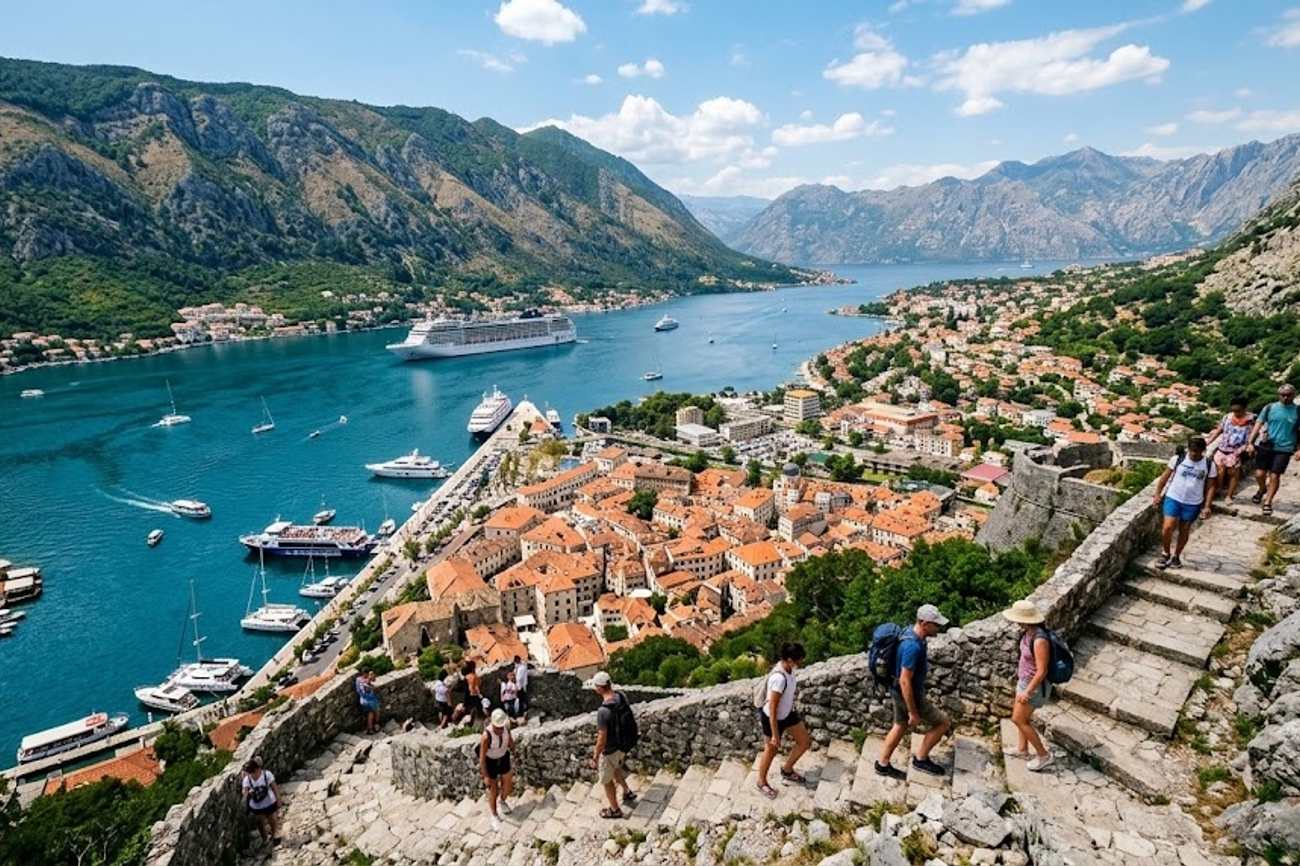
Image generated by AI
[Podgorica, July 2026] — Montenegro has recorded 994,459 tourist arrivals during the first half of 2026, marking a 5.7 percent increase in visitor volume compared to the same period in 2025. This surge in arrivals is accompanied by a significant rise in total overnight stays, which reached 5.14 million, representing a year-on-year growth of 6.5 percent.
The growth is primarily driven by a spike in international demand and a shifting preference toward independent lodging. Data indicates that foreign tourist arrivals grew by 6.2 percent annually, while the overnight stays generated by these overseas visitors climbed by 6.9 percent. The Ministry of Tourism of Montenegro and local authorities are leveraging this momentum to position the country as a viable alternative to the more saturated Mediterranean markets, emphasizing its blend of Adriatic coastlines and mountain landscapes.
The Shift Toward Private Lodging
The most aggressive growth within the sector is occurring in the private accommodation market. Independent rentals, including villas and apartments, have seen a dramatic influx of guests, signaling a departure from traditional hotel-centric travel.
Private lodging facilities hosted approximately 380,000 tourists between January and June 2026, a 16 percent increase over the 2025 figures for the same timeframe. These visitors accounted for 3.28 million overnight stays, reflecting a 9.5 percent annual increase. This trend suggests that modern travelers are prioritizing flexibility and localized experiences over standardized hospitality.
Conversely, the traditional hotel and resort sector is experiencing a period of stability rather than rapid expansion. Collective accommodation facilities welcomed roughly 615,000 visitors in the first six months of 2026, a marginal increase of 0.4 percent. Overnight stays in these managed properties reached 1.86 million, growing by 1.6 percent. While the growth rate is slower than that of private rentals, the steady demand indicates a persistent market for full-service hospitality and organized travel packages.
Who Is Affected
The current tourism trajectory impacts several distinct segments of the travel market and the local economy:
- International Travelers: Visitors from outside Montenegro are the primary engine of growth, with a 6.2 percent increase in arrivals. This group is increasingly seeking "compact" destinations that offer diverse geography (beaches and mountains) in a small area.
- Private Property Owners: Owners of apartments and villas are seeing the highest returns, with a 16 percent jump in guest numbers, making them the fastest-growing segment of the tourism supply chain.
- Hotel Operators: Traditional resorts are maintaining their market share but are facing stiff competition from the independent rental sector.
- Local Economy: With tourism contributing approximately 25 percent of Montenegro's total national economic activity, the growth in H1 2026 provides a critical boost to transport, food services, and regional employment.
- Regional Competitors: Other Adriatic and Mediterranean destinations may see a shift in traffic as Montenegro promotes itself as a less crowded alternative.
What This Means for Travelers
For those planning a trip to Montenegro in late 2026 or 2027, these statistics translate into several practical realities:
1. Availability Shifts: The massive 16 percent growth in private accommodation means there are more options for independent travelers. However, the high demand for villas and apartments—particularly on the coast—means that prime properties will likely book up faster than in previous years. Travelers should book private rentals well in advance.
2. Pricing Pressure: As international demand rises by over 6 percent, travelers can expect upward pressure on pricing for both flights and lodging. The increased popularity of the destination often leads to "peak season" pricing extending further into the shoulder months.
3. Diversified Itineraries: The push by authorities to promote nature-based and cultural tourism means there is better infrastructure and more organized activity for those visiting national parks and mountain regions, rather than just the beach resorts.
4. Airport and Transport Congestion: With nearly one million visitors arriving in just six months, travelers should anticipate higher traffic volumes at Podgorica Airport (TGD) and Tivat Airport (TIV), particularly during the summer months.
Sustainable Expansion and Economic Outlook
The 2026 H1 data represents a recovery and acceleration following a mixed 2025. In the previous year, Montenegro saw 2.73 million arrivals (a 4.7 percent increase over 2024), but total overnight stays actually dipped by 1.5 percent to 15.37 million. The 2026 figures suggest that the trend has reversed, with both the number of visitors and the length of their stays moving upward.
The government is now focused on "sustainable growth," which involves upgrading infrastructure to handle the increased load without degrading the natural environment. A key strategic goal is the extension of the tourism season. By promoting UNESCO-listed heritage sites and adventure tourism, the country aims to reduce the extreme seasonality of the Adriatic coast and create a year-round revenue stream.
As Montenegro continues to integrate further into the European travel market, the balance between high-capacity resorts and boutique private stays will determine its ability to scale. The current data shows a healthy diversification of the "tourism product," allowing the country to attract both luxury seekers and budget-conscious independent nomads.
FAQ: Montenegro Travel 2026
Is it better to stay in a hotel or a private apartment in Montenegro? Currently, private apartments and villas are the fastest-growing sector, offering more flexibility and local immersion. Hotels remain the better choice for those seeking full-service amenities and organized packages. Both sectors are seeing growth, but private rentals are increasing in availability.
When is the best time to visit to avoid the crowds? While the first half of 2026 saw nearly one million visitors, much of this is concentrated in the summer. To avoid peak congestion, consider visiting during the shoulder seasons, as the government is actively promoting cultural and nature-based tourism year-round.
How has the tourism market changed since 2025? The market has shifted from a slight decline in overnight stays in 2025 to a strong 6.5 percent increase in 2026. There is also a marked preference for independent lodging over traditional hotels compared to previous years.
What are the primary attractions driving this growth? The growth is fueled by a combination of Adriatic beaches, UNESCO World Heritage sites, and mountain landscapes. Travelers are increasingly choosing Montenegro as a compact alternative to larger, more crowded Mediterranean destinations.
The Adriatic is no longer a hidden gem; it is a primary destination.
#MontenegroTourism2026 #TGD #TIV #AdriaticTravel #BalkanTourism #PrivateAccommodationGrowth
Related Travel Guides
- Ireland’s The CCD Earns International Recognition With Silver Honour For Best Overseas Conference Centre At M&IT Awards
- Antigua and Barbuda Charts Next Tourism Era With Comprehensive Study on Growth Limits and Opportunities
- Greece Travel Revenue Climbs Over Seven Percent to Over Four Billion Euros Billion as July Arrivals Drop Over Three Percent Amid Changing Tourism Trends
Disclaimer
This article is for informational and educational purposes only. It does not constitute legal, financial, or professional advice. While we strive to provide accurate and up-to-date information, travel policies, regulations, and conditions change rapidly. Always verify information with official sources before making travel decisions. Nomad Lawyer makes no representations about the accuracy, reliability, completeness, or suitability of the information provided. Readers should consult qualified professionals for advice specific to their circumstances. The views expressed in this article are those of the author and do not necessarily reflect the views of Nomad Lawyer.
Naina Thakur
Contributor & Travel Specialist
Travel enthusiast and legal writer covering visa regulations, responsible tourism, and cultural journeys across global destinations.
Learn more about our team →