Mogadishu Tourism Bets on TikTok to Convert Social Scrolls into Travel Bookings: Diaspora Demand, Security Logistics, and Somalia's 2030 Vision

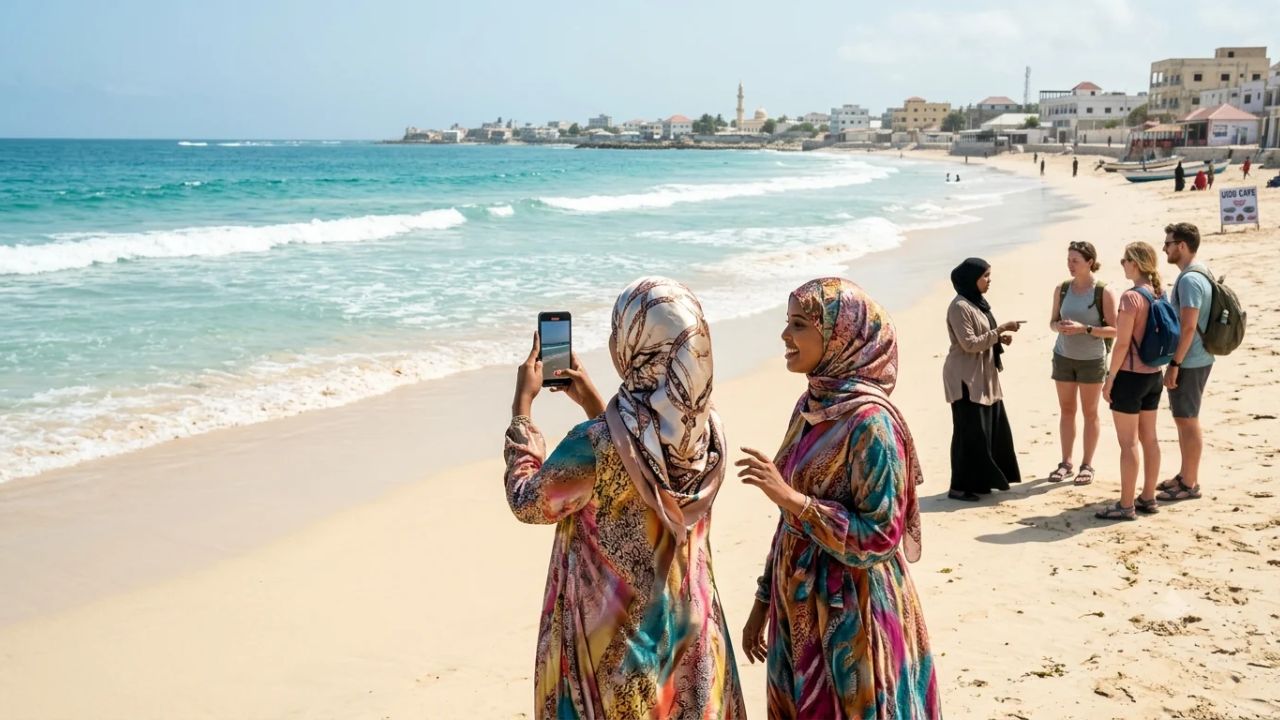
MOGADISHU, Somalia — On smartphone screens across London, Dubai, Nairobi, and Minneapolis, short-form TikTok videos are offering global viewers an unexpected visual window into the capital of Somalia: turquoise Indian Ocean waves crashing against Lido Beach, open-air seafood auctions, and camel herds traversing white-sand dunes.
Pioneered by local tourism entrepreneur Sucdi Abdul Fattah Abdul Khader, operating under her creator identity Sucdi Sanura, this mobile-first marketing approach seeks to reshape perceptions of Mogadishu by displaying the coastline, culinary traditions, and urban life of a city long defined internationally by armed conflict.
However, the commercial journey between watching an engaging sixty-second social media reel and executing a confirmed travel booking represents one of the most complex conversion funnels in global tourism.
While algorithmic video feeds can generate hundreds of thousands of views within hours, transforming passive digital engagement into paid reservations requires overcoming profound structural obstacles.
Prospective travelers must navigate strict consular travel warnings, secure specialized high-risk insurance, arrange armed security details, and manage complex international flight itineraries to a destination where security conditions remain volatile.
At the national level, Somalia is attempting to establish the administrative foundations of a functional visitor economy.
Official macroeconomic data published by the Ministry of Information, Culture and Tourism reports that international tourist and diaspora arrivals exceeded 125,000 in 2024, contributing an estimated US$280 million to national Gross Domestic Product.
With regional airlines like Oman’s SalamAir introducing direct non-stop scheduled flights to Aden Adde International Airport and the federal government launching an electronic travel authorization system ahead of its National Tourism Policy 2030, Mogadishu's emerging travel entrepreneurs are testing whether grassroots digital storytelling can translate into sustainable, high-yield tourism reality.
SOMALIA TOURISM SECTOR: MACROECONOMIC AND OPERATIONAL BENCHMARKS
| Economic & Sector Metric | Official Government Benchmark | Strategic Industry Context |
|---|---|---|
| Annual Visitor Volume | Over 125,000 Total Arrivals | Dominated by returning diaspora |
| (Ministry of Tourism 2024) | and humanitarian personnel | |
| Direct GDP Contribution | 5.2% of National GDP | Vital source of foreign exchange |
| (Estimated US$280 Million) | in post-conflict recovery | |
| Hospitality Infrastructure | US$85 Million Hotel Revenues; | Concentrated within fortified |
| More than 5,400 Urban Rooms | coastal and airport districts | |
| Gateway Flight Expansion | Twice-weekly SalamAir flights | Direct Gulf link connecting |
| Muscat to Mogadishu (Sep 2026) | regional transit networks | |
| Entry Facilitation System | Electronic Travel Auth (ETA) | Digital pre-clearance portal |
| launched in September 2025 | managed by immigration agency |
The TikTok Conversion Paradox: Moving from Viral Views to Paid Itineraries
The use of short-form vertical video represents a radical departure from traditional destination marketing.
For decades, post-conflict destinations relied on expensive trade show delegations, specialized travel memoirs, or government diplomatic channels to communicate security improvements.
TikTok bypasses these traditional gatekeepers entirely, placing unfiltered visual impressions directly into the algorithmic feeds of international travelers who might never intentionally search for a holiday in the Horn of Africa.
                   THE SOCIAL-TO-BOOKING CONVERSION FUNNEL

   [ Top of Funnel: Algorithmic Discovery ]
         * 60-Second TikTok video displays pristine waters at Jazeera Beach
         * Curiosity spike: Viewer encounters positive visuals defying media stereotypes
         * Engagement metrics: Thousands of likes, shares, and algorithmic recommendations

   [ Middle of Funnel: The Inquiry Chokepoint ]
         * Prospective traveler contacts operator via WhatsApp or direct message
         * Concrete pricing request: Vehicle hire, armed security, lodging costs
         * Confronting logistics: Route transfers, flight schedules, consular warnings

   [ Bottom of Funnel: Financial Commitment ]
         * Traveler reviews formal written itinerary and safety protocols
         * Payment of non-refundable booking deposit via international wire
         * Arrival at Aden Adde International Airport (MGQ) and tour execution
The commercial test, however, begins the moment the video playback ends.
Travel industry analysts observe that while extreme-adventure and frontier travel content generates exceptionally high click-through rates, the percentage of viewers who actually book remains minuscule.
A prospective traveler encountering Sucdi Sanura’s content must move through a sequence of complex decision gates.
First, price sensitivity clashes with significant security overhead. A backpacker inspired by an exotic beach video may expect budget-friendly backpacking rates, only to discover that traveling safely in Mogadishu requires hardened logistics. Armored private transport, mandatory armed protection details, and fortified hotel bookings routinely elevate daily tour expenses to between US$400 and US$800 per person per day.
Second, international flight and entry logistics present hurdles. Potential visitors must verify whether commercial flights connect smoothly with their home cities, navigate the online electronic travel authorization portal, and secure valid transit documentation through Middle Eastern or East African transit points.
Finally, establishing deposit and contractual trust remains a formidable barrier. Sending hundreds of dollars in non-refundable tour deposits to an independent operator in a country without standard consumer credit card chargeback protections requires immense consumer trust. Without established liability contracts or bonded travel guarantees, many prospective inquiries dissolve at the payment stage.
Macroeconomic Snapshot: Deconstructing Somalia's 125,000 Annual Arrivals
To accurately evaluate the commercial potential of social media marketing in Mogadishu, one must examine the composition of Somalia’s visitor arrivals.
According to data compiled by the Ministry of Information, Culture and Tourism, the country recorded more than 125,000 international and diaspora arrivals in 2024, generating an estimated US$280 million in total economic activity and supporting more than 5,400 hotel rooms across major urban centers.
SOMALIA VISITOR DEMOGRAPHIC COMPOSITION ANALYSIS
| Entity / Route | Metrics | Operational Status |
|---|---|---|
| Traveler Segment | Estimated Share of Arrivals | Travel Objectives & Economic Habits |
| Somali Diaspora Returnees | 70% to 75% of Total Inbound Traffic | Visiting family, real estate |
| (UK, US, Canada, Sweden) | (Primary economic foundation) | investment, business setup; stays |
| in local family homes & hotels | ||
| Corporate & Humanitarian | 15% to 20% of Total Inbound Traffic | International aid agencies, UN |
| confined to fortified compounds | ||
| Frontier Leisure & | 5% to 10% of Total Inbound Traffic | Cultural sightseers, extreme |
| Adventure Travelers | (Emerging niche demographic) | backpackers, documentary makers; |
| book guided city day itineraries |
A critical distinction lies in the composition of these visitor numbers.
The overwhelming majority of arrivals are not foreign leisure holidaymakers, but members of the vast global Somali diaspora returning from North America, Europe, Australia, and the Gulf to visit relatives, manage property investments, or establish commercial enterprises.
These diaspora travelers possess native language fluency, familial support networks, and an inherent understanding of local security dynamics.
Independent foreign adventure tourists—the specific demographic targeted by English-language TikTok content—represent a small fraction of the overall volume.
Nonetheless, this demographic yields an outsized economic footprint for private tour operators.
When a foreign traveler books an independent city tour, their capital directly supports an extensive domestic value chain: paying daily wages to local university-educated guides, hiring private transport drivers, supporting artisanal boatmen at the fishing ports, patronizing family-run seafood restaurants, and purchasing traditional frankincense and woven textiles from market vendors.
Aviation Connectivity: Aden Adde International Airport and the Muscat Bridge
The physical lifeline connecting Mogadishu to the global economy is Aden Adde International Airport (MGQ), situated on the southern coastline of the capital.
For years, reaching Mogadishu required navigating fragmented, expensive regional connections.
However, ongoing commercial airline expansion is steadily lowering the friction of international access.
                   INTERNATIONAL AIRLINE CORRIDORS TO MOGADISHU

   [ Middle Eastern Mega-Hubs ]
         * Muscat (MCT): Twice-weekly non-stop flights via SalamAir (Launched Sep 2026)
         * Istanbul (IST): Daily direct widebody services operated by Turkish Airlines
         * Dubai (DXB): Regular regional flights via flydubai and Daallo Airlines
         * Doha (DOH): Scheduled passenger connections via Qatar Airways partners

   [ East African Regional Gateways ]
         * Addis Ababa (ADD): High-frequency daily links via Ethiopian Airlines
         * Nairobi (NBO): Regional commercial services connecting East African hubs
A major operational milestone occurred on 3 September 2026, when Omani low-cost carrier SalamAir inaugurated twice-weekly scheduled non-stop flights connecting Muscat to Mogadishu.
Utilizing modern Airbus A320neo aircraft, this route provides an affordable Gulf gateway for travelers originating in Western Europe, South Asia, and the Middle East.
By removing an intermediate regional transfer, the service reduces travel time and eliminates baggage transfer vulnerabilities that frequently complicate journeys to the Horn of Africa.
SalamAir joins a select group of established international carriers that maintain scheduled flight services into Aden Adde International Airport.
Turkish Airlines operates direct widebody services from Istanbul Airport, serving as the primary commercial conduit for European and North American travelers. Ethiopian Airlines provides daily regional connectivity through its continental hub in Addis Ababa, while regional carriers such as flydubai and Daallo Airlines link the capital to the United Arab Emirates and Kenya. These scheduled air services provide vital operational reliability for travelers arranging onward private ground logistics.
However, booking an international air ticket addresses only the first leg of the journey.
The immediate logistical challenge occurs the moment the traveler steps out of the aircraft cabin and onto the tarmac at Aden Adde International Airport.
ADEN ADDE AIRPORT ARRIVAL AND SECURITY PROTOCOLS
| Entity / Route | Metrics | Operational Status |
|---|---|---|
| Arrival Step | Operational Requirement | Security & Logistical Safeguard |
| 1. Immigration Clearance | Presentation of valid passport and | Automated electronic matching with |
| approved Electronic Travel Auth (ETA) | biometric immigration databases | |
| 2. Terminal Meet & Greet | Pre-arranged rendezvous with licensed | Prevents travelers from exiting |
| local tour operator inside terminal | into unvetted public transport | |
| 3. Transport Transfer | Boarding private, vetted transport | Convoy moves through fortified |
| equipped with armed escort detail | airport checkpoints into city | |
| 4. Hotel Check-In | Transfer to security-screened hotel | Vehicle undercarriage inspection; |
| facility within protected district | armed perimeter security guards |
The Security Architecture: Operating Guided Tours in a Hostile Environment
While short-form video clips highlight the tranquil turquoise beauty of Lido Beach, operating commercial tourism in Mogadishu requires adherence to rigorous physical security protocols.
The security environment across southern Somalia remains characterized by active asymmetric threats, primarily from the militant extremist group Al-Shabaab, which continues to carry out suicide bombings, targeted assassinations, and complex vehicle-borne improvised explosive device (VBIED) attacks against government facilities, international hotels, and public gathering places.
                    MOGADISHU URBAN SECURITY TOPOGRAPHY

   [ Fortified Airport Enclave: Halane Compound ]
         * Heavily guarded diplomatic and United Nations base adjacent to runway
         * Perimeter blast walls, biometric access gates, and African Union peacekeepers
         * Accommodates international embassies, secure guesthouses, and NGO offices

   [ Coastal and Municipal Zones ]
         * Fortified Luxury Hotels (e.g., Decale, Elite, Jazeera Palace)
         * Mandatory deployment of Special Protection Unit (SPU) armed guards
         * Movement restricted to pre-scouted vehicular corridors and vetted markets
To manage these operational risks, professional tour operators in Mogadishu coordinate closely with the Special Protection Unit (SPU), a dedicated wing of the Somali police force tasked with safeguarding foreign nationals, diplomatic personnel, and humanitarian workers.
Standard operating procedures for international tour groups incorporate non-negotiable safety measures.
Any excursion outside the fortified airport perimeter requires an armed Special Protection Unit escort vehicle staffed by trained security personnel who clear routes and maintain perimeter vigilance while guests visit markets or coastal monuments.
In addition, foreign travelers do not stay in unvetted residential apartments or budget guesthouses. Lodging is strictly restricted to fortified commercial hotels featuring concrete blast perimeter walls, razor wire, multiple vehicle security checkpoints, and armed guard towers, such as the Decale Hotel located within the airport perimeter or heavily secured beachfront establishments.
Experienced guides also practice dynamic route management, avoiding predictable transit schedules. Itinerary timings are varied daily, high-risk government checkpoints are circumnavigated, and public visits to crowded venues like the Bakaara Market are conducted during controlled, off-peak hours with dedicated local fixers monitoring neighborhood intelligence.
Government Policy & Border Modernization: The 2030 Vision and Electronic Authorizations
The federal government of Somalia recognizes that revitalizing the visitor economy is essential for generating youth employment, attracting foreign direct investment, and rehabilitating the country’s international reputation.
SOMALIA TOURISM POLICY ROADMAP (VISION 2030)
| Entity / Route | Metrics | Operational Status |
|---|---|---|
| Policy Initiative | Strategic Implementation | Projected National Objective |
| National Tourism Policy | Federal inter-ministerial development | Establish Somalia as a recognized |
| (Vision 2030) | framework targeting ecotourism | African coastal & cultural hub |
| Electronic Travel Auth | Digital visa pre-clearance portal | Replaces cumbersome manual embassy |
| (ETA - Launched 2025) | launched by immigration agency | visa applications for foreigners |
| Cultural Heritage Sites | Restoration of historic monuments in | Revitalizes maritime architectural |
| Rehabilitation | Hamadweyne and ancient mosques | landmarks for future travelers |
| Hospitality Training | Vocational hospitality programs in | Elevates customer service and food |
| Standards | partnership with regional institutes | safety standards in urban hotels |
Under the National Tourism Policy, articulated through the Ministry of Information, Culture and Tourism and international diplomatic missions, the federal government has set an ambitious horizon: establishing Somalia as a recognized African cultural and ecotourism destination by 2030.
The most tangible regulatory reform achieved to date is the launch of the Electronic Travel Authorization (ETA) system in September 2025 by the Immigration and Citizenship Agency of Somalia.
Historically, securing an entry visa required foreign travelers to navigate opaque, lengthy bureaucratic processes through the handful of overseas Somali embassies in Washington, London, Ankara, or Nairobi, or rely on precarious visa-on-arrival invitation letters issued by local fixers.
The ETA platform modernizes this border workflow through digital processing. Prospective visitors submit passport biodata, digital photographs, confirmed flight reservations, and local host invitation documentation through the centralized immigration portal. Background checks are conducted digitally by immigration authorities, and an electronic approval letter is issued within three to five business days.
Upon arrival at Aden Adde International Airport, travelers present their approved ETA document, pay the statutory visa issuance fee of sixty US dollars in cash, and receive an official entry visa affixed to their passport. Passports must possess at least six months of remaining validity from the date of entry.
Consular Warnings, Insurance Exclusions, and High-Risk Travel Law
For international tourists considering an expedition to Mogadishu, understanding statutory legal frameworks, consular warnings, and insurance exclusions is vital before committing financial resources.
                     LEGAL AND INSURANCE RISK MATRIX

   [ Universal Consular Travel Warnings ]
         * US State Department: Level 4 "Do Not Travel" advisory
         * UK FCDO: Strict advisory against all travel to Somalia
         * Australian DFAT: "Do Not Travel" warning across all regions

   [ Commercial Insurance Invalidation ]
         * Standard consumer travel medical insurance policies are completely void
         * Claims arising from terrorism, civil unrest, or active warfare are excluded

   [ Specialized Frontier Underwriting ]
         * Mandatory high-risk hostile-environment medical insurance policies
         * Dedicated Kidnap & Ransom (K&R) coverage and emergency air extraction bonds
1. Consular Travel Warnings
Major global foreign ministries—including the United States Department of State, the United Kingdom Foreign, Commonwealth & Development Office (FCDO), and the European External Action Service—maintain categorical, unambiguous travel advisories: "Do Not Travel to Somalia."
These advisories emphasize that foreign governments possess virtually zero capacity to provide emergency consular or evacuation services to citizens detained, injured, or taken hostage in Somalia.
Consular posts operate from within fortified diplomatic enclaves, and domestic security protocols prevent consular officers from traveling into municipal districts to assist distressed travelers.
2. Complete Invalidation of Standard Travel Insurance
A critical legal reality that many social media consumers fail to recognize is that standard consumer travel insurance policies are entirely invalid in Somalia.
Standard travel insurance products—such as those purchased through commercial flight booking engines, credit card benefits, or general travel agencies—contain strict exclusion clauses.
First, policies enforce war and civil unrest exclusions, stipulating that any claim resulting directly or indirectly from acts of war, armed rebellion, military operations, or terrorism is explicitly excluded from reimbursement.
Second, government advisory exclusion clauses mandate that if a traveler enters a territory subject to an active "Do Not Travel" advisory issued by their national foreign ministry, all medical coverage, emergency hospitalization, and baggage loss claims are automatically voided.
Consequently, travelers intending to visit Mogadishu must procure specialized hostile-environment insurance underwritten by specialized Lloyd’s of London syndicates or bespoke international security underwriters, such as Ripcord, Battleface, or Global Rescue. These specialized policies provide emergency medical evacuation coverage via dedicated private air ambulances, emergency trauma stabilization, and Kidnap and Ransom response services, carrying premiums that easily add hundreds of dollars to the trip’s total cost.
Urban Highlights and Coastal Landscapes: What Visitors Actually Experience
For the intrepid travelers who navigate these logistical and financial hurdles, Mogadishu offers an intense, sensory, and visually striking travel experience that defies common media caricatures.
MOGADISHU SIGNATURE EXPERIENTIAL HIGHLIGHTS
| Entity / Route | Metrics | Operational Status |
|---|---|---|
| Cultural & Natural Site | Geographical Location | Authentic Traveler Experience |
| Lido Beach | Northern Oceanfront District | Animated weekend beach gatherings, |
| (Plage de Lido) | (Abdiaziz District) | camel rides, oceanfront cafes |
| Jazeera Beach | Southern Coastal Stretch | Pristine turquoise waters, fresh |
| (Jazira) | (15 km south of city center) | lobster meals, secluded coves |
| Hamadweyne Historic | Ancient Maritime Quarter | Century-old stone architecture, |
| District | (Near the historic seaport) | traditional weavers, spice shops |
| Mogadishu Fish Market | Waterfront Port Area | Energetic morning fish auctions; |
| (Suuqa Kalluunka) | (Central Harbor) | massive yellowfin tuna and sharks |
1. Lido Beach and Jazeera Beach: Indian Ocean Coastal Life
Mogadishu’s premier public gathering space is Lido Beach, stretching along the city’s northern coast.
On Friday afternoons, the shoreline fills with thousands of local families, returning diaspora youths, and children playing football in the sand.
Open-air beachfront restaurants serve freshly caught Indian Ocean lobster, kingfish, and grilled red snapper paired with chilled watermelon juice, while dromedary camels offer rides along the water’s edge.
Fifteen kilometers further south, Jazeera Beach presents an even more dramatic coastal landscape.
Framed by towering white limestone cliffs and crystal-clear turquoise waters, Jazeera is a favored weekend retreat where visitors can take small wooden boat excursions to rocky offshore islands and watch local spear-fishermen haul in octopuses and giant grouper.
2. Historical Architecture: Hamadweyne and Colonial Ruins
In the historic Hamadweyne district, remnants of Mogadishu’s ancient identity as a prosperous medieval trading city on the Swahili Coast remain visible.
Narrow stone alleyways wind past coral-rag residential buildings featuring carved wooden doors and arched doorways reflecting Persian, Arab, and Portuguese architectural influences.
Here, traditional artisans operate wooden handlooms, weaving alindi—the distinctive, colorful cotton textile worn during Somali weddings and cultural celebrations.
Nearby, the haunting ruins of twentieth-century Italian colonial architecture—including the skeletal facade of the Mogadishu Catholic Cathedral (built in 1928) and the historic Arba'a Rukun Mosque (dating to 1268)—stand as silent testaments to the complex historical layers that have shaped the city.
3. Somali Gastronomy and Cafe Culture
Somali cuisine is a flavorful confluence of East African, Middle Eastern, and Italian culinary heritages.
A traditional culinary day begins with Canjeero (a sourdough fermented flatbread similar to Ethiopian injera) drizzled with spiced ghee (subag) and honey, served alongside sweet spiced tea infused with cloves, cinnamon, and cardamom (Shaah Cadde).
For lunch, travelers enjoy Bariis Iskukaris, fragrant basmati rice cooked with raisins, cloves, and turmeric, served with tender braised goat or camel meat and the ubiquitous fresh banana, which Somalis slice directly into savory rice and pasta dishes.
In the late afternoon, open-air cafes across the city serve rich espresso and sweet Somali pastries (Sambusa and Halwa), providing an atmospheric setting for conversation and storytelling.
The Consumer Due Diligence Playbook: Vetting a Mogadishu Tour Operator
For prospective travelers inspired by social media content who are evaluating a journey to Mogadishu, performing rigorous operational due diligence is essential to protect personal safety and financial capital.
MOGADISHU TOUR DUE DILIGENCE ACTION PLAYBOOK
| Entity / Route | Metrics | Operational Status |
|---|---|---|
| Verification Step | Mandatory Due Diligence Action | Critical Risk Mitigation Value |
| 1. Security Protocol | Demand written confirmation of SPU | Ensures legal armed protection and |
| armed escort details and vehicle | vetted drivers on all movements | |
| 2. Lodging Verification | Require specific hotel name and | Confirms lodging has blast walls, |
| security tier prior to deposit | armed guards, & verified perimeter | |
| 3. Written Contract | Insist on itemized inclusions and | Clarifies refund terms if flights |
| clear cancellation refund schedules | are disrupted or security shifts | |
| 4. Airport Protocol | Verify operator has "Airside" or | Prevents unescorted exposure in |
| secure-terminal pickup credentials | unvetted public arrivals area |
Step 1: Demand an Itemized Security Breakdown
Never book an expedition based solely on informal WhatsApp messaging or appealing social media imagery. Require the operating company to deliver an official, legally binding operational itinerary that clearly documents safety parameters.
The contract must state the exact number of armed Special Protection Unit officers assigned to your private vehicle throughout the itinerary, the precise four-wheel-drive vehicle model provided to handle unpaved coastal tracks, and the specific hotel facility reserved, verifying that the property is situated within a heavily guarded enclave protected by blast barriers and perimeter checkpoints.
Step 2: Establish Transparent Cancellation and Disruption Terms
Operating flights into Mogadishu can be subject to unexpected commercial delays or security diversions. Before wiring non-refundable deposit funds, ensure your written contract explicitly clarifies financial terms during unforeseen events.
The written agreement must document what happens to deposit funds if your international airline cancels flights due to regional airspace closures, what specific refund percentages apply if local security incidents prevent scheduled city excursions, and whether the tour company guarantees replacement security transfers at no supplemental charge if flight arrival times shift.
Step 3: Secure Verified Hostile-Environment Insurance
Do not board a flight to Somalia without having active, written policy documentation confirming that your insurer is aware of your destination and provides uncompromised coverage.
Verify that your policy explicitly includes emergency trauma stabilization and medical evacuation guarantees to high-level regional surgical hospitals in Nairobi, Dubai, or Johannesburg. In addition, retain digital copies of policy certificates, international dispatch contact coordinates, and passport biodata pages on an encrypted cloud drive accessible by family members at home.
Strategic Horizons: Frontier Tourism and the Long Road to Normalization
The emerging phenomenon of Mogadishu tourism driven by TikTok content creators like Sucdi Sanura represents a compelling case study in modern post-conflict regeneration.
It highlights the democratization of destination storytelling: for the first time in modern history, the visual narrative of Somalia is being shaped by young, local Somali entrepreneurs rather than foreign war correspondents or international security agencies.
Every verified tour booking, every coffee purchased in a local cafe, and every fresh fish bought at the port injects direct economic capital into a recovering urban economy, empowering local youths and demonstrating that peace yields tangible economic dividends.
Yet, this commercial expansion must remain anchored in realistic risk management.
Mogadishu is not a conventional backpacker destination, and marketing it as such without transparent communication regarding security protocols, mandatory armed escorts, and strict insurance requirements does a disservice to travelers and local hosts alike.
As the federal government progresses toward its National Tourism Policy 2030, the path forward will demand balanced progress: strengthening domestic security institutions, expanding direct regional flight links, maintaining rigorous border standards through electronic authorizations, and nurturing responsible local entrepreneurs.
For the international traveler willing to look beyond conventional horizons and undertake disciplined preparation, Mogadishu offers an unforgettable encounter with an ancient maritime culture, proving that even in the face of immense historical adversity, the human spirit of hospitality endures.
Related Travel Guides
- Surabaya Autumn Tourism 2026 Surges as Gen Z Travelers Drive Booking Boom Across East Java
- Germany and France Lead Ten-Nation European Coalition Expanding Sustainable Rail Travel
- Netherlands and European Nations Shift Tourism from Volume to Value: Landmark JRC Economic Data
- Busan Triggers Historic One Trillion Won Tourism Boom Bypassing Seoul: Direct Flights and Cruises
- Princess Cruises Launches Blue Friday 2026 Campaign with 50% Fare Cuts and Complimentary Guests
This article is for informational purposes. Flight routes, passenger regulations, visa rules, and transit advisories are subject to change by airlines and aviation authorities. Readers are advised to verify schedules and travel documentation with relevant carriers and border agencies before departure.
Related Stories

Western Ireland Becomes Europe's Cool Climate Refuge: Kerry, Mayo, Sligo, and Roscommon Drive High-Yield Slow Tourism Boom

California Pacific Coast Highway Reopens: Big Sur Restoration, Santa Ynez Wine Country, and Coastal Resilience Drive $166B Tourism Surge