
Middle East Airspace Closures Trigger Massive Global Travel Chaos, Sparking Devastating Flight Cancellations Across Qatar, UAE, Israel, and Lebanon: Latest Airline News
As geopolitical tensions violently escalate across the Middle East, global airlines are executing unprecedented flight cancellations and route suspensions, stranding thousands amidst severe travel chaos.

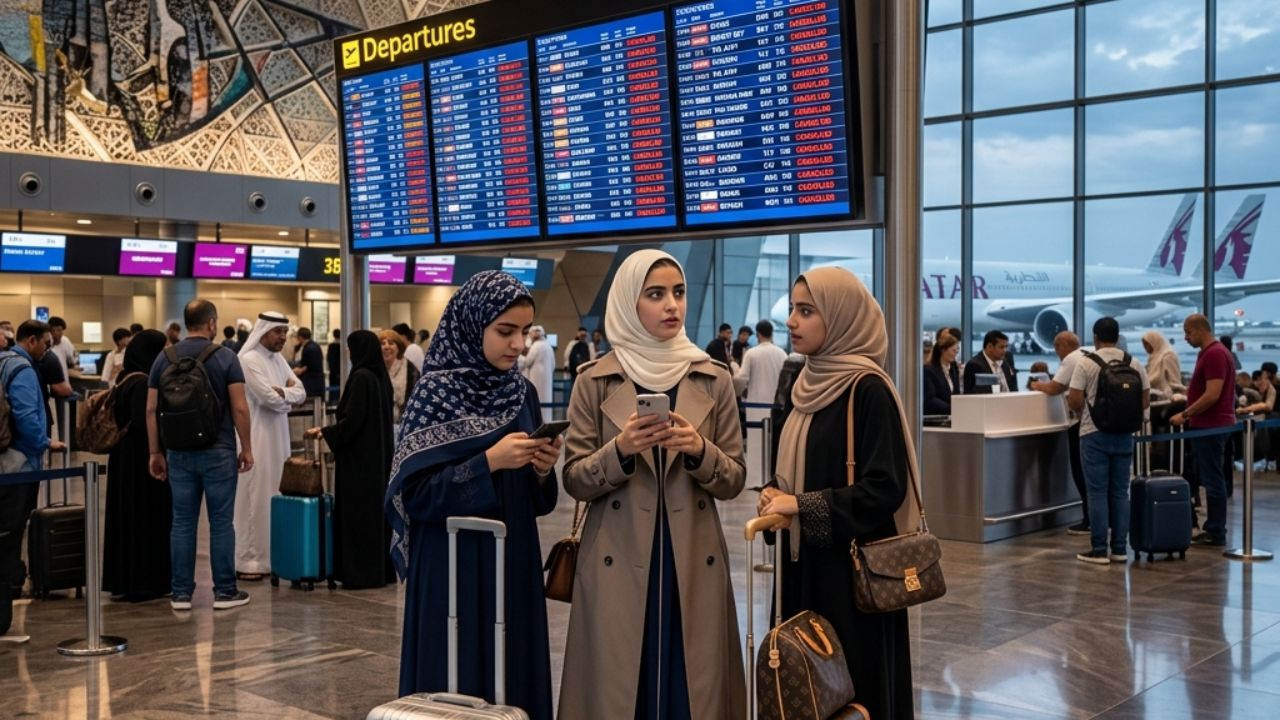
Image generated by AI
A Catastrophic Collapse of the Middle East Aviation Corridor
While millions of global passengers rely on the Persian Gulf and Levant regions for seamless international transit, the extreme fragility of this critical network is currently being exposed by a catastrophic wave of sudden flight cancellations, paralyzing terminal gridlock, and systemic travel chaos. Delivering highly critical, urgent airline news, industry data confirms that a fresh, massive escalation in geopolitical tensions involving Iran, Israel, and the United States has triggered the absolute most devastating aviation disruptions seen in recent history. While desperate passengers attempt to dodge massive airport disruptions and severely delayed connections, these exclusive aviation updates reveal that major sections of airspace above Iran and Iraq are now virtually empty. As military uncertainty skyrockets, massive global carriers have completely suspended operations into Qatar, the UAE, Israel, and Lebanon, instantly crippling passenger flows between Europe, Asia, Africa, and the broader Gulf region.
Expanded Overview: The Paralysis of the Super-Connectors
The strategic collapse of the Middle Eastern transit corridor serves as massive, undeniable proof of the industry's extreme vulnerability to regional military volatility. Historically, the Middle East serves as the absolute vital bridge linking the Eastern and Western hemispheres. According to highly verified industry data from the International Air Transport Association (IATA), billions of passenger journeys and massive cargo volumes move directly through these specific hubs annually.
When systemic aviation breakdowns occur—triggered by sudden, severe airspace restrictions—the resulting logistical nightmare forces airlines to make immediate, highly stressful decisions regarding passenger safety and fuel planning. In this terrifying scenario, carriers moved aggressively to cancel flights, forcefully reroute aircraft around conflict zones, and completely suspend services until highly critical security assessments become clearer. This immediate operational freeze has completely shattered global scheduling integrity, leaving tourists and corporate commuters utterly stranded.
Section-Wise Breakdown of the International Crisis
Tel Aviv and Beirut Completely Paralyzed
The immediate epicenters of this devastating operational collapse are the primary gateways in Israel and Lebanon. Ben Gurion Airport in Tel Aviv and Beirut-Rafic Hariri International Airport are experiencing absolute gridlock. Massive European legacy carriers, including Air France, KLM, and the Lufthansa Group, have completely suspended all services into these cities. The complete withdrawal of international lift has physically isolated these highly critical business and tourism markets, completely destroying peak-season travel itineraries and violently displacing thousands of outbound passengers.
The Gulf Hub Devastation
Equally devastating is the massive operational freeze infecting the undisputed super-connectors of the Persian Gulf. Dubai, Abu Dhabi, and Doha rank among the absolute most important transfer hubs on the planet. The crisis hit terminal velocity when Qatar Airways was forced to temporarily suspend operations due to sudden Qatari airspace closures. Simultaneously, massive foreign carriers like Japan Airlines canceled critical routes like the Tokyo Haneda–Doha service, while Virgin Atlantic violently canceled its London Heathrow–Dubai service while desperately avoiding Iraqi airspace. This total disruption of Gulf connectivity prevents European passengers from reaching Asia and Australia.
Widespread Global Carrier Retreat
The retreat from the Middle East is massive and highly coordinated. Carriers that normally rely on these highly lucrative corridors are actively turning aircraft around mid-flight; LOT Polish Airlines was forced to violently return its Warsaw-Dubai flight back to its origin. Low-cost giant Wizz Air has suspended all flights into Israel, Dubai, Abu Dhabi, and Amman, utterly devastating the budget travel market. This widespread network of cancellations illustrates how violently a localized security event can instantly destroy airline networks spanning five continents.
Global Airline Responses and Key Impacted Airports Tables
To fully comprehend the highly calibrated operational parameters that dictate this massive industry collapse, the following tables explicitly detail the exact airline operational actions and the specific Middle Eastern airports devastated by the crisis:
Airline Operational Action Matrix
| Airline | Operational Action |
|---|---|
| Air France | Cancelled flights to and from Tel Aviv and Beirut |
| KLM | Advanced suspension of Amsterdam-Tel Aviv services |
| Iberia Express | Cancelled scheduled Tel Aviv flight |
| IndiGo | Monitoring developments and assessing operations |
| Japan Airlines | Cancelled Tokyo Haneda–Doha service and return flight |
| LOT Polish Airlines | Returned Warsaw-Dubai flight to Warsaw |
| Lufthansa Group | Suspended flights to Tel Aviv, Beirut, Oman and temporarily halted Dubai services |
| Norwegian Air | Suspended Dubai flights |
| Scandinavian Airlines | Suspended Copenhagen-Tel Aviv service |
| Turkish Airlines | Cancelled multiple Gulf and Levant services |
| Virgin Atlantic | Cancelled London Heathrow-Dubai service and avoided Iraqi airspace |
| Qatar Airways | Temporarily suspended operations due to Qatari airspace closure |
| Wizz Air | Suspended flights to Israel, Dubai, Abu Dhabi and Amman |
Key Airports Impacted by Current Disruptions
| Airport | Country | Strategic Importance |
|---|---|---|
| Hamad International Airport (Doha) | Qatar | Global transfer hub linking Europe, Asia and Africa |
| Dubai International Airport | UAE | One of the world’s busiest international airports |
| Ben Gurion Airport (Tel Aviv) | Israel | Major gateway for Israel’s tourism and business travel |
| Beirut-Rafic Hariri International Airport | Lebanon | Lebanon’s primary international aviation gateway |
| Abu Dhabi International Airport | UAE | Important Gulf aviation hub |
| Queen Alia International Airport (Amman) | Jordan | Regional connection point for Middle East travel |
Passenger Impact: Insulating the Traveler from Exhaustion
For the modern international commuter and tourist, the passenger impact of this massive airspace closure is financially and emotionally devastating. The modern demographic is increasingly demanding absolute logistical reliability, actively turning away from travel itineraries crippled by heavily delayed flights arriving into volatile regions.
When massive airport disruptions trigger nationwide flight cancellations across the Middle East, foreign passengers are frequently stranded in transit for days. Travelers scheduled to move through Doha, Dubai, or Muscat are currently facing completely severed itineraries. Aviation analysts fiercely recommend that passengers immediately review travel insurance protections, maintain flexible hotel bookings, and prepare for significantly longer journey times as remaining active airlines are forced into massive, time-consuming detours to avoid the conflict zones.
Industry Analysis: Safety Protocols and Financial Hemorrhaging
From a macroeconomic and industry operations perspective, this massive international meltdown highlights the extreme financial cost of modern aviation safety protocols. Modern aviation systems rely on highly sensitive intelligence gathering; when risk levels spike, carriers aggressively implement precautionary airspace avoidance measures well before formal government closures occur.
While absolutely necessary to guarantee passenger safety, this massive rerouting severely damages airline profitability. Diverting aircraft around Iran and Iraq requires massive additional fuel burn and adds hours to long-haul flight times, completely destroying tightly managed crew schedules and aircraft utilization metrics. Furthermore, the Middle East had been experiencing a massive post-pandemic tourism recovery; these extended flight suspensions will brutally impact visitor arrivals and corporate travel revenue streams across the UAE, Qatar, and Jordan if the geopolitical crisis continues to escalate.
Conclusion: A Highly Volatile Horizon for Global Travel
The massive disruption of the Middle Eastern transit corridor is exponentially more than a routine airspace restriction—it represents a massive, highly terrifying failure of global scheduling elasticity. By violently severing the primary air bridges connecting Europe to Asia and Africa, the current geopolitical crisis has proven that the global aviation network remains fiercely vulnerable to localized military conflicts. As legacy hubs continue to drown in devastating delays and massive flight cancellations, global passengers are left to navigate a terrifyingly unreliable travel landscape, desperately hoping for a diplomatic stabilization before the broader international travel network is entirely destroyed.
Key Takeaways
- Massive Network Suspensions: Airlines worldwide have violently executed massive flight cancellations to Doha, Dubai, Tel Aviv, Beirut, and Abu Dhabi.
- Major Carrier Retreat: Lufthansa, Air France, Japan Airlines, and Virgin Atlantic have completely halted highly lucrative services into the Middle East.
- Airspace Abandonment: Massive swaths of airspace over Iran and Iraq are entirely empty as airlines execute extreme, fuel-heavy detours to guarantee passenger safety.
- Gulf Hub Devastation: The crisis has completely paralyzed the global super-connectors of Dubai and Doha, severing transit between Europe, Asia, and Africa.
- Severe Passenger Chaos: Travelers are facing utterly destroyed itineraries, massive delays, and heavily extended flight times as the industry scrambles to adapt.
Disclaimer: The flight cancellation metrics, international hub impacts, and airline operational actions presented in this report are based on official aviation industry assessments and real-time flight tracking data. Network capacity adjustments, severe airspace closures, and specific airport restrictions are extremely volatile and subject to continuous change based on shifting geopolitical tensions. International travelers routing through the Middle East are urgently advised to monitor their booking status directly with their airline and prepare for potential emergency rerouting.
Disclaimer
This article is for informational and educational purposes only. It does not constitute legal, financial, or professional advice. While we strive to provide accurate and up-to-date information, travel policies, regulations, and conditions change rapidly. Always verify information with official sources before making travel decisions. Nomad Lawyer makes no representations about the accuracy, reliability, completeness, or suitability of the information provided. Readers should consult qualified professionals for advice specific to their circumstances. The views expressed in this article are those of the author and do not necessarily reflect the views of Nomad Lawyer.
Kunal K Choudhary
Co-Founder & Contributor
A passionate traveller and tech enthusiast. Kunal contributes to the vision and growth of Nomad Lawyer, bringing fresh perspectives and driving the community forward.
Learn more about our team →