
Gulf Air Corridors Under Pressure: 1,453 Flight Delays and 80 Cancellations Ripple Across Dubai, Jeddah, and Cairo
Security alerts, a 21 October airport strike in Dammam, and regional airspace detours triggered 1,453 delays and 80 cancellations across 13 Middle Eastern aviation hubs on 24 October 2026.

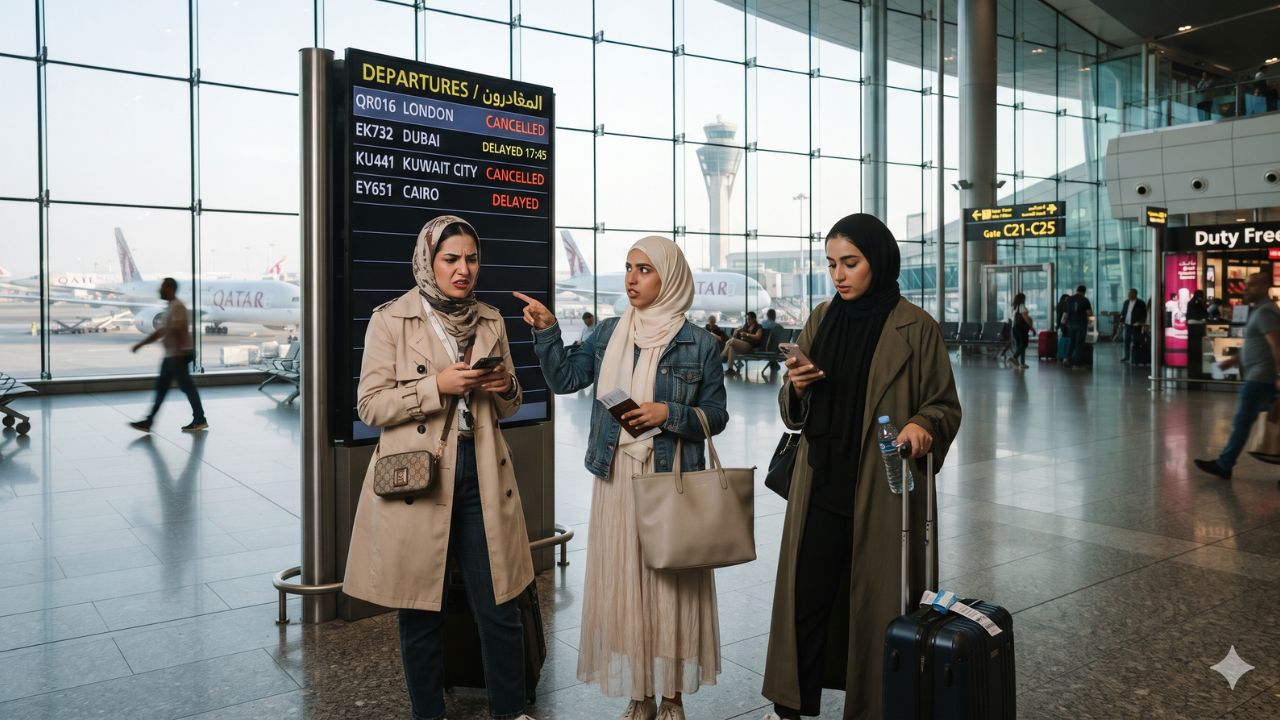
While Istanbul Airport absorbed a staggering 317 flight delays alone, King Abdulaziz International Airport in Jeddah emerged as the region's hardest-hit cancellation hotspot with 18 grounded departures, as escalating security concerns and airspace detours generated 1,453 delays and 80 cancellations across 13 Middle Eastern gateways. Aviation tracking records compiled on 23 October 2026 at 4:37 PM US Eastern Time (24 October at 12:37 AM Gulf Standard Time) reveal a heavily stressed aviation network stretching from North Africa to the Arabian Sea. Triggered by a security incident at King Fahd International Airport in Dammam on 21 October, combined with prior disruptions at Riyadh's King Khalid International Airport, international carriers have instituted precautionary reroutings that stretch crew duty limits and snarl flight connections.
The fallout extends across the United Arab Emirates, Saudi Arabia, Qatar, Bahrain, Egypt, Jordan, and Türkiye. Major international operators—including Dubai Airports and regional flag carriers like Saudia and Etihad Airways—are restructuring daily schedules to navigate restricted flight corridors. For passengers connecting between Europe, Asia, and Africa through the Gulf, what should be efficient two-hour layovers have transformed into multi-hour terminal waits and sudden cancellations.
The Operational Anatomy of Middle Eastern Airspace Friction
The current flight crisis stems from a convergence of acute regional security challenges, mandatory airspace diversions, and weather anomalies.
The primary operational trigger occurred on 21 October, when King Fahd International Airport in Dammam suffered an attack that caused casualties, forced aircraft diversions, and prompted emergency airfield shutdowns. Although flight movements at Dammam eventually resumed, the event sent shockwaves through international flight dispatch centers. Airlines operating long-haul rotations through the Persian Gulf immediately reassessed risk parameters, leading to cancellations and frequency cuts across Saudi destinations, including Riyadh, Jeddah, and Dammam. These security worries were magnified by earlier disruptions at King Khalid International Airport in Riyadh, where partial operational restorations have yet to stabilize commercial international traffic.
As a consequence, regional and intercontinental carriers have enacted extended schedule suspensions:
- Etihad Airways: Extended multiple Saudi route cancellations deep into November 2026.
- flydubai: Suspended several scheduled services to Saudi destinations until at least 29 October.
- Air India and Air India Express: Grounded all rotations serving Riyadh, Jeddah, and Dammam through 24 October.
- IndiGo: Canceled all scheduled flights connecting India with Riyadh, Jeddah, Dammam, and Madinah through 24 October.
- Cathay Pacific: Implemented a long-term commercial suspension on its Riyadh route, extending cancellations through 31 January 2027.
Beyond security protocols, weather and equipment availability created secondary friction points. Severe typhoon conditions in the western Pacific prompted weather-related cancellations on the long-haul Dubai–Taipei corridor, while technical inspections and delayed inbound aircraft propagated rolling schedule slippage throughout regional feeder networks.
Hub-by-Hub Disruption Across 13 Regional Airports
The impact of the disruption is distributed across 13 major gateways, illustrating the interconnected nature of Middle Eastern transit corridors.
| Airport / Aviation Gateway | Country / Territory | Recorded Delays | Recorded Cancellations | Operational Context & Performance Metrics |
|---|---|---|---|---|
| Istanbul Airport (IST) | Türkiye | 317 delays | 2 cancellations | Highest delay tally across all monitored gateways |
| Dubai International (DXB) | United Arab Emirates | 213 delays | 11 cancellations | Primary Gulf global transit hub; high delay volume |
| King Abdulaziz International (JED) | Saudi Arabia | 136 delays | 18 cancellations | Highest cancellation count in the dataset; Umrah traffic hit |
| Cairo International (CAI) | Egypt | 135 delays | 5 cancellations | Major North African connector serving Gulf labor routes |
| Antalya Airport (AYT) | Türkiye | 135 delays | 2 cancellations | Mediterranean tourist gateway feeling European flow delays |
| Sabiha Gökçen International (SAW) | Türkiye | 119 delays | 5 cancellations | Low-cost carrier hub in Istanbul facing schedule slippage |
| Zayed International (AUH) | United Arab Emirates | 116 delays | 4 cancellations | Abu Dhabi flag carrier hub absorbing network adjustments |
| Hamad International (DOH) | Qatar | 101 delays | 1 cancellation | Global transit gateway holding cancellations to a minimum |
| Sharjah International (SHJ) | United Arab Emirates | 78 delays | 11 cancellations | Air Arabia home base managing high cancellation rates |
| King Fahd International (DMM) | Saudi Arabia | 44 delays | 13 cancellations | Ground zero of the 21 October attack; heavy flight cuts |
| Queen Alia International (AMM) | Jordan | 23 delays | 4 cancellations | Levant transit crossroads experiencing feeder delays |
| Bahrain International (BAH) | Bahrain | 23 delays | 2 cancellations | Island gateway managing reduced Gulf shuttle rotations |
| Al Maktoum International (DWC) | United Arab Emirates | 13 delays | 2 cancellations | Secondary Dubai cargo and passenger relief terminal |
Across the United Arab Emirates, the four tracked airports—Dubai International, Sharjah, Zayed International in Abu Dhabi, and Al Maktoum—accumulated 420 delays and 28 cancellations. In Saudi Arabia, Jeddah and Dammam combined for 180 delays and 31 cancellations.
Airline Performance: Carriers Under Operational Pressure
Airline operational statistics reflect substantial schedule volatility across both legacy flag carriers and low-cost operators:
- Saudia: Recorded 87 delays (representing 28% of its tracked schedule—the highest delay percentage among listed carriers) and eight cancellations (2%).
- Air Arabia: Logged 63 delays (27%) alongside nine cancellations (3%), driven by disruptions at its primary Sharjah base.
- Etihad Airways: Registered 81 delays (25%) and held cancellations to two flights (rounded to 0%).
- Pegasus Airlines: Recorded 128 delays (17%) and two cancellations (0%) across its Turkish and regional network.
- SunExpress: Reported 91 delays (21%) and six cancellations (1%).
- EgyptAir: Experienced 49 delays (18%) and five cancellations (1%) out of Cairo.
- Royal Jordanian: Logged six delays (4%) and three cancellations (2%) at Amman.
What Makes Middle Eastern Airspace Hubs Vulnerable
The Middle East serves as the world's primary aerial bridge, funneling millions of travelers between the Eastern and Western hemispheres through narrow, highly regulated flight corridors. Unlike continental landmasses with redundant airspace, commercial aviation in the Gulf is constrained by extensive military exclusion zones, sensitive geopolitical boundaries, and maritime flight paths over the Persian Gulf and Red Sea.
When an incident occurs—such as the attack in Dammam or sudden security alerts in neighboring regions—aircraft cannot simply fly direct routes. Instead, air traffic control agencies must redirect aircraft through narrow, congested detours over Egypt, Saudi Arabia, or Oman. These diversions add 45 to 90 minutes of extra flight time, consuming thousands of gallons of supplementary jet fuel and forcing crews to exceed legal duty-time caps. Because wide-body aircraft operate continuous multi-leg rotations, a two-hour detour on a morning flight from London to Dubai cascades into delayed departures to Mumbai, Singapore, and Sydney later that evening.
Visitor Insider Tips
For travelers currently traveling through or connecting within the Gulf, localized knowledge is essential to minimizing transit stress:
- Utilize the Haramain High-Speed Railway in Saudi Arabia: If your domestic flight between Jeddah, Makkah, and Madinah is canceled or faces multi-hour delays, bypass the airport terminals entirely. The modern Haramain High Speed Railway connects King Abdulaziz International Airport's Terminal 1 train station directly to Madinah in approximately two hours and Makkah in under an hour, running smoothly at 300 km/h unaffected by airspace restrictions.
- Leverage Ground Transit Between UAE Airports: If your flight from Dubai (DXB) is heavily delayed or canceled, inquire about rebooking out of Zayed International Airport (AUH) in Abu Dhabi or Sharjah International (SHJ). A taxi or airline luxury shuttle between central Dubai and Abu Dhabi takes just 75 minutes, often allowing you to catch alternative long-haul departures without overnight delays.
- Request Direct Transit Hotel Vouchers at Dubai and Doha: Both Emirates at DXB (through their Dubai Connect program) and Qatar Airways at DOH provide complimentary hotel accommodations, transit visas, and meals for layovers exceeding eight to ten hours when caused by airline schedule changes. Inquire directly at the transfer desk before exiting immigration.
- Insist on Re-routing via Alternate European or Asian Gateways: Under international ticketing rules, if a regional flight through Jeddah or Dammam is canceled due to security suspensions, passengers are entitled to rebooking on partner carriers through neutral hubs like Istanbul, Doha, or Cairo without penalty.
- Keep Paper Confirmations of Hotel and Transport Bookings: Because flight departures may shift without advance mobile notifications, maintain physical printed itineraries and contact your hotel concierge via messaging channels to confirm late arrivals and prevent room cancellations.
Cultural and Environmental Context
The airports of the Gulf represent far more than commercial transit hubs; they are vital cultural crossroads. King Abdulaziz International Airport in Jeddah functions as the sacred threshold for millions of Muslim pilgrims undertaking Umrah and Hajj, as well as cultural visitors heading into the coral-stone lanes of UNESCO-listed Historic Jeddah (Al-Balad), where travel disruptions directly impact deeply personal journeys.
From an environmental perspective, ongoing airspace detours carry a severe ecological cost. Rerouting hundreds of daily wide-body flights around restricted corridors adds thousands of nautical miles to flight paths, generating tons of excess carbon dioxide and burning precious aviation fuel. As regional aviation authorities work to restore flight confidence, the resilience of Gulf tourism relies on balancing modern geopolitical realities with the historic hospitality that has welcomed desert travelers for centuries.
FAQ: Gulf and Middle East Flight Disruptions October 2026
What caused the flight cancellations across Gulf airports on 24 October 2026?
Cancellations and delays stemmed primarily from security concerns following an attack at Dammam's King Fahd International Airport on 21 October, regional airspace detours, and airline schedule adjustments.
Which airport experienced the most cancellations during this disruption?
King Abdulaziz International Airport in Jeddah recorded the highest number of cancellations with 18 grounded flights, while Istanbul Airport logged the highest delay tally with 317 delayed flights.
How are major airlines responding to the Saudi security alerts?
Carriers including Etihad, flydubai, Air India, IndiGo, and Cathay Pacific have extended flight suspensions to select Saudi cities into late October, November, and January 2027.
What should I do if my flight through Dubai or Jeddah is delayed?
Monitor your airline's mobile app, confirm onward connecting boarding passes at transfer desks, and ask airline representatives about meal and hotel vouchers if layovers exceed eight hours.
Across the desert skies of the Middle East, the ancient rhythm of caravan hospitality endures, guiding travelers safely through even the most turbulent winds.
Related Travel Guides
- Typhoon Champi Paralyzes Asian Skies: 1,090 Flight Cancellations and 4,878 Delays Strike Shanghai, Taipei, and Okinawa
- SWISS Opens Summer 2027 Gateway to Toulouse: Direct Flights to France's Aerospace Capital and Pyrenean Trails
- Cascading Airspace Delays Grip US Hubs: Chicago, Austin, and San Francisco Hit by 3,287 Flight Disruptions
- The Rose-Red Kingdom Rebounds: How Jordan Is Courting American Travelers Amid Petra's Tourism Recalibration
Disclaimer
This article is for informational and educational purposes only. It does not constitute legal, financial, or professional advice. While we strive to provide accurate and up-to-date information, travel policies, regulations, and conditions change rapidly. Always verify information with official sources before making travel decisions. Nomad Lawyer makes no representations about the accuracy, reliability, completeness, or suitability of the information provided. Readers should consult qualified professionals for advice specific to their circumstances. The views expressed in this article are those of the author and do not necessarily reflect the views of Nomad Lawyer.
Preeti Gunjan
Contributor & Community Manager
A passionate traveller and community builder. Preeti helps grow the Nomad Lawyer community, fostering engagement and bringing the reader experience to life.
Learn more about our team →