
Michigan’s St. Marys River Four Private Islands Listed for $2.3M as Great Lakes Eco-Retreat
A rare 520-acre archipelago in Michigan's St. Marys River hits the market for $2.3M, featuring four islands, a renovated home, two boats, and protected habitat.

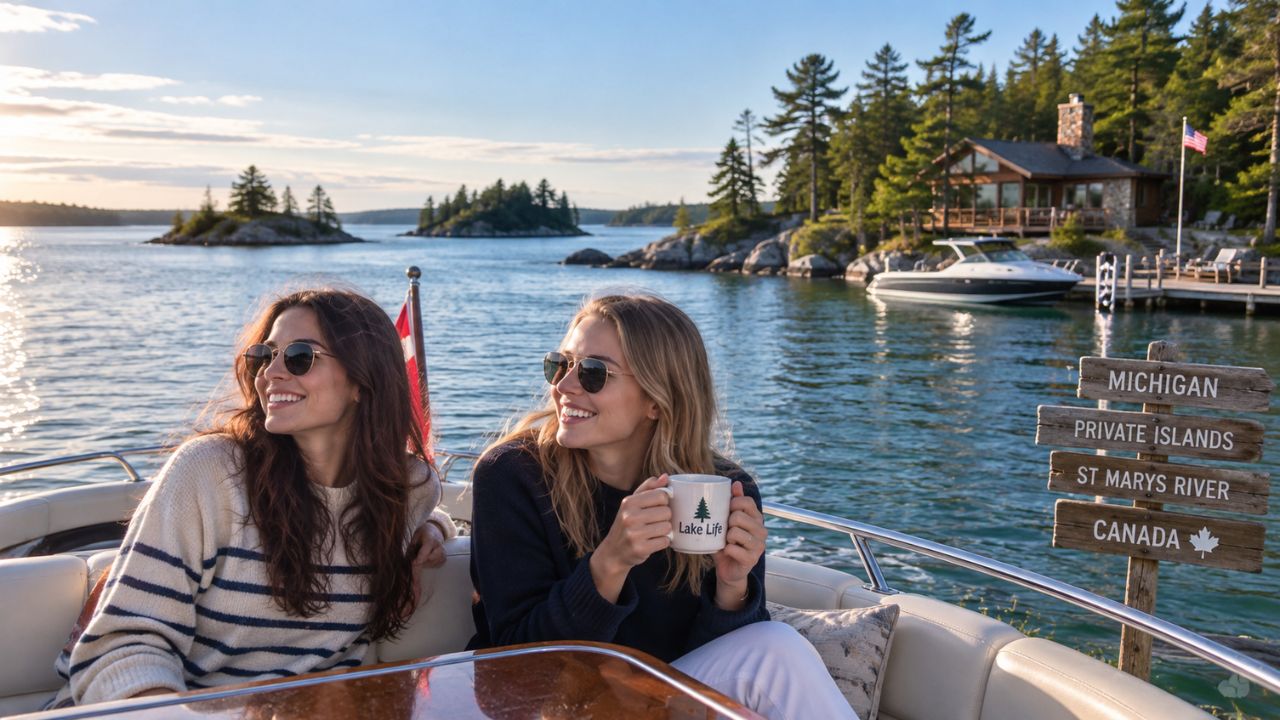
Image generated by AI
A pristine 520-acre private island archipelago near the Michigan-Canada international border has entered the market for $2.3 million, bundling four wilderness islands, a fully renovated off-grid luxury residence, two seaworthy vessels, and an active conservation easement in the heart of the Great Lakes.
Published on September 4, 2026, the rare real estate offering comprises Burnt, Wilson, Claw, and Harris Islands, nestled in the scenic waters of the St. Marys River off Drummond Island and DeTour Village. The private retreat reflects a growing trend in Great Lakes tourism and remote living, where luxury travelers and conservation-minded buyers prioritize undisturbed natural ecosystems, complete privacy, and responsible stewardship over dense resort developments.
The Local Trend Revealed: Ultra-Secluded Eco-Estates Along the International Boundary
The four-island compound sits within the St. Marys River, directly adjacent to the maritime border separating the Upper Peninsula of Michigan from Ontario, Canada. While the islands offer panoramic vistas across northern Canadian waters, the entire landholding remains firmly within United States jurisdiction.
Represented by listing agent Anna DeCamp of Gaslight Group, the property delivers an operational turnkey estate designed for self-sufficient wilderness living. The centerpiece of the retreat is a 2,131-square-foot, three-bedroom, two-bathroom home occupying a wooded peninsula positioned between two sheltered natural bays. Originally utilized by the current owners as a seasonal holiday haven for roughly a decade, the residence underwent an extensive reconstruction between 2017 and 2018, during which contractors transported building materials entirely by boat to gut and modernize the interior.
Today, the residence combines modern amenities with classic northern seclusion. It features full electrical service, running water, a gas cooking range, and a custom wood-panelled Finnish sauna. To address the unique logistical demands of managing 520 acres of shoreline and forest, the transaction includes an equipment package featuring a Kubota tractor and two operational boats, led by a 2006 32-foot World Cat catamaran.
Access to the compound begins on the Michigan mainland at DeTour Village, where the owners maintain a dedicated marina slip. From DeTour Harbor, a 20- to 30-minute boat crossing navigates the working waters of the St. Marys River, where 1,000-foot Great Lakes iron ore freighters share the channel with recreational vessels heading into northern Lake Huron.
| Property & Marine Parameter | Verified Estate Specifications |
|---|---|
| Asking Price | $2.3 million |
| Total Landholding | Approximately 520 acres across 4 islands |
| Islands Included | Burnt Island, Wilson Island, Claw Island, Harris Island |
| Residential Living Space | 2,131 square feet (3 bedrooms, 2 bathrooms, sauna, gas stove) |
| Included Marine Vessels | 2 boats (featuring 2006 32-foot World Cat catamaran) |
| Ground Maintenance Gear | Kubota utility tractor and specialized shoreline equipment |
| Mainland Departure Hub | DeTour Village, Michigan (20–30 minute boat crossing) |
| Conservation Holding | Little Traverse Conservancy easement protecting majority of acreage |
| Nearest Supply Centers | St. Ignace and Sault Ste. Marie |
Cultural & Environmental Value: Conservation Easements and Great Lakes Wildlife
The defining attribute of this St. Marys River property is its legal conservation status, which ensures that its natural beauty remains permanently safeguarded from aggressive commercial subdivision.
The vast majority of the 520 acres is legally protected under a permanent conservation easement held by the Little Traverse Conservancy, with approximately 100 acres remaining unencumbered for flexible private residential use. Under guidelines established by the Michigan Department of Agriculture and Rural Development (MDARD), conservation easements permanently limit high-density development while preserving private title and recreational enjoyment. These restrictions run with the deed, guaranteeing that future custodians maintain the property's wild canopy.
This conservation ethos mirrors the broader ecological framework of northern Lake Huron. Drummond Island itself covers roughly 135 square miles, divided between 57 percent public ownership managed by the Michigan Department of Natural Resources (DNR) and 43 percent private holdings. As of June 2026, the Little Traverse Conservancy manages nearly 400 public nature preserves, 40 working forest reserves, and holds easements across more than 345 private properties in northern Michigan.
For wildlife, this unbroken canopy of cedar, aspen, and northern hardwoods provides essential sanctuary. River otters, beavers, red foxes, and coyotes roam the shoreline shoals, while sandhill cranes, bald eagles, and common loons nest across the undisturbed bays. By maintaining low-impact private sanctuaries alongside state initiatives—such as the recent preservation of over 73,000 acres in the nearby Michigamme Highlands—the region safeguards vital freshwater wetlands without overburdening public tax rolls.
Visitor Insider Tips: Exploring DeTour Village and Drummond Island
Travelers exploring northern Michigan’s maritime borderlands can experience the region’s natural character through practical local insights:
- Navigating the St. Marys River Channel: When boating out of DeTour Village, always monitor marine VHF Channel 16 and keep updated NOAA navigational charts. Commercial freighters bound for the Soo Locks have limited stopping capability and draft deep in the dredged channels; give them at least half a mile of clearance and expect heavy vessel displacement wakes.
- Tasting Traditional Upper Peninsula Flavors: In DeTour Village and nearby Raber, seek out local roadhouses serving authentic Upper Peninsula pasties—flaky, lard-crusted pastries filled with diced beef, potatoes, rutabaga, and onions, originally carried underground by Cornish copper and iron miners. Pair this with freshly caught, pan-fried Great Lakes whitefish or smoked lake trout from local family fisheries.
- Accessible Public Preserves for Non-Island Owners: You do not need to spend millions to experience this ecological paradise. Visit the Little Traverse Conservancy's Forslund Dix Point Preserve on Drummond Island, which offers public hiking trails along the St. Marys River, or explore the Clyde and Martha Williams Preserve for pristine boreal birdwatching.
- Fossil Hunting on Ancient Alvar Pavements: Drummond Island hosts rare limestone alvar ecosystems—exposed prehistoric sea beds dating back 400 million years. Walk the shoreline near Maxton Plains to spot fossilized coral reefs and rare arctic-alpine wildflowers found in few other places in North America.
- Best Travel Seasons: Summer (July and August) offers prime swimming, kayaking, and boating conditions, with daytime water temperatures reaching comfortable levels. For dramatic autumn colors, visit between late September and mid-October, when northern maple and birch canopies turn brilliant gold and crimson against the deep blue waters of Lake Huron.
Tourism Outlook: The Rise of Low-Impact Wilderness Travel
The listing of Burnt, Wilson, Claw, and Harris Islands illustrates how high-net-worth tourism is evolving from conventional resort materialism toward nature-based authenticity and space.
In an era of congested coastal destinations, the Great Lakes archipelago offers a quiet refuge where clean freshwater, dark night skies, and ecological conservation take center stage. For regional communities like DeTour Village, St. Ignace, and Sault Ste. Marie, the coexistence of working commercial waterways, protected public preserves, and private eco-estates demonstrates that economic vitality and environmental preservation can thrive hand in hand across Michigan’s northern frontier.
Related Travel Guides
Disclaimer
This article is for informational and educational purposes only. It does not constitute legal, financial, or professional advice. While we strive to provide accurate and up-to-date information, travel policies, regulations, and conditions change rapidly. Always verify information with official sources before making travel decisions. Nomad Lawyer makes no representations about the accuracy, reliability, completeness, or suitability of the information provided. Readers should consult qualified professionals for advice specific to their circumstances. The views expressed in this article are those of the author and do not necessarily reflect the views of Nomad Lawyer.
Raushan Kumar
Founder & Lead Developer
Full-stack developer with 11+ years of experience and a passionate traveller. Raushan built Nomad Lawyer from the ground up with a vision to create the best travel and law experience on the web.
Learn more about our team →