
Miami Overtakes Major US Cities with Largest Hotel Network and $32.2 Billion Tourism Impact in 2026
Miami-Dade County has become the leading US tourism hub in 2026, surpassing New York and Las Vegas in hotel network expansion and generating a record $32.2 billion economic impact.

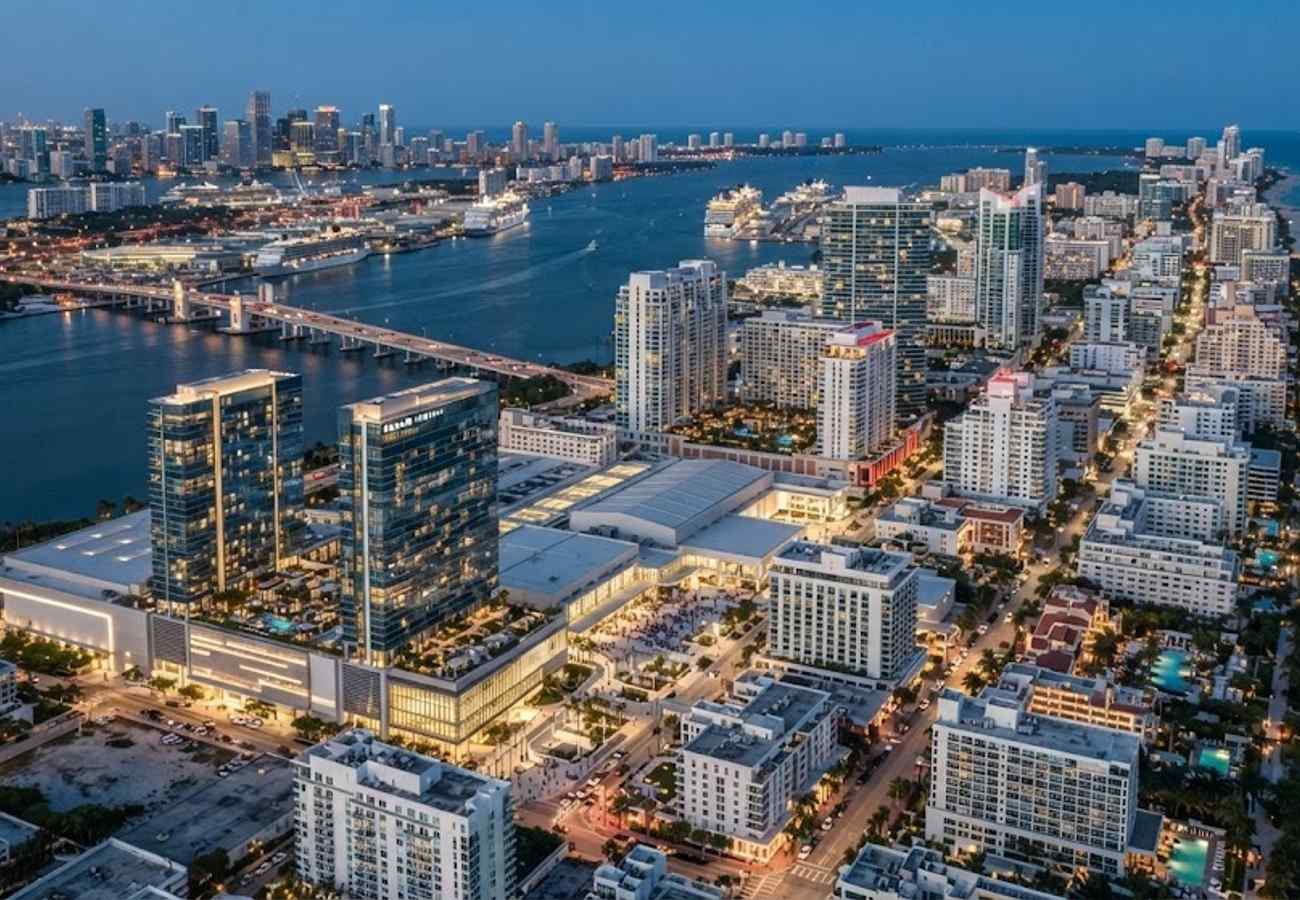
Image generated by AI
Miami-Dade County has officially surpassed traditional heavyweights like New York, Los Angeles, and Las Vegas to establish the largest hotel network in the United States. This expansion has fueled a record-breaking $32.2 billion economic impact, supported by a surge in international visitation and high-net-worth corporate travel.
The hospitality sector in South Florida has undergone a systemic transformation, pivoting from a seasonal boutique destination to a year-round global powerhouse. This shift is driven by aggressive infrastructure investment and a strategic diversification of appeal, targeting corporate conventions, luxury travelers, and cultural tourism.
The Greater Miami Convention & Visitors Bureau (GMCVB) has steered this evolution by incentivizing international developers to build state-of-the-art accommodations. This planned expansion ensures that room supply does not merely meet existing demand but actively stimulates new visitor growth.
2026 Tourism Performance Metrics
Data released during the GMCVB’s 2026 State of the Travel & Tourism Industry event confirms a watershed moment for the region. Miami-Dade County recorded 28.3 million visitors, a figure reflecting compounded annual growth and a resilient international marketing strategy.
The visitor profile shows a balanced mix of domestic stability and high-spending international arrivals:
- Florida Residents: 31% of total visitation.
- Other US States: 46% of total visitation.
- International Arrivals: The remaining 23% provide the high-yield revenue necessary to sustain luxury expansions.
Economic Impact and Revenue Distribution
The financial influx from these visitors has resulted in a total economic impact of $32.2 billion. Direct spending across lodging, dining, shopping, transportation, and entertainment reached $22.7 billion, marking a 4.1% increase over the previous year.
The accommodations sector remains the primary engine of this growth. Lodging alone generated $10.4 billion in visitor spending, accounting for nearly half of all tourism-related expenditures in the region.
Hotel Network Expansion and Market Dominance
The Miami skyline has been reshaped by a construction renaissance focused on integrated resort experiences. A pivotal addition to this infrastructure is the Grand Hyatt Miami Beach Convention Center Hotel, which integrates high-capacity luxury lodging directly with exhibition spaces. This allows Miami to capture the MICE (Meetings, Incentives, Conferences, and Exhibitions) market, where corporate travelers typically exhibit the highest daily spend.
In 2026, Greater Miami and Miami Beach led the top 25 US hotel markets in three critical industry metrics:
- Occupancy Rates: Defying national trends of oversupply, Miami has maintained high occupancy year-round.
- Average Daily Rate (ADR): Continuous upward momentum in pricing has placed Miami among the most profitable US destinations.
- Revenue Per Available Room (RevPAR): Leading the nation in RevPAR confirms that the market is successfully selling premium products at premium prices.
Transit and Lodging Specifications 2026
| Metric | 2026 Value | Year-over-Year Change | Primary Driver |
|---|---|---|---|
| Total Visitors | 28.3 Million | Positive Growth | International Marketing |
| Total Economic Impact | $32.2 Billion | N/A | Diversified Tourism Base |
| Direct Visitor Spending | $22.7 Billion | +4.1% | Increased Luxury Footprint |
| Lodging Revenue | $10.4 Billion | N/A | High ADR & RevPAR |
| Domestic Visitation | 77% (Combined) | Stable | Intra-state & National Travel |
Traveler Logistics Guide: Navigating Miami's New Infrastructure
From a ground-level perspective, the best way to navigate Miami's expanded hotel landscape is to align your lodging with your primary purpose of visit to avoid the city's notorious traffic congestion.
For Convention Attendees: If visiting for a conference, prioritize the Grand Hyatt Miami Beach or adjacent properties. The direct connection to the Convention Center eliminates the need for daily commutes, which can be unpredictable during peak event seasons.
For Luxury and Leisure Travelers: The shift toward integrated resorts means many amenities are now contained within a single complex. When booking, verify if the property offers "all-inclusive" luxury tiers, as these have become the standard for the modern elite traveler in South Florida.
Transit and Customs Tips:
- International Arrivals: With the surge in international visitors, ensure all travel documents are updated. Travelers from ETIAS-required regions should complete their digital authorizations at least 72 hours before departure to avoid delays at Miami International Airport (MIA).
- Ground Transport: Utilize ride-share apps over traditional taxis for more transparent pricing, though pre-arranged hotel shuttles remain the most efficient way to reach the beach districts from the airport.
- Optimal Booking: To avoid the premium pricing associated with Miami's high ADR, book "shoulder season" dates (May-June or September-October), though be mindful of weather patterns during these periods.
Infrastructure Impact Assessment
The dominance of Miami's hotel network signals a shift in the US tourism hierarchy. By successfully integrating luxury lodging with large-scale event infrastructure, Miami has decoupled its economy from seasonal dependence. This model provides a blueprint for other coastal cities looking to attract high-net-worth individuals and corporate entities. The result is a more resilient regional economy with over 200,000 jobs supported directly by the travel and hospitality industry.
Miami has transitioned from a vacation spot to a global economic engine.
Related Travel Guides
Disclaimer
This article is for informational and educational purposes only. It does not constitute legal, financial, or professional advice. While we strive to provide accurate and up-to-date information, travel policies, regulations, and conditions change rapidly. Always verify information with official sources before making travel decisions. Nomad Lawyer makes no representations about the accuracy, reliability, completeness, or suitability of the information provided. Readers should consult qualified professionals for advice specific to their circumstances. The views expressed in this article are those of the author and do not necessarily reflect the views of Nomad Lawyer.
Raushan Kumar
Founder & Lead Developer
Full-stack developer with 11+ years of experience and a passionate traveller. Raushan built Nomad Lawyer from the ground up with a vision to create the best travel and law experience on the web.
Learn more about our team →