
Miami Beach Airport Express Bus Guide 2026: Fares, Routes, and MIA Transit Tips
Avoid expensive rideshares with the Miami Beach Airport Express. Learn about the 2026 fares, Route 150 stops, and how to navigate from MIA to South Beach.

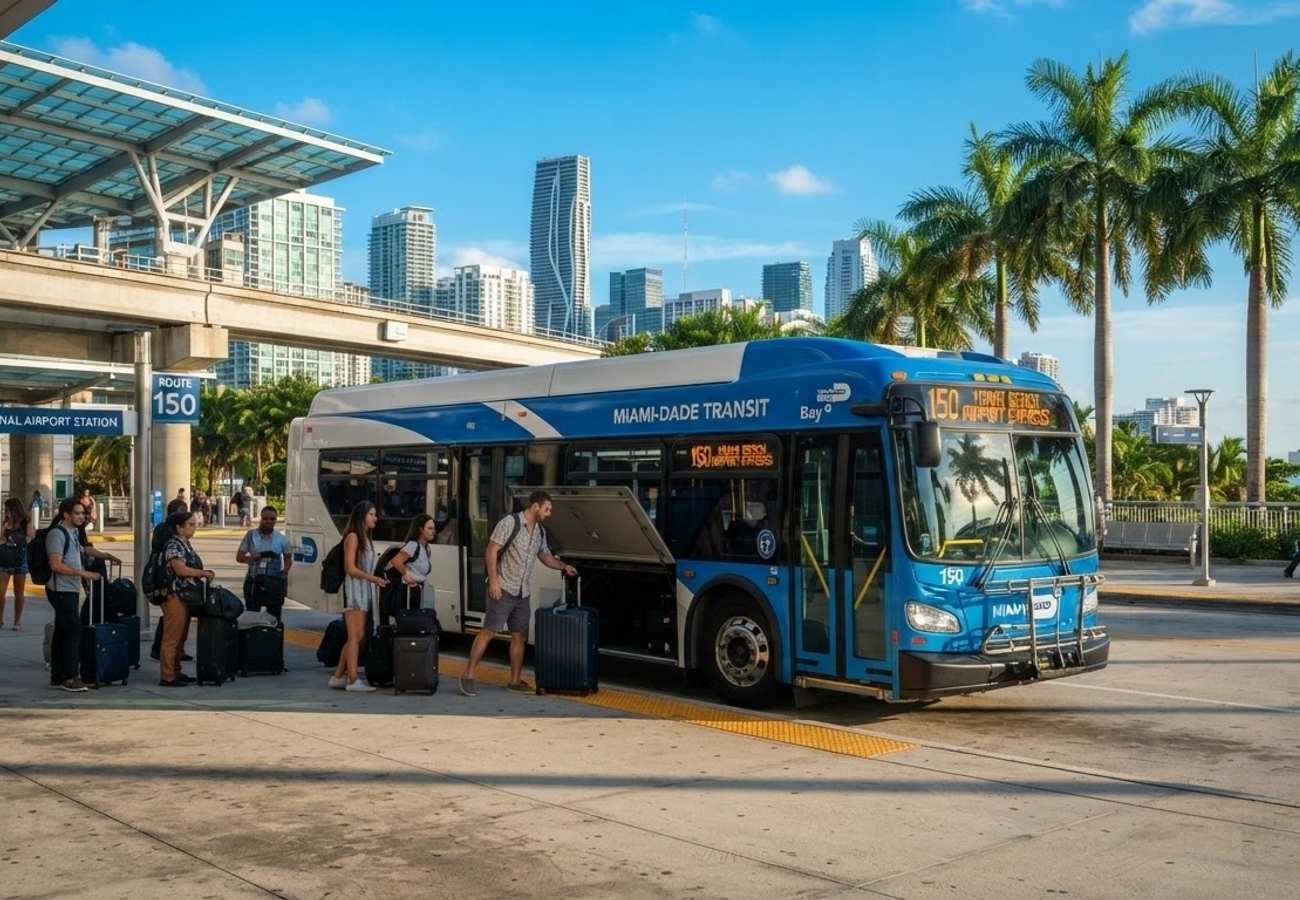
Image generated by AI
Travelers landing at Miami International Airport (MIA) can avoid the high costs of rideshares by utilizing the Miami Beach Airport Express, a budget-friendly transit link to South Beach. This service provides a direct, air-conditioned connection for passengers prioritizing cost over door-to-door convenience.
For many arriving passengers, the transition from the tarmac to the sand often involves a costly Uber or taxi ride. However, the Miami Beach Airport Express serves as a viable alternative, offering dedicated luggage space and frequent departures. In 2026, this service remains a primary artery for budget-conscious tourists, students, and cruise passengers extending their stay in the Magic City.
Understanding Miami-Dade Transit Route 150
The service known to tourists as the Miami Beach Airport Express is officially designated as Miami-Dade Transit Route 150. Unlike private shuttle vans, this is a limited-stop municipal service utilizing standard 40-foot city buses. The route is strategically mapped to traverse the Julia Tuttle Causeway, subsequently navigating Collins Avenue and Indian Creek Drive to reach the heart of Miami Beach.
These vehicles are equipped with digital destination signs explicitly reading “150 Miami Beach Airport Express,” ensuring they are easily identifiable among other Metrobus options. Inside, passengers will find priority seating at the front and sufficient room for suitcases.
The duration of the trip varies based on traffic congestion and the specific destination stop. A typical journey from the airport station to central South Beach—specifically around Lincoln Road or 15th Street—takes approximately 50 minutes. While a rideshare might reduce this time to 25 or 35 minutes under ideal conditions, the cost differential is significant.
2026 Fare Structure and Payment Methods
As of mid-2026, the adult fare for a one-way trip on the Miami Beach Airport Express is 2.25 dollars. This pricing aligns with standard Miami-Dade Metrobus rates, creating a stark contrast to the 25 to 40 dollar fares typically charged by taxis or Uber for the same route.
Payment Options and Fare Capping
Passengers have several ways to settle their fare:
- EASY Card/Ticket: These reloadable fare media are the most efficient options.
- Contactless Payment: Tapping a mobile wallet or a contactless bank card is supported at available validators.
- Cash: While accepted, cash is discouraged because drivers cannot provide change. Passengers must provide the exact amount; otherwise, any overage is effectively donated to the transit system.
A key benefit for visitors is the fare-capping policy. By using an EASY Card, riders are charged per trip up to a specific daily ceiling. Once this cap is reached, subsequent rides for the remainder of the day are free. This makes the bus an ideal choice for those planning to explore the city beyond their hotel.
| Transport Mode | Estimated One-Way Cost | Estimated Travel Time | Convenience Level |
|---|---|---|---|
| Route 150 Bus | $2.25 | 45–60 Minutes | Moderate (Walk to Hotel) |
| Uber / Lyft | $25.00 – $40.00 | 25–35 Minutes | High (Door-to-Door) |
| Taxi | $30.00 – $45.00 | 25–35 Minutes | High (Door-to-Door) |
Navigating MIA to the Bus Boarding Area
A common point of confusion for first-time arrivals is that the Airport Express does not depart from the terminal baggage claim curbs. To reach the bus, passengers must travel to the Miami International Airport Station.
The process follows these specific steps:
- Locate the MIA Mover: After retrieving luggage, follow the purple signage for the "MIA Mover" and "Rental Car Center."
- Transit to the Hub: Board the automated people mover. This service is free and designed specifically for passengers with heavy luggage.
- Find the Transit Bay: Upon exiting at the Rental Car Center, follow signs for "Public Transit" or "Metrobus." This leads to the Miami Intermodal Center.
- Board Route 150: Identify the bay specifically labeled for Route 150. Electronic displays typically indicate the next departure time.
Strategic Stops in Miami Beach and South Beach
Route 150 is designed as a limited-stop service, meaning it does not stop at every block. Instead, it targets high-density hotel clusters and major beach access points to maintain a faster pace.
Key areas served include:
- Mid Beach: Stops near 41st Street.
- Collins Avenue: Frequent stops between the 2300 and 2500 blocks.
- Central South Beach: Stops near 15th Street, 17th Street, and Lincoln Road.
For those staying at major properties like the Royal Palm or Loews Miami Beach, the bus drops passengers within short walking distance. Travelers heading toward Ocean Drive near 5th Street often exit at Washington Avenue or Collins Avenue and complete the final leg of their journey on foot or via a very short rideshare.
Schedule, Frequency, and Operational Hours
The Miami Beach Airport Express is engineered for convenience, meaning passengers rarely need to adhere to a strict timetable. Buses typically depart every 20 to 30 minutes throughout the day. During peak daytime hours, the frequency often increases to a 20-minute interval.
Operational hours generally run from 5 a.m. until nearly midnight. This window is designed to synchronize with the arrival and departure patterns of major international flights and the turnover schedules of cruise ships at PortMiami.
Why This Matters: The Traveler's Perspective
From a logistical standpoint, choosing the Airport Express over a rideshare is a trade-off between time and capital. For a solo traveler or a couple, the total round-trip cost remains under 10 dollars per person. In contrast, a single one-way Uber ride can cost more than the entire week's worth of bus transit.
For the traveler, this means the difference between a high-stress, high-cost arrival and a predictable, low-cost transition. While the "last mile" (the walk from the bus stop to the hotel) requires some effort with luggage, the financial savings are substantial. This is particularly critical for long-term nomads or budget travelers who view transportation as a variable cost to be minimized.
Choosing the bus transforms a $40 transit expense into a $4.50 round trip, leaving more of the travel budget for the actual Miami experience.
Related Travel Guides
Disclaimer
This article is for informational and educational purposes only. It does not constitute legal, financial, or professional advice. While we strive to provide accurate and up-to-date information, travel policies, regulations, and conditions change rapidly. Always verify information with official sources before making travel decisions. Nomad Lawyer makes no representations about the accuracy, reliability, completeness, or suitability of the information provided. Readers should consult qualified professionals for advice specific to their circumstances. The views expressed in this article are those of the author and do not necessarily reflect the views of Nomad Lawyer.
Kunal K Choudhary
Co-Founder & Contributor
A passionate traveller and tech enthusiast. Kunal contributes to the vision and growth of Nomad Lawyer, bringing fresh perspectives and driving the community forward.
Learn more about our team →