
Travel Thailand Joins Visa Crackdown: 30-Day Limit Now in Effect
Thailand travel joins major nations in 2026 tightening visa-free stays to 30 days. US, UK, China, Japan, Canada follow suit. What this means for your itinerary.

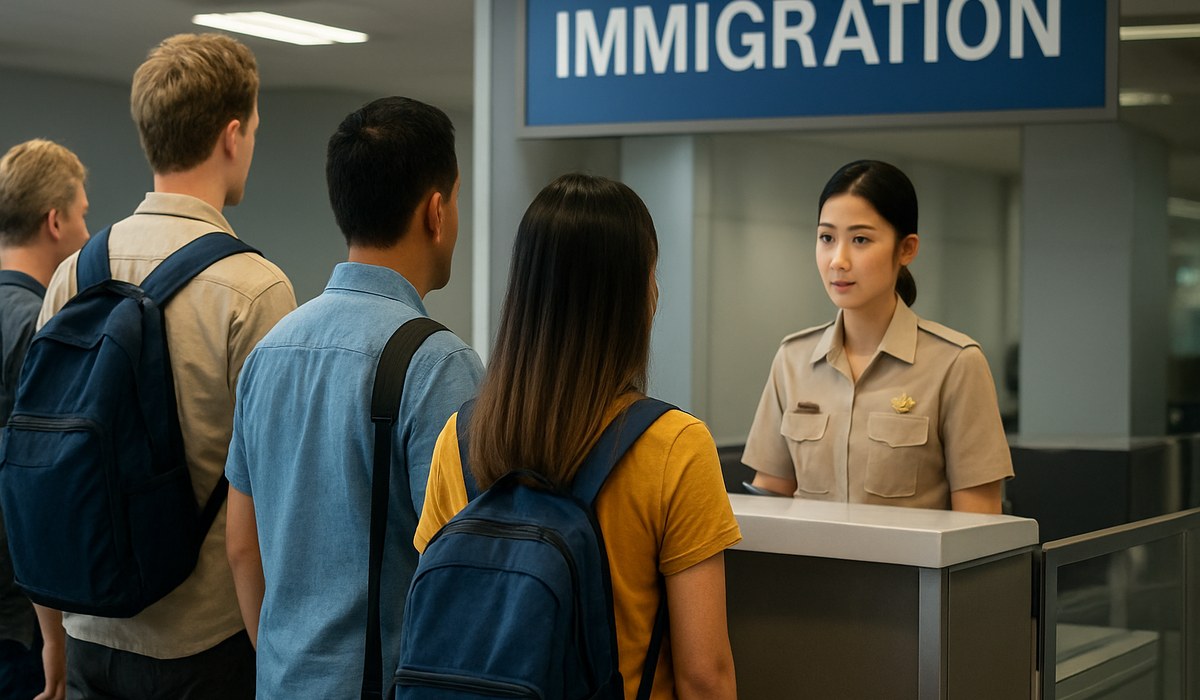
Image generated by AI
Your Southeast Asia getaway just became a game of numbers. Thailand has officially capped visa-free entry at 30 days—matching restrictions now deployed across Washington, London, Beijing, Tokyo, and Ottawa. For the first time in a generation, travelers cannot simply extend their stay in one of Asia's most visited nations without jumping through bureaucratic hoops. The shift marks a watershed moment for global tourism. When Thailand moves, the entire backpacker ecosystem trembles.
Quick Summary
- Thailand reduces visa-free stays from 60 days to 30 days effective immediately (March 2026)
- US, UK, China, Japan, and Canada have implemented identical or near-identical caps in the past 18 months
- Travelers face visa extension costs, onward ticket requirements, and proof of funds scrutiny
- Digital nomads and long-term visitors must now budget $100–$500 USD for alternative entry pathways
- The policy shift reflects broader geopolitical anxiety about population movement and border control
Thailand Joins Global Tightening: What Changed and When
Thailand's Immigration Bureau announced the new 30-day visa-free stay cap in late March 2026, effective immediately for all arriving tourists holding passports from visa-exempt countries. Previously, travelers could enter the kingdom without a visa and receive a standard 30-day tourist stamp—but many exploited secondary options that extended their sojourn to 60 days through border runs or visa extensions at local Thai immigration offices.
That loophole is now sealed. The Royal Thai Government has eliminated the automatic 30-day extension (TM.7 form) for visitors already holding a visa-free entry stamp. Instead, anyone wishing to stay beyond the initial 30 days must apply for a Non-Immigrant visa before departure from their home country or obtain a Tourist visa from a Thai embassy abroad.
Colonel Sumet Chaivanakul, Deputy Director of the Thai Immigration Bureau, confirmed the change in a press statement: "The policy ensures visitor management aligns with regional security protocols and maintains sustainable tourism capacity across major entry points."
This is not a temporary measure. Thai officials have signaled the restriction will remain indefinite, pending review in 2027.
To verify the current rules for your nationality, consult the IATA Travel Centre, which maintains real-time updates on entry requirements for every country pair.
How the 30-Day Limit Compares to US, UK, China, Japan, and Canada
Thailand is the sixth major tourist destination to impose a 30-day cap since January 2025. The wave began with Australia reducing its visitor limit to 30 days in late 2024—a shock that sent ripples through the backpacker and digital nomad communities. Here's how the restrictions now stack up:
United States: The US maintains a 90-day visa-free period for most Western nationalities under the Visa Waiver Program, but the Department of Homeland Security now requires pre-departure background checks and may deny re-entry if a visitor has spent more than 120 days in the country over any 12-month period.
United Kingdom: After Brexit, the UK capped visa-free stays at 30 days for non-British and non-EU nationals. Citizens of Canada, Australia, and New Zealand remain exempt, but arrivals from Asia-Pacific nations receive the standard 30-day Visitor stamp with no extension option available at UK immigration counters.
China: Beijing tightened its tourist visa rules in June 2025, reducing the standard "L" visa (ordinary tourism) from 60 to 30 days for most nationalities. The measure includes mandatory hotel registration scans and daily tourism monitoring via mobile apps—marking the first time China has deployed real-time surveillance of visitor movements.
Japan: Tokyo introduced a 30-day visitor cap for non-residents in September 2025, bucking its tradition of more relaxed entry rules. Exceptions exist for workers on Japan External Trade Organization (JETRO) sponsorships, but tourists face rigid enforcement.
Canada: Ottawa limited visitor stays to 30 days in January 2026, aligning with US-Canada border coordination agreements. The measure includes financial verification requirements: visitors must show C$5,000 ($3,700 USD) in accessible funds per month of stay.
Thailand's cap mirrors Canada's strictness but without (yet) requiring proof of funds. However, immigration officers may deny entry to anyone deemed unable to support themselves.
What This Means for Your Travel Plans: Strategies for Longer Stays
If you're planning a month-plus adventure in Thailand, your options have narrowed considerably.
Option 1: Pre-Departure Tourist Visa Apply at a Thai embassy or consulate in your home country before traveling. A standard Tourist visa grants 60 days and costs $35–$60 USD depending on your location. Processing time is typically 3–5 business days. This remains the simplest path for anyone planning a 30–60 day stay.
Option 2: Non-Immigrant Visa If you intend to stay 90+ days, a Non-Immigrant (ED) visa for education, business (B), or other categories requires sponsorship and advance preparation. Costs range from $200–$500 USD depending on visa class. You must apply at a Thai embassy; border-run extensions are no longer permitted.
Option 3: Digital Nomad / Long-Stay Visa Thailand has not yet introduced an official "digital nomad" visa, but neighboring Malaysia and Vietnam offer these programs. Long-term visitors increasingly apply for Non-Immigrant B visas (business) by arranging a Thai-registered company or consulting contract, then renewing annually.
Option 4: Elite / Privilege Pass For high-net-worth individuals, Thailand's Elite Long-Term Resident program permits 20-year stays starting at ฿600,000 ($17,000 USD). It's expensive but guarantees permanent visa-free re-entry.
To assess your specific nationality's eligibility and visa pathways, use Sherpa's real-time travel restriction tool, which cross-references your passport and destination to show all available visa options and processing timelines.
For UK passport holders, the FCDO Travel Advice page for Thailand provides official guidance on visa types and typical extension outcomes, updated weekly.
Cost Impact: A traveler planning a 60-day stay in Thailand now faces an additional $35–$60 USD in visa fees, plus processing time delays. For groups or families, this compounds to $500+ USD and lost vacation days waiting for embassy appointments.
The Bigger Picture: Why Major Nations Are Restricting Entry
Thailand's policy change is not isolated. Rather, it reflects a coordinated (or at minimum, synchronized) global shift toward border securitization and visitor cap management—rooted in three converging pressures:
1. Post-Pandemic Border Control Infrastructure Many nations invested heavily in digital border screening systems during COVID-19. Rather than sunset these technologies, governments are deploying them to manage tourism flows and reduce strain on housing, healthcare, and infrastructure in major cities. Thailand's largest cities
Disclaimer
This article is for informational and educational purposes only. It does not constitute legal, financial, or professional advice. While we strive to provide accurate and up-to-date information, travel policies, regulations, and conditions change rapidly. Always verify information with official sources before making travel decisions. Nomad Lawyer makes no representations about the accuracy, reliability, completeness, or suitability of the information provided. Readers should consult qualified professionals for advice specific to their circumstances. The views expressed in this article are those of the author and do not necessarily reflect the views of Nomad Lawyer.
Kunal K Choudhary
Co-Founder & Contributor
A passionate traveller and tech enthusiast. Kunal contributes to the vision and growth of Nomad Lawyer, bringing fresh perspectives and driving the community forward.
Learn more about our team →