
Mexico Tourism Surge 2026: Cancun and Riviera Maya Lead 47.8 Million International Visitor Influx
Mexico's Caribbean coast and Pacific hubs are seeing a massive resurgence, with 47.8 million international tourists visiting in 2025, led by Cancun's dominant air arrivals and the Riviera Maya's expansive resort corridor.

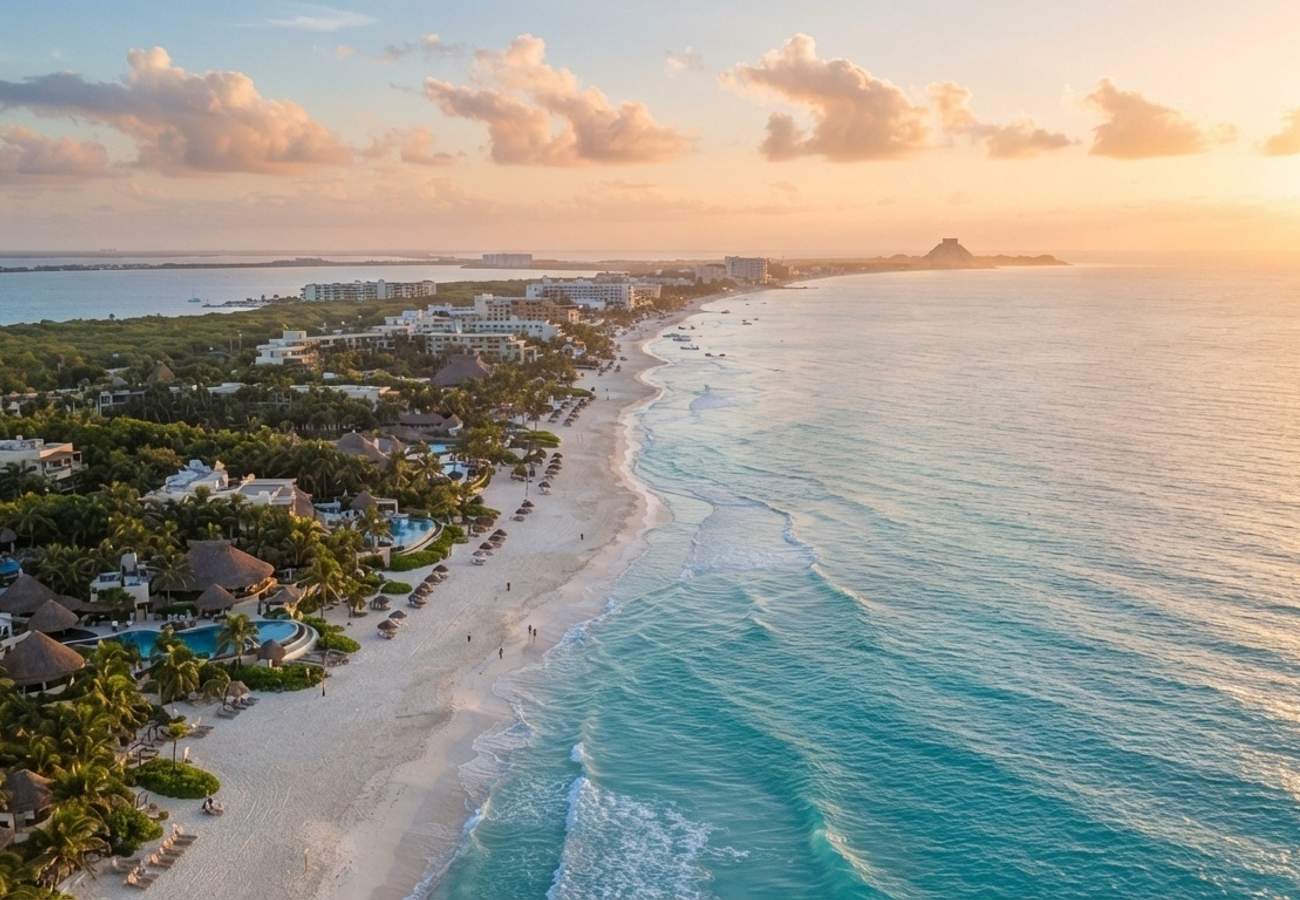
Image generated by AI
[Cancun, September 14, 2026] — Mexico has solidified its position as a global tourism powerhouse, recording 47.8 million international visitors in 2025 with total international tourism receipts hitting approximately US$35 billion. The surge is primarily driven by the Caribbean coast's allure and a robust recovery across Pacific luxury hubs, signaling a complete post-pandemic rebound for the nation's travel sector.
According to year-end figures from DataTur, the official tourism intelligence system of the Mexican government, international air arrivals reached 20.6 million in 2025. While the Caribbean gateway of Cancun remains the primary entry point for foreign travelers, a diversified interest in Mayan archaeological sites and Pacific desert landscapes is redistributing visitor flow across the country.
The Drivers of Mexico's Tourism Recovery
The current growth is not uniform across all regions; rather, it is split between high-volume leisure gateways and luxury-focused niche markets. Cancun and the Riviera Maya continue to dominate the leisure segment, while Los Cabos and Puerto Vallarta have successfully pivoted toward a blend of nature-based tourism and high-end luxury.
Meanwhile, urban centers like Mexico City serve as the primary cultural conduit for the country, and Acapulco is currently in a state of aggressive reconstruction following the devastation caused by Hurricane Otis. The national strategy has focused on expanding the accessibility of Mayan wonders and improving infrastructure at key archaeological sites to maintain the momentum of international arrivals.
Regional Visitor Breakdown and Trends
The following data highlights the variance in how Mexico's top destinations are measured and their respective performance trends over the last five years.
| Destination | 2021 | 2022 | 2023 | 2024 | 2025 | Primary Metric |
|---|---|---|---|---|---|---|
| Cancun | (Gateway) | 8.57m* | 10.04m | 9.72m | 9.41m | Int'l Air Entries |
| Mexico City | 2.18m** | 4.58m | 14.40m | 14.85m | 8.52m*** | Hotel Arrivals |
| Los Cabos | 2.42m | 3.03m | 3.03m | 3.05m | 3.84m | Hotel Arrivals |
| Puerto Vallarta | (Recovery) | 3.13m | 1.83m | 1.85m | 1.81m | Int'l Air Arrivals |
| Riviera Maya | (Multi-mill) | (DataTur) | (DataTur) | 12m+ | 12m+ | Hotel Arrivals |
| Acapulco | 5.64m | 7.84m | (Otis Impact) | Rebuilding | Recovery | Total Visitors |
*Jan-Nov arrivals. **Foreign visitors to Jalisco. ***Jan-Jul arrivals.
The Caribbean Powerhouses: Cancun and Riviera Maya
Cancun continues to function as the indispensable gateway for the Caribbean coast. Despite a slight 3.2% dip in 2025 arrivals (9,408,423) compared to 2024 (9,723,864), it remains the top airport in Mexico for international tourists. The city has evolved into a strategic base where travelers combine beach relaxation in the Hotel Zone with cultural excursions to the El Rey archaeological zone.
Further south, the Riviera Maya has transitioned from a collection of resorts into a massive tourism corridor. Between July 2024 and June 2025, the state of Quintana Roo reported 25,071,697 tourist arrivals in the Riviera Maya region, significantly outpacing the 22,507,407 recorded for Cancun alone during the same period.
This corridor, which includes Playa del Carmen and Tulum, is seeing increased investment in conservation. The National Institute of Anthropology and History (INAH) has implemented critical upgrades at sites like Xel Há, improving signage, visitor facilities, and conservation pathways to handle the millions of visitors seeking Mayan history.
Pacific Coast Expansion: Los Cabos and Puerto Vallarta
On the Pacific side, Los Cabos is cementing its status as a premium destination. Hotel arrivals grew steadily from 2,416,954 in 2021 to 3,047,996 in 2024. In 2025, Los Cabos Airport saw 2.29 million international entries, a slight increase over the 2.27 million recorded in 2024. Data from Baja California Sur indicates that international visitors now make up 53% of the total tourism mix, with the state handling 4.523 million total air passengers in 2025.
Puerto Vallarta maintains a stable international presence, with 1,805,366 international arrivals in 2025. The broader Jalisco region, including Guadalajara and Puerto Vallarta airports, saw a total of 12,790,315 passenger arrivals in 2025, up from 12,245,569 in 2024.
What This Means for Travelers
For those planning a trip to Mexico in 2026, the data suggests a shift toward "multi-hub" itineraries rather than staying in a single resort.
1. Itinerary Diversification: Instead of a single-city stay, travelers are now splitting time. A common high-efficiency route includes three nights in Cancun, two in Playa del Carmen, and three in Tulum to cover the full spectrum of beach, nature, and history.
2. Booking Logic: The Hotel Zone in Cancun remains the best choice for convenience and water sports, while downtown areas are increasingly preferred by those seeking authentic Yucatecan cuisine like cochinita pibil and sopa de lima.
3. Regional Contrasts: Travelers seeking nightlife and marina access should prioritize Cabo San Lucas, whereas those wanting art galleries and a quieter atmosphere should book in San José del Cabo.
4. Infrastructure Alerts: While the Riviera Maya is highly accessible, the recovery of Acapulco is ongoing. Travelers should check current facility availability before booking in that specific region.
The Road Ahead for 2027
Mexico is moving toward a model of "distributed tourism" to prevent the overcrowding of Cancun's Hotel Zone. By promoting the Riviera Maya corridor and the Pacific luxury hubs, the government aims to spread economic benefits and reduce the environmental strain on the Caribbean coast. Expected developments include further integration of the Tulum airport to bypass Cancun's congestion and continued upgrades to Mayan ruins under INAH oversight.
FAQ: Mexico Travel 2026
What is the best way to visit the Riviera Maya? The most efficient method is using a multi-base itinerary. Split your stay between Playa del Carmen for shopping and dining, and Tulum for archaeological sites and nature, rather than staying in one hotel for the entire trip.
How does Cancun compare to the Riviera Maya in terms of crowds? While Cancun is the primary airport gateway, the Riviera Maya corridor actually handles a higher volume of total arrivals (over 25 million recently) due to its sprawling nature and multiple destination hubs.
Is Los Cabos more expensive than Puerto Vallarta? Generally, yes. Los Cabos has positioned itself as a premium luxury destination with a higher concentration of high-end resorts, whereas Puerto Vallarta offers a more balanced mix of traditional Mexican charm and mid-to-high range leisure.
Are the Mayan ruins accessible for short trips? Yes. For those on a tight schedule, the El Rey archaeological zone is located directly within Cancun's hotel area, allowing visitors to combine a cultural site visit with a beach day.
Mexico continues to redefine the balance between mass tourism and cultural preservation.
Related Travel Guides
Disclaimer
This article is for informational and educational purposes only. It does not constitute legal, financial, or professional advice. While we strive to provide accurate and up-to-date information, travel policies, regulations, and conditions change rapidly. Always verify information with official sources before making travel decisions. Nomad Lawyer makes no representations about the accuracy, reliability, completeness, or suitability of the information provided. Readers should consult qualified professionals for advice specific to their circumstances. The views expressed in this article are those of the author and do not necessarily reflect the views of Nomad Lawyer.
Raushan Kumar
Founder & Lead Developer
Full-stack developer with 11+ years of experience and a passionate traveller. Raushan built Nomad Lawyer from the ground up with a vision to create the best travel and law experience on the web.
Learn more about our team →