
JKIA Staff Go-Slow Triggers Massive Flight Disruptions for Kenya Airways and Global Partners in 2026
A workforce go-slow at Jomo Kenyatta International Airport has paralyzed Nairobi's aviation hub, causing systemic delays for Kenya Airways, Emirates, and Qatar Airways across global networks.

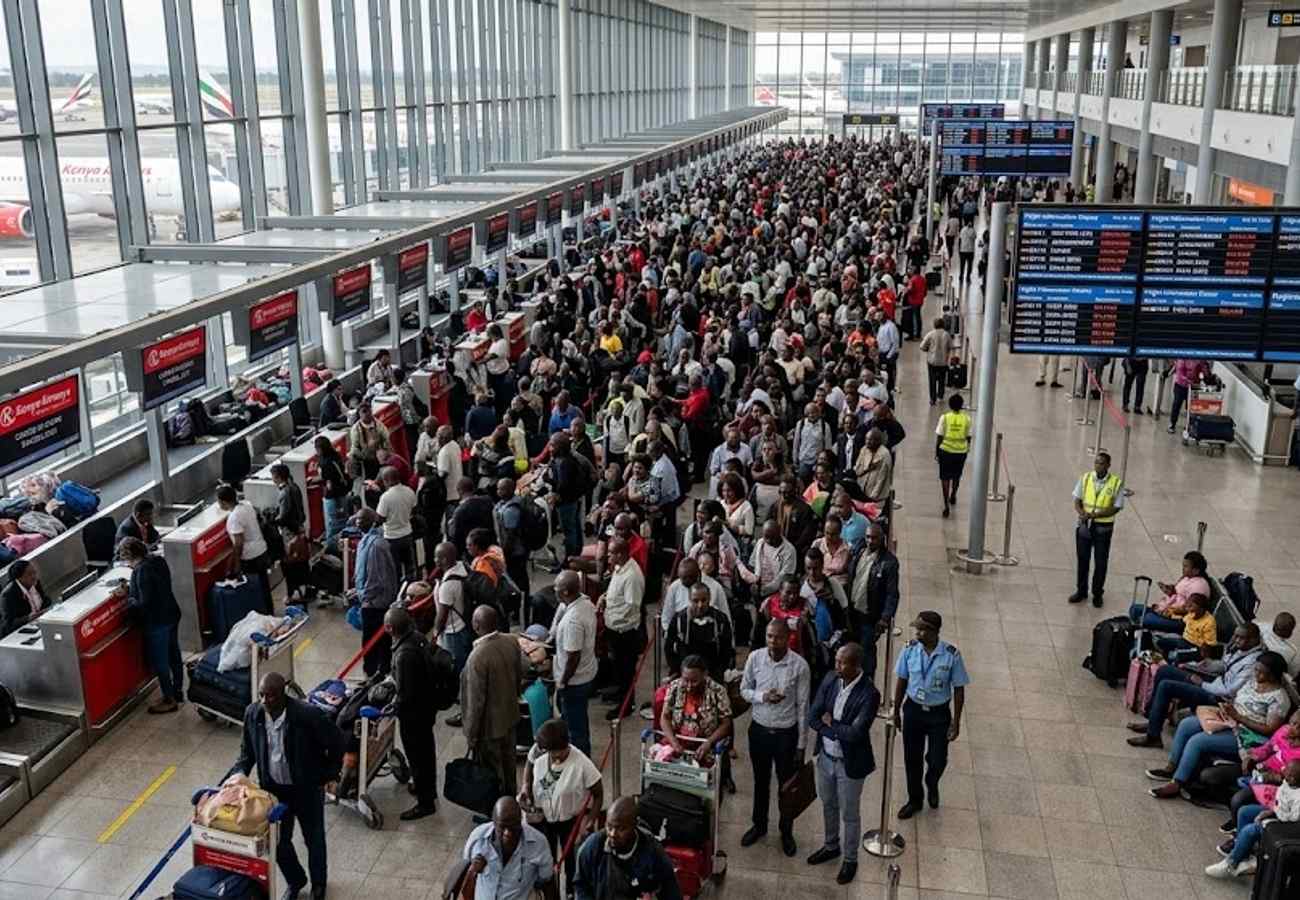
Image generated by AI
Staffing disputes at East Africa's primary aviation hub have spiraled into a network-wide crisis, leaving thousands of passengers stranded or delayed. A coordinated "go-slow" by airport and aviation agency personnel at Jomo Kenyatta International Airport (JKIA) is currently crippling departure banks and disrupting critical long-haul and regional corridors.
Systemic Operational Collapse at Nairobi Hub
On August 30, 2026, a strategic slowdown by staff linked to key aviation agencies at JKIA triggered a cascade of operational failures. The impact was immediate: massive queues formed at security checkpoints, check-in counters, and boarding gates, leading to rolling disruptions that extended late into the night.
Because JKIA serves as the central gateway for Kenya's international traffic, any reduction in ground handling or air-traffic management efficiency creates an immediate bottleneck. The reduced pace of baggage handling and passenger processing has effectively eliminated the operational margins airlines rely on to maintain punctuality.
The result is a pattern of spaced-out departure slots and aircraft held on the tarmac, creating a domino effect that impacts connections across North America, Europe, the Middle East, and the African continent.
Kenya Airways Network Under Pressure
As the primary tenant of JKIA, Kenya Airways (KQ) has borne the brunt of the disruptions. In a customer update issued on August 30, 2026, the carrier cited air-traffic control constraints, noting that flights were experiencing average delays of two to three hours.
The disruption is categorized across three primary sectors:
- Long-Haul Routes: These services are the most vulnerable to "ripple effect" delays. Specifically, the Nairobi to New York service (KQ2) has seen substantial delays, causing passengers to miss critical onward connections in the U.S.
- Regional Connectivity: High-frequency routes to Entebbe, Kilimanjaro, and Lusaka have seen flights consolidated or delayed to manage crew hours. Notably, the Nairobi to Johannesburg service (KQ762) suffered a cancellation on August 28, 2026.
- Domestic Sectors: While less severe, domestic routes to Mombasa and Eldoret have faced delays, and flights from Kisumu to Nairobi saw isolated cancellations during the latter half of August.
Global Impact: Qatar Airways and Emirates Affected
The crisis extends beyond the national carrier. As a vital transit point for the region, JKIA's instability affects major international players including Emirates and Qatar Airways.
The disruption is compounded by codeshare agreements. Many flights marketed by Middle Eastern carriers are operated by Kenya Airways aircraft and crews. When a KQ-operated sector is delayed, the entire itinerary for a Qatar Airways or Emirates passenger is compromised, even if the long-haul leg to Doha or Dubai is operating on schedule.
Industry reports indicate increased ground times for Middle Eastern services, raising the probability of overnight stays and missed links for travelers heading toward Asia and Europe.
Compounding Factors: Runway Incidents and Infrastructure Works
The current staffing crisis is not occurring in a vacuum. JKIA's resilience has already been tested by recent technical and structural challenges:
- Runway Emergencies: A recent tyre-burst incident during landing forced a temporary suspension of runway operations. In a single-runway hub, such events create a backlog that takes several hours to clear.
- Infrastructure Upgrades: Phased upgrades to terminal systems and runways are ongoing. While these are typically scheduled for off-peak hours, they have tightened overall capacity.
The convergence of workforce action, infrastructure construction, and isolated safety incidents has left airlines with virtually no flexibility to reposition aircraft or recover schedules.
Flight Disruption Summary
| Route/Service | Impact Status | Specific Detail |
|---|---|---|
| Nairobi $\rightarrow$ New York (KQ2) | Severe Delay | Frequent late departures; missed connections |
| Nairobi $\rightarrow$ Johannesburg (KQ762) | Cancelled | Recorded cancellation on August 28, 2026 |
| Regional (Entebbe, Lusaka, Kilimanjaro) | Moderate/High | Schedule adjustments and flight consolidations |
| Domestic (Mombasa, Eldoret) | Moderate | Shorter but disruptive delays |
| Domestic (Kisumu $\rightarrow$ Nairobi) | Isolated | Cancellations in late August |
| International Partners (Emirates, Qatar) | Moderate | Increased ground times and connection risks |
Passenger Guidance and Legal Recourse
Travelers scheduled to transit through Nairobi in early September should maintain simplified itineraries and monitor flight statuses via mobile apps.
For those already affected, passenger-rights experts suggest the following:
- Documentation: Keep a detailed record of all delays and unplanned expenses.
- Rebooking: Request immediate re-routing or adjustment to alternative connection points.
- Refunds: Seek full refunds for cancelled sectors regardless of ticket type.
Kenya Airways has urged passengers to update their contact information on the official website to facilitate faster communication regarding rebooking options.
The stability of East African aviation now hinges on the resolution of the JKIA staffing dispute.
Related Travel Guides
Disclaimer
This article is for informational and educational purposes only. It does not constitute legal, financial, or professional advice. While we strive to provide accurate and up-to-date information, travel policies, regulations, and conditions change rapidly. Always verify information with official sources before making travel decisions. Nomad Lawyer makes no representations about the accuracy, reliability, completeness, or suitability of the information provided. Readers should consult qualified professionals for advice specific to their circumstances. The views expressed in this article are those of the author and do not necessarily reflect the views of Nomad Lawyer.
Naina Thakur
Contributor & Travel Specialist
Travel enthusiast and legal writer covering visa regulations, responsible tourism, and cultural journeys across global destinations.
Learn more about our team →