
Aviation Updates: Massive Travel Chaos Paralyzes Mexico as Aeromexico and Volaris Suffer 21 Cancellations and 212 Delays
A catastrophic operational meltdown has heavily paralyzed three massive Mexican aviation hubs, violently stranding thousands of regional and international travelers.

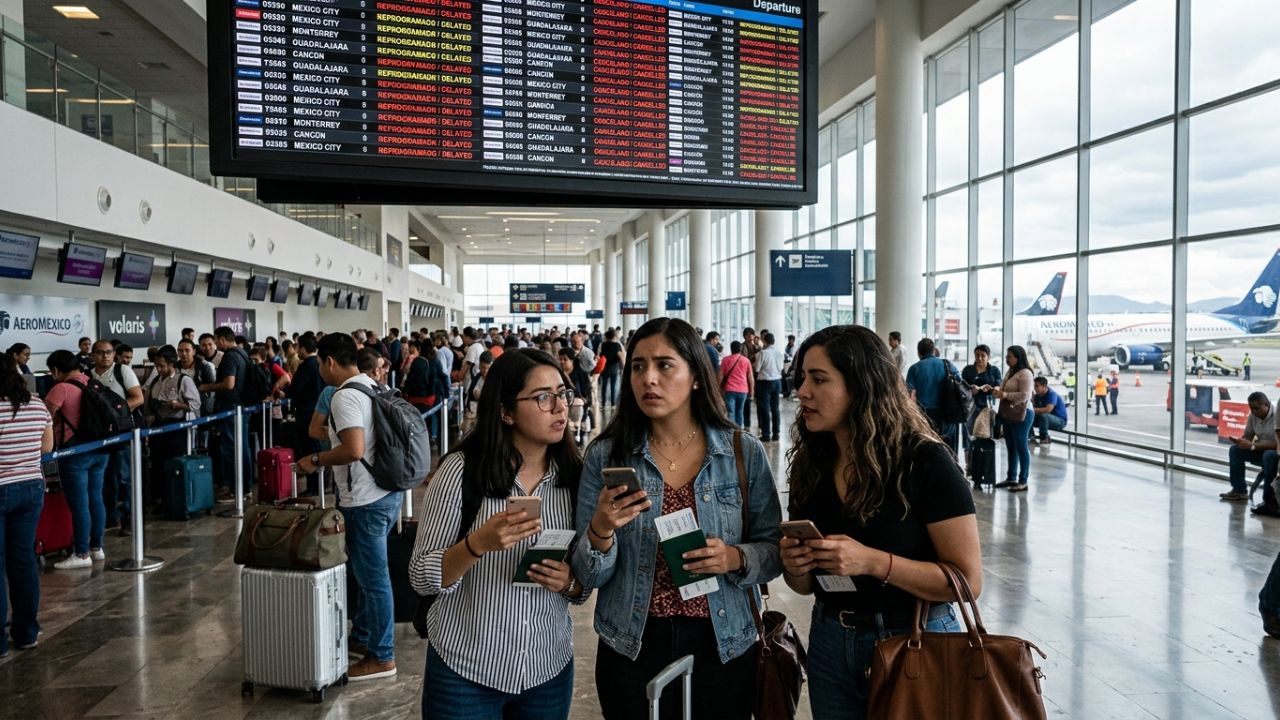
Image generated by AI
Aviation Updates: Massive Travel Chaos Paralyzes Mexico as Aeromexico and Volaris Suffer 21 Cancellations and 212 Delays
As the incredibly complex Latin American aviation network desperately attempts to balance intense seasonal demand, an absolutely catastrophic operational failure has completely paralyzed three of Mexico's busiest transit hubs, violently stranding thousands of global travelers.
A massive, incredibly destructive wave of severe travel chaos has violently swept across Mexico today, heavily paralyzing incredibly vital transit corridors seamlessly connecting the massive nation's economic and tourism centers to the world. According to the absolute latest breaking airline news, catastrophic operational disruptions have been officially recorded across the Mexican airspace, where an incredibly devastating combination of outright flight cancellations and severe, rolling delays has completely shattered domestic and international air traffic movement.
The absolute most recent, highly verified operational tracking data explicitly confirms that a staggering total of 21 flight cancellations and 212 severe delays have been officially reported across the deeply interconnected national network. This completely unforeseen logistical failure has heavily crushed tightly scheduled services actively operated by the nation's massive legacy and low-cost titans, explicitly including Aeromexico, Viva Aerobus, and Volaris, alongside major American partners like American Airlines, United Airlines, and Delta Air Lines. Because the targeted hubs perfectly include Cancún, Monterrey, and Mexico City—the absolute primary lifelines for Mexican commerce and global tourism—these massive airport disruptions have instantly destroyed passenger movement across highly sensitive corridors reaching across the entire North American continent.
Aviation Updates: The Scale of the National Breakdown
The incredibly rapid scale of this localized operational meltdown perfectly illustrates the intense, highly fragile interconnectivity currently dominating the modern Mexican aviation sector.
Mexico physically operates as a massive, undisputed continental hub requiring flawless, high-frequency domestic turnaround connectivity alongside massive international long-haul services. Because major gateway airports actively orchestrate highly complex regional routes alongside vital cross-border shuttles into the United States, they must meticulously handle an incredibly demanding volume of tightly scheduled daily passenger traffic. When sudden, massive delays violently strike these specific regional mega-hubs, the resulting travel chaos instantly ripples outward, forcefully paralyzing massive interstate and international corridors. During this heavily scrutinized reporting period, the 21 registered flight cancellations and 212 rolling delays actively triggered a highly notable level of structural collapse. Critical connecting services forcefully impacted by the severe gridlock instantly contributed to massive, highly visible congestion inside local passenger processing areas, completely overwhelming terminal operations across the country.
Section-Wise Breakdown: The Affected Aviation Hubs
The sudden collapse of operational punctuality actively targeted specific, highly trafficked Mexican aviation gateways.
The Cancún Tourism Meltdown
Operating as one of Latin America’s absolute leading leisure gateways, Cancún International Airport experienced an incredibly terrifying volume of localized operational failures. Handling millions of visitors heading to the pristine beaches of Quintana Roo, the airport was violently battered, officially recording 7 outright cancellations and a staggering 80 severe rolling delays. This massive localized failure instantly cascaded across the tourism network, heavily destroying hotel transfers, vital cruise connections, and onward transportation for thousands of frantic international vacationers.
The Monterrey Industrial Gridlock
In northern Mexico’s critical industrial corridor, General Mariano Escobedo International Airport in Monterrey faced incredible operational challenges. This massive business gateway recorded the absolute highest volume of localized cancellations, violently grounding 9 flights and absorbing 75 severe delays. Because this hub serves as a critical lifeline for corporate travelers and massive regional connections, these severe airport disruptions directly severed vital business itineraries across multiple destinations.
The Mexico City Hub Strain
The operational failures also violently extended to the absolute heart of the nation. Lic. Benito Juárez International Airport in Mexico City—one of the absolute busiest aviation facilities in the entire country—suffered massive congestion. Managing complex aircraft movements and massive passenger flows, the capital's primary airport recorded 5 cancellations and an agonizing 57 delays, temporarily paralyzing the deeply integrated domestic and international flight schedule.
Flight Details and Verified Disruption Matrix
To completely understand the exact scope of this catastrophic operational failure across the participating global and regional carriers, the following data explicitly details the specific cancellation and delay statistics manually recorded via official airport tracking systems.
Confirmed Mexican Aviation Disruption Matrix
| Affected Airport Hub | Regional Significance | Total Cancelled Flights | Total Delayed Flights |
|---|---|---|---|
| Cancún International Airport | Primary Latin American Leisure Gateway | 7 | 80 |
| General Mariano Escobedo Int'l (Monterrey) | Northern Industrial & Corporate Hub | 9 | 75 |
| Lic. Benito Juárez Int'l (Mexico City) | Capital Mega-Hub & Domestic Center | 5 | 57 |
| Total Verified Disruption | Multi-Carrier Network Impact | 21 | 212 |
Data definitively reflects the highly synchronized operational stress suffered across Mexico, where a massive accumulation of domestic, business, and leisure corridors experienced total structural failure impacting 233 total scheduled services.
Passenger Impact: Trapped in the Terminals
For the heavily exhausted and deeply terrified passengers actively engaged in vital domestic and international travel, the sudden, highly unexpected presence of massive, multi-airline cancellations instantly contributed to highly terrifying unpredictability.
Because the massive Mexican operational scale heavily demands absolute reliance on flawless, multi-airline turnaround coordination, even brief, localized interruptions severely destroy passenger flow planning. Corporate executives desperately attempting to secure critical business transit via Monterrey, and families anxiously waiting to begin highly anticipated coastal vacations in Quintana Roo, found their heavily scheduled, incredibly expensive itineraries completely destroyed. The massive, widespread airport disruptions created intense, agonizing scheduling challenges for travelers actively connecting through these three affected cities, directly leading to massively longer wait times, ruined connections, and highly frantic last-minute emergency hotel bookings throughout the entire day.
Industry Analysis: The Fragility of Mexican Airspace
Aviation management experts strictly note that while the recorded 21 cancellations and massive 212 delays actively represent an incredibly frustrating operational event, they sadly perfectly illustrate the deep logistical fragility inherent in heavily congested Mexican mega-hubs.
The catastrophic, rolling delays recorded heavily by major carriers like Aeromexico, Volaris, Viva Aerobus, and their massive American partners (Delta, United, American Airlines) are typically triggered by highly interconnected external pressures. While specific mechanical or highly localized weather-related root causes for this specific incident were not immediately broadcast, such intense, localized gridlock is frequently the direct, terrifying result of deeply congested regional air traffic control sectors, sudden ground-staff operational limits, or restrictive tarmac space severely limiting physical aircraft turnaround options. Because government agencies like the Agencia Federal de Aviación Civil (AFAC) and Servicios a la Navegación en el Espacio Aéreo Mexicano (SENEAM) struggle desperately to actively manage traffic amid ongoing network pressures, a single delayed aircraft instantly creates an uncontrollable domino effect.
Conclusion: A Highly Uncertain National Recovery
The sudden, highly disruptive operational meltdown across Mexico serves as an incredibly stark, undeniable reminder of the massive logistical fragility currently dominating the North American aviation sector.
While airline crews and exhausted airport teams desperately worked to manually manage the situation and visibly reduce further delays, the severe travel chaos proved incredibly difficult to contain. As airlines rapidly deploy massive recovery efforts to restore domestic and international schedules, travelers actively navigating busy routes across Mexico City, Monterrey, and Cancún must remain completely vigilant. To successfully survive this ongoing era of severe, massive transit meltdowns, travelers must aggressively monitor daily, highly specific aviation updates, build massive, multi-hour buffer times into their connecting itineraries, and maintain total, absolute flexibility regarding their boarding expectations.
Key Takeaways
- Massive National Disruption: The Mexican aviation network suffered an absolute operational collapse, officially recording exactly 21 flight cancellations and 212 severe delays.
- Monterrey Business Meltdown: General Mariano Escobedo International Airport absorbed the absolute heaviest cancellation damage, violently grounding 9 corporate and regional flights.
- Cancún Tourism Gridlock: Cancún explicitly handled the absolute highest volume of massive rolling delays, recording 80 delayed flights and destroying vital cruise and hotel connections in Quintana Roo.
- Capital Hub Battered: Lic. Benito Juárez International Airport in Mexico City severely struggled to maintain operations, dropping 5 flights and delaying 57 others.
- Major Airlines Impacted: Both domestic titans (Aeromexico, Viva Aerobus, Volaris) and US legacy carriers (American, United, Delta) forcefully absorbed the massive operational damage.
- Passenger Strategy: Affected national and global travelers are strictly commanded to stay completely clear of airport queues, immediately contacting their airlines digitally via official apps for rapid rebooking options.
Related Travel Guides
Massive UAE Visa Bombshell: Strict New 30-Day Escape Window Announced
Travel Chaos Cripples Spain as Iberia and Ryanair Suffer 1,079 Delays
Disclaimer
This article is for informational and educational purposes only. It does not constitute legal, financial, or professional advice. While we strive to provide accurate and up-to-date information, travel policies, regulations, and conditions change rapidly. Always verify information with official sources before making travel decisions. Nomad Lawyer makes no representations about the accuracy, reliability, completeness, or suitability of the information provided. Readers should consult qualified professionals for advice specific to their circumstances. The views expressed in this article are those of the author and do not necessarily reflect the views of Nomad Lawyer.
Preeti Gunjan
Contributor & Community Manager
A passionate traveller and community builder. Preeti helps grow the Nomad Lawyer community, fostering engagement and bringing the reader experience to life.
Learn more about our team →