Maryland, Massachusetts, and Michigan Battle for US Tourism Dominance in 2025-2026 Travel Surge

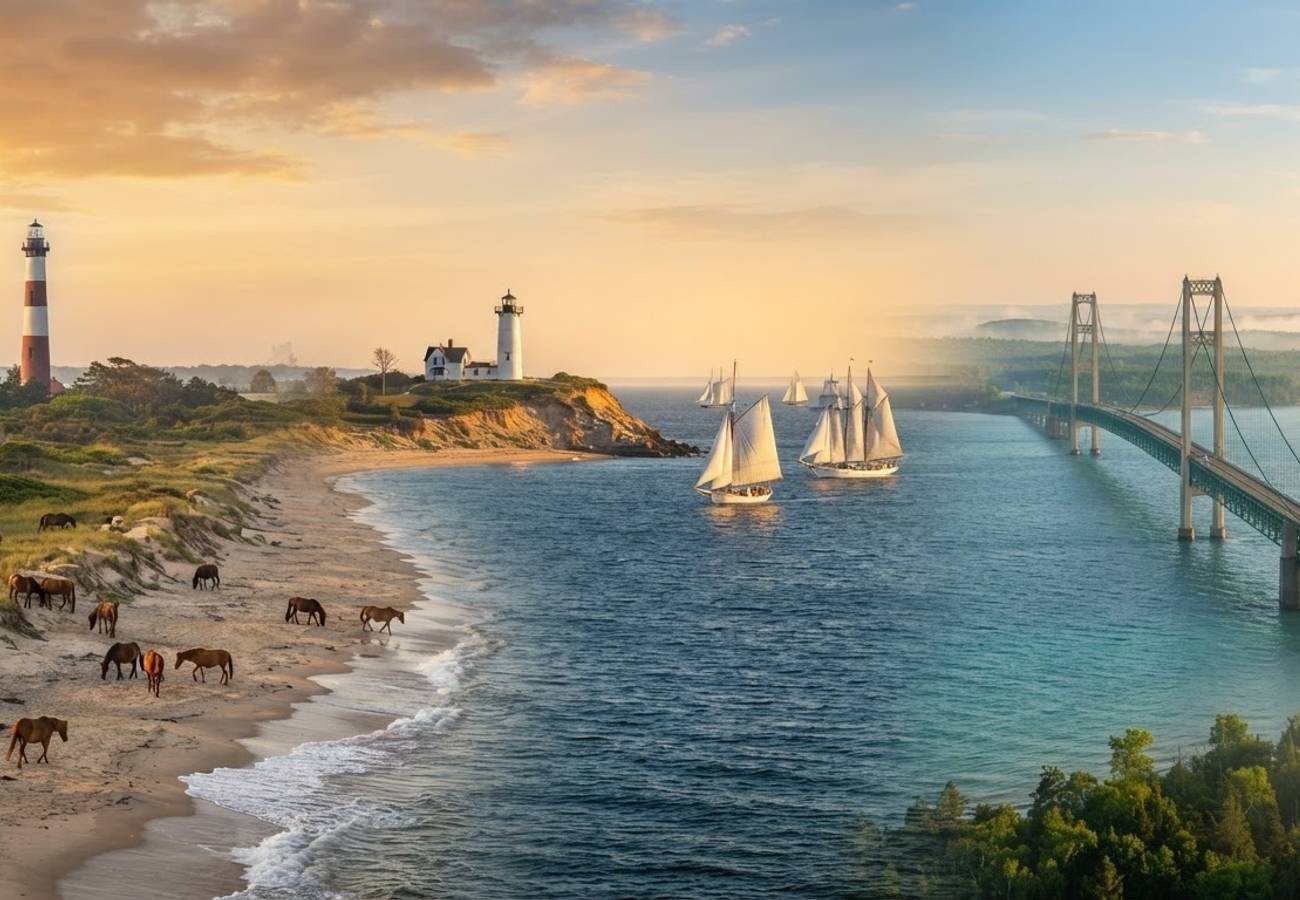
Image generated by AI
The American travel landscape is currently witnessing a high-stakes competition as Maryland, Massachusetts, and Michigan deploy aggressive growth strategies to capture shifting traveler preferences in 2026. While Michigan maintains a massive economic lead in total spending, Maryland and Massachusetts are leveraging international mega-events and eco-tourism to bridge the gap.
The shift in 2026 reflects a broader trend where travelers are moving away from generic vacations toward "experience-driven" trips. This includes a surge in maritime heritage tours, global sporting events, and sustainable outdoor recreation. These three states are now the primary engines of growth, utilizing their unique geographic advantages—from the Great Lakes to the Atlantic coast—to attract both domestic drive-market visitors and high-spending international tourists.
Comparative Analysis of State Tourism Engines
The economic scale of these three regions reveals distinct strategies. Michigan operates as a travel empire with a massive baseline of domestic trips, while Massachusetts has transformed into a global hub for 2026. Maryland, meanwhile, is successfully diversifying its portfolio to move beyond simple beach tourism.
| State | 2025 Tourism Base | 2026 Growth Driver | Main Visitor Markets | Key Tourism Strength |
|---|---|---|---|---|
| Maryland | Spending exceeded $21.2 billion; driven by Ocean City and Baltimore/Annapolis | International arrivals, World Cup spillover (DC/Philly), Chesapeake Bay eco-tourism | PA, VA, DC, DE, NY, Canada, UK, Germany, India, France | Beaches, maritime heritage, seafood tourism |
| Massachusetts | Direct spending reached $24.8 billion; regional leisure and business travel | FIFA World Cup, America250 celebrations, Sail Boston tall ships festival | NY, CT, RI, NH, PA, UK, Canada, Germany, France, China | Revolutionary history, Cape Cod, global events |
| Michigan | Spending crossed $30.7 billion; 131 million trips; $54.8B economic impact | Pure Michigan anniversary, Canadian border recovery, Upper Peninsula eco-tourism | IL, OH, IN, WI, MI residents, Ontario (Canada), UK, Germany, Japan | Great Lakes, outdoor adventure, Detroit culture |
Market Leadership and Competitive Edge
When analyzing the current rankings, Michigan remains the heavyweight in terms of raw financial impact, with visitor spending surpassing $30.7 billion. However, Massachusetts holds the strongest potential for international growth due to its role as a host for global events. Maryland distinguishes itself by offering the most balanced mix of coastal escapes and deep historical heritage.
A critical observation for 2026 is the dependence on "drive-markets." Both Michigan and Maryland rely heavily on nearby states for their volume, whereas Massachusetts is seeing a more significant spike in long-haul international arrivals.
Maryland's Strategic Shift Toward Global Appeal
Between 2025 and 2026, Maryland's tourism economy transitioned from a phase of recovery into a period of sustained expansion. In 2025, the state saw visitor spending top $21.2 billion, largely fueled by high average daily hotel rates (ADR) and peak summer occupancy in traditional hubs.
By 2026, the trajectory shifted. The state began capturing "spillover" traffic from the 2026 FIFA World Cup matches held in nearby Philadelphia and Washington D.C. This international influx has been complemented by a strategic push into the Chesapeake Bay Watershed for eco-tourism and the upgrading of outdoor facilities in Western Maryland.
Visitor Demographics in the Mid-Atlantic
Maryland's accessibility via the I-95 corridor makes it a magnet for short-haul trips. Approximately 77% of all tourists are from the surrounding eight-state Mid-Atlantic region, with the highest volumes coming from:
- Primary Markets: New York City, Philadelphia, Washington D.C./Hagerstown, and Baltimore.
- Secondary Markets: Florida, Texas, Georgia, and North Carolina.
- International Hubs: Canada leads as the top foreign market, followed by the UK, Germany, France, and India, many of whom enter via BWI airport.
The "America in Miniature" Appeal
Maryland leverages its diverse geography to attract repeat visitors. The state's strategy focuses on four primary pillars:
- Coastal Escapes: Ocean City and Assateague Island remain top draws for family vacations and wildlife viewing.
- Living History: The sailing culture of Annapolis and the civil rights narratives of the Harriet Tubman Underground Railroad Byway provide intellectual depth to the travel experience.
- Mountain Recreation: Deep Creek Lake and Garrett County drive autumn foliage and winter skiing traffic.
- Culinary Identity: The global branding of Maryland blue crabs and the "Original Orange Crush" cocktail create a specific, marketable food identity.
Massachusetts and the 2026 Global Visibility Surge
Massachusetts has experienced the most dramatic transformation in the 2025–2026 window. While 2025 was characterized by steady domestic spending of $24.8 billion, 2026 has seen the Commonwealth enter a period of record-breaking global exposure.
The primary catalyst has been the convergence of "mega-events." The 2026 FIFA World Cup brought seven matches to Gillette Stadium in the Greater Boston area, which reports indicate generated approximately 450,000 international visitor stays. This coincides with the "America250" celebrations marking the 250th anniversary of the American Revolution and the Sail Boston tall ships festival, creating a perfect storm of heritage and sports tourism.
Why This Matters: The Traveler's Perspective
For the modern traveler, this competition between states results in a tangible increase in infrastructure quality and a wider variety of curated experiences. When states compete for "Information Gain"—meaning they offer something truly unique that cannot be found elsewhere—the consumer wins.
From a logistical standpoint, the "spillover effect" seen in Maryland proves that travelers are no longer visiting a single city, but are instead engaging in "multi-city stays." A tourist visiting Boston for a World Cup match is now more likely to extend their trip to Cape Cod or a historic university tour, increasing the average length of stay and total spend per visitor.
For the digital nomad or business traveler, the investment in "four-season travel" (particularly in Michigan and Western Maryland) means that these regions are becoming viable year-round hubs rather than just summer destinations. The shift toward eco-tourism along the Chesapeake Bay and the Great Lakes suggests a move toward sustainable travel that appeals to a younger, more environmentally conscious demographic.
The battle for the American traveler in 2026 is no longer about who has the best beach, but who can offer the most integrated, event-driven experience.
Related Travel Guides
This article is for informational purposes. Flight routes, passenger regulations, visa rules, and transit advisories are subject to change by airlines and aviation authorities. Readers are advised to verify schedules and travel documentation with relevant carriers and border agencies before departure.
Related Stories

Pennsylvania, Michigan, and Kentucky Tourism Boom: 2026 Economic Impact and Canadian Travel Influx

Secondary Cities in Asia and Europe Outpace Major Hubs as Overtourism Policies Shift Travel in 2026