Malaysia Airlines Navigates A330neo Delivery Delays and Global Aviation Supply Bottlenecks Amid Route Expansion Plans

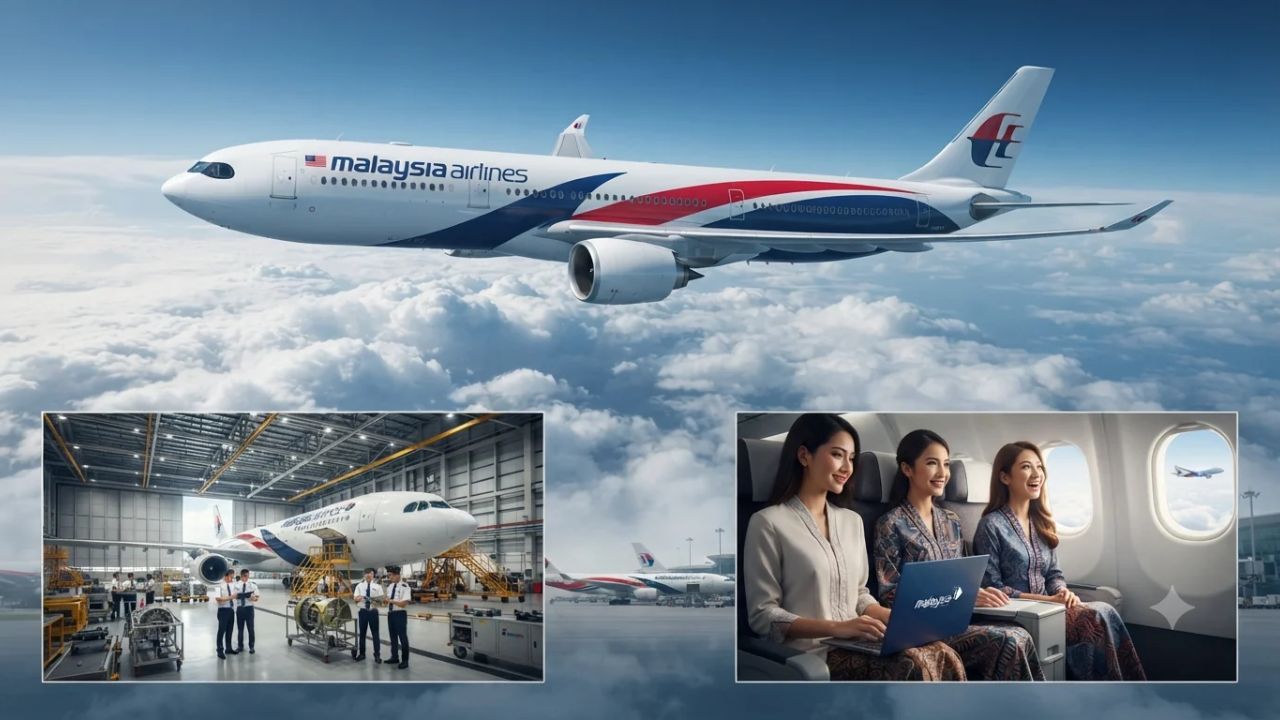
Against the backdrop of persistent aerospace supply chain bottlenecks and delayed widebody aircraft deliveries, Malaysia Airlines is advancing its long-term fleet renewal and network expansion through Kuala Lumpur International Airport.
Aviation authorities and regional airline associations have affirmed that the commercial airline industry continues to face severe operational headwinds. An update released on November 12, 2026, by the Association of Asia Pacific Airlines (AAPA) confirmed that airframe delivery delays, maintenance backlogs, and specialized technical labor shortages are constraining fleet planning across the Asia-Pacific region. Despite these industry-wide pressures, Malaysia Aviation Group (MAG) reaffirmed its multi-year capital commitment on November 2, 2026, maintaining its phased acquisition of 40 Airbus A330neo widebody aircraft and pushing ahead with targeted route additions into East Asia, Australia, and South Asia.
For international passengers and business travelers, the central question is how these competing dynamics affect published flight schedules. While global manufacturers face delivery backlogs, Malaysia Airlines has implemented strategic schedule enhancements—including increased frequencies to Brisbane, Surabaya, and Fukuoka, alongside the resumption of direct flights to Busan. Concurrently, the national carrier continues to expand its high-volume air bridge between India and Malaysia, supporting a nationwide tourism economy that generates RM323.0 billion in economic value.
MALAYSIA AIRLINES FLEET RENEWAL & OPERATIONAL BASELINE
| Entity / Route | Metrics | Operational Status |
|---|---|---|
| Operating Dimension | Officially Verified Specification | Strategic Industry Context |
| Widebody Commitment | 40 Airbus A330neo Aircraft Total | 20 Tranche 1 (through 2028) |
| (Mix of direct purchase and leases) | 20 Tranche 2 (phased 2029–2031) | |
| Supply Constraints | AAPA & IATA November 2026 Reports | 18,100 aircraft backlogs globally; |
| Delays in airframes & engine parts | airlines retaining older aircraft | |
| Near-Term Routes | Fukuoka (Daily from Dec 1, 2026) | Fukuoka departs +40% frequency; |
| Busan (4x weekly resumes Dec 2, 2026) | Brisbane daily; Surabaya 16x weekly | |
| Key Air Bridge: India | 80 Weekly Flights across 10 Cities | Nearly 1 million passengers (H1 2026 |
| +10% year-on-year traffic growth | supported by 30-day visa-free entry) | |
| Tourism Sector Share | RM 323.0 Billion Gross Value Added | 15.9% of national GDP; 3.7 million |
| (Department of Statistics Malaysia) | workers in tourism-related industries | |
| Hub Infrastructure | New In-House Catering Facility | Target completion Q4 2028; planned |
| Located adjacent to KLIA Terminal | 50,000 meals daily capacity (Q2 2029) |
The Global Fleet Bottleneck: Why Delivery Schedules Are Under Pressure
To evaluate Malaysia Airlines’ expansion trajectory, travelers must examine the unprecedented supply chain pressures facing commercial aerospace manufacturers worldwide.
Data published in the global air transport outlook reveals that as of mid-2026, the global backlog of outstanding commercial aircraft orders exceeded 18,100 airframes—equivalent to almost 60 percent of the world’s active commercial airline fleet.
GLOBAL AEROSPACE SUPPLY CHAIN BOTTLENECKS
[Raw Material & Component Shortages (Titanium, Forgings, Avionics)]
                                |
                                v
[Engine Manufacturing & Overhaul Backlogs (Rolls-Royce, CFM, P&W)]
                                |
                                v
[Airbus & Boeing Assembly Line Delivery Delays (Months Behind Schedule)]
                                |
                                v
[Airlines Forced to Extend Older Aircraft Leases & Increase Flying Hours]
                                |
                                v
[Heavier Maintenance Burden & Higher Fuel Consumption on Legacy Fleets]
The Three Drivers of Fleet Delivery Drag
- Precision Component and Metallurgy Shortages: Tier-1 and Tier-2 aerospace suppliers continue to grapple with shortages of specialized raw materials, including aerospace-grade titanium, advanced composite resins, and precision cabin interior modules. Delays in business-class seating mechanisms and galleys have repeatedly stalled finished airframes at final assembly lines in Toulouse.
- Turbofan Engine Maintenance Delays: Modern high-bypass geared and direct-drive turbofans—including the Rolls-Royce Trent 7000 engines powering the Airbus A330neo—require intensive scheduled shop visits. A worldwide shortage of spare engine cores and turbine blades has created extensive queues at maintenance, repair, and overhaul (MRO) facilities, forcing airlines to ground operational aircraft temporarily while waiting for serviced powerplants.
- Skilled Aerospace Workforce Deficits: Following widespread retirements across the global aerospace sector during the pandemic, assembly lines and certified maintenance facilities face ongoing shortages of licensed aircraft engineers, structural sheet-metal workers, and quality inspectors, limiting factory ramp-up rates.
Operational Responses: Retaining Older Aircraft Longer
Faced with delayed delivery dates for new widebody replacements, airlines throughout the Asia-Pacific region have adjusted their fleet utilization:
- Carrying out comprehensive interior refreshes and heavy maintenance structural checks (C-checks and D-checks) to extend the operational life of legacy Airbus A330-200 and A330-300 ceo aircraft.
- Running aircraft at higher daily utilization rates to preserve capacity on trunk long-haul and regional routes.
- Accepting the trade-off of higher operating expenses, as older widebodies burn between 15 and 25 percent more fuel per seat than modern A330neo and A350 aircraft and demand more frequent unscheduled line maintenance.
The A330neo Transformation: Core Pillar of Malaysia Airlines' Long-Term Strategy
Despite near-term manufacturing bottlenecks, Malaysia Aviation Group’s commitment to the Airbus A330neo represents a comprehensive generational transformation of its medium- and long-haul fleet.
MALAYSIA AIRLINES AIRBUS A330NEO PROCUREMENT ARCHITECTURE
| Entity / Route | Metrics | Operational Status |
|---|---|---|
| Procurement Tranche | Aircraft Volume & Financing Model | Delivery Horizon & Purpose |
| Initial Tranche (2022) | 20 Airbus A330-900neo Aircraft | Deliveries phased through 2028; |
| (10 Direct Purchase + 10 Leases) | Replaces aging A330-200/300 fleet | |
| Second Tranche (2025) | 20 Additional A330neo Aircraft | Delivery scheduled for 2029–2031; |
| (Options converted to firm orders) | Drives long-term network expansion | |
| Cabin Architecture | Two-Class Configuration | Business suites with sliding doors; |
| Next-generation in-flight tech | Recaro ergonomic economy seats |
Enhancing Passenger Comfort and Fuel Efficiency
The Airbus A330-900neo delivers significant operational and passenger experience advancements over older widebody variants:
- Environmental Performance: Powered by Rolls-Royce Trent 7000 engines and featuring aerodynamic composite winglets with an extended 64-meter wingspan, the A330neo delivers a 25 percent reduction in fuel burn and CO2 emissions per seat compared to previous-generation competitor aircraft.
- Next-Generation Business Class: Malaysia Airlines configured its A330neo fleet with Collins Aerospace Elevation business-class suites, featuring full-flat beds, personal sliding privacy doors, direct aisle access for all premium passengers, and high-definition wireless entertainment integration.
- Airspace by Airbus Cabin: The widebody cabin provides passengers with larger overhead stowage bins, customized ambient LED mood lighting designed to alleviate jet lag, and quieter cabin sound levels.
Published Network Enhancements: Near-Term Route Expansions
While global fleet delivery timelines adjust, Malaysia Airlines has focused on optimizing its existing fleet allocation to launch several high-demand route expansions for late 2026.
MALAYSIA AIRLINES PUBLISHED ROUTE SCHEDULE ENHANCEMENTS
| Entity / Facility | Delays | Cancellations | Details |
|---|---|---|---|
| Destination Gateway | Country / Territory | Effective Date | Frequency & Schedule Shift |
| Brisbane (BNE) | Australia | 25 October 2026 | Increased from 6x weekly to |
| Daily non-stop rotations | |||
| Surabaya (SUB) | East Java, Indonesia | 1 November 2026 | Frequency expanded from 14 to |
| 16 weekly flights | |||
| Fukuoka (FUK) | Kyushu, Japan | 1 December 2026 | Scaled from 5x weekly to |
| Daily scheduled service (+40%) | |||
| Busan (PUS) | South Korea | 2 December 2026 | Resumption of direct scheduled |
| service with 4x weekly flights |
REGIONAL CONNECTIVITY EXPANSION MAP
                            [KUALA LUMPUR HUB (KUL)]
                                       |
      +--------------------------------+--------------------------------+
      |                                |                                |
      v                                v                                v
[EAST ASIA EXPANSION]         [SOUTHEAST ASIA FEEDER]         [AUSTRALASIAN TRUNK]
- Fukuoka (Daily from Dec 1)   - Surabaya (16x weekly)        - Brisbane (Daily from Oct 25)
- Busan (4x weekly from Dec 2) - Direct regional commerce     - Key long-haul holiday link
1. Scaling the East Asia Footprint: Fukuoka and Busan
The expansion into secondary Japanese and South Korean gateways reflects rising corporate and leisure travel demand:
- Daily to Fukuoka: By increasing Kuala Lumpur–Fukuoka frequencies from five weekly flights to daily on December 1, 2026, the airline expands weekly departure capacity by 40 percent. The flight connects travelers from western Japan to Southeast Asia and Australia without requiring domestic transit through Tokyo Haneda or Narita.
- Resuming Busan: Launching four weekly rotations to South Korea’s second-largest metropolitan area on December 2 provides direct air access to the maritime and industrial capital of the Korean peninsula, capturing holidaymakers bound for coastal resorts and business travelers in the shipping and manufacturing sectors.
2. Deepening Australasian and Indonesian Links
- Brisbane Daily Flights: Upgrading Queensland’s primary international gateway to daily non-stop service strengthens Malaysia Airlines' competitive stance against Singapore Airlines and Qantas, offering dependable single-hop connections for Australian holidaymakers heading to the UK, Europe, and South Asia.
- Surabaya Frequency Step-Up: Expanding East Java flights to 16 weekly departures strengthens short-haul business and family travel between Indonesia and Malaysia, channeling transit passengers into KLIA Terminal 1.
The India-Malaysia Corridor: An Engine of Passenger Traffic
One of the most robust performing segments in Malaysia Airlines' global network is its direct air bridge to India.
INDIA-MALAYSIA AVIATION CORRIDOR PERFORMANCE METRICS
| Operational Metric | Recorded Performance Figure | Strategic Aviation Significance |
|---|---|---|
| Weekly Departure Volume | 80 Direct Flights per Week | Extensive regional coverage |
| Indian Gateway Network | 10 Major Metropolitan Gateways | DEL, BOM, BLR, MAA, HYD, COK, etc. |
| Half-Year Passenger Vol | Close to 1.0 Million Passengers | Recorded January to June 2026 |
| Annual Traffic Growth | +10.0% Year-on-Year Increase | Driven by 30-day visa-free policy |
| Transit Flow Pattern | Dual Destination Architecture | Significant onward transit flows to |
| (Local tourism + international hub) | Australia, New Zealand, & East Asia |
The Strategic Driver: 30-Day Visa-Free Policy
The sustained surge in Indian passenger traffic is tied directly to the Malaysian government's bilateral visa liberalization policies:
- Eligible Indian passport holders enjoy 30-day visa-free entry into Malaysia, requiring only the online submission of the digital Malaysia Digital Arrival Card (MDAC) prior to departure.
- This regulatory ease has transformed Kuala Lumpur into a favored destination for short-notice family vacations, destination weddings, and corporate incentive trips.
KLIA as a Competitive Transit Crossroads
Beyond point-to-point traffic ending in Kuala Lumpur, Malaysia Airlines leverages its Indian flight bank to feed passengers across its global network:
- Passengers boarding evening flights in Chennai, Mumbai, or Delhi land at KLIA early the following morning, connecting with minimal layovers onto onward daytime flights to Sydney, Melbourne, Perth, Auckland, and Tokyo.
- By offering competitive through-fares and unified baggage check, the carrier positions itself as an attractive value alternative to Gulf hub carriers on the Kangaroo Route between Australia and South Asia.
Macroeconomic Significance: Aviation’s Role in Malaysia’s Tourism Economy
The expansion of airline route capacity forms an essential component of Malaysia’s macroeconomic planning.
MALAYSIA NATIONAL TOURISM MACROECONOMIC METRICS (2025/2026)
| Entity / Route | Metrics | Operational Status |
|---|---|---|
| Economic Indicator | National Total / Official Statistic | Macroeconomic Proportion & Scale |
| Tourism Gross Value | RM 323.0 Billion | 15.9% of National Gross Domestic |
| Added (GVATI) | (Department of Statistics Malaysia) | Product (GDP) |
| Inbound Tourism Spend | RM 124.8 Billion | +16.5% growth over previous year; |
| vital foreign exchange generator | ||
| Industry Employment | 3.7 Million Workers | Employs roughly 23% of total |
| national workforce | ||
| National Campaign | Preparations for Visit Malaysia | Focus on cultural heritage, eco- |
| Year Initiatives | tourism, and regional dispersion |
The Value of Hub Connectivity
Official statistics from the Department of Statistics Malaysia (DOSM) demonstrate that the health of national aviation directly underpins broader employment and business investment:
- Inbound tourism receipts reaching RM124.8 billion flow directly into hospitality, retail, domestic transport, and regional handicrafts.
- For regional states like Sabah, Sarawak, and Penang, international air capacity landing at KLIA serves as the primary funnel delivering overseas travelers into domestic flight connections.
Infrastructure and Service Investments: In-House Catering for 2028
Beyond aircraft airframes and route schedules, Malaysia Aviation Group is investing in ground service infrastructure to support long-term operational resilience.
KLIA IN-HOUSE AIRLINE CATERING FACILITY SPECIFICATIONS
| Entity / Route | Metrics | Operational Status |
|---|---|---|
| Project Milestone | Target Timeline / Operational Scope | Strategic Objective & Value |
| Facility Construction | Underway adjacent to KLIA | Modern, purpose-built aviation |
| Terminal 1 operational perimeter | food production center | |
| Target Completion | Fourth Quarter of 2028 (Q4 2028) | Full structural & technological |
| installation completed | ||
| Operational Launch | Second Quarter of 2029 (Q2 2029) | Commercial meal production and |
| aircraft service integration | ||
| Daily Meal Capacity | Approximately 50,000 Meals Daily | Complete catering self-sufficiency |
| and strict halal-certified standards |
Ensuring Service Consistency and Brand Quality
Following past operational transitions that highlighted the risks of relying exclusively on external single-source suppliers, MAG's development of its own 50,000-meal-per-day catering complex guarantees operational autonomy:
- Protects flight departure schedules from third-party catering delays.
- Allows the airline to elevate its culinary offerings, showcasing authentic Malaysian culinary traditions—such as signature satay service with spicy peanut sauce—across international business and economy cabins.
- Strengthens halal integrity, ensuring meals prepared for domestic, regional, and Hajj charter flights adhere to the highest certification standards overseen by the Department of Islamic Development Malaysia (JAKIM).
Practical Traveler Guide: Navigating Malaysia Airlines Bookings and KLIA Transit
For passengers holding reservations or planning future travel on Malaysia Airlines, understanding equipment allocations, terminal transit procedures, and documentation guidelines ensures a smooth travel experience.
PRACTICAL TRAVELER CHECKLIST: FLYING MALAYSIA AIRLINES
| Entity / Route | Metrics | Operational Status |
|---|---|---|
| Travel Element | Operational Rule / Requirement | Actionable Field Guidance |
| Schedule Monitoring | Verify reservation notices 72 hours | Check for aircraft equipment shifts |
| prior to departure online or in app | or minor departure timing changes | |
| KLIA Hub Transit | Minimum Connection Time (MCT): | Dedicated transfer counters operate |
| 60 minutes international-to-intl | within Satellite and Main Terminals | |
| Arrival Documentation | Malaysia Digital Arrival Card (MDAC) | Mandatory online submission within |
| (Exemptions: Malaysian citizens) | 3 days before arriving in Malaysia | |
| Baggage Routing | Interline baggage through-checking | Available on single-ticket bookings |
| to final destination (Oneworld) | across partner carriers like Qantas |
Essential Guidance for Passengers
-
Verify Equipment Configurations:
- Because aircraft deliveries from manufacturers can adjust over multi-year horizons, travelers should check their reservation’s seat map 72 to 24 hours before flight departure.
- On routes transitioning between Airbus A330-300 and A330-900neo aircraft, seat configurations in Business Class shift between staggered Vantage seats and individual Elevation suites with privacy doors.
-
Managing Connection Windows at Kuala Lumpur International Airport (KLIA):
- Malaysia Airlines operates predominantly out of KLIA Terminal 1, using both the Main Terminal Building (Contact Pier) and the Satellite Building.
- Terminal transit buses run continuously between the Main Terminal and Satellite gates while the aerotrain modernization project undergoes testing.
- For smooth international-to-international transfers, ensure your itinerary maintains at least 60 to 75 minutes of transit buffer, allowing ample time to clear security screening at the boarding gate.
-
Complying with Entry Requirements:
- While citizens of India and China benefit from temporary visa exemptions for tourism visits up to 30 days, all foreign travelers entering Malaysia must complete the official Malaysia Digital Arrival Card (MDAC) online within three days prior to arrival.
- Travelers must present their confirmed return air ticket, hotel accommodation confirmation, and valid passport with at least six months of remaining validity at immigration counters.
Frequently Asked Questions
Why are Malaysia Airlines' aircraft deliveries arriving later than expected?
Global commercial aircraft manufacturing faces widespread supply chain bottlenecks. As confirmed by regional reports from the Association of Asia Pacific Airlines (AAPA) and IATA, delays in securing specialized raw materials, microelectronics, aircraft seating mechanisms, and turbofan engine components have slowed assembly lines at major manufacturers, creating multi-month delivery delays for airlines worldwide.
How many Airbus A330neo aircraft has Malaysia Airlines ordered?
Malaysia Aviation Group (MAG) has committed to a total of 40 Airbus A330neo widebody aircraft. The initial agreement signed in 2022 encompasses 20 A330-900neo aircraft (10 purchased directly from Airbus and 10 secured via long-term leases from Avolon), scheduled for phased delivery through 2028. An additional 20 aircraft ordered in 2025 are slated for delivery between 2029 and 2031 to complete the airline's long-term fleet modernization.
Which new routes is Malaysia Airlines expanding in late 2026?
The airline has published four key route adjustments:
- Brisbane, Australia: Upgraded from six weekly flights to daily non-stop service starting October 25, 2026.
- Surabaya, Indonesia: Increased from 14 to 16 weekly flights from November 1, 2026.
- Fukuoka, Japan: Scaled from five weekly flights to daily service (+40% capacity) starting December 1, 2026.
- Busan, South Korea: Direct scheduled passenger flights resumed with four weekly rotations starting December 2, 2026.
Does an aircraft delivery delay mean my Malaysia Airlines flight will be cancelled?
No. General industry delivery delays do not indicate that existing passenger bookings are cancelled. Malaysia Airlines continues to manage its scheduled network by optimizing the utilization of its current widebody and narrowbody fleets and extending leases on existing aircraft. Passengers should monitor their booking in the official airline mobile app or website for any minor schedule adjustments.
How significant is the India–Malaysia flight network for the airline?
The Indian market represents one of Malaysia Airlines' most vital commercial networks. The airline operates 80 weekly flights across ten Indian metropolitan gateways—including New Delhi, Mumbai, Bengaluru, Chennai, and Hyderabad. In the first half of 2026, passenger volume exceeded one million travelers, a 10 percent year-on-year increase supported by Malaysia's 30-day visa-free entry policy for Indian tourists.
When will Malaysia Airlines open its new catering facility at KLIA?
Malaysia Aviation Group’s new dedicated in-house catering facility is targeted for construction completion in the fourth quarter of 2028, with full commercial food production operations commencing in the second quarter of 2029. The modern complex is designed to produce approximately 50,000 halal-certified meals daily, ensuring service autonomy and quality control across international flights.
Related Travel Guides
- easyJet Quadruples Newcastle Airport Network to 32 Routes: Three-Aircraft Base, Winter Schedule, and Regional Jobs Analysis
- Europe's Calm Coastal Refuges: Six Slow-Travel Alternatives to Overtourism Across Portugal, Spain, Greece, Albania, and the Baltics
- Kyoto's Kodaiji Temple Reopens Historic Guest Hall After 237 Years: Higashiyama Heritage Travel and Autumn Viewing Guide
- Malaysia's Explore Sabah Initiative Bridges Kota Kinabalu Gateways and Rural Homestays Ahead of Visit Sabah Year 2027
This article is for informational purposes. Flight routes, passenger regulations, visa rules, and transit advisories are subject to change by airlines and aviation authorities. Readers are advised to verify schedules and travel documentation with relevant carriers and border agencies before departure.
Related Stories

Alaska Airlines Launches Nonstop Anchorage–Tokyo Flights: Boeing 737 MAX 8 Transpacific Operations and Pacific Gateway Strategy
FAA Proposes $228,000 in Civil Penalties Against Sonoma County Airport and Colorado Air Tour Operator for Safety Violations