FAA Proposes $228,000 in Civil Penalties Against Sonoma County Airport and Colorado Air Tour Operator for Safety Violations

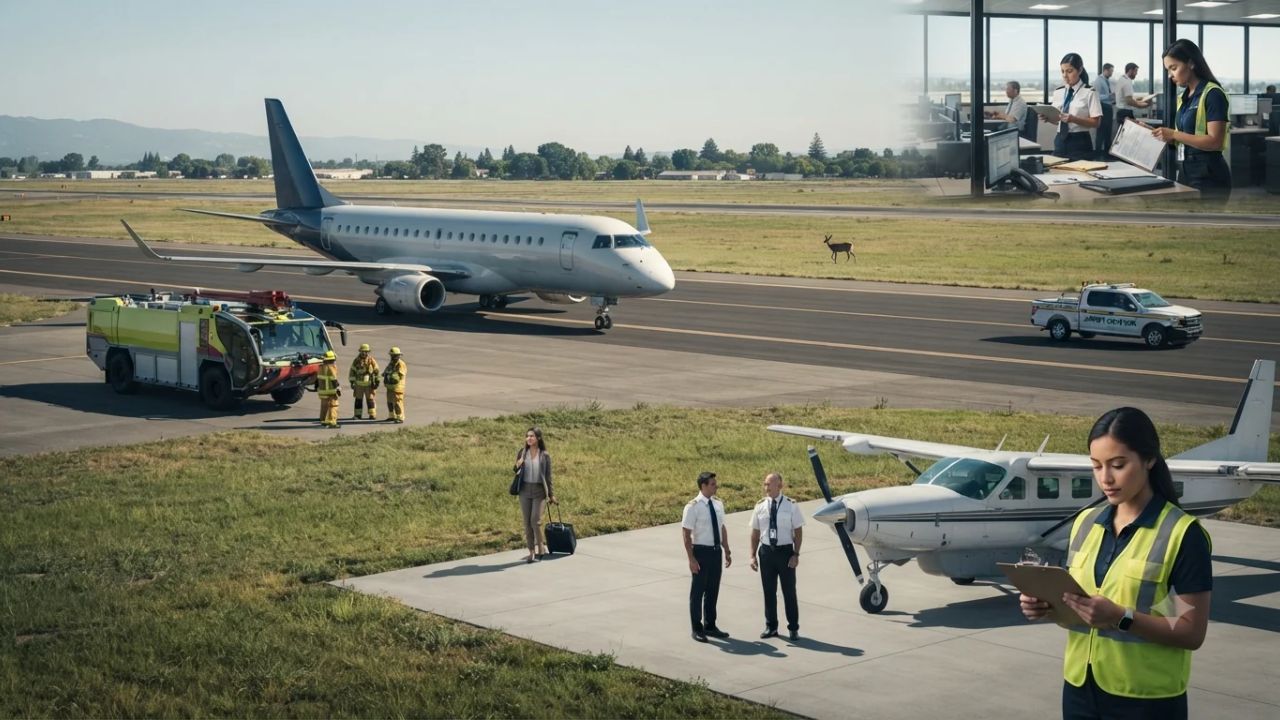
The Federal Aviation Administration has proposed civil penalties totaling $228,000 against Charles M. Schulz–Sonoma County Airport in California and a commercial air tour operator in Colorado, citing severe lapses in airport emergency rescue coverage, wildlife runway inspections, and mandatory employee drug screening.
The enforcement actions underscore the federal government's heightened oversight of ground-level infrastructure and regional air operations. While commercial passenger aviation in the United States maintains an exceptional safety record, federal regulators are increasingly targeting the administrative, operational, and personnel procedures that underpin flight safety before an aircraft ever leaves the tarmac.
According to formal enforcement notices released by the agency, Sonoma County Airport (STS) faces a proposed fine of $170,000 for handling scheduled commercial passenger flights without the required Aircraft Rescue and Firefighting (ARFF) staff and vehicles, failing to notify the operating airline, and omitting mandatory pre-flight wildlife hazard checks. Separately, Colorado Springs-based Arapahoe Flight Club faces a $58,000 penalty for hiring pilots and mechanics without pre-employment drug testing and failing to enroll them in mandatory random testing pools over a two-year period.
FAA ENFORCEMENT NOTICES: COMPREHENSIVE CASE BASELINE
| Enforcement Parameter | Charles M. Schulz–Sonoma County Airport | Arapahoe Flight Club |
|---|---|---|
| Facility Location | Santa Rosa, Sonoma County, California | Colorado Springs, Colorado |
| Operational Role | Commercial Part 139 Air Carrier Airport | Commercial Air Tour Operator |
| Proposed Penalty Sum | $170,000 Civil Penalty | $58,000 Civil Penalty |
| Total Enforcement Sum | $228,000 Combined Proposed Penalty | Formal Notice of Proposed Penalty |
| Primary Regulatory | 14 CFR Part 139 (Airport Certification) | 14 CFR Part 120 / 49 CFR Part 40 |
| Citations | Airport Certification Manual (ACM) | DOT Workplace Drug & Alcohol Rule |
| Alleged Violations | 1. Inadequate ARFF fire rescue staff/rig | 1. Hired 2 pilots & 2 mechanics |
| 2. Zero notice to operating airline | without pre-employment tests | |
| 3. Skipped morning deer/wildlife check | 2. Excluded from random test pool | |
| Incident Timetable | March 2025 Scheduled Passenger Flights | May 2024 through September 2026 |
| Current Legal Status | 30-Day Response Window (Unadjudicated) | 30-Day Response Window (Alleged) |
Case 1: Sonoma County Airport and the Breakdown in Runway Protection
The largest proposed penalty targets Charles M. Schulz–Sonoma County Airport (IATA: STS, ICAO: KSTS), a vital commercial gateway serving California's wine country. The airport handles scheduled passenger jet service operated by carriers such as Alaska Airlines (Horizon Air), Avelo Airlines, and American Airlines, connecting Northern California with major hubs including Los Angeles, Seattle, Phoenix, and Las Vegas.
The FAA’s $170,000 civil penalty notice details three distinct operational failures that occurred during scheduled passenger operations in March 2025.
CHRONOLOGY OF ALLEGED AIRPORT GROUND FAILURES (STS)
[March 2025: Scheduled Commercial Passenger Flights Handled]
                             |
       +---------------------+---------------------+
       |                                           |
       v                                           v
[ARFF EMERGENCY FAILURE]                   [WILDLIFE HAZARD FAILURE]
- ARFF crash truck uncrewed / missing      - Mandatory dawn runway inspection skipped
- Fire suppression capacity degraded       - No check for deer / bird hazards
- Approved Certification Manual breached   - First passenger departure cleared blindly
       |                                           |
       +---------------------+---------------------+
                             |
                             v
              [FAILURE OF AIRLINE NOTIFICATION]
              - Carrier never alerted to degraded safety status
              - Pilots operated under false assumption of full ARFF
1. Absence of Required Aircraft Rescue and Firefighting (ARFF) Coverage
Under Title 14 of the Code of Federal Regulations (14 CFR Part 139), every commercial service airport must maintain an FAA-approved Airport Certification Manual (ACM). The manual dictates the specific ARFF Index required based on the length and frequency of the largest commercial aircraft serving the facility:
- For Sonoma County Airport, the manual requires dedicated, specialized rescue vehicles equipped with aqueous film-forming foam (AFFF), dry chemical agents, and certified crash-rescue firefighters stationed on the field during all scheduled commercial carrier operations.
- The FAA alleges that on two specific passenger flights in March 2025, STS lacked the mandatory personnel and operational rescue apparatus specified in its manual.
- Had an emergency incident occurred during takeoff or landing—such as an engine fire, brake overheating, or runway excursion—the mandated level of rapid-response firefighting foam and specialized extraction equipment would not have been deployed within the federally mandated three-minute response window.
2. Failure to Provide Critical Safety Notification to Operating Airlines
Equally significant to the absence of equipment was the alleged failure to communicate. Federal aviation regulations strictly require airport dispatchers and management to immediately alert arriving and departing commercial airlines whenever required airport safety equipment or emergency services fall below published certification standards.
The FAA alleges that STS management failed to notify the operating passenger airline that ARFF coverage was degraded. Consequently, airline dispatchers and flight captains operated those flights under the false assumption that full federal emergency crash-rescue infrastructure was standing by on the field.
3. Omission of Mandatory Runway Wildlife Hazard Inspections
The third component of the enforcement notice concerns runway safety protocols. Sonoma County Airport is bordered by vineyards, agricultural pastures, and oak woodlands, creating an active habitat for wildlife, particularly black-tailed deer, coyotes, and large raptors.
Under the airport’s FAA-approved Wildlife Hazard Management Plan (WHMP):
- Airport operations staff are legally required to conduct a thorough physical runway inspection for wildlife, foreign object debris (FOD), and fence breaches prior to the first scheduled commercial departure of each day.
- The FAA alleges that STS personnel failed to perform this mandatory wildlife sweep before the day's first passenger departure in March 2025.
- Wildlife collisions represent a severe hazard to commercial aviation. Striking a 150-pound deer at 140 knots during takeoff rotation can crush nose landing gear, puncture wing fuel tanks, or cause catastrophic engine failure.
PART 139 AIRPORT EMERGENCY & WILDLIFE STANDARDS (REGULATORY SCOPE)
| Regulatory Requirement | Federal Standard (14 CFR Part 139) | Direct Impact on Flight Safety |
|---|---|---|
| ARFF Response Time | Vehicle must reach midpoint of | Fire extinguishment within first |
| furthest runway within 3 minutes | 60 seconds of fuselage burn-through | |
| Airline Notification | Immediate issuance of NOTAM and direct | Informs pilot diversion decisions; |
| Protocols | radio alert to airline operations | pilots may divert if ARFF is absent |
| Wildlife Sweep | Physical vehicular inspection prior | Clears deer, coyotes, and bird flocks |
| Frequency | to dawn/first scheduled departure | to prevent fatal takeoff strikes |
Case 2: Arapahoe Flight Club and Commercial Air Tour Screening Violations
The second proposed enforcement action involves Arapahoe Flight Club, a commercial flight school and air tour operator based in Colorado Springs, Colorado.
The FAA proposed a $58,000 civil penalty following an audit that revealed extensive non-compliance with mandatory federal drug and alcohol testing regulations spanning more than two years between May 2024 and September 2026.
ARAPAHOE FLIGHT CLUB DRUG & ALCOHOL TESTING ALLEGATIONS
| Entity / Route | Metrics | Operational Status |
|---|---|---|
| Employee Position | Date of Employment / Action | Alleged Federal Testing Breach |
| Commercial Pilot 1 | Assigned safety-sensitive flights | Zero pre-employment drug screening; |
| Active: May 2024 to September 2026 | excluded from random testing pool | |
| Commercial Pilot 2 | Assigned safety-sensitive flights | Zero pre-employment drug screening; |
| Active: May 2024 to September 2026 | excluded from random testing pool | |
| Aircraft Mechanic 1 | Performed return-to-service checks | No verified negative drug result; |
| Active: May 2024 to September 2026 | excluded from random testing pool | |
| Aircraft Mechanic 2 | Performed maintenance & inspection | No verified negative drug result; |
| Active: May 2024 to September 2026 | excluded from random testing pool |
The Federal Mandate: 14 CFR Part 120 and DOT Workplace Testing
Under Department of Transportation (DOT) standards and FAA regulations governed by 14 CFR Part 120 and 49 CFR Part 40, any commercial aviation entity employing individuals in safety-sensitive functions—including commercial pilots, flight instructors carrying passengers, aircraft maintenance technicians, and ground security personnel—must execute a rigid testing regime:
- Mandatory Pre-Employment Screening: An employer cannot permit an individual to perform a safety-sensitive function until it receives a verified negative drug test result from a certified Medical Review Officer (MRO).
- Random Testing Pool Enrollment: Once hired, safety-sensitive employees must be placed into an active, scientifically randomized drug and alcohol testing pool that conducts unannounced testing throughout the calendar year at federally mandated annual sampling rates (typically 25% to 50% for drugs, and 10% for alcohol).
Systemic Administrative Failure vs. Impairment Incidents
The FAA’s enforcement notice explicitly details that Arapahoe Flight Club hired two commercial pilots and two certified aircraft mechanics and permitted them to conduct commercial air tour flights and perform airworthiness maintenance without obtaining verified pre-employment drug tests. In addition, all four individuals were omitted from the operator's random testing pool for over two years.
Importantly, the FAA’s notice does not allege that any pilot or mechanic tested positive for controlled substances, nor does it allege that an alcohol-related flight incident occurred. Rather, the violation centers on the systemic failure to implement federal testing safeguards. In commercial aviation, regulatory compliance is absolute: failing to test personnel who fly passengers or maintain aircraft flight controls represents a severe compromise of public safety.
THE DOT DRUG & ALCOHOL TESTING LIFE CYCLE
[Job Candidate Application for Safety-Sensitive Role]
                         |
                         v
[Mandatory DOT Pre-Employment Drug Collection]
                         |
                         v
[Certified Lab Screening & Medical Review Officer (MRO) Verification]
                         |
        +----------------+----------------+
        |                                 |
        v (Verified Negative)             v (Positive or Incomplete)
[Cleared to Perform Flight/Maintenance] [STRICTLY PROHIBITED FROM SAFETY WORK]
        |
        v
[Immediate Enrollment in Active Random Testing Pool]
        |
        v
[Unannounced, Randomized Testing Throughout Year]
The Civil Enforcement Process: 30-Day Response and Due Process
It is essential for travelers and industry stakeholders to recognize that the FAA’s notices represent proposed civil penalties, rather than finalized judicial judgments.
Under federal administrative law (14 CFR Part 13), both Charles M. Schulz–Sonoma County Airport and Arapahoe Flight Club have been granted 30 days from receipt of their respective notices to formally exercise their statutory due-process rights.
FAA CIVIL PENALTY ADJUDICATION PROCESS
| Entity / Route | Metrics | Operational Status |
|---|---|---|
| Procedural Step | Action Available to Respondent | Legal Consequence & Strategic Choice |
| Option 1: Settlement | Pay proposed penalty in full or | Resolves matter without formal |
| negotiate reduced settlement sum | administrative admission of guilt | |
| Option 2: Informal | Request meeting with FAA regional | Opportunity to present mitigating |
| Conference | legal counsel & safety inspectors | evidence, records, or corrective fix |
| Option 3: Written | Submit sworn affidavits, logbooks, | Demonstrates regulatory compliance |
| Evidence Submission | and inspection records for review | to seek dismissal or fine reduction |
| Option 4: Formal | Request formal hearing before an | Case proceeds to judicial trial; |
| Judicial Hearing | Administrative Law Judge (ALJ) | ALJ issues binding legal ruling |
The Typical Enforcement Trajectory
In cases involving municipal airport authorities and commercial operators:
- Operators frequently opt for an informal conference with FAA enforcement attorneys. During these proceedings, Sonoma County Airport officials will likely present corrective actions taken since March 2025—such as hiring additional airport firefighters, acquiring backup rescue apparatus, upgrading airfield automated fence sensors, and tightening flight notification protocols.
- If an entity demonstrates that the violations were administrative rather than willful, and proves that robust safety management systems (SMS) have been implemented to prevent recurrence, the FAA may agree to a mitigated financial settlement.
- If negotiations fail, the FAA issues an official Order of Civil Penalty, which the respondent can appeal to the National Transportation Safety Board (NTSB) and ultimately the U.S. Court of Appeals.
Systemic Oversight: FAA Regulatory Trends Across U.S. Aviation
The simultaneous issuance of penalties against a regional commercial airport and a commercial air tour operator highlights broader regulatory trends within the Federal Aviation Administration.
FAA SAFETY FOCUS AREAS: 2026/2027 ENFORCEMENT PRIORITIES
| Entity / Route | Metrics | Operational Status |
|---|---|---|
| Aviation Sector | Regulatory Pressure Point | Federal Safety Initiatives |
| Regional Part 139 | Staffing retention in airport fire | National runway safety summits; |
| Airports | rescue departments; wildlife mitigation | strict audit of mutual-aid agreements |
| Commercial Air Tours | Pilot hiring oversight; drug/alcohol | NTSB Most Wanted List compliance; |
| (Part 91 / Part 135) | testing pools; flight time limits | mandatory Safety Management Systems |
| Major Air Carriers | Ground handling contractor oversight | Enhanced ground safety monitoring & |
| and maintenance subcontracting | ramp foreign object debris programs |
1. Scrutiny on Regional Airport ARFF Staffing
Across the United States, municipal airports face mounting recruitment and budgetary pressures within their fire departments. Specialized ARFF certification requires rigorous training in aircraft structural materials (including composite resins that release toxic fibers when burning), high-pressure foam turrets, and rapid aircraft evacuation procedures.
When municipal budgets face constraints, maintaining dedicated 24-hour ARFF crews exclusively for a handful of commercial regional flights becomes difficult. However, the FAA’s enforcement action against STS sends an unequivocal message to municipal airport sponsors nationwide: commercial passenger flights cannot operate without certified emergency rescue crews on the airfield.
2. Heightened Scrutiny on Commercial Air Tour Operators
Commercial air tour operators—providing scenic helicopter and airplane flights over scenic landscapes such as the Rocky Mountains, the Grand Canyon, and coastal California—have faced intense scrutiny from both the FAA and the NTSB following a series of fatal accidents in recent years.
Federal regulators have tightened requirements surrounding pilot qualifications, maintenance logs, and workplace testing. Omission of safety-sensitive staff from drug and alcohol testing pools undermines public confidence in the charter sector, prompting the agency to utilize maximum civil penalty assessments to compel compliance.
Practical Traveler Guide: Airport Safety and Charter Operator Vetting
For passengers booking commercial flights out of regional airports or scheduling scenic air tour charters, understanding how safety oversight functions empowers travelers to make informed decisions.
PRACTICAL TRAVELER CHECKLIST: SAFETY PROTOCOLS & OPERATOR CHECKS
| Entity / Route | Metrics | Operational Status |
|---|---|---|
| Travel Scenario | Safety Element to Verify | Practical Consumer Guidance |
| Regional Flying (STS) | Airline Operational Continuity | Flights operate normally; airlines |
| monitor airport compliance audits | ||
| Booking Air Tours | Operating Certificate Authority | Verify operator holds active Part |
| (Part 91 Letter of Auth vs Part 135) | 135 or Part 91 tour authorization | |
| Pre-Flight Visual | Airfield Wildlife Barriers | Report any wildlife spotted near |
| Awareness | & Runway Encroachments | taxiways directly to flight crew |
| Charter Maintenance | Pilot Credentials & Aircraft Log | Ask for operator's safety record and |
| Transparency | Standards | third-party audit status (ARGUS/Wyv) |
Essential Practical Advice for Consumers
-
Traveling via Sonoma County Airport (STS):
- Passengers booked on flights with Alaska Airlines, Avelo, or American Airlines out of Santa Rosa should not expect flight disruptions as a result of the FAA’s proposed penalty.
- The alleged incidents occurred in March 2025. In response to FAA inquiries, commercial airports immediately remediate reported deficiencies by adjusting firefighter shift schedules, entering into reciprocal mutual-aid agreements with local municipal fire districts, and logging certified runway wildlife sweeps electronically.
- Travelers can continue to utilize STS normally, benefiting from its convenient regional terminal access.
-
How to Vet Commercial Air Tour and Flight Operators:
- When booking scenic airplane or helicopter tours in mountainous regions like Colorado:
- Ask for Certificate Details: Ensure the company holds an active FAA Part 135 Air Carrier Certificate or an official Part 91.147 Commercial Air Tour Letter of Authorization.
- Verify Drug and Alcohol Program Compliance: Legitimate commercial tour operators display their FAA anti-drug and alcohol misuse prevention program registration number upon request.
- Check Third-Party Safety Audits: Reputable charter and tour organizations often participate in independent safety audit registries such as ARGUS International, Wyvern, or the Tour Operators Program of Safety (TOPS).
- When booking scenic airplane or helicopter tours in mountainous regions like Colorado:
-
Understanding Wildlife Hazards in Aviation:
- If you observe deer, birds, or wildlife near airport runways or taxiways while looking out of an aircraft window prior to takeoff, mention it immediately to a cabin crew member. Flight crews can radio the control tower to dispatch airport operations vehicles for dispersal before departure.
Frequently Asked Questions
What did the FAA allege against Sonoma County Airport (STS)?
The FAA proposed a $170,000 civil penalty alleging that in March 2025, Charles M. Schulz–Sonoma County Airport handled two commercial passenger flights without the mandatory Aircraft Rescue and Firefighting (ARFF) staff and vehicles required by its Airport Certification Manual. The FAA also alleged that the airport failed to notify the operating passenger airline of the missing coverage and failed to conduct a mandatory morning runway wildlife inspection for deer before the day's first commercial departure.
What are the allegations against Arapahoe Flight Club in Colorado?
The FAA proposed a $58,000 civil penalty alleging that Arapahoe Flight Club hired two commercial pilots and two aircraft mechanics between May 2024 and September 2026 without conducting required pre-employment drug testing and without receiving verified negative test results. In addition, the operator allegedly failed to enroll these four safety-sensitive employees into its mandatory random drug and alcohol testing pool while they performed flight operations and maintenance duties.
Did any pilots or mechanics test positive for drugs or alcohol?
No. The FAA’s enforcement notice against Arapahoe Flight Club does not allege that any pilot or mechanic tested positive for drugs, nor does it allege an alcohol-related incident. The proposed penalty is based strictly on the failure to execute mandatory federal screening and random pool enrollment protocols required by 14 CFR Part 120 and 49 CFR Part 40.
Are commercial flights at Sonoma County Airport safe and operating normally?
Yes. Commercial flights operated by airlines such as Alaska Airlines, Avelo Airlines, and American Airlines continue to operate on normal schedules at STS. The FAA notice addresses proposed civil penalties for events in March 2025. Airports facing FAA enforcement routinely implement immediate corrective actions, including revised firefighting rosters and digitized runway wildlife logging, to maintain operational certification.
What is Aircraft Rescue and Firefighting (ARFF) and why is it mandatory?
Aircraft Rescue and Firefighting (ARFF) is a specialized category of emergency response involving dedicated high-speed crash trucks equipped with specialized foam agents and fire-rescue personnel trained in aircraft extrication. Federal regulations (14 CFR Part 139) require commercial airports to maintain specific ARFF readiness on site during scheduled passenger operations to reach an aircraft emergency anywhere on the airfield within three minutes.
What happens next in the FAA enforcement process?
Both Sonoma County Airport and Arapahoe Flight Club have 30 days from receiving their formal notices to respond. They may pay the penalty, submit mitigating evidence, request an informal conference with FAA legal counsel, or request a formal hearing before an Administrative Law Judge (ALJ). The proposed penalties remain allegations until the administrative process is concluded.
Related Travel Guides
- Singapore Airlines Unveils S$2 Billion Long-Haul Cabin Overhaul: New Business Class Suites with Privacy Doors, Companion Beds, and Retrofit Timeline
- Egypt and Liberia Sign Landmark EGYPTAIR Aviation Accord: Cairo Air Links, Roberts Airport Hub Strategy, and Eco-Tourism Analysis
- Malaysia Airlines Navigates A330neo Delivery Delays and Global Aviation Supply Bottlenecks Amid Route Expansion Plans
- easyJet Quadruples Newcastle Airport Network to 32 Routes: Three-Aircraft Base, Winter Schedule, and Regional Jobs Analysis
This article is for informational purposes. Flight routes, passenger regulations, visa rules, and transit advisories are subject to change by airlines and aviation authorities. Readers are advised to verify schedules and travel documentation with relevant carriers and border agencies before departure.
Related Stories

Alaska Airlines Launches Nonstop Anchorage–Tokyo Flights: Boeing 737 MAX 8 Transpacific Operations and Pacific Gateway Strategy

Singapore Airlines Unveils S$2 Billion Long-Haul Cabin Overhaul: New Business Class Suites with Privacy Doors, Companion Beds, and Retrofit Timeline