Luxembourg Tightens Drone Surveillance After Airport Shutdown Forces 19 Flights to Divert Across Europe

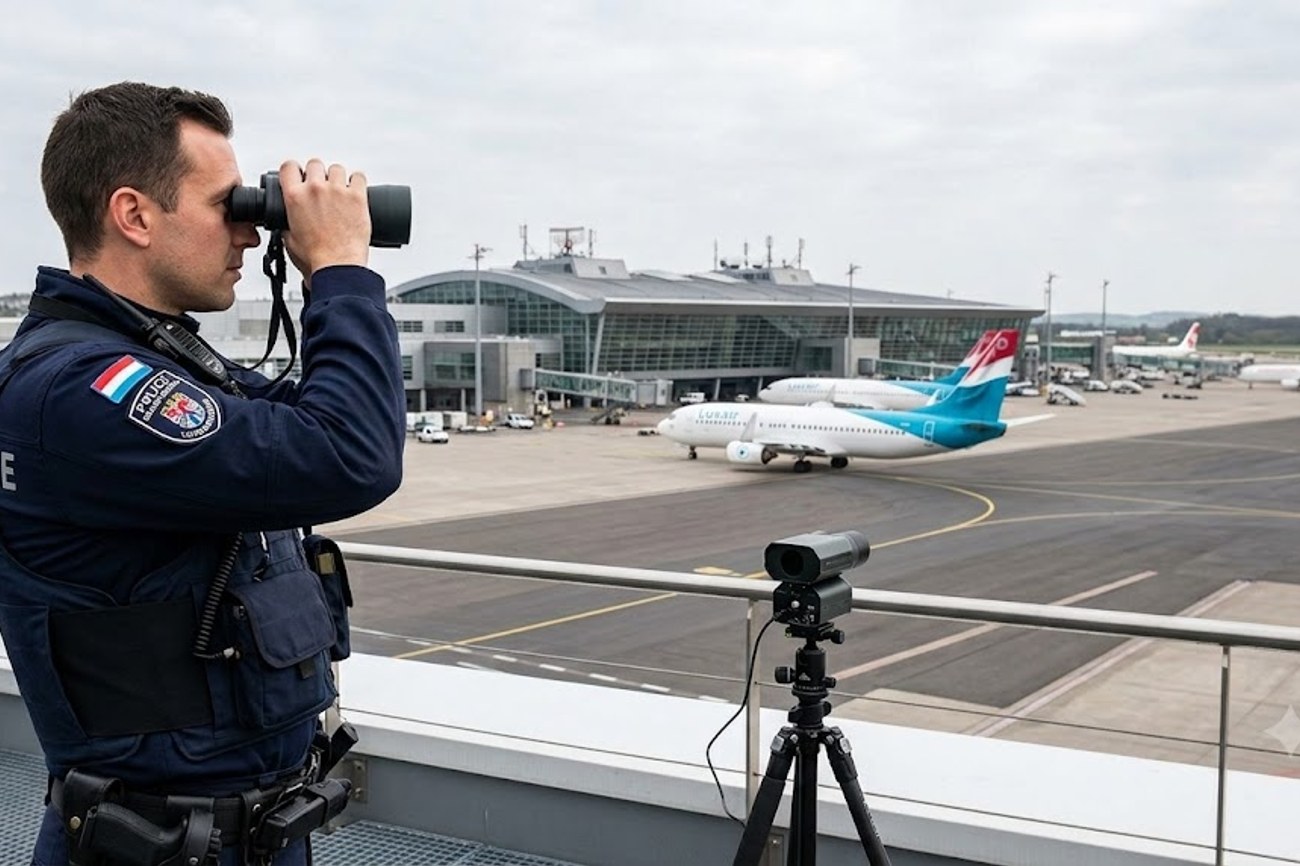
Image generated by AI
title: "Navigating the Grand Duchy: Beyond the Findel Flight Path" description: "An insider's guide to Luxembourg's evolving airspace security, travel logistics, and the cultural pulse of the Grand Duchy." date: "2026-09-25" A single unauthorized drone sighting can paralyze the entire international gateway of a nation, as seen when Luxembourg’s only international airport completely shuttered its operations on September 18, 2026. This event forced the diversion of 19 flights and highlighted the extreme vulnerability of a country that relies on one primary aerial artery for its global connectivity. While the airport resumed operations at 1:20 AM on September 19, the incident triggered a rapid escalation in national security, leading to the deployment of advanced surveillance equipment sourced from allied foreign partners to monitor the skies over Findel.
The New Era of Airspace Vigilance in Luxembourg
The atmosphere around Luxembourg Airport has shifted from routine efficiency to heightened scrutiny. Following the September 18 shutdown, the Interministerial Drone Assessment Unit confirmed on September 20 that the country has significantly bolstered its airspace monitoring and analysis capabilities. For the frequent traveler, this means a more visible security presence and a government that is no longer taking "unidentified aerial phenomena" lightly.
The scale of the response is telling. Prime Minister Luc Frieden personally convened ministers and security authorities to address the breach, signaling that drone activity is now viewed through a lens of national security rather than mere nuisance. While the government refuses to disclose the technical specifications of the new detection systems, the involvement of international partners suggests a sophisticated, multi-layered approach to surveillance.
For those arriving via lux-Airport, the immediate takeaway is that the airport is operating under a state of high alert. While flights have returned to their rotations, the administration has warned that residual disruptions can occur. In a hub that serves 16 airlines and connects to over 120 international destinations, a momentary lapse in airspace security creates a ripple effect that can take days to stabilize.
What Makes Luxembourg's Gateway Unique
Luxembourg is a geographical anomaly in European travel. Unlike France or Germany, which boast multiple major hubs, the Grand Duchy is entirely dependent on Luxembourg Airport. This creates a disproportionate impact when disruptions occur. The airport isn't just a transit point; it is the country's sole lifeline to the global economy.
The growth statistics are staggering for such a small territory. In 2024, the airport surpassed the five-million-passenger milestone for the first time. By the end of 2025, that number climbed to approximately 5.3 million passengers. The trajectory is only moving upward, with baseline forecasts projecting a 7.8% increase to roughly 5.7 million passengers in 2026.
This rapid expansion has turned Findel into a high-stakes environment. When 19 flights are diverted in a single evening, it isn't just a logistical headache—it's a systemic failure of the country's only international entry point. The airport's role as a major European gateway means that any security breach here has implications for the broader Schengen Area, making the recent deployment of allied surveillance equipment a matter of regional interest.
Visitor Insider Tips
Navigating Luxembourg requires a different mindset than visiting Paris or Berlin. To experience the country like a local and avoid the pitfalls of the tourist trail, keep these specific insights in mind:
The Transit Strategy: Do not rely solely on the airport's immediate shuttle services if there has been a recent security alert. Use the official Luxembourg Public Transport network. A unique local perk is that all public transport within the entire country is free. Whether you are taking the tram from the airport to the city center or a bus to the northern forests, keep your wallet in your pocket.
Timing the City: Avoid the Gare Centrale area during peak commuting hours (8:00 AM - 9:00 AM and 5:00 PM - 6:00 PM). Instead, head to the Grund—the lower town. It is the quietest part of the capital and offers the best views of the fortifications. Visit the Grund in the early morning to see the fog clinging to the Alzette river before the day-trippers arrive.
Drone Etiquette and Law: If you are a hobbyist photographer, be extremely cautious. As of September 13, the Directorate of Civil Aviation introduced eight new UAS geographical zones. These include sensitive areas around Luxembourg City, the European Convention Center, Schengen, Esch-Belval, Senningen, and Gare Centrale. These zones can be activated instantly by the Grand Ducal Police. Flying without explicit authorization in these areas is no longer a minor infraction; it is now treated as a serious security breach.
Regional Specialties: Skip the generic tourist cafes. Look for "Judd mat Gaardebounen" (smoked collar of pork with broad beans), the national dish. For a truly local experience, visit a traditional "Wine Bar" in the city center to sample Moselle Valley Rieslings, which are world-class but often overlooked in favor of French wines.
Cultural and Environmental Context
The tension between Luxembourg's desire to be a global financial and political hub and its small-town physical reality is evident in its approach to security. The recent drone incidents have sparked a conversation about the "invisible borders" of the city. The deployment of foreign surveillance equipment highlights Luxembourg's deep integration with its allies, but it also signals a move toward a more securitized urban environment.
Tourism in Luxembourg is intrinsically linked to its heritage. The city's fortifications are a UNESCO World Heritage site, and the government struggles to balance the preservation of these ancient stone walls with the needs of a modern, high-tech economy. The introduction of no-fly zones over the European Convention Center and the city center is a direct result of this friction—protecting the diplomatic sanctity of the EU institutions while maintaining the openness of a tourist destination.
Furthermore, the environmental impact of the airport's growth is a point of local contention. Moving toward 5.7 million passengers annually puts pressure on the surrounding greenery. The government's "Master Plan" for expansion must navigate the delicate balance of increasing capacity without destroying the very pastoral charm that attracts visitors to the Ardennes and the Moselle valley.
FAQ: Visiting Luxembourg 2026
What is the best time to visit? Late spring (May to June) offers the best weather for hiking the Mullerthaler Region. September is also excellent, provided you avoid the dates of major cycling events like the Tour de Luxembourg, which often bring temporary traffic and drone restrictions.
Do I need a visa? Luxembourg is part of the Schengen Area. Citizens of the US, Canada, and the UK generally do not need a visa for short stays, but always check the latest requirements on the official Visit Luxembourg portal.
How do I get to the city from the airport? The most efficient way is via the airport bus or the tram. Since all public transport in Luxembourg is free, you can simply board the vehicle heading toward Luxembourg City and enjoy the ride at no cost.
Is it safe for solo travelers? Extremely. Luxembourg is one of the safest countries in the world. The primary concern for solo travelers is usually navigating the steep cliffs and winding alleys of the old city, not personal safety.
Watch the skies, ride the free trams, and lose yourself in the fortifications of a city that feels like a village.
Related Travel Guides
- Turkish Airlines Flight Returns to Istanbul After Moscow Drone Attack Disrupts Air Travel Between Turkey and Russia
- United Airlines Brings Premium Boeing 787-9 Dreamliner to Sydney San Francisco Route With New Elevated Cabin Experience
- easyJet Flight EZY888 Returns at Glasgow Airport After Passenger Disruption Triggers Police Intervention
This article is for informational purposes. Flight routes, passenger regulations, visa rules, and transit advisories are subject to change by airlines and aviation authorities. Readers are advised to verify schedules and travel documentation with relevant carriers and border agencies before departure.
Related Stories

Jet Airways vs. Boeing NCLAT Battle: Why Manufacturer Litigation Offers No Quick Ticket Refunds for Indian Travel Agents
easyJet Launches Direct Liverpool to Reykjavik Flights: Inside the North West's New Winter Gateway to Iceland