
Lufthansa Travel Chaos: Thousands Stranded as German Carrier Triggers 158 Flight Cancellations and 492 Severe Delays Across Frankfurt and Munich
As severe operational bottlenecks paralyze Frankfurt and Munich airports, desperate passengers face terrifying travel chaos, rolling flight cancellations, and massive terminal gridlock.

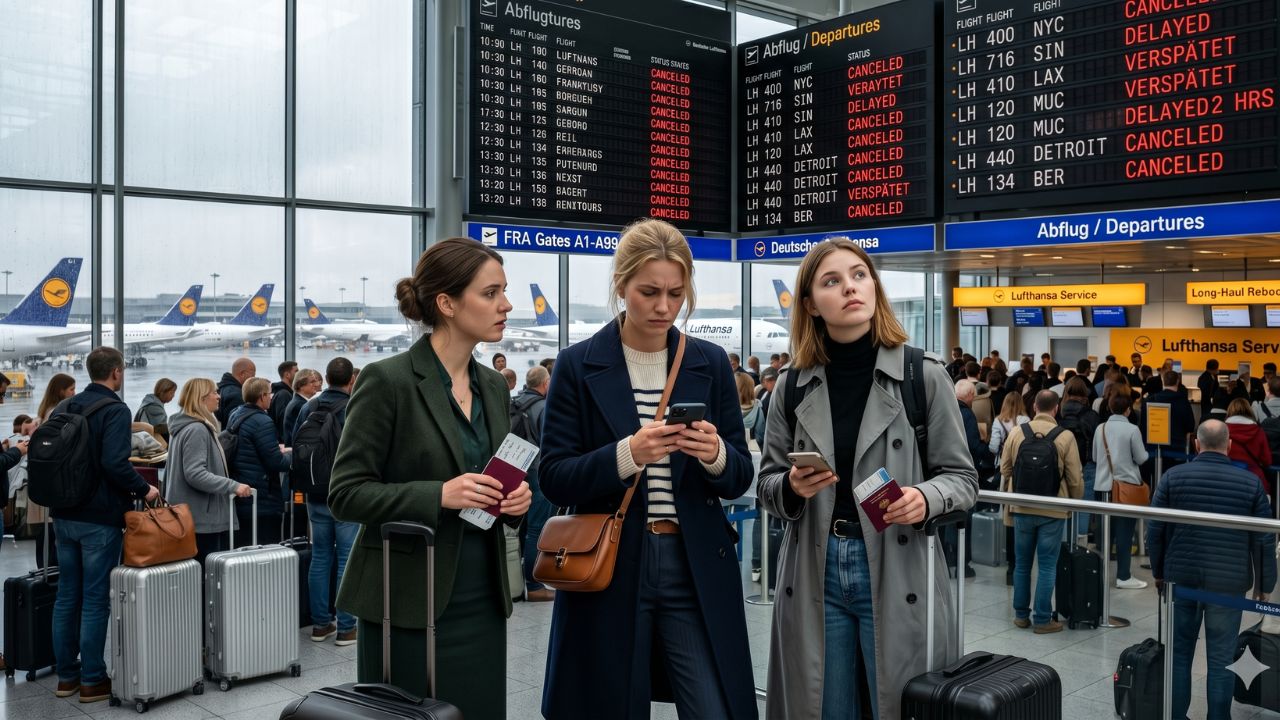
Image generated by AI
A Massive Operational Meltdown Plunges Germany into Gridlock
While massive sectors of the global passenger network frequently battle highly unpredictable weather events, synchronized logistical bottlenecks at major European mega-hubs remain the absolute most terrifying catalyst for sudden, unmanageable terminal congestion. Delivering highly urgent, breaking airline news, verified European aviation trackers confirm that a catastrophic operational meltdown is actively generating severe, cascading travel chaos across Germany. Today, June 1, 2026, a horrifying total of 158 complete flight cancellations and a staggering 492 severe new flight delays have been officially recorded by Lufthansa, violently paralyzing the nation's primary aviation gateways.
While desperate travelers already attempt to navigate sudden, terrifying airport disruptions caused by massive summer volumes, these exclusive aviation updates reveal that Germany’s largest airline is battling a total network collapse. Thousands of highly vulnerable passengers bound for Europe, North America, Asia, and the Middle East have been brutally stranded. The widespread issues highlight exactly how quickly operational congestion can ripple through the incredibly fragile Lufthansa network, forcing the airline to violently ground aircraft and completely destroying the itineraries of both domestic and long-haul international passengers.
Expanded Overview: The Scale of the Aviation Crisis
The sudden, highly publicized execution of this operational meltdown serves as an undeniable example of how rapidly the world's most critical transit hubs can completely disintegrate. For thousands of travelers rushing through terminals, checking departure boards, and desperately hoping their flights would leave on time, the day violently turned into an exhausting test of patience. The sheer scale of the disruption—a combined total of 650 flight disruptions—is completely overwhelming airport infrastructure at Frankfurt Airport and Munich Airport, Lufthansa's two primary operational centers.
Delayed aircraft, massive schedule adjustments, and severe passenger backlogs are placing terrifying additional pressure on ground operations. Consequently, many travelers are encountering severely extended waiting times, horrifying missed onward connections, and highly expensive, unexpected itinerary changes. Because large network carriers like Lufthansa operate highly interconnected schedules, when aircraft rotations, crew availability, or airport slots experience even minor interruptions, the devastating effects instantly cascade through the global network for hours.
Section-Wise Breakdown of the Connectivity Crisis
Frankfurt and Munich Paralyzed
The impact of these massive Lufthansa disruptions violently extends far beyond individual domestic passengers because Frankfurt and Munich function as the absolute most critical strategic gateways connecting Europe to the rest of the world. Frankfurt Airport serves as one of Europe’s busiest international aviation hubs, while Munich Airport plays a critical, irreplaceable role in Lufthansa’s long-haul and regional operations. When catastrophic disruptions occur at either location, the paralyzing effects are immediately felt across multiple continents.
Air travel demand has remained incredibly strong, with European carriers experiencing continued massive growth in passenger volumes. However, this increased demand has created terrifying additional pressure on airport infrastructure, staffing resources, and air traffic management systems. Aviation experts repeatedly warn that even moderate disruptions during busy travel periods will generate massive, unrecoverable delays throughout the network.
The Collapse of Connecting Itineraries
Passengers traveling through these major connecting hubs are particularly vulnerable. A localized delay on a single short-haul flight can lead to brutally missed onward global connections. This forces the airline to desperately arrange emergency alternative transportation, hotel accommodations, or rebooking options, frequently failing due to the sheer volume of stranded passengers flooding the terminals.
Verified Lufthansa Disruption Data Table
To fully comprehend the massive operational scale and strategic fallout dictating this highly volatile travel meltdown, the following table explicitly details the exact cancellation and delay metrics recorded across the Lufthansa network today:
| Affected Airline / Mega-Hubs | Cancelled Flights (#) | Delayed Flights (#) | Total Disrupted Flights |
|---|---|---|---|
| Lufthansa Network (Global) | 158 | 492 | 650 |
| Frankfurt Airport (FRA) | Severe Impact | Severe Impact | Primary Network Failure |
| Munich Airport (MUC) | Severe Impact | Severe Impact | Primary Network Failure |
Passenger Impact: Stranded Itineraries and EU Passenger Rights
For the modern domestic and international commuter attempting to navigate this highly volatile European corridor, the passenger impact of this massive operational meltdown is completely exhausting. As travelers face terrifying uncertainty regarding departures and connections, attention must immediately shift toward passenger rights and compensation protections available under European regulations.
The European Union’s passenger rights framework explicitly states that travelers affected by significant delays or cancellations may be legally entitled to assistance, reimbursement, rerouting, or compensation. The European Commission mandates that passengers affected by these horrific cancellations and long delays have extremely powerful specific rights under Regulation EC 261/2004. Depending on the length of the delay and route distance, passengers are legally eligible for meals, refreshments, hotel accommodation, transportation assistance, or rerouting options.
Germany’s Federal Aviation Office (Luftfahrt-Bundesamt) aggressively advises passengers to first contact the airline directly to demand compensation. Travelers are heavily urged to retain all boarding passes, booking confirmations, delay notifications, and receipts required during legal compensation reviews.
Industry Analysis: The Fragility of Mega-Hub Operations
From a macroeconomic and industry operations perspective, the localized cancellations highlight a massive, terrifying truth: modern air travel remains intensely vulnerable to operational pressures, weather challenges, and air traffic constraints. While airlines continue investing heavily in predictive analytics, digital operations centers, and crew management technologies to improve operational resilience, the entire system completely collapses when a limited breakdown occurs. Even technologically advanced carriers absolutely struggle when multiple challenges emerge simultaneously, proving that future investments in airport infrastructure are desperately required.
Conclusion: A Highly Volatile European Crisis
The massive, highly publicized operational failure of the Lufthansa network represents a severe, terrifying crisis for the global travel sector. By actively forcing thousands of passengers to endure 158 flight cancellations and 492 severe delays, the airline industry guarantees an incredibly stressful, highly exhausting journey. As the operational teams frantically battle this massive terminal gridlock across Frankfurt and Munich, passengers are heavily urged to aggressively monitor their bookings, strictly demand EC 261/2004 compensation, and fully expect massive, cascading flight cancellations amidst unprecedented European travel chaos.
Key Takeaways
- Massive Network Meltdown: Severe operational congestion triggered a staggering 650 total disrupted flights across the Lufthansa network.
- Frankfurt and Munich Gridlock: The airline violently grounded 158 flights and severely delayed 492 others out of its two primary global hubs.
- Global Corridors Severed: The massive disruption completely destroyed highly sensitive itineraries connecting Europe to North America, Asia, and the Middle East.
- EU Regulation EC 261/2004: Stranded passengers are legally entitled to massive compensation, hotel accommodations, and rerouting assistance under EU law.
- Passenger Survival Tactics: Travelers are aggressively urged to constantly monitor airline apps, retain all financial receipts, and fiercely demand legal compensation from Lufthansa customer service.
Disclaimer: The specific cancellation metrics, delayed flight volumes, and airline operational failures presented in this report are based on verified flight tracking data regarding the Lufthansa network disruption on June 1, 2026. Official airline routing, terminal congestion levels, and final ticket rebooking options are highly volatile and subject to continuous, real-time update based on active operational directives. Prospective passengers are urgently advised to fiercely monitor their specific booking status and verify active flight schedules directly via the airline's official portal prior to airport arrival.
Disclaimer
This article is for informational and educational purposes only. It does not constitute legal, financial, or professional advice. While we strive to provide accurate and up-to-date information, travel policies, regulations, and conditions change rapidly. Always verify information with official sources before making travel decisions. Nomad Lawyer makes no representations about the accuracy, reliability, completeness, or suitability of the information provided. Readers should consult qualified professionals for advice specific to their circumstances. The views expressed in this article are those of the author and do not necessarily reflect the views of Nomad Lawyer.
Kunal K Choudhary
Co-Founder & Contributor
A passionate traveller and tech enthusiast. Kunal contributes to the vision and growth of Nomad Lawyer, bringing fresh perspectives and driving the community forward.
Learn more about our team →