
Los Angeles 2028 Olympics Traffic Plan: 369 Miles of Road Restrictions Across California
California authorities have unveiled a 369-mile Games Route Network for the 2028 Olympics, implementing strict permit-only lanes and traffic restrictions across major Southern California freeways.
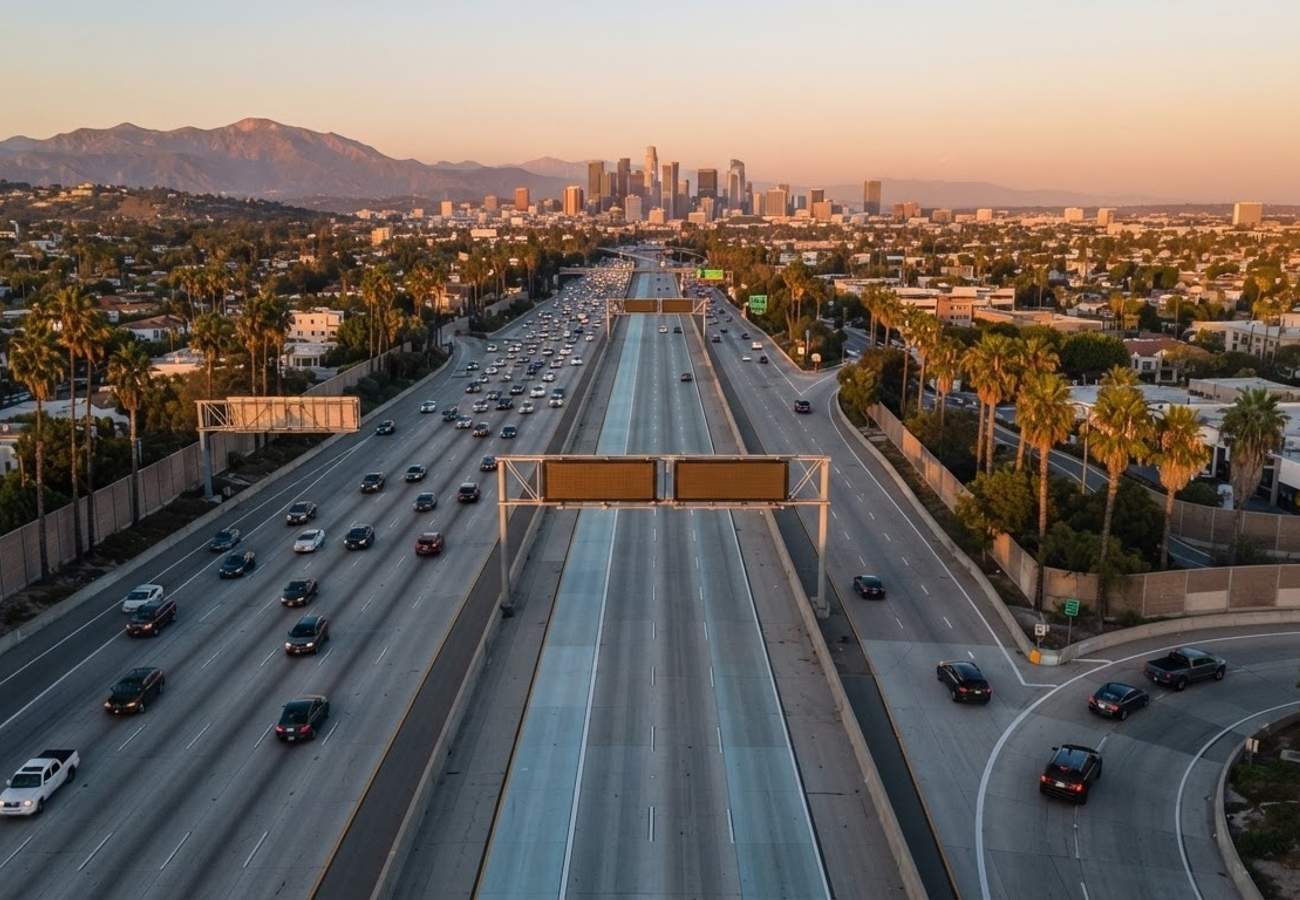
Image generated by AI
The California Department of Transportation (Caltrans) has designated 369 miles of roads as a "Games Route Network" for the 2028 Olympics and Paralympics, introducing permit-only lanes and significant restrictions across Southern California's most critical freeway corridors.
The LA28 Games Route Network Framework
To ensure the predictable movement of athletes and accredited personnel, Caltrans is implementing a permit-controlled hierarchy of roads. This system does not rely on total motorway shutdowns but instead utilizes "dedicated capacity." This means specific lanes, ramps, and traffic-control infrastructure will be temporarily reserved for Olympic and Paralympic movement, effectively reducing the available road space for the general public.
The restrictions are scheduled to be active from June 1, 2028, through September 1, 2028. This window covers the Olympic Games (July 14–30) and the Paralympic Games (August 15–27).
Route Specifications and Infrastructure Impact
The network spans three counties—Los Angeles, Orange, and San Diego—connecting the Olympic Village at UCLA to various competition and operational sites.
| Network Element | Specification/Detail |
|---|---|
| Total Route Network | Approximately 369 miles |
| Freeway Component | Approximately 236 miles |
| Local Street Component | Approximately 134 miles |
| Primary LA Corridors | I-5, I-10, I-101, I-105, I-110, I-210, I-405 |
| Orange County Routes | I-5, SR-55, SR-57, SR-73, SR-91, I-405 |
| San Diego Routes | I-5 |
| Restriction Period | June 1 – September 1, 2028 |
Critical Pressure Points: I-405 and Sunset Boulevard
The I-405 freeway is identified as the most significant pressure point. As the primary north-south artery connecting LAX, West Los Angeles, the South Bay, and Orange County, any reduction in general-purpose lanes will have a compounding effect on regional congestion. Travelers should note that these restrictions will overlap with existing highway construction projects scheduled for completion before the Games.
On a local level, Sunset Boulevard near UCLA will face intense scrutiny. Because UCLA serves as the Olympic Village, this corridor will function as a "mobility spine," requiring constant, high-security movement for athletes. General commuters and tourists attempting to cross neighborhoods surrounding UCLA should expect significant diversions.
Enforcement and Visual Identification
Caltrans is introducing a specific visual language to prevent accidental incursions into restricted zones. A light-blue LA28 identification system will be applied to pavement markings and signage.
Drivers must be alert for signs marked "PERMIT ONLY." Entering these dedicated lanes without official authorization is expected to carry fines approaching $300. This applies to rental car users, who may be tempted to use familiar HOV or express lanes that have been converted to Olympic-only use.
Regional Transit Shift: The "One Million Trip" Challenge
Metro anticipates approximately one million additional trips per day during the Games. To mitigate the loss of road capacity, the agency is deploying the Games Enhanced Transit Service (GETS). This supplement to existing rail and bus lines will utilize mobility hubs and shuttle services to move spectators.
The regional strategy focuses on "transportation-demand management," meaning the goal is to force a behavioral shift toward walking, cycling, and public transit rather than increasing road capacity.
Mobility Response Matrix
| Pressure Point | Operational Response |
|---|---|
| Olympic Vehicle Volume | Dedicated Games Route Network |
| 1 Million Daily Extra Trips | Games Enhanced Transit Service (GETS) |
| Venue Congestion | Bus priority lanes and mobility hubs |
| Private Car Demand | Travel-demand management and restrictions |
| Wayfinding | Light-blue LA28 signage and regional digital info |
| Freight/Logistics | Dedicated freight planning to maintain port access |
Traveler Logistics Guide: Navigating LA28
From a ground-level perspective, the best way to navigate Los Angeles during this period is to abandon the reliance on private vehicles for any trip involving the I-405 or the UCLA vicinity.
Optimal Connection Strategies:
- Airport Transfers: If arriving at LAX, avoid the I-405 during peak Games hours. Utilize the FlyAway bus services or pre-arranged shuttles that have integrated access to GETS hubs.
- Layover & Transit Times: Increase your estimated travel time by at least 60-90 minutes for any cross-city movement. The reduction in general-purpose lanes will create "bottlenecking" at exits not designated for the Games.
- Digital Transit Tools: Prioritize real-time navigation apps that integrate Caltrans' temporary closures. Do not rely on static maps or previous knowledge of HOV lane locations.
- The "Last Mile" Approach: Plan for "Park and Ride" options on the outskirts of the restricted zone. The strategy for 2028 is designed to make the "last mile" to the venue accessible only via shuttle, walking, or cycling.
Expect the unexpected: the 2028 Games will turn the Los Angeles freeway system into a managed logistics zone rather than a public utility.
Related Travel Guides
Disclaimer
This article is for informational and educational purposes only. It does not constitute legal, financial, or professional advice. While we strive to provide accurate and up-to-date information, travel policies, regulations, and conditions change rapidly. Always verify information with official sources before making travel decisions. Nomad Lawyer makes no representations about the accuracy, reliability, completeness, or suitability of the information provided. Readers should consult qualified professionals for advice specific to their circumstances. The views expressed in this article are those of the author and do not necessarily reflect the views of Nomad Lawyer.