
Lithuania Deploys Stadler FLIRT Fleet to Boost Rail Ridership to 10 Million by 2030
Lithuania has initiated its largest rail fleet renewal since 1990, investing €226.5 million in Stadler FLIRT electric and battery-electric trains to double annual passenger volumes by 2030.

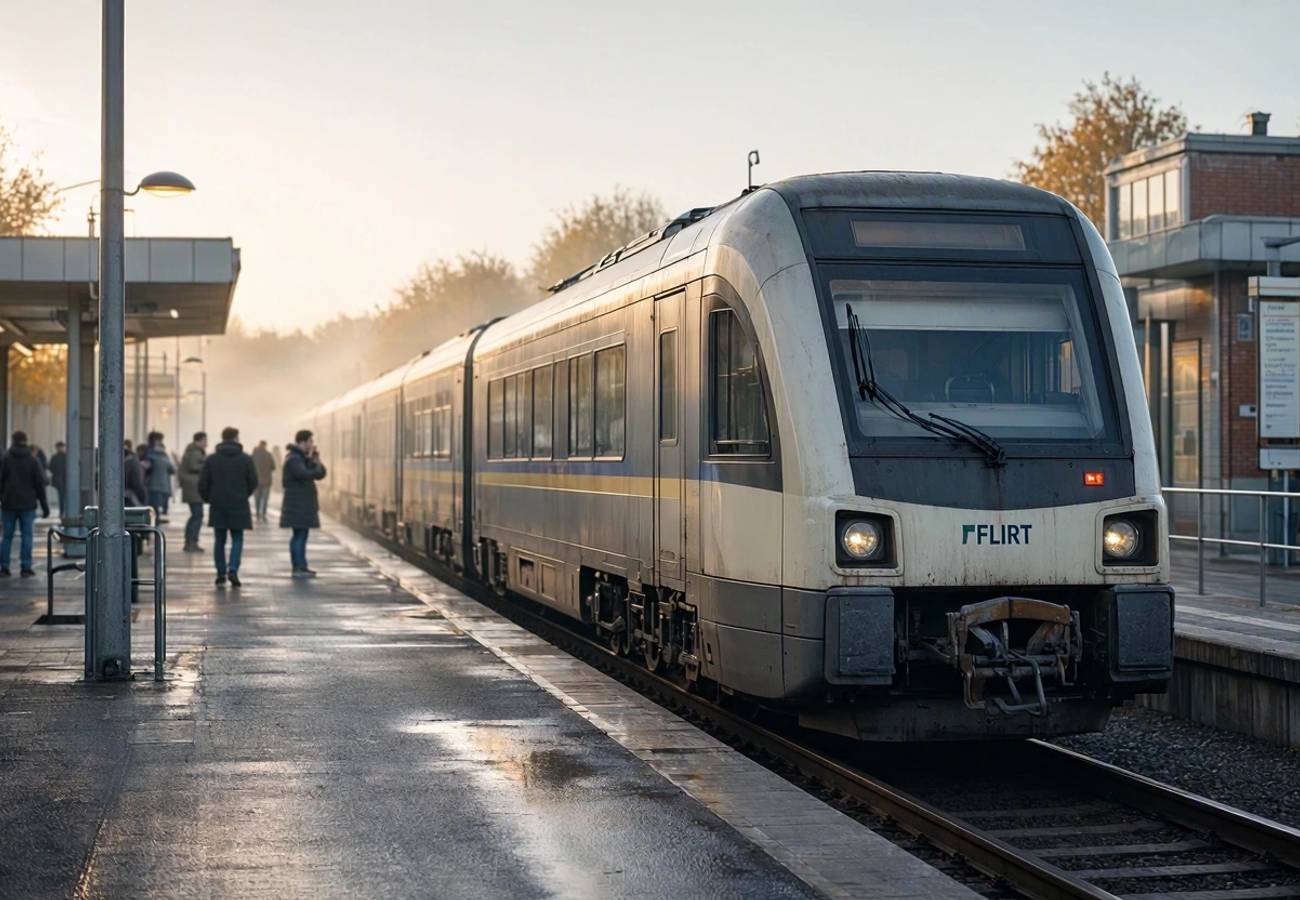
Image generated by AI
Lithuanian railway ridership is projected to climb from 5.5 million passengers in 2025 to 10 million by 2030—a nearly 82% increase that signals a massive shift in domestic transit preferences. This growth is being fueled by the most aggressive fleet renewal program since the nation regained independence in 1990, centering on a €226.5 million procurement of cutting-edge rolling stock.
The Rail Modernisation in Numbers
On 22 October 2026, the national passenger operator, LTG Link, officially transitioned the first Stadler FLIRT electric train into commercial service. The initial deployment focuses on the high-traffic Vilnius–Kaunas corridor, a primary artery for students, business commuters, and tourists.
The financial scope of this project is substantial. The contract, signed with Stadler Polska on 21 June 2023, totals €226.5 million. This figure encompasses not only the physical acquisition of 15 trains but also a comprehensive technical support and spare-parts agreement extending through 2037. By securing a 30-year intended lifespan for these vehicles, the Lithuanian government is shifting from short-term patching of legacy diesel systems to a long-term infrastructure strategy.
The fleet is a hybrid of two distinct technologies designed to solve the "last mile" electrification problem. While nine units are standard Electric Multiple-Units (EMUs), six are Battery-Electric Multiple-Units (BEMUs). This allows LTG Link to maintain zero-emission standards even on regional lines that lack overhead wiring, provided the distance does not exceed the battery's operational ceiling.
Regional Benchmarks and Technology Shifts
Lithuania's approach mirrors a broader European trend toward "de-dieselization" of regional rail. According to data from the International Union of Railways (UIC), the transition to BEMUs allows countries to modernize services without the prohibitive cost of electrifying every kilometer of rural track.
The following table breaks down the technical divergence between the two new fleet types being integrated into the 1,520 mm broad-gauge network:
| Feature | Electric Multiple-Units (EMU) | Battery-Electric Units (BEMU) |
|---|---|---|
| Units Ordered | 9 | 6 |
| Train Length | 93 metres | 65 metres |
| Seating Capacity | 200 passengers | 128 passengers |
| Power Source | 25 kV, 50 Hz overhead wires | Overhead wires + onboard batteries |
| Battery Range | N/A | Up to 70 km |
| Primary Use Case | Intercity (e.g., Vilnius-Kaunas) | Regional/Non-electrified lines |
This strategic split ensures that the Ministry of Transport and Communications can scale capacity on the main lines while simultaneously upgrading the passenger experience in the periphery, where diesel trains have historically dominated.
What This Means for Travelers
For the individual traveler, this transition moves the Lithuanian rail experience from "functional" to "premium." The new Stadler FLIRT units introduce several specific upgrades that directly impact trip planning:
- Enhanced Accessibility: New boarding systems and dedicated spaces for passengers with reduced mobility make rail a viable alternative to private cars for all demographics.
- Multi-Modal Integration: The inclusion of dedicated bicycle spaces suggests a push toward "bike-and-rail" tourism, particularly for those exploring the regions outside Vilnius.
- Digital Readiness: With integrated charging facilities, the trains are now equipped for the "digital nomad" lawyer or business traveler moving between the two largest cities.
Booking Advice: If you are traveling the Vilnius–Kaunas route in late 2026, check your specific departure. Because the 15 trains are being deployed in stages, not every trip will feature the new rolling stock immediately. Priority is given to the capital corridor, but regional battery-electric services are slated for a December 2026 rollout.
Forward Projection: The 2030 Horizon
The trajectory of this investment suggests that Lithuania is positioning itself as a Baltic leader in sustainable transit. By aiming for 10 million annual passengers by 2030, the government is betting on a modal shift away from private vehicle usage.
The success of this plan depends on the actual performance of the BEMUs. While the 70 km battery range is a strong benchmark, real-world variables—such as harsh Baltic winters and heavy passenger loads—will determine if these trains can fully replace diesel on longer regional stretches. If successful, LTG Link may exercise its options to purchase additional units, further accelerating the phase-out of internal combustion engines. For more on global aviation and transport shifts, the International Air Transport Association (IATA) provides comparative data on how rail is increasingly complementing short-haul flight networks in Europe.
FAQ: Lithuania Rail Modernisation 2026
Will ticket prices increase with the new trains? The data does not indicate a price hike; rather, the investment is aimed at increasing volume (from 5.5M to 10M passengers), which typically suggests a strategy of competitive pricing to attract new riders.
When will the battery-electric trains be available for regional travel? Deployment for the battery-electric units is planned to begin in December 2026, targeting routes that currently lack overhead electrification.
Which route currently has the best service? The Vilnius–Kaunas corridor is the primary beneficiary of the first wave of Stadler FLIRT electric trains as of 22 October 2026.
Are these trains compatible with all Lithuanian tracks? Yes, both the EMU and BEMU models are designed for the 1,520 mm broad-gauge infrastructure used across the national network.
A strategic bet on battery power to bridge the gap between urban hubs and rural reaches.
Related Travel Guides
Disclaimer
This article is for informational and educational purposes only. It does not constitute legal, financial, or professional advice. While we strive to provide accurate and up-to-date information, travel policies, regulations, and conditions change rapidly. Always verify information with official sources before making travel decisions. Nomad Lawyer makes no representations about the accuracy, reliability, completeness, or suitability of the information provided. Readers should consult qualified professionals for advice specific to their circumstances. The views expressed in this article are those of the author and do not necessarily reflect the views of Nomad Lawyer.
Preeti Gunjan
Contributor & Community Manager
A passionate traveller and community builder. Preeti helps grow the Nomad Lawyer community, fostering engagement and bringing the reader experience to life.
Learn more about our team →