
Florence to Venice by Rail: How to Avoid Overtourism and Experience Italy Slowly in 2026
Discover how to transform the high-speed Florence to Venice rail journey into a sustainable slow-travel experience that supports local Venetian communities and avoids the day-trip crowds.

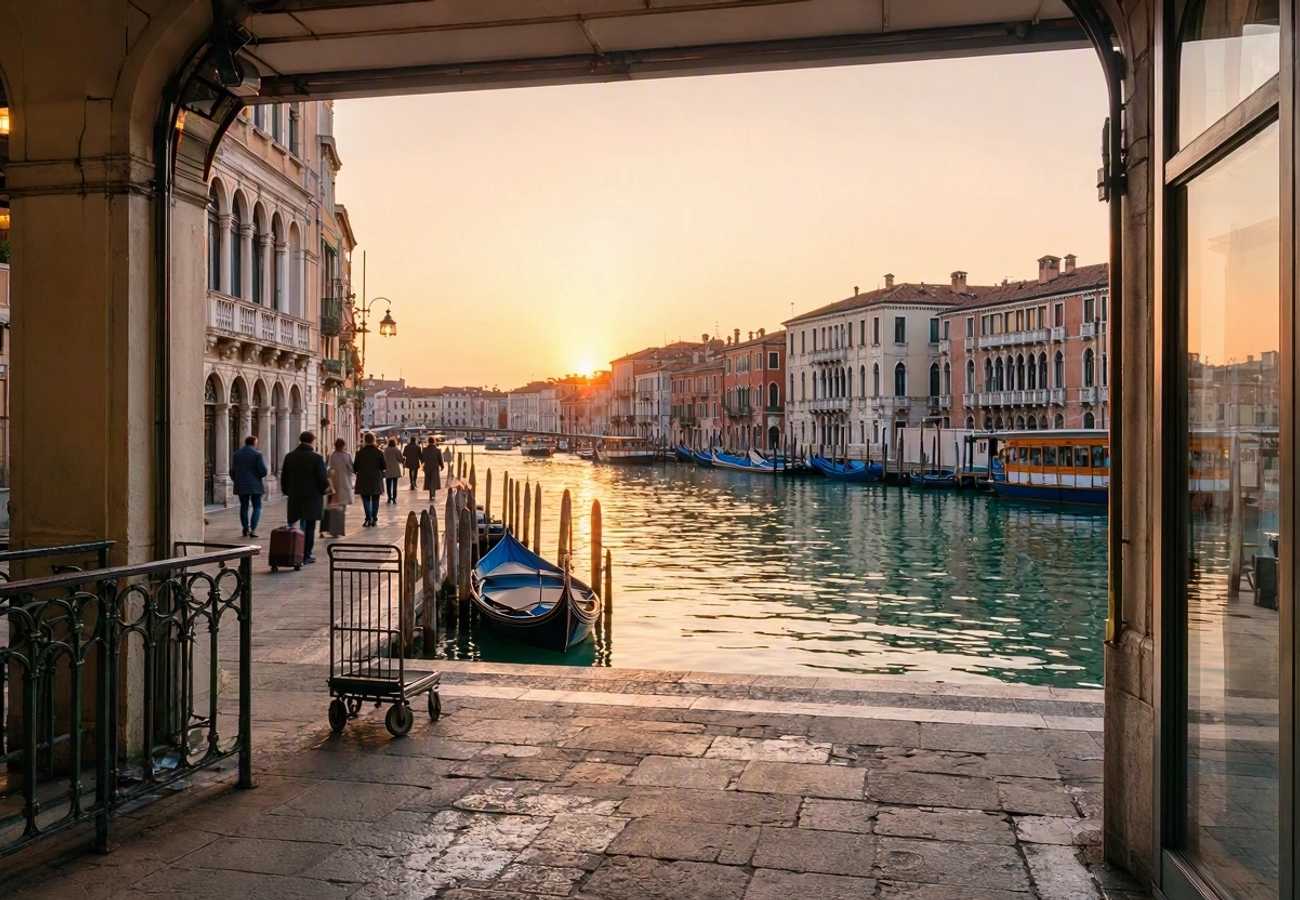
Image generated by AI
The journey from Florence to Venice is so efficient that visitors can leave Tuscany after breakfast and stand in the Venetian lagoon before lunch. While this high-speed connectivity is a technical marvel, it has inadvertently fueled a "hit-and-run" tourism culture where thousands arrive in the morning, snap a photo of St Mark’s Square, and vanish by sunset, leaving the city's fragile infrastructure strained.
The Shift Toward Slow Travel in the Veneto Region
The rail link between Firenze Santa Maria Novella and Venezia Santa Lucia is more than just a transit corridor; it is currently the front line in Italy's battle against overtourism. The ease of a two-hour direct trip has turned one of the world's most delicate cities into a temporary stopover. This creates a dangerous imbalance: millions of annual visitors flooding narrow alleys and bridges, while the actual resident population of the historic center continues to shrink.
To counter this, there is a growing movement toward "slow travel." Instead of treating Venice as a checklist item, travelers are being encouraged to use the rail network as a gateway to a deeper stay. By extending a visit to at least two nights, the economic benefit shifts from high-turnover tourist traps to locally owned guesthouses and authentic artisans.
What Makes the Florence-Venice Route Unique
Unlike most city-to-city transfers, the arrival at Venezia Santa Lucia is an experiential event. The station is positioned directly on the Grand Canal; the moment you step outside, you are greeted not by taxis or buses, but by the immediate sight of water, vaporetti, and historic Venetian architecture.
The contrast between the two hubs is stark. Florence's station is a gateway to the Renaissance heart of Tuscany, while Venice's terminus is a literal bridge into a floating city. This route allows travelers to transition from the structured elegance of Florence to the labyrinthine, water-bound logic of Venice without the stress of car rentals or domestic flights. For those seeking a more sustainable approach, booking through Trenitalia or Italo provides a low-carbon alternative to road travel.
Logistics and Timing for the Conscious Traveler
To avoid the crushing crowds that characterize the "day-trip" peak, timing is everything. The most congested windows typically occur between late morning and mid-afternoon.
Rail Journey and Crowd Index
| Feature | Detail | Local Insider Note |
|---|---|---|
| Departure Station | Firenze Santa Maria Novella | Located within walking distance of the historic center. |
| Arrival Station | Venezia Santa Lucia | Direct access to the Grand Canal. |
| Average Duration | ~2 Hours (Direct) | Book high-speed services for maximum efficiency. |
| Peak Crowd Window | 11:00 AM – 3:00 PM | Avoid arriving during this window to bypass vaporetti queues. |
| Quietest Periods | Early Morning / Late Evening | Best for exploring residential districts. |
Visitor Insider Tips
Having spent significant time navigating these cities, I recommend ignoring the primary tourist axis (Station $\rightarrow$ Rialto $\rightarrow$ St Mark's) and instead basing yourself in the outer districts.
- Where to Base Yourself: Avoid the immediate vicinity of the station. Look for accommodation in Cannaregio for a quieter vibe and the historic Jewish Ghetto, or Dorsoduro for a more artistic, university-town atmosphere.
- The "Reverse" Itinerary: Visit the heavy-hitters like the Doge's Palace or St Mark's Basilica first thing in the morning or late in the evening. Use the midday peak—when day-trippers are clogging the main arteries—to retreat into the residential streets of Castello or Santa Croce.
- Island Strategy: Do not attempt to visit Murano, Burano, and Torcello in one afternoon. Pick one island and explore it slowly. This reduces the pressure on the water-bus system and allows you to find genuine glass-blowers or lace-makers rather than mass-produced souvenir shops.
- Transport Hack: Purchase a multi-day vaporetti pass. It is far more economical than single tickets and encourages you to explore the lagoon's edges rather than sticking to the crowded center.
Cultural and Environmental Context
Venice is a living city, not a museum or a film set. The rise of short-term rentals has significantly reduced the housing available for locals, turning some neighborhoods into "visitor-only" zones. When choosing where to sleep, prioritizing regulated hotels or locally run guesthouses helps maintain the city's social fabric.
Furthermore, the environmental impact of millions of visitors is evident in the waste and wear on the city's ancient stone. Travelers should use refillable water bottles—Venice has numerous public fountains with high-quality drinking water—and respect the UNESCO World Heritage status of the city by following local etiquette: do not block bridges for photos and keep the walkways clear for residents commuting to work.
FAQ: Visiting Venice from Florence 2026
What is the best time to visit to avoid crowds? Avoid Carnival, Easter, and the summer peak. Mid-week visits in the shoulder seasons (spring and autumn) are ideal. Always aim to explore the main sights before 9:00 AM or after 6:00 PM.
Do I need a car to get from Florence to Venice? Absolutely not. Cars are banned in the center of Venice. The high-speed train is the fastest and most sustainable option, taking you directly from the heart of Florence to the edge of the Grand Canal.
Is it safe for solo travelers? Yes, both Florence and Venice are very safe for solo travelers. The rail connection is straightforward, and the cities are highly walkable. Use official transport and stay in well-reviewed, locally-run accommodations.
How do I get from the Venice train station to my hotel? The most common way is via the Vaporetto (water bus). However, for a more local experience and to avoid crowds, consider walking through the quieter neighborhoods if your hotel is within a 20-minute stroll.
Travel not as a consumer of a destination, but as a guest of its people.
Related Travel Guides
Disclaimer
This article is for informational and educational purposes only. It does not constitute legal, financial, or professional advice. While we strive to provide accurate and up-to-date information, travel policies, regulations, and conditions change rapidly. Always verify information with official sources before making travel decisions. Nomad Lawyer makes no representations about the accuracy, reliability, completeness, or suitability of the information provided. Readers should consult qualified professionals for advice specific to their circumstances. The views expressed in this article are those of the author and do not necessarily reflect the views of Nomad Lawyer.
Raushan Kumar
Founder & Lead Developer
Full-stack developer with 11+ years of experience and a passionate traveller. Raushan built Nomad Lawyer from the ground up with a vision to create the best travel and law experience on the web.
Learn more about our team →