Latvia Launches Multi-Million Tourism Infrastructure Upgrade at RIX Riga Airport and Coastal Resorts

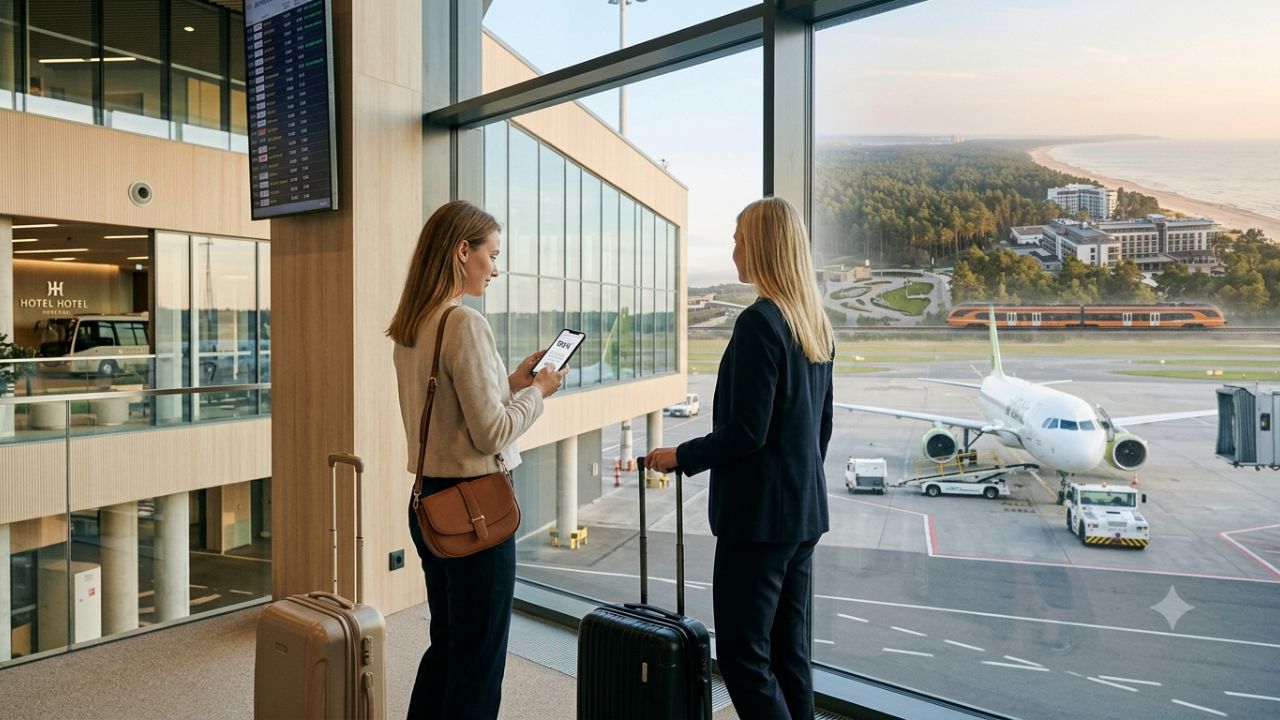
Image generated by AI
Latvia has launched a record-breaking capital investment program across its aviation networks and luxury hotel sectors to capture high-yield European travelers, aiming to push national tourism export revenue past EUR 1.5 billion by 2030.
Supported by the European Bank for Reconstruction and Development (EBRD) and national frameworks under the Sustainable Development Strategy of Latvia until 2030, the Baltic nation is executing major terminal modernizations at RIX Riga Airport and integrating high-speed Rail Baltica transit link connections. Concurrently, luxury coastal hotels in Jūrmala and cultural venues across Riga are upgrading property ratings to expand year-round business, MICE, and wellness tourism according to official economic indicators from Latvia Travel.
Aviation Infrastructure and Multimodal Terminal Expansion at RIX Riga Airport
As the primary air gateway for the Baltic states, RIX Riga Airport handles more than 7.1 million annual passengers, functioning as an essential hub for Northern European connectivity. Home carrier airBaltic maintains market leadership at the airport, controlling over 57 percent of total passenger traffic.
To process projected long-term demand, the airport authority is constructing a new ultra-energy-efficient multimodal passenger terminal. Supported by EBRD financing, the expansion modernizes check-in facilities, security screening corridors, and baggage handling systems to eliminate transit bottlenecks.
RIX Riga Airport Multimodal Expansion Framework
├── Passenger Throughput: Currently 7.1M+ annual passengers | Scaling to 12M capacity tier
├── Primary Home Carrier: airBaltic (Holds 57%+ total passenger traffic share)
├── Rail Integration    : Rail Baltica high-speed link (<10-minute transit to central Riga)
└── Commercial Zone     : Mixed-use airport business park, corporate offices & logistics hub
Adjacent to active runways, a new commercial airport business park is being developed, introducing corporate office towers, logistics facilities, and transit-oriented hotels designed to establish the airport zone as a primary economic engine.
Rail Baltica High-Speed Transit Integration
A cornerstone of Latvia's transport strategy is integrating RIX Riga Airport directly into the pan-European high-speed rail network via Rail Baltica. Supported by multi-hundred-million-euro infrastructure allocations, the rail connection will provide a direct transit time of under 10 minutes between the airport terminal and Riga Central Station.
Once operational, the rail link will support an airport capacity tier capable of handling 12 million annual passengers, enabling international travelers to transfer between flight gates and high-speed rail corridors connecting Estonia, Lithuania, and Central Europe without relying on highway transport.
Hospitality Metrics and Regional Visitor Night Distribution
Data released by the Central Statistical Bureau of Latvia shows strong growth across the national accommodation sector. Total visitor nights spent across Latvia's 1,345 registered tourist accommodation sites surpassed 5.0 million, representing a 6.1 percent annual increase.
Latvia Tourism Accommodation & Export Performance
├── Export Target      : Surpass EUR 1.5 Billion in national tourism revenue by 2030
├── Total Visitor Nights: 5.0 Million+ nights (6.1% year-over-year growth)
├── Total Facilities   : 1,345+ registered tourist accommodation sites nationwide
└── Workforce Goals    : Up-skilling 5,000+ hospitality & aviation workers annually
While the capital city of Riga continues to draw the highest volume of overseas visitors, coastal resort cities and regional municipalities are absorbing substantial private investment.
| Municipality / Region | Non-Resident Overnight Stay Share | Core Tourism & Investment Focus |
|---|---|---|
| Riga (Capital) | 71.8% | Historic Old Town, UNESCO heritage, MICE conferences, urban luxury |
| Jūrmala (Coastal Resort) | 7.7% | Coastal wellness resorts, 4-Star Superior hotels, Baltic beaches |
| Mārupe (Airport Corridor) | 3.8% | Corporate lodging, airport business parks, transit logistics |
| Liepāja (Coastal Port) | 2.8% | Naval heritage, wind-surfing, cultural music festivals |
| Sigulda (Gauja Valley) | 1.7% | Gauja National Park, castle trails, outdoor adventure tourism |
In Jūrmala, major properties such as the Jūrmala SPA Hotel have completed multi-million-euro renovations to achieve 4-Star Superior ratings, targeting affluent corporate conference delegates and wellness travelers.
Environmental Sustainability and Eco-Hotel Certifications
To align with national 2030 environmental mandates, Latvian hoteliers are implementing green building standards. Property developers are retrofitting historical buildings with smart climate control systems, energy-efficient heating, and zero-waste management frameworks.
An increasing number of properties are securing international eco-certifications such as the Green Key, satisfying demand from sustainability-conscious European travelers. To support service quality across expanded facilities, public-private educational partnerships aim to up-skill over 5,000 hospitality and aviation professionals annually by 2030.
Mitigating Winter Seasonality Through MICE and Business Tourism
Latvian tourism authorities are executing targeted strategies to boost shoulder-season hotel occupancy by 15 to 20 percent, reducing reliance on summer holiday traffic.
By expanding 4-Star Superior hotel capacity and modernizing conference facilities in Riga and Jūrmala, the nation is competing for international Meetings, Incentives, Conferences, and Exhibitions (MICE) events. Year-round corporate travel and wellness retreats stabilize hotel occupancy rates and maintain year-round employment across the service sector.
Why This Matters
Latvia’s synchronized investments in aviation, high-speed rail, and luxury hospitality demonstrate how a Baltic nation can transition from low-cost regional travel into a high-value Northern European destination. For international travelers, the upcoming Rail Baltica connection and expanded RIX Riga Airport terminal will make flying into Riga and transferring to Jūrmala’s coastal resorts seamless.
For European tourism investors and event organizers, Latvia offers a stable, highly connected hub with modern conference facilities, strong environmental standards, and competitive operating costs. As infrastructure projects near completion toward 2030, Latvia is positioning itself as a premier destination for business conferences, wellness travel, and cultural exploration in the Baltic region.
FAQ: Latvia Tourism & Infrastructure Upgrades 2030
What is Latvia's national tourism revenue target for 2030?
The Ministry of Economics of Latvia aims to drive national tourism export revenue past the EUR 1.5 billion threshold by focusing on high-value hospitality, sustainability, and year-round MICE travel.
How is RIX Riga Airport expanding its capacity?
Supported by EBRD funding, RIX Riga Airport is constructing a multimodal passenger terminal, an airport business park, and a high-speed Rail Baltica station targeting a 12 million annual passenger capacity tier.
What proportion of non-resident tourists stay in Riga and Jūrmala?
According to the Central Statistical Bureau of Latvia, Riga captures 71.8 percent of non-resident overnight stays, while the coastal resort city of Jūrmala captures 7.7 percent.
How quickly will Rail Baltica connect Riga Airport to the city center?
The Rail Baltica high-speed rail link will provide a direct transit time of under 10 minutes between RIX Riga Airport and Riga Central Station.
Related Travel Guides
This article is for informational purposes. Flight routes, passenger regulations, visa rules, and transit advisories are subject to change by airlines and aviation authorities. Readers are advised to verify schedules and travel documentation with relevant carriers and border agencies before departure.
Related Stories

Denmark and Estonia Autumn Escapes: How 'Coolcationing' and Geopolitics Reshape Northern Europe 2026

Marriott Luxury Resorts Unveil 2026 Festive Season Across the Americas: Complete Cultural and Travel Guide