
Wizz Air Pivots Strategy: Base Closures and Fleet Redeployment for Profitability
Wizz Air shifts from aggressive expansion to a profitability-first model, closing bases in Abu Dhabi and Vienna to redeploy aircraft to high-growth European mar

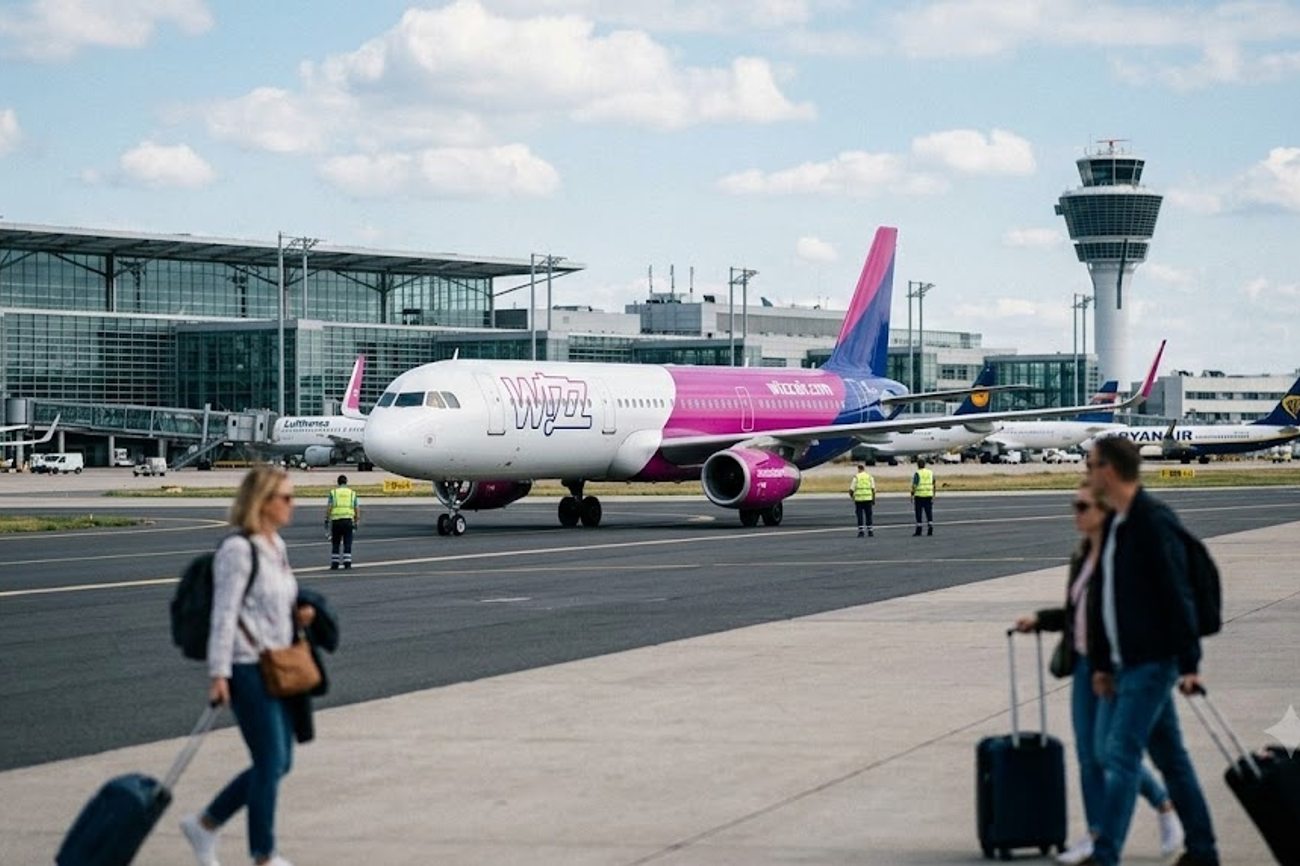
Image generated by AI
Strategic Shift From Expansion to Efficiency
Wizz Air is executing a large-scale reorganization of its operational network, signaling a departure from the aggressive expansionism that previously defined its growth. The airline is now prioritizing stability and profitability over risky market entries, opting to consolidate its presence in high-performance regions rather than stretching resources across disparate geographies.
This strategic pivot involves a calculated reduction of operations at underperforming airports to boost efficiency in markets with stronger long-term demand. While this has resulted in the closure of several bases and the withdrawal from specific countries, the move is designed to optimize the airline's financial health rather than shrink its global footprint.
The Abu Dhabi Exit and Middle East Retreat
The most significant pillar of this restructuring was the decision to exit Abu Dhabi. Originally established to create a low-cost international bridge connecting the UAE with Europe and Central Asia, the Abu Dhabi joint venture was intended to be a primary engine for non-European growth.
However, the airline officially exited the Abu Dhabi joint venture in 2025. Several factors contributed to this withdrawal:
- Regional Instability: Heightened uncertainty in the Middle East affected long-term viability.
- Operational Hurdles: Extreme weather conditions impacted aircraft performance and reliability.
- Resource Allocation: The high number of flight hours required for long-haul international routes made the operation less efficient than short-haul European hops.
By withdrawing from the UAE, Wizz Air has redirected significant aircraft capacity back into its core European network.
Vienna Base Closure and European Consolidation
Following the Middle East retreat, Wizz Air targeted its European operations for optimization, leading to the closure of its Vienna base in 2026. This move shifts the airline's focus back toward Central and Eastern Europe, where it maintains a dominant historical presence.
The closure of the Vienna base resulted in the immediate disappearance of several key routes, including:
- Southern Europe: Barcelona, Malaga, Tenerife, Bilbao, and Funchal.
- International/Regional: London, Jeddah, Tirana, and Tel Aviv.
It is important to note that Wizz Air has not entirely abandoned Vienna. While the airport no longer serves as a base—meaning no aircraft or crew are permanently stationed there—some routes continue to operate via aircraft based at other locations. This allows the airline to maintain a minimal presence while slashing the overhead costs associated with maintaining a full base.
Fleet Constraints and Engine Reliability Issues
The network volatility is not solely a result of strategic choice but also a necessity driven by fleet availability. Wizz Air’s Airbus A320neo-family fleet has been hampered by mandatory engine inspections related to Pratt & Whitney GTF engines.
With several aircraft grounded for necessary checks, the airline faces a reduced active fleet. This scarcity of aircraft has forced Wizz Air to be more selective; every available plane must now be deployed to the most profitable route possible to maximize returns.
Redeployment to High-Growth Hubs
The capacity reclaimed from Abu Dhabi and Vienna is being funneled into markets with robust demand. Destinations in Spain, Italy, Croatia, and Albania have seen an increase in capacity as a direct result of this redeployment.
This new "adaptable network" strategy allows Wizz Air to shift aircraft rapidly based on current profitability and operating conditions, ensuring the airline remains lean and responsive to market fluctuations.
Key Takeaways
- Profit Over Growth: Wizz Air has shifted from aggressive expansion to a strategy focused on efficiency and financial stability.
- Major Withdrawals: The airline exited its Abu Dhabi joint venture in 2025 and closed its Vienna base in 2026.
- Fleet Pressure: Pratt & Whitney GTF engine inspections have reduced aircraft availability, forcing the airline to prioritize high-yield routes.
- European Focus: Capacity is being redirected toward high-growth markets in Spain, Italy, Croatia, and Albania.
FAQ
What is the difference between closing a base and leaving an airport? Closing a base means the airline removes permanently stationed aircraft and crew. However, the airline may still fly into that airport using aircraft based elsewhere, though usually with fewer routes and lower frequency.
Why did Wizz Air leave Abu Dhabi? The exit was driven by a combination of regional uncertainty, operational challenges in extreme weather, and the need to move capacity back to more profitable European markets.
Which routes were most affected by the Vienna base closure? Significant cuts were made to routes connecting Vienna with London, Barcelona, Malaga, Tenerife, Bilbao, Funchal, Jeddah, Tirana, and Tel Aviv.
Related Travel Guides
Disclaimer
This article is for informational and educational purposes only. It does not constitute legal, financial, or professional advice. While we strive to provide accurate and up-to-date information, travel policies, regulations, and conditions change rapidly. Always verify information with official sources before making travel decisions. Nomad Lawyer makes no representations about the accuracy, reliability, completeness, or suitability of the information provided. Readers should consult qualified professionals for advice specific to their circumstances. The views expressed in this article are those of the author and do not necessarily reflect the views of Nomad Lawyer.
Kunal K Choudhary
Co-Founder & Contributor
A passionate traveller and tech enthusiast. Kunal contributes to the vision and growth of Nomad Lawyer, bringing fresh perspectives and driving the community forward.
Learn more about our team →