Kyoto's Kodaiji Temple Reopens Historic Guest Hall After 237 Years: Higashiyama Heritage Travel and Autumn Viewing Guide

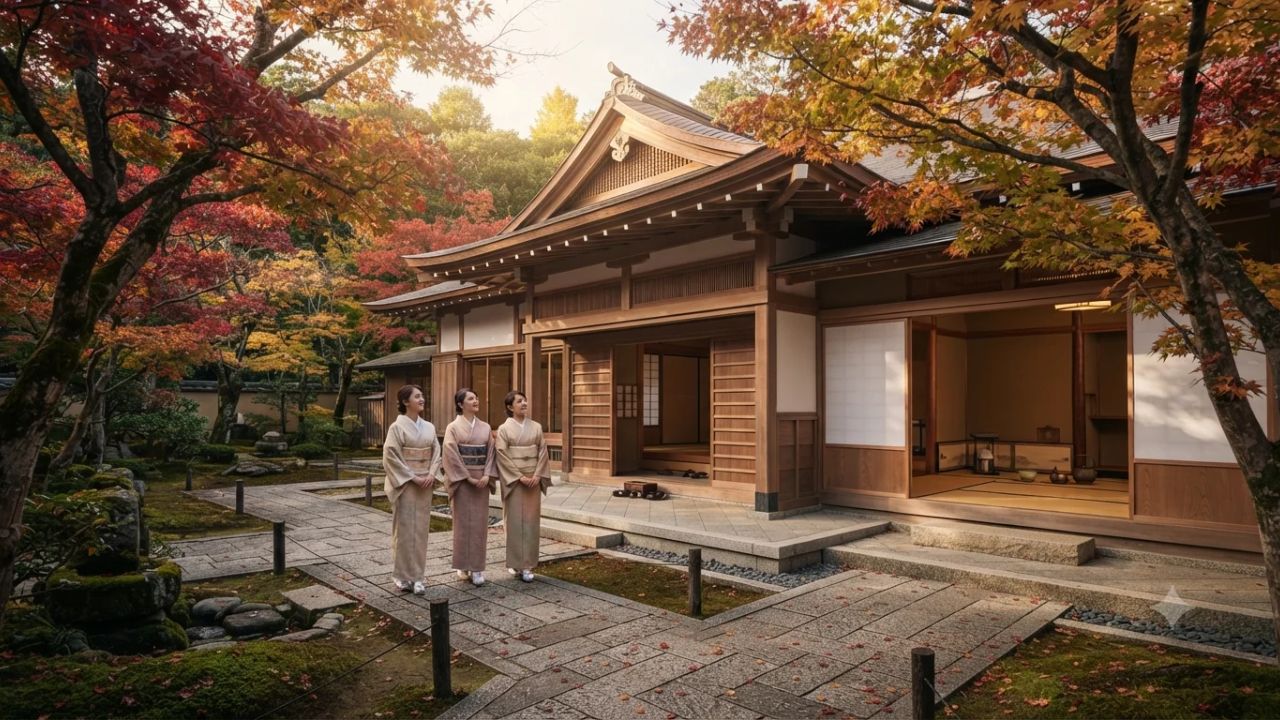
Following decades of meticulous architectural research and timber craftsmanship, Kodaiji Temple in Kyoto’s historic Higashiyama district is opening its reconstructed Guest Hall to the public on November 14, 2026, marking the building's return 237 years after fire destroyed the 1605 original.
Consecrated in 1606 by Kita no Mandokoro (widely remembered as Nene) to honor the memory of her late husband, warlord Toyotomi Hideyoshi, Kodaiji Temple stands as one of Kyoto’s premier cultural landmarks. The original Guest Hall (Kyakuden), an imposing reception structure dismantled and relocated from Fushimi Castle in 1605, served as an essential venue for aristocratic diplomatic receptions and Buddhist ceremonies before burning to the ground in 1789.
The public unveiling introduces a daytime heritage viewing experience featuring hand-painted sliding screens (fusuma-e) and traditional matcha tea service. However, because the newly rebuilt hall operates strictly on a daytime schedule from 09:00 to 16:30 and will remain closed during Kodaiji’s evening autumn illuminations, travelers visiting Kyoto during peak autumn foliage must coordinate their sightseeing itineraries around strict admission windows, historic stone footpaths, and municipal traffic diversions.
KODAIJI TEMPLE GUEST HALL RECONSTRUCTION & OPERATIONAL BASELINE
| Entity / Route | Metrics | Operational Status |
|---|---|---|
| Operational Element | Officially Confirmed Specification | Practical Visitor Significance |
| Historical Milestone | Reconstructed after 1789 fire | Re-establishes Momoyama architectural |
| (Original moved from Fushimi 1605) | layout planned since 1988 initiative | |
| Public Opening Date | 14 November 2026 at 13:00 JST | First public access in 237 years; |
| Regular hours: 09:00 to 16:30 daily | daytime-only entry restriction | |
| Temple Admission Cost | Adults: ¥800 | Standard precinct grounds entry; |
| Junior/Senior High Students: ¥400 | Primary school children enter free | |
| Traditional Tea Cost | ¥1,500 per person | Optional daytime tea in hall annex; |
| Reception hours: 09:30 to 16:30 | non-reserved, first-come basis | |
| Evening Illumination | Grounds open until 22:00 (last 21:30) | Guest Hall closed during light-up; |
| Operating through 13 December 2026 | no re-entry on single daytime ticket | |
| Transport Restriction | Right-turn ban on Higashioji-dori | Peak autumn weekends (21-23, 28-29 |
| (10:00 to 19:00 onto South Gate St) | Nov); use Kyoto City Bus 206 |
Historical Lineage: From Fushimi Castle to the 1789 Fire
To appreciate the architectural significance of the newly reopened Guest Hall, travelers must understand its origins within the Momoyama period (1573–1603)—an era characterized by grand military castles, opulent decorative arts, and the refinement of the Japanese tea ceremony.
CHRONOLOGICAL EVOLUTION OF KODAIJI'S GUEST HALL
1605: [Fushimi Castle Reception Pavilion]
          | (Dismantled & gifted by Tokugawa Ieyasu)
          v
1606: [Installed at Kodaiji Temple] (Consecrated by Nene for Toyotomi Hideyoshi)
          |
          v
1789: [Catastrophic Fire Destroys Guest Hall] (Precinct survives in fragmented state)
          |
          v
1988: [Specialist Academic Committee Formed] (Archival research & blueprint recovery)
          |
          v
2026: [Public Unveiling (November 14)] (Restored timber joinery & seasonal fusuma-e)
The Role of Nene and Fushimi Castle
Following Toyotomi Hideyoshi’s death in 1598, his principal wife, Nene, took the Buddhist tonsure, adopting the religious name Kodai-in Kogetsuni. Seeking to establish a spiritual sanctuary to offer memorial rites for Hideyoshi, she secured political and financial backing from the emerging hegemon, Tokugawa Ieyasu.
In 1605, Ieyasu authorized the dismantling of several lavish structures from Fushimi Castle—Hideyoshi’s former fortress south of Kyoto—and permitted their reassembly on the slopes of Higashiyama. Among these grand pavilions was the Kyakuden, or Guest Hall, which served as the formal reception parlor for imperial envoys, visiting abbots, and high-ranking samurai lords.
The temple complex was formally consecrated in 1606 under the Kennin-ji branch of Rinzai Zen Buddhism. However, in 1789, a catastrophic fire swept through the lower grounds, incinerating the original wooden Guest Hall along with several associated pavilions. While other primary structures—including the Main Gate (Chokushimon), the Sanctuary (Otama-ya), and two historic tea houses designed by master Sen no Rikyū (Kasa-tei and Shigure-tei)—miraculously survived or were subsequently restored, the site of the Guest Hall remained an open courtyard for more than two centuries.
The Thirty-Eight-Year Reconstruction Effort
The journey toward restoring the Guest Hall began in 1988, when Kodaiji’s administrative council established a specialist reconstruction committee composed of architectural historians, master temple carpenters (miyadaiku), and cultural property conservators.
Drawing upon seventeenth-century building inventories, Edo-period woodblock layouts, and archaeological excavations of the foundation stones, the committee developed an authentic timber-frame blueprint utilizing traditional Japanese cypress (hinoki) and cedar (sugi).
Earlier in 2026, the temple provided a preliminary preview of the interior sliding screens (fusuma-e), commissioning contemporary Japanese painters to execute seasonal floral motifs—including vibrant spring peonies, pine boughs, and autumn grasses—echoing the golden Momoyama aesthetic that defined Hideyoshi’s court.
While the Main Gate was designated an Important Cultural Property of Japan on August 28, 1907, the reconstructed Guest Hall stands as a faithful contemporary recreation rather than a registered historic relic, giving visitors a tangible sense of how the temple functioned during its golden age.
Daytime Access vs. Autumn Evening Illuminations: The Operational Dilemma
For visitors planning itineraries during Kyoto's peak autumn foliage season (kōyō), the opening of the Guest Hall introduces a critical scheduling consideration. Kodaiji operates two distinctly separate viewing experiences each November: the regular daytime visit and the world-renowned evening illumination.
DAYTIME GUEST HALL ACCESS VS. EVENING ILLUMINATION TIMETABLE
| Entity / Route | Metrics | Operational Status |
|---|---|---|
| Visiting Window | Operational Hours | Accessible Features |
| Daytime Viewing | 09:00 to 16:30 | Full precinct access; interior view |
| (Opening day starts at 13:00) | of new Guest Hall; tea service | |
| Transition Window | 16:30 to 17:00 | Guest Hall closes and locks; |
| (Twilight transition) | daytime visitors can remain on paths | |
| Evening Illumination | 17:00 to 22:00 | Illuminated rock garden & pond, |
| (Final admission at 21:30) | glowing bamboo grove; Hall CLOSED |
PRECINCT ROUTING ARCHITECTURE: DAYTIME VS. NIGHT VISITS
[Temple Entrance / Ticket Counter]
          |
          v
[Main Courtyard & Reconstructed Guest Hall]
          |
          +---> [Daytime (09:00-16:30)]: Enter Guest Hall / Admire Fusuma / Matcha Tea (¥1,500)
          |
          +---> [Night (17:00-22:00)]: Guest Hall DOORS LOCKED (Exterior viewing only)
          |
          v
[Hōjō Rock Garden (Zen Dry Landscape)]
          |
          v
[Garyu-chi Reflecting Pond (Maple Canopy)]
          |
          v
[Otama-ya Sanctuary (Makie Lacquer Artifacts)]
          |
          v
[Sen no Rikyū Tea Houses: Kasa-tei & Shigure-tei]
          |
          v
[Illuminated Bamboo Path / Precinct Exit]
The Re-Entry Policy and Itinerary Sequencing
A central operational rule enforced by Kodaiji's gate wardens is that admission tickets do not permit re-entry once a visitor passes through the exit turnstiles.
This policy creates an important tactical choice for travelers:
- The Linger Strategy: A visitor who enters the temple grounds at 15:30 can tour the reconstructed Guest Hall, enjoy tea service before the 16:30 hall closing, and then linger quietly along the garden paths until the evening projection-mapping and lights turn on at 17:00. This avoids buying a second ticket, but requires waiting outdoors in November temperatures for roughly forty minutes.
- The Split Itinerary: Visiting the Guest Hall during the morning (between 09:00 and 11:30) allows unhurried inspection of the painted screens in bright natural sunlight, followed by lunch in Gion and an evening return to another illuminated temple (such as Kiyomizu-dera or Eikan-do) or purchasing a fresh evening ticket for Kodaiji’s night illuminations later.
Ticketing Structure and Traditional Tea Reception
Kodaiji Temple maintains a straightforward, multi-tiered admission framework designed to accommodate individual travelers, families, and student excursion groups.
KODAIJI TEMPLE ADMISSION & TEA EXPERIENCE PRICING MATRIX
| Entity / Facility | Delays | Cancellations | Details |
|---|---|---|---|
| Visitor Category | Standard Entry Fee | Optional Tea Service | Notes and Verification Rules |
| Adults (General) | ¥800 | + ¥1,500 per person | Full precinct access |
| Junior High Students | ¥400 (50% discount) | + ¥1,500 per person | Student identification required |
| Senior High Students | ¥400 (50% discount) | + ¥1,500 per person | Student identification required |
| Primary / Pre-School | Free of charge | + ¥1,500 per person | Min. 1 adult per 5 children |
The ¥1,500 Guest Hall Tea Experience
In conjunction with the reopening of the hall, Kodaiji has reinstituted a traditional Japanese tea reception located inside the adjoining reception wing.
Unlike formal, multi-hour chado tea ceremonies that require advance reservations and formal kimono dress, the Guest Hall tea offering is designed as an accessible contemplative pause for independent travelers:
- Service Inclusions: Guests receive a bowl of freshly whisked, ceremonial-grade Uji matcha accompanied by a seasonal Japanese confectionery (wagashi) crafted by a heritage Kyoto sweet-maker to complement the tea's natural bitterness.
- Reception Timing: Tea reception opens daily at 09:30 (thirty minutes after the temple gates open) and concludes at 16:30, with final orders accepted at 16:00.
- Capacity Dynamics: The tea room operates on a first-come, first-served basis with tatami mat seating overlooking a peaceful raked-gravel courtyard. Group sizes are moderated during peak midday hours to maintain quiet reflection.
Navigating Higashiyama: Traffic Bans, Bus Routes, and Crowd Logistics
Situated in the heart of the Higashiyama preservation zone, Kodaiji Temple sits along narrow, winding cobblestone roads that experience intense pedestrian and vehicular density during late November.
KYOTO MUNICIPAL TRANSPORT RESTRICTIONS (AUTUMN PEAK DATES)
| Entity / Route | Metrics | Operational Status |
|---|---|---|
| Date Range | Traffic Management Measure | Affected Roadway & Travel Advice |
| 21–23 November 2026 | Mandatory Right-Turn Prohibition | Northbound traffic on Higashioji- |
| (Labor Thanksgiving) | Active 10:00 to 19:00 daily | dori cannot turn onto South Gate St |
| 28–29 November 2026 | Mandatory Right-Turn Prohibition | Applies to private passenger cars |
| (Peak Foliage Weekend) | Active 10:00 to 19:00 daily | and commercial taxis; delays expected |
| All Autumn Season | Kyoto Bus Luggage Restrictions | Large suitcases prohibited on city |
| (October to December) | Strictly enforced on Route 206 | buses; use luggage forwarding |
Municipal Traffic Measures
To prevent total gridlock along the scenic approaches leading to Kodaiji, Yasaka Shrine, and Kiyomizu-dera, the Kyoto Prefectural Police and Kyoto City Transport Bureau implement targeted turning bans:
- On the long holiday weekend of November 21–23 and the weekend of November 28–29, northbound vehicles traveling on the main arterial avenue of Higashioji-dori are prohibited from making a right turn onto Kodaiji South Gate Street between 10:00 AM and 7:00 PM.
- Travelers taking taxis from Kyoto Station should inform their drivers to approach via Gojo-dori or drop them off near the Yasaka Shrine intersection on Shijo-dori, continuing the remaining distance on foot.
HIGASHIYAMA PEDESTRIAN ACCESS MAP
[Kyoto Station Bus Terminal (Bay D2)]
                 |
                 | (Kyoto City Bus 206 / ~20-25 mins)
                 v
[Higashiyama Yasui Bus Stop (Higashioji-dori)]
                 |
                 +---> Walk east along Torii Lane (2 minutes)
                 |
                 v
[Ishibei-koji Stone Paved Alley]
                 |
                 v
[Nene-no-Michi (Pedestrian Flagstone Promenade)]
                 |
                 v
[Kodaiji Temple Southern Gate Steps & Reception Pavilion]
Recommended Transit Routes
The most reliable way to reach Kodaiji Temple from Kyoto Station:
- Public Bus: Board Kyoto City Bus Route 206 (bound for Gion / Kitaoji Bus Terminal) from Bus Bay D2 outside Kyoto Station's Karasuma Exit. Disembark at Higashiyama Yasui stop (approximately 20 minutes in normal traffic, up to 35 minutes during autumn congestion). From the bus stop, walk east toward the mountains along the pedestrian flagstone path of Nene-no-Michi for roughly seven minutes.
- Keihan Railway: For travelers arriving from Osaka or central Kyoto, ride the Keihan Main Line to Gion-Shijo Station. Take Exit 6 and walk eastward through Yasaka Shrine and Maruyama Park, descending south onto Nene-no-Michi (approximately 15 minutes of scenic walking).
- Hankyu Railway: Disembark at Kyoto-Kawaramachi Station (Hankyu Kyoto Line), crossing the Shijo Bridge over the Kamo River before proceeding through Gion (approx. 20 minutes).
Large Luggage Regulations
Kyoto City has implemented a strict "Hands-Free Sightseeing" campaign. Passengers carrying oversized luggage (suitcases where length, width, and depth exceed 160 cm combined) are prohibited from boarding crowded municipal route buses, including the 206 line.
Travelers arriving directly from Kansai International Airport (KIX) or Tokyo should leave heavy baggage at Kyoto Station luggage lockers or utilize same-day luggage delivery services (Takuhaibin) that transfer bags directly from the train terminal to Kyoto hotels.
Architectural and Landscape Highlights of the Kodaiji Complex
A visit to Kodaiji Temple extends well beyond the newly reconstructed Guest Hall. The complex preserves several of the finest surviving examples of Momoyama-period Zen aesthetics:
PROMINENT ARCHITECTURAL ASSETS WITHIN KODAIJI TEMPLE
| Entity / Route | Metrics | Operational Status |
|---|---|---|
| Architectural Monument | Historical Designation / Date | Unique Artistic Characteristics |
| Otama-ya (Sanctuary) | Important Cultural Property (1606) | Houses shrines of Hideyoshi & Nene; |
| Preserved original wooden structure | birthplace of Kodai-ji makie | |
| Kasa-tei (Umbrella) | Important Cultural Property (1605) | Historic thatched tea house designed |
| Tea House | Relocated from Fushimi Castle | with radiating bamboo ceiling spokes |
| Shigure-tei Tea House | Important Cultural Property (1605) | Rare two-story tea ceremony tower; |
| Relocated from Fushimi Castle | linked to Kasa-tei by covered bridge | |
| Garyu-chi (Pond) & | National Historic Site & Place of | Strolling pond garden designed by |
| Garyuro Bridge | Scenic Beauty (Kobori Enshu school) | master landscape architect Enshu |
The Birthplace of Kodai-ji Makie
Inside the secluded Otama-ya sanctuary, visitors can observe the golden lacquered shrines honoring Toyotomi Hideyoshi and Nene.
The interior woodwork is celebrated in Japanese art history for establishing Kodai-ji Makie—a revolutionary lacquer technique that sprinkles fine gold and silver powder onto wet black lacquer before engraving delicate floral patterns. Unlike the formal Chinese-influenced lacquerware that preceded it, Kodai-ji Makie introduced naturalistic, fluid designs depicting autumn bellflowers, wild chrysanthemums, and maple leaves floating on water currents.
The Kobori Enshu Garden and Tea Pavilions
Surrounding the central temple halls is a strolling garden attributed to the master landscape architect Kobori Enshu. The garden features:
- Garyu-chi (Reclining Dragon Pond): A serene water basin surrounded by ancient Japanese maples. During the autumn illumination, the calm surface acts as a mirror, reflecting incandescent red foliage and the wooden pillars of the Garyuro covered bridge.
- Kasa-tei and Shigure-tei: Situated at the top of a stone stairway on the hillside, these rustic tea pavilions reflect the unadorned, earthy aesthetic of tea master Sen no Rikyū. Kasa-tei features a conical ceiling crafted from split bamboo resembling an open umbrella, while Shigure-tei represents one of the only surviving two-story tea structures in Japan.
Practical Traveler Guide: Etiquette and Accessibility Protocols
Visiting an active Zen Buddhist temple requires cultural awareness and practical preparation.
PRACTICAL TRAVELER ETIQUETTE & ACCESSIBILITY CHECKLIST
| Entity / Route | Metrics | Operational Status |
|---|---|---|
| Protocol Dimension | Regulatory Requirement | Field Advice for International Guest |
| Footwear Protocols | Shoes strictly prohibited on tatami | Wear clean, decent socks without |
| mats inside the new Guest Hall | holes; easy slip-off shoes preferred | |
| Photography Rules | Photography permitted in gardens; | Strictly NO tripods, monopods, or |
| restricted inside Otama-ya sanctuary | flash photography anywhere on site | |
| Wheelchair Access | Restricted inside historic halls; | Southern gate bypasses main steps, |
| gravel paths require manual push | but interior tatami is inaccessible | |
| Autumn Temperatures | Evening temperatures drop to 5–8°C | Pack thermal layers, gloves, and a |
| in late November | compact down jacket for night visits |
Step-by-Step Field Etiquette
-
Navigating the Guest Hall Interior:
- Before stepping onto the wooden verandas or entering the tatami rooms of the Guest Hall, place your outdoor footwear into the plastic bags provided at the entry vestibule or leave them in the wooden shoe cubbies.
- Walking barefoot on historic tatami mats is considered disrespectful; ensure you are wearing socks.
- Do not step on the black cloth borders (beri) of the tatami mats, as traditional Japanese customs associate stepping on borders with wearing down fabric seals and disrespecting family crests.
-
Photography and Tripod Bans:
- Handheld smartphone and camera photography of the garden and the exterior of the Guest Hall is permitted.
- Tripods, monopods, and selfie sticks are strictly banned across the entire temple precinct at all times, as they block narrow wooden walkways and create safety hazards in crowded areas.
- Photography of sacred Buddhist statues and ancestral tablets inside the Otama-ya sanctuary is strictly forbidden.
-
Accessibility Considerations:
- Kodaiji Temple is constructed along the natural incline of the Higashiyama foothills. The standard visitor route includes steep stone staircases, uneven granite pavers, and gravel walkways.
- Travelers with limited mobility can utilize the southern parking approach to bypass the steep front entrance stairs. However, the newly reconstructed Guest Hall features traditional raised wooden thresholds (shikii) that cannot accommodate motorized wheelchairs.
Frequently Asked Questions
When does the reconstructed Kodaiji Temple Guest Hall open to the public?
The reconstructed Guest Hall (Kyakuden) at Kodaiji Temple officially opens to the public on Saturday, November 14, 2026, starting at 13:00 Japan Standard Time (JST). Following opening day, the hall will operate on regular daytime hours from 09:00 to 16:30 daily, with final admission at 16:00.
Why was the Kodaiji Guest Hall rebuilt, and how old was the original?
The original Guest Hall was a historic reception pavilion dismantled and transferred from Toyotomi Hideyoshi’s Fushimi Castle in 1605, a year before Kodaiji was consecrated in 1606. The original building was completely destroyed by a disastrous fire in 1789. Following thirty-eight years of academic research, architectural planning, and timber craftsmanship initiated in 1988, the building was reconstructed to restore the temple’s historic Momoyama-period layout.
Can I visit the Guest Hall during Kodaiji's evening autumn illuminations?
No. The newly reconstructed Guest Hall operates strictly during daytime hours and closes promptly at 16:30. During the Kodaiji Autumn Evening Illumination (running through December 13, 2026, from 17:00 to 22:00), the Guest Hall is locked and inaccessible, although visitors can view the hall’s exterior alongside illuminated maple gardens, the Garyu-chi pond, and the bamboo grove.
How much does it cost to enter Kodaiji Temple and experience the tea service?
Standard daytime admission to Kodaiji Temple costs ¥800 for adults, ¥400 for junior high and senior high school students, and is free for primary school pupils and younger children (with adult supervision). The optional traditional green tea (matcha) and Japanese sweet (wagashi) experience inside the Guest Hall reception wing costs an additional ¥1,500 per person and is available between 09:30 and 16:30.
What traffic restrictions affect travel to Kodaiji Temple during November?
On peak autumn holiday weekends (November 21–23 and November 28–29, 2026), the Kyoto Prefectural Police enforce a mandatory right-turn prohibition between 10:00 and 19:00 for northbound traffic on Higashioji-dori turning onto Kodaiji South Gate Street. This ban affects taxis and private cars. Visitors are strongly advised to utilize Kyoto City Bus Route 206 from Kyoto Station to the Higashiyama Yasui stop, or walk from Keihan Gion-Shijo Station.
Can I leave Kodaiji after visiting the Guest Hall and re-enter for the night illumination?
No. Kodaiji Temple enforces a strict single-entry policy; once a visitor leaves through the exit gate, the ticket becomes void and cannot be used for re-entry. Travelers wishing to experience both the daytime Guest Hall interior and the evening illuminations must either remain inside the temple grounds through the 16:30–17:00 twilight transition or purchase a separate admission ticket for the evening session.
Related Travel Guides
- Malaysia's Explore Sabah Initiative Bridges Kota Kinabalu Gateways and Rural Homestays Ahead of Visit Sabah Year 2027
- Canada and Greece Advance Landmark Tourism MoU to Expand Transatlantic Travel, Cultural Heritage, and Bilateral Trade
- Greenland's Ilulissat Icefjord Balances Direct Transatlantic Flights and Fragile Arctic Trails: Trail Counters and Conservation Analysis
- Mexico's 180-Day Rule and E-Gates Accelerate Canadian Snowbird Influx: Complete Cost Analysis for Los Cabos and Coastal Gateways
This article is for informational purposes. Flight routes, passenger regulations, visa rules, and transit advisories are subject to change by airlines and aviation authorities. Readers are advised to verify schedules and travel documentation with relevant carriers and border agencies before departure.
Related Stories
Malaysia's Explore Sabah Initiative Bridges Kota Kinabalu Gateways and Rural Homestays Ahead of Visit Sabah Year 2027
Tybee Island Holiday 2026: Festive Programming Drives Winter Tourism Surge in Coastal Georgia