
Kuwait Airport Chaos: Airways and EgyptAir Cancel 7 Flights
Kuwait International Airport faces cascading flight cancellations in May 2026 as Kuwait Airways and EgyptAir suspend services to New York, Istanbul, and Bangkok amid regional airspace restrictions affecting thousands of travelers.

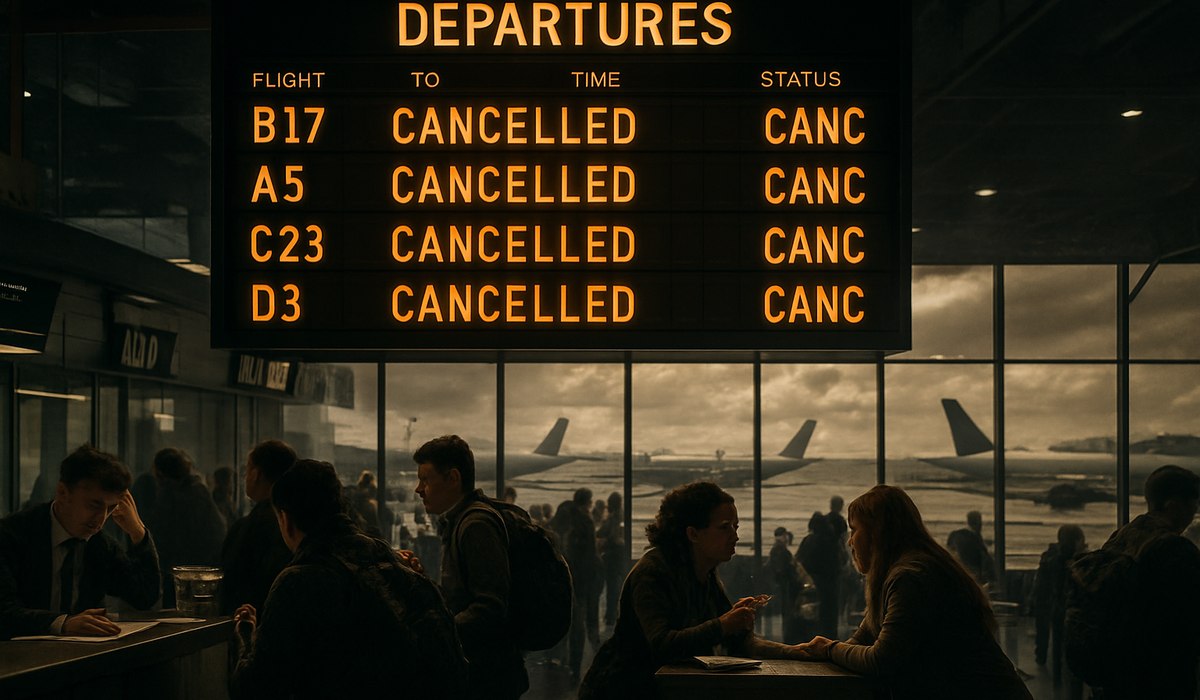
Image generated by AI
Kuwait International Airport Reels From Widespread Flight Disruptions
Kuwait International Airport confronted severe operational disruptions this week as Kuwait Airways and EgyptAir canceled at least seven flights serving major international hubs. The cascading cancellations severed critical air corridors to New York, Istanbul, Amsterdam, Bangkok, and Cairo, leaving thousands of passengers stranded and reigniting concerns about regional aviation stability. The disruptions mark the latest chapter in mounting instability at the Gulf's vital transit hub, where airspace restrictions tied to broader Middle Eastern security tensions continue reshaping flight schedules across multiple carriers.
Multiple Carriers Hit: Kuwait Airways and EgyptAir Cancellations Disrupt Regional Hub
Kuwait airport chaos intensified this week when both carriers abruptly canceled scheduled departures with minimal advance notice to affected passengers. Kuwait Airways suspended long-haul rotations linking Kuwait City directly to New York and Bangkok, services that typically operate multiple times weekly and serve business travelers, connecting passengers, and leisure tourists heading to North American and Southeast Asian destinations.
EgyptAir similarly axed its core Cairo shuttle service, eliminating one of the Gulf's busiest labor migration and family travel corridors. Local reports and passenger accounts indicate that some travelers learned of cancellations through mobile notifications from third-party booking platforms rather than direct airline communications, creating confusion and frustration across crowded departure halls.
Airlines attributed the suspensions to ongoing airspace restrictions imposed by multiple regional governments responding to heightened security concerns. Both carriers confirmed they would continue adjusting schedules on a rolling basis, leaving passengers uncertain about future flight availability and reliability.
Long-Haul Routes Most Affected: New York and Bangkok Services Suspended
Long-distance intercontinental flights bore the brunt of this week's disruptions. Kuwait Airways suspended its signature New York service, one of the airline's flagship routes connecting the Gulf to North America's largest aviation market. The airline operates this corridor using widebody aircraft capable of carrying 250+ passengers, meaning each cancellation affected hundreds of travelers including business passengers with fixed meeting schedules.
Bangkok services faced similar cuts, eliminating direct access to Thailand's bustling tourism and business hub. Industry analysts noted that the suspension of both routes simultaneously suggested airspace routing constraints rather than isolated mechanical issues, as carriers typically maintain redundancy across long-haul networks.
Kuwait Airways passengers booked on these cancelled flights reported being offered rebookings on alternative Gulf carriers or indirect routing through competing hubs in Doha and Abu Dhabi, though these alternatives often added 8-12 hours to total journey times. Some travelers reported being directed to rebook on flights departing up to two weeks later, effectively invalidating business trip purposes.
European Connections Severed: Istanbul and Amsterdam Flights Cancelled
Kuwait airport chaos extended into medium-haul European markets as both carriers suspended critical European feeder services. Istanbul operations, typically serving as a major connection point for European-bound passengers from South Asia and the subcontinent, ceased entirely for several days this week.
Amsterdam flights, essential links for passengers connecting onward to Northern Europe, Scandinavia, and the Atlantic region, similarly disappeared from schedules. These routes function as critical transfer points where passengers originating from India, Pakistan, Bangladesh, and broader South Asia connect to final European and North American destinations.
The loss of these European gateways created particular hardship for passengers holding separate tickets on multiple airlines. When a Kuwait Airways leg was cancelled, downstream connecting flights on European carriers sometimes became invalid, leaving travelers responsible for expensive last-minute rebooking or multi-day waits for alternative routings.
Regional Security Tensions Drive Ongoing Airspace Restrictions
The immediate cause of Kuwait airport chaos traces to broader Middle Eastern airspace restrictions now in place across multiple jurisdictions since late February 2026. Military incidents including missile and drone activity prompted several governments to impose temporary flight prohibitions or redirect civilian traffic around contested zones.
Kuwait International Airport experienced full operational suspension on multiple occasions, with subsequent reopening occurring under restricted capacity and limited flight windows. The unpredictable operating environment forced carriers to continuously recalibrate schedules based on changing regulatory notices and risk assessments from aviation authorities.
Foreign carriers including Kuwait Airways and EgyptAir found their long-haul operations particularly vulnerable, as extended routing around restricted airspace consumed additional fuel, flight time, and crew resources. Some flights originally planned to depart faced last-minute cancellations when alternative routing calculations exceeded aircraft endurance limits or crew duty limitations.
The situation mirrors broader challenges across Gulf aviation, where carriers like Emirate and Qatar Airways have likewise adjusted networks in response to regional volatility. Industry observers expect these constraints to persist through at least mid-2026 based on current geopolitical assessments.
Live Flight Tracking and Real-Time Updates
Passengers seeking current information about Kuwait airport operations should consult FlightAware for real-time departure and arrival data, schedule changes, and operational status updates. The platform displays active flight tracking, estimated delays, and gate information updated every 60 seconds during airport operations.
The FAA's international aviation alerts system provides official guidance regarding airspace closures and restrictions affecting flights departing from or transiting U.S. airspace. This resource proves essential for passengers on affected transatlantic routes.
For comprehensive consumer protection information, the U.S. Department of Transportation publishes detailed guidance regarding passenger rights during disruptions, including meal and accommodation provisions, rebooking obligations, and compensation eligibility.
| Metric | Details |
|---|---|
| Flights Cancelled | At least 7 confirmed cancellations May 5-9, 2026 |
| Affected Carriers | Kuwait Airways, EgyptAir |
| Primary Routes Impacted | Kuwait-New York, Kuwait-Bangkok, Kuwait-Istanbul, Kuwait-Amsterdam, Kuwait-Cairo |
| Estimated Passengers Affected | 1,800+ based on typical aircraft capacity |
| Root Cause | Regional airspace restrictions due to security incidents |
| Expected Duration | Through mid-2026 pending geopolitical developments |
| Airport Operational Status | Partial capacity with rotating flight windows |
What This Means for Travelers
The kuwait airport chaos carries significant implications for anyone planning travel through the Gulf region during the next several months. Below are concrete steps to protect your travel plans:
-
Check your airline's schedule daily if booked on Kuwait Airways, EgyptAir, or any carrier using Kuwait as a connection point. Airlines update schedules with minimal advance notice, often issuing changes within 24 hours of departure.
-
Book flexible tickets when possible, allowing free changes to alternate dates or carriers without substantial fees. Standard advance-purchase fares often become non-refundable during disruptions.
-
Verify alternate routing options before your scheduled departure. Identify which competing airlines operate your origin-to-destination market and whether you'd accept longer journey times.
-
Request written confirmation of airline care provisions (meals, hotels, ground transportation) before accepting rebooking offers, ensuring you understand who bears costs for extended disruptions.
-
Monitor airspace restriction updates through aviation authority websites in your departure country. These restrictions often precede airline cancellations by 24-48 hours.
-
Contact your airline proactively rather than waiting for cancellation notifications. Airlines may offer voluntary rebooking before automatic cancellation systems trigger, providing superior routing options.
-
Document all communication with airlines, including email confirmations, passenger names, booking references, and times of contact for potential compensation claims under consumer protection regulations.
FAQ: Kuwait Airport Chaos
What should I do if my Kuwait Airways or EgyptAir flight is cancelled?
Contact your airline immediately through their official website, mobile app, or customer service phone line. Request rebooking on the next available flight to your destination, either directly or via alternative routing. If the airline cannot accommodate you within 24 hours, you may qualify for accommodation and meal provisions depending on
Disclaimer
This article is for informational and educational purposes only. It does not constitute legal, financial, or professional advice. While we strive to provide accurate and up-to-date information, travel policies, regulations, and conditions change rapidly. Always verify information with official sources before making travel decisions. Nomad Lawyer makes no representations about the accuracy, reliability, completeness, or suitability of the information provided. Readers should consult qualified professionals for advice specific to their circumstances. The views expressed in this article are those of the author and do not necessarily reflect the views of Nomad Lawyer.
Preeti Gunjan
Contributor & Community Manager
A passionate traveller and community builder. Preeti helps grow the Nomad Lawyer community, fostering engagement and bringing the reader experience to life.
Learn more about our team →