Kenya Aviation Workers End Two-Day Strike as Nairobi Jomo Kenyatta International Airport Resumes Flights

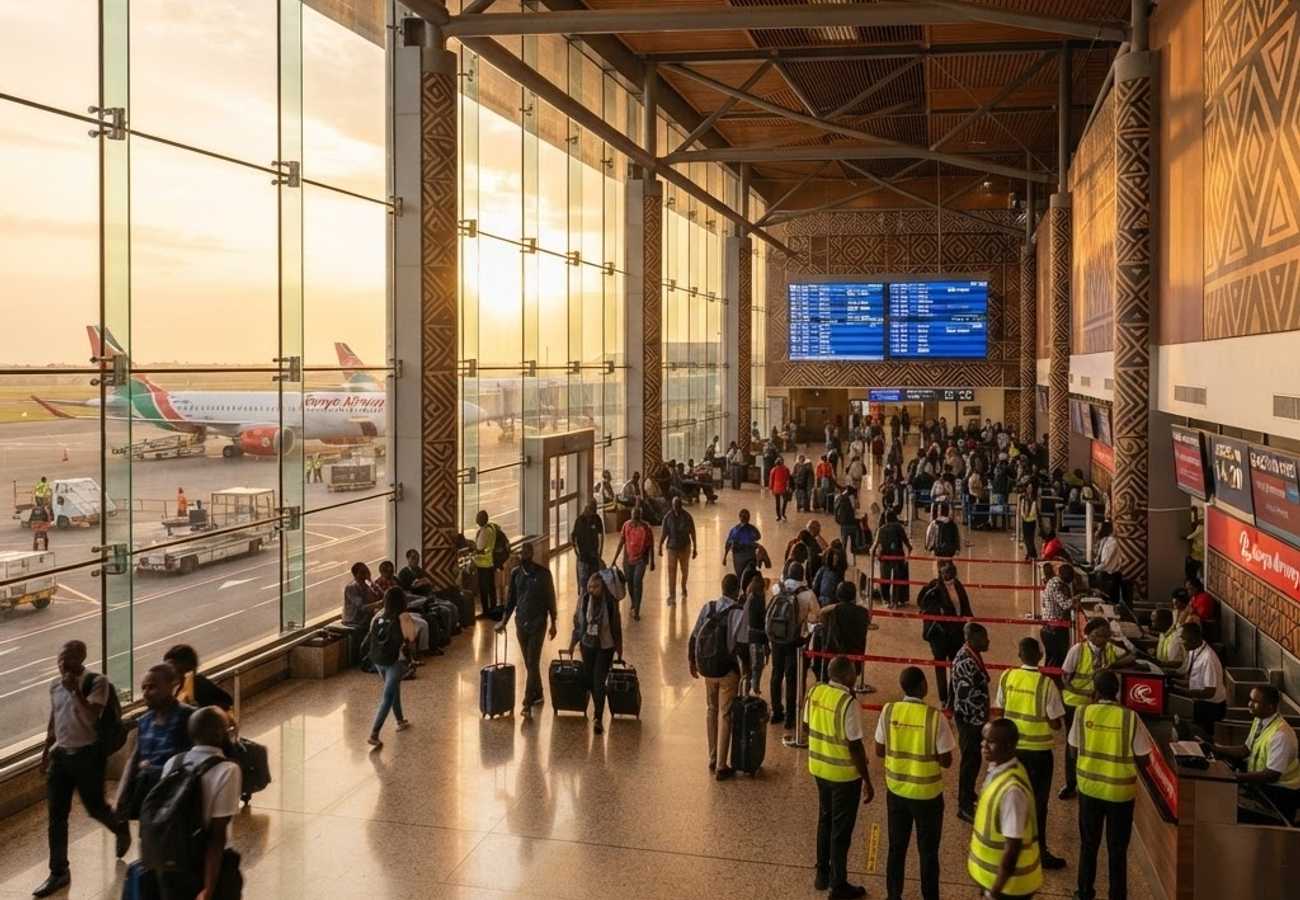
Image generated by AI
Kenya’s aviation sector has reached a return-to-work agreement, ending a two-day industrial action that crippled Nairobi’s primary gateway and disrupted air travel across the country.
The Kenya Aviation Workers Union officially called off the strike on September 1, following negotiations with the Ministry of Transport and several state aviation agencies. The work stoppage, which began on Sunday, severely limited air traffic at Jomo Kenyatta International Airport (JKIA), the busiest hub for both regional and international flights in Kenya.
The industrial action triggered widespread cancellations and multi-hour delays. Kenya Airways and other operators were forced to adjust crew rosters and flight schedules as ground staff became unavailable, leaving thousands of passengers stranded in terminals.
Scope of Operational Disruptions
While the primary impact was felt in Nairobi, the strike extended to other critical aviation nodes. Operations slowed significantly at:
- Moi International Airport (Mombasa)
- Eldoret International Airport
- Kisumu International Airport
The disruption affected both international routes—specifically connections to Europe and the Middle East—and domestic links serving the coastal and western regions of Kenya. Because JKIA serves as the central hub for Kenya Airways and various regional carriers, the stoppage created a ripple effect across East African airspace.
Core Labor Grievances and the September 1 Agreement
The strike was the result of long-standing disputes regarding compensation, staffing levels, and the governance of state aviation institutions. Union members cited several key triggers:
- Collective Bargaining: A long-pending agreement between the union and the Kenya Civil Aviation Authority remained unresolved for years.
- Compensation: Stagnating wages and benefits for technical, security, and support staff.
- Management Models: Concerns over proposed restructuring at JKIA and alleged unfair hiring practices.
The return-to-work deal signed on September 1 includes a commitment to fast-track negotiations on the collective bargaining agreement and establishes a framework to address pay and staffing grievances within existing budget and legal guidelines.
Current Flight Status and Passenger Impact
Despite the official end of the strike, the aviation network is experiencing a gradual recovery. Airlines are currently prioritizing stranded passengers, which may limit seat availability for new bookings in the immediate term.
Industry data indicates that the backlog of affected passengers will take several days to clear. Many carriers have implemented flexible rebooking policies, allowing travelers to change flight dates without penalty.
Impact on Regional Aviation Infrastructure
| Affected Airport | Status | Primary Impact |
|---|---|---|
| Jomo Kenyatta International (Nairobi) | Resuming | Severe delays, cancelled international/domestic links |
| Moi International (Mombasa) | Resuming | Reduced operational capacity |
| Eldoret International | Resuming | Slowed ground operations |
| Kisumu International | Resuming | Reduced flight frequency |
Why This Matters: Industry Analysis
From a logistical perspective, this event underscores the extreme vulnerability of East Africa's aviation architecture. The region relies heavily on a "hub-and-spoke" model centered on Jomo Kenyatta International Airport. When JKIA falters, the entire regional network suffers.
For travelers and corporate entities, the real impact is the realization that labor stability is now as critical as physical infrastructure. The recurrence of these strikes suggests a structural misalignment between the Kenyan government's fiscal constraints and the workforce's expectations for safety and security roles.
Our analysis suggests that until a permanent, multi-year collective bargaining agreement is implemented, the risk of "go-slow" actions remains high. This instability can deter high-value business travel and impact the safari high season, which is vital for Kenya's GDP.
Forward Outlook
The durability of the current truce depends entirely on the speed of the formal negotiations between the union and the Kenya Civil Aviation Authority. If the government fails to translate the September 1 agreement into tangible wage increases or staffing reforms, further disruptions are likely.
Market trends suggest that Kenya will need to diversify its airport resilience strategies, potentially increasing the operational independence of secondary airports like Mombasa and Eldoret to prevent total network collapse during future labor disputes.
Flight schedules are stabilizing, but travelers should verify status directly with carriers before heading to the terminal.
Related Travel Guides
This article is for informational purposes. Flight routes, passenger regulations, visa rules, and transit advisories are subject to change by airlines and aviation authorities. Readers are advised to verify schedules and travel documentation with relevant carriers and border agencies before departure.
Related Stories

South America Emerges as Premier Long-Haul Choice for European Travelers in 2026: Cultural and Luxury Travel Guide

United Airlines Launches Nonstop Newark to St. Croix Flights: US Virgin Islands Travel Guide and Crucian Heritage