
Kenmore Air de Havilland DHC-3 Otter Crash in San Juan Islands: Passenger Impact and Safety Analysis 2026
A Kenmore Air seaplane crash in the San Juan Islands has triggered operational suspensions and emergency evacuations, impacting regional travel logistics in the Pacific Northwest.

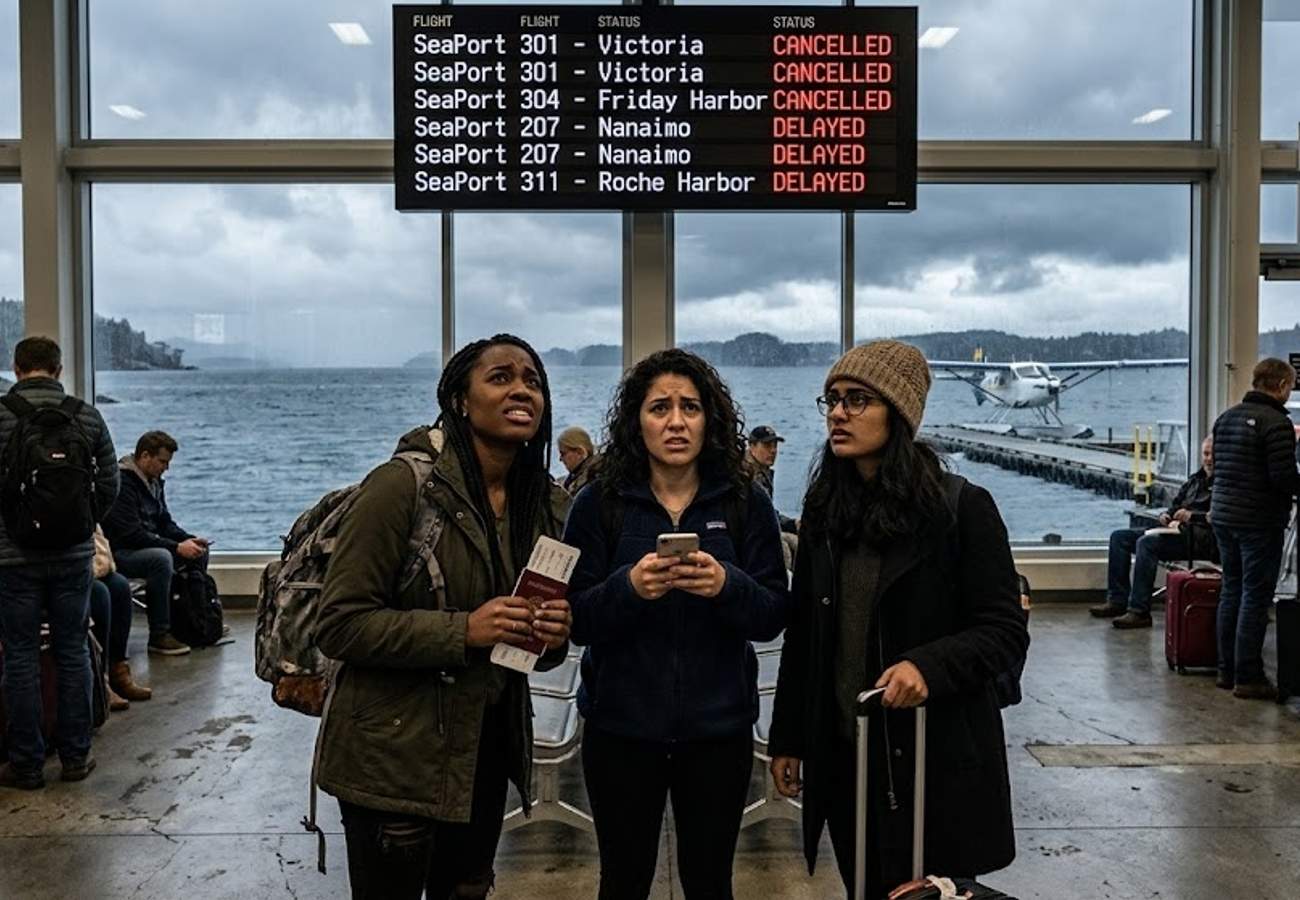
Image generated by AI
Headline Options:
- Factual/News: Kenmore Air de Havilland DHC-3 Otter Crashes in San Juan Islands Leaving 4 Seriously Injured and Flights Suspended
- Curiosity-Gap (Discover): A Routine Scenic Flight Turned Into a Fiery Disaster: The Chaos Now Gripping the San Juan Islands
- Problem-Solving (Search): What to Do if Your Kenmore Air Flight is Cancelled: San Juan Islands Travel Alternatives and Rights
A routine commercial flight ended in a fiery emergency landing in the Salish Sea, leaving four people seriously injured and disrupting the primary air link to Washington's island sanctuaries.
The Disruption Details
On July 26, 2026, a Kenmore Air de Havilland DHC-3 Otter seaplane departed Seattle’s Lake Union destined for Roche Harbor in the San Juan Islands. The aircraft, carrying 10 passengers and one pilot, encountered severe weather conditions, including localized thunderstorms and lightning squalls, as it approached the archipelago.
Flight tracking data and reports from the Federal Aviation Administration (FAA) and the National Transportation Safety Board (NTSB) indicate the pilot attempted an evasive maneuver near Sucia Island to avoid a storm cell. This resulted in a rapid descent and a hard emergency landing in Shallow Bay. The aircraft struck the rocky shoreline and was quickly consumed by fire. All 11 occupants were rescued by civilian boaters, the U.S. Coast Guard, and local sheriff departments.
Flight & Airport Impact Breakdown
The incident has created immediate logistical bottlenecks for travelers in the Pacific Northwest:
- Operational Status: Kenmore Air has temporarily grounded operations and cancelled scheduled routes for safety evaluations.
- Casualties: Four individuals sustained serious injuries, including head trauma, bone fractures, and lacerations.
- Medical Logistics: Emergency airlifts were coordinated to transport the injured to medical facilities in Bellingham and Orcas Island.
- Transit Surge: A sudden spike in demand has hit Washington State ferry services and private water charters as the primary air alternative vanished.
Passenger Rights & Advisory
For passengers affected by the sudden grounding of Kenmore Air services, the legal and logistical landscape is complex due to the nature of regional seaplane operations.
Rebooking and Refunds Our analysis of standard aviation policy suggests that because the grounding was a direct result of a safety emergency, passengers are entitled to a full refund for unused tickets or immediate re-routing. For the affected passenger, this means you should not accept "travel vouchers" if a cash refund is preferred, as the carrier is obligated to return funds for services not rendered.
Duty of Care While the U.S. does not have a direct equivalent to the EU's EU261/2004 for domestic regional flights, the Department of Transportation (DOT) guidelines emphasize the carrier's responsibility for passenger welfare during major disruptions. If you are stranded, document all "out-of-pocket" expenses for meals and lodging, as these may be recoverable through insurance or carrier claims.
Alternative Transit Strategy If your itinerary depends on the San Juan Islands, we advise the following:
- Ferry Priority: Immediately book Washington State Ferries (WSF) reservations, as these are currently operating at peak capacity.
- Insurance Verification: Review "Trip Interruption" clauses in your travel insurance. A grounded fleet due to a crash often qualifies as a covered event.
- Weather Monitoring: Use the National Weather Service (NWS) specifically for the Salish Sea region before attempting alternative water charters.
Industry Analyst View
The de Havilland DHC-3 Otter is a staple of coastal aviation due to its utility. However, this incident reinforces a growing concern among safety advocates regarding the reliance on aging airframes in volatile micro-climates.
Our analysis indicates that the "fragile logistics network" of the Pacific Northwest is overly dependent on a few key operators. The transition from a routine flight to a total regional suspension highlights the need for integrated backup systems and upgraded onboard weather-tracking technology to prevent "reactive" maneuvering in storm cells.
The path forward for regional aviation requires a shift from legacy reliability to modernized, tech-driven safety protocols.
Related Travel Guides
Disclaimer
This article is for informational and educational purposes only. It does not constitute legal, financial, or professional advice. While we strive to provide accurate and up-to-date information, travel policies, regulations, and conditions change rapidly. Always verify information with official sources before making travel decisions. Nomad Lawyer makes no representations about the accuracy, reliability, completeness, or suitability of the information provided. Readers should consult qualified professionals for advice specific to their circumstances. The views expressed in this article are those of the author and do not necessarily reflect the views of Nomad Lawyer.

Kunal K Choudhary
Co-Founder & Contributor
A passionate traveller and tech enthusiast. Kunal contributes to the vision and growth of Nomad Lawyer, bringing fresh perspectives and driving the community forward.
Learn more about our team →